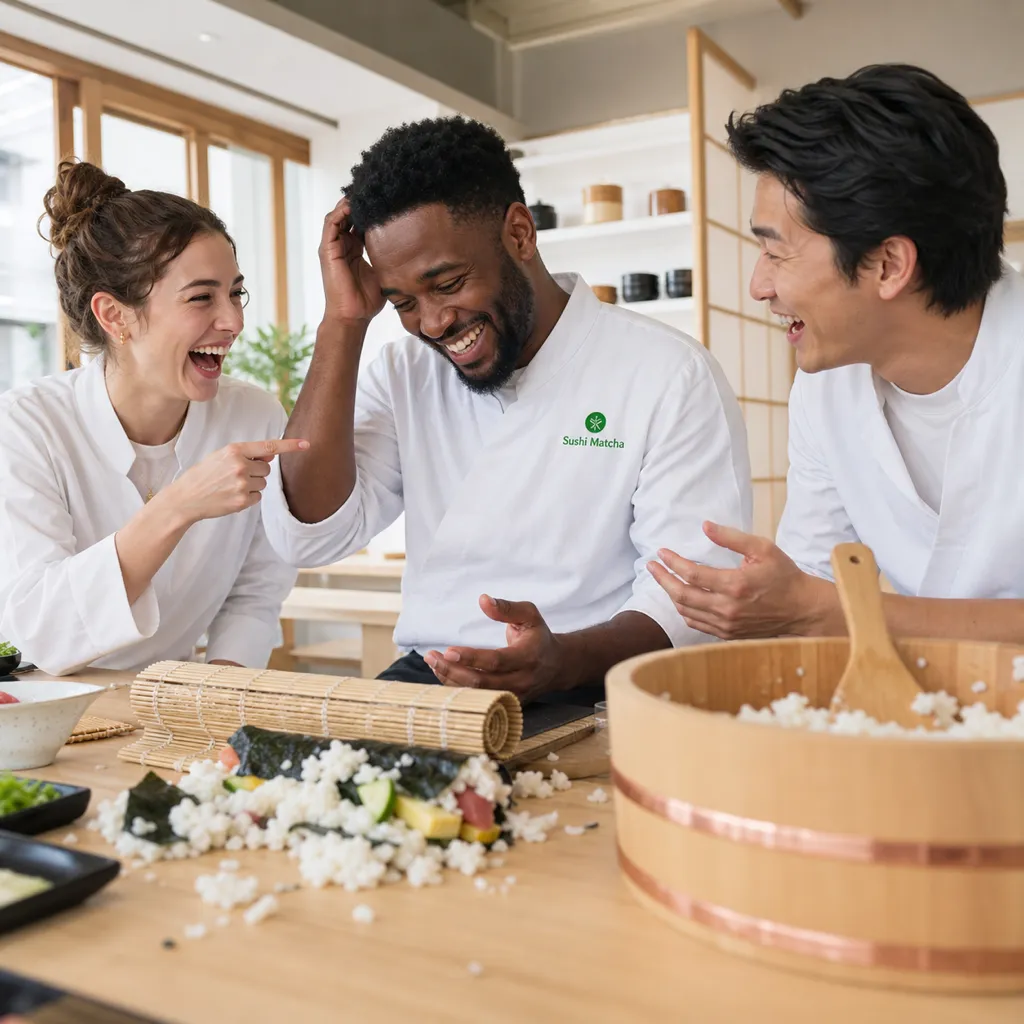
Booking a Tokyo Sushi Class for a Group
Booking a class for yourself takes two minutes. Booking one for six friends who are spread across three group chats, two time zones and one undecided dinner plan is a different task — and the hard part is almost never the booking form. It is getting a straight answer out of your own group before you open it.
This guide is about that co-ordination problem for our signature sushi and matcha class in Asakusa: what to ask everyone, how to keep the party in one session, and what to settle before money changes hands. It does not compare shared and private formats or their prices — that is a separate decision, covered further down.
Popular in Tokyo right now — our most recommended experience

Tokyo Sushi Making Class : Sake Ceremony & Matcha Experience in Asakusa
One organiser, one booking
The single most useful decision is made before anyone opens a calendar: decide who is booking, and have that person book for everyone at once.
Places in a shared class are sold per person, and availability belongs to a specific session. When several people book separately, each booking takes whatever places are open at the moment it is made. Nobody is doing anything wrong, but two friends booking an hour apart can easily end up looking at different start times, and a group that booked in three waves has three confirmations to keep track of.
A single booking for the whole party avoids all of that. One person enters the total number of participants, one confirmation email arrives, and one set of details has to be correct. Settle the money between yourselves afterwards — that is much easier than untangling separate reservations.
Collect this before you open the booking page
Send one message to the group and ask for all of it at once. Chasing four separate answers over three days is how dates get lost.
- Who is definitely coming. Not "probably" — a number you are willing to pay for.
- Everyone's ages, if anyone is under 18. Children aged four and above can take part in the regular class. Children under four are welcome to come along and share with a parent.
- Food requirements, one line per person. An allergy, a vegan menu and a "no raw fish" preference are three different things and should be written as three different things.
- Anyone who cannot drink alcohol. The class includes a sake toast, and water or Japanese green tea is available instead. Nobody has to drink.
- A realistic arrival window. Based on where the group is actually coming from that morning, not where you hope to be.
- A contact person and email. Confirmation details, including directions and a map, go to whoever books.
If two people in your group have conflicting requirements — one wants an early start, one is arriving on a late train — resolve that in the chat, not by making two bookings.
Choose the session around the constraint, not the majority
Groups tend to vote on a time. It usually works better to find the one member with the least flexibility and build around them.
The class runs 90 minutes, so you are not blocking out a whole day, but you are fixing a start time that everyone has to reach. In practice the binding constraint is usually a flight, a check-out time, or one friend arriving from another city. Ask who that is first, then look at what is available on the class page for your date and party size.
If your group is still deciding how far ahead to commit at all, our comparison of booking in advance or on the same day sets out the trade-off between locking a date and keeping the day flexible.
What to check on the booking screen
Before you pay, read back the things that are hard to change later.
Check the date and start time. Check the participant count against your list — it is easy to book for the number of people in the chat rather than the number actually attending. Enter the dietary requirements you collected rather than planning to mention them on the day; they affect what is prepared for you.
Then check the cancellation terms and tell your group what they are. Cancellation is free up to 24 hours before the class, cancellations inside 24 hours are subject to a 100% fee, and no-shows are non-refundable. Rescheduling is free of charge as long as you let us know at least 24 hours before your original start time. That is the sentence to paste into the group chat, because it is what turns "I might not make it" into a decision with a deadline.
The friend who drops out
Plan for it before it happens, because with a per-person price a late change affects whoever is covering the booking.
Give your group an internal deadline that sits comfortably ahead of the 24-hour mark — a couple of days before is sensible — and tell them that after it, a place is paid for whether or not it is used. That is a fairer conversation to have in advance than on the morning of the class.
If your numbers grow instead, check availability for the additional places rather than assuming a session with room for one has room for four.
When a shared class is not the right shape
Everything above assumes you are joining a shared session, which is the usual choice for a group of friends. The signature class has a published maximum of 20 guests, and the other people in the room are simply other guests.
Two situations point elsewhere. If having the studio to yourselves is the point of the outing, or if you are organising something closer to a private event, the private formats are separate booking options with their own group requirements and confirmation process. Our comparison of shared and private sushi class formats covers that decision and the pricing questions that come with it.
The other situation is a group that is not really a group yet — friends arriving on different days, or people who may join. Booking one place for yourself is perfectly normal, and our guide to joining a sushi class alone explains how that works.
A short organiser's checklist
- Confirm a final headcount, with ages for anyone under 18.
- Collect food requirements individually and in writing.
- Identify the person with the tightest schedule and pick the session around them.
- Make one booking for the whole party, from one email address.
- Share the cancellation terms and set an internal deadline ahead of them.
- Send the confirmation details, including the meeting point, to everyone.
Once the list is complete, open the signature class page, check the sessions currently offered for your date and party size, and book the whole group in one go. The organising is the part that takes effort; the booking itself is the easy bit.
Related Articles

Book a Sushi Class Early or on the Day?
Reserve a Tokyo sushi class in advance or try on the day? Weigh certainty against flexibility and know what to check before counting on a same-day place.
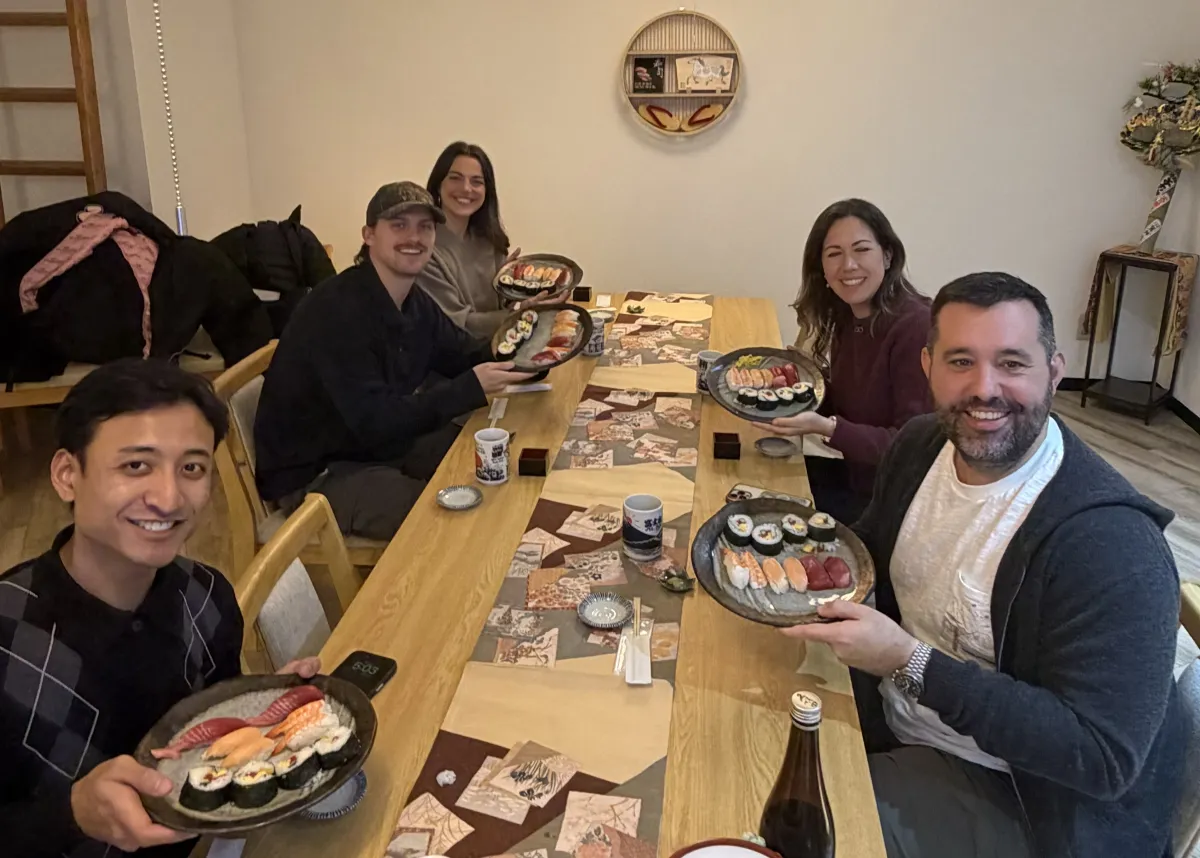
Tokyo Sushi Class: Instant or Request?
Some sushi classes in Tokyo confirm instantly, others are request bookings. Here is which is which at our Asakusa studio, and how each affects your plans.
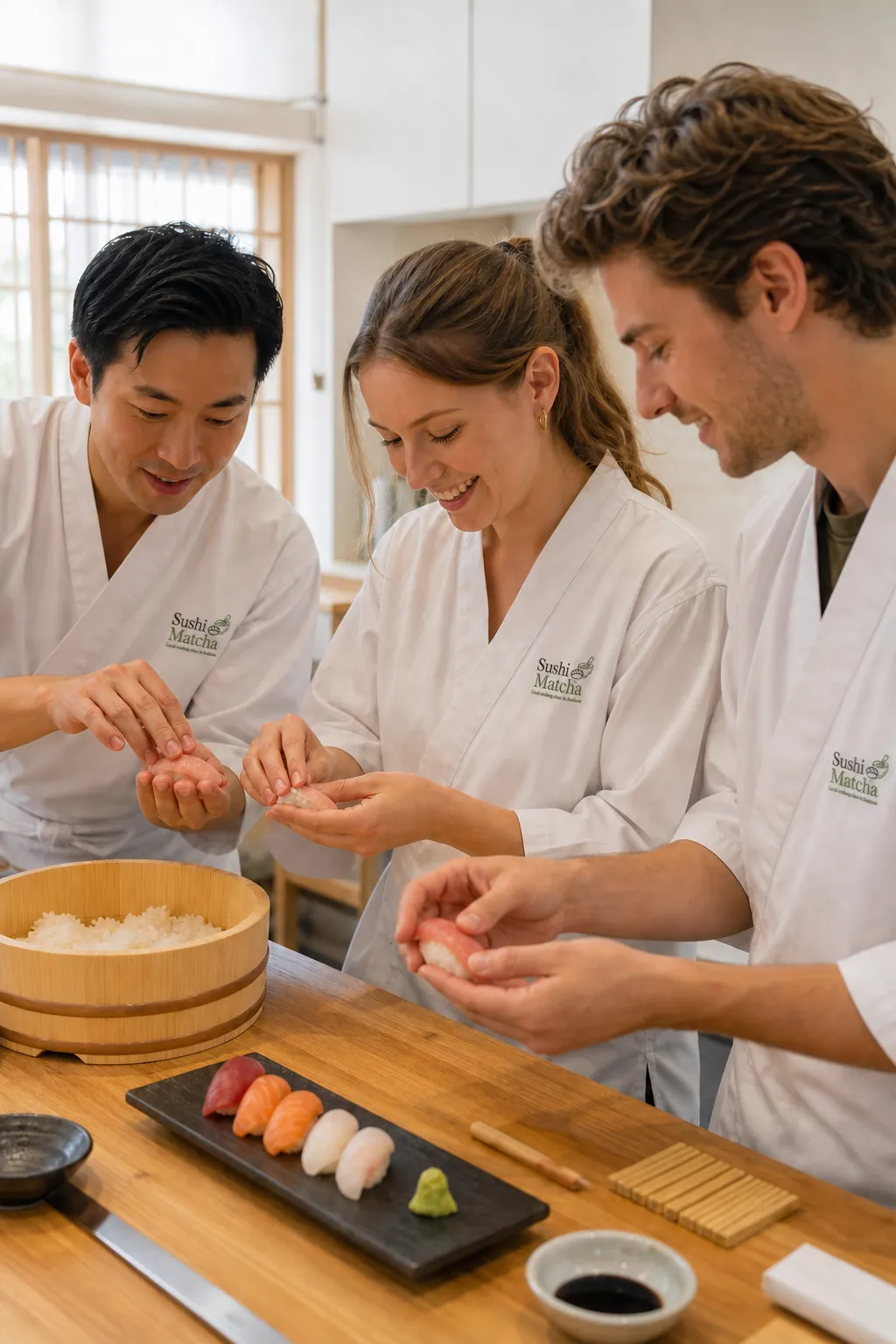
Practising Before a Tokyo Sushi Class
Should a beginner practise sushi at home first? Here is what a 90-minute Asakusa class actually asks of you, and what is worth sorting out instead.