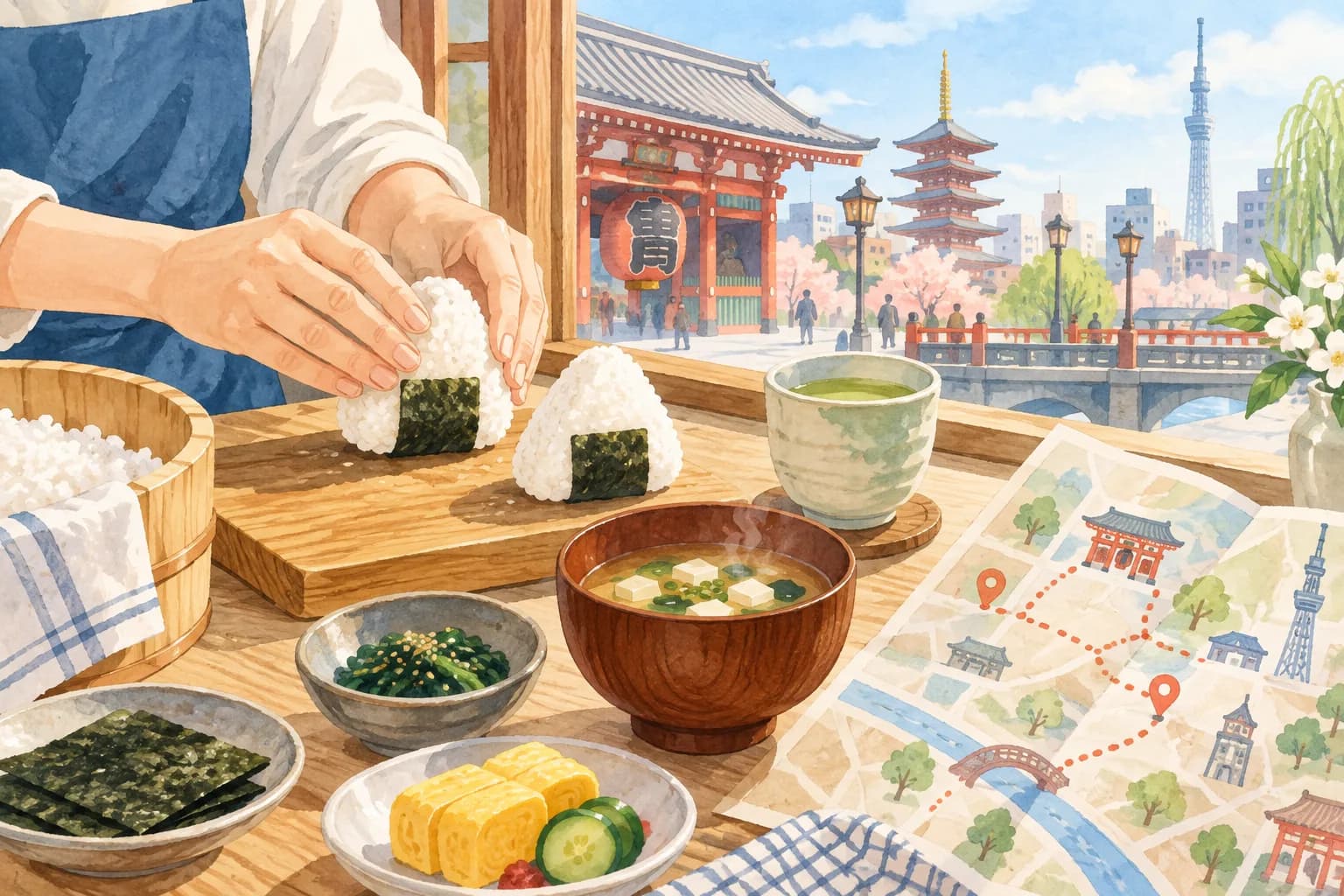
Morning Onigiri Class and Asakusa Plan
An early cooking class can solve two Tokyo-planning problems at once: jet lag has you awake before many attractions open, and you want a real activity without using the whole day. The key is to build the morning around the confirmed class, not around an imaginary schedule copied from an old itinerary.
Sushi Matcha's current morning onigiri-making class in Asakusa is published with an 8 AM start, a 60-minute duration and a price of ¥8,000 per person. Participants make onigiri with several fillings, eat them with miso soup and pickles, have green tea, and prepare extra onigiri to take away. Check the live date and availability before treating that hour as fixed.
Popular in Tokyo right now — our most recommended experience
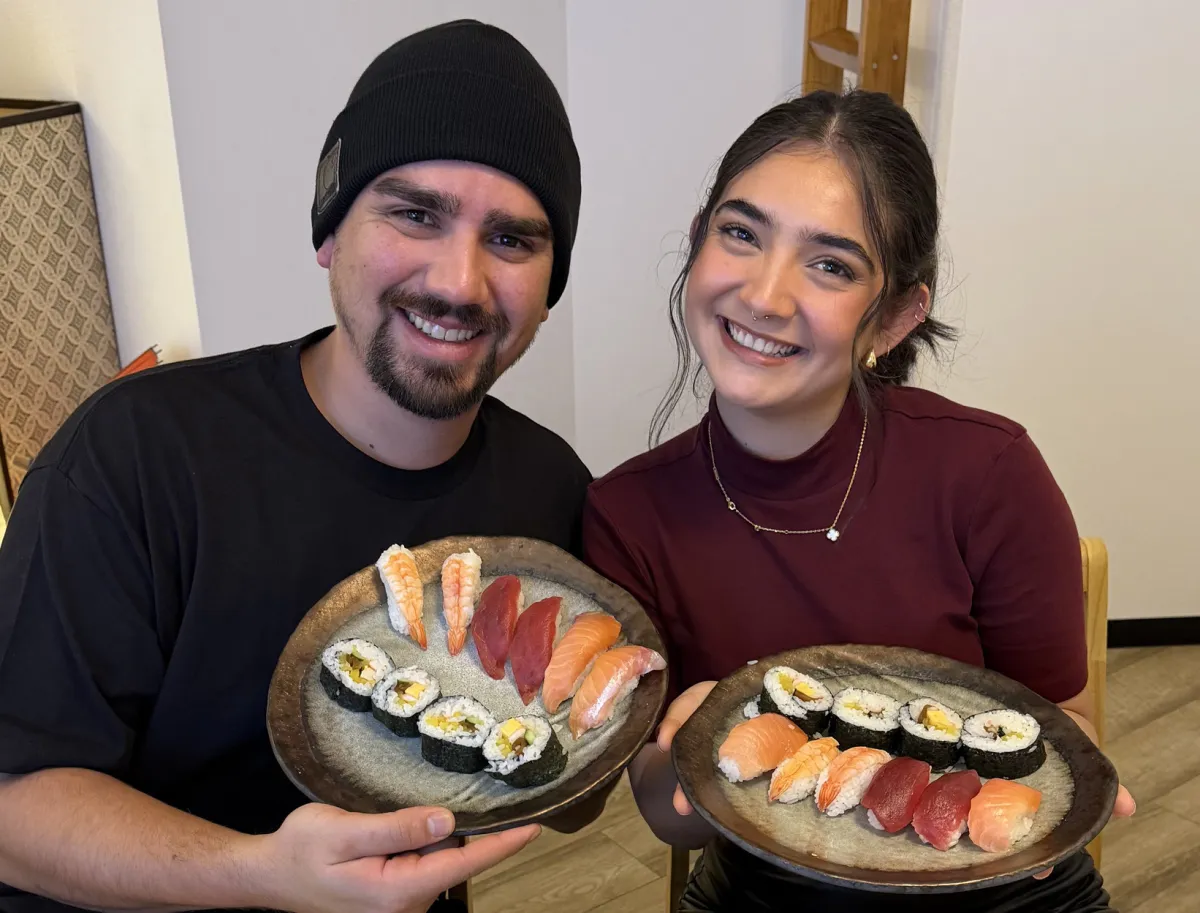
Tokyo Sushi Making Class : Sake Ceremony & Matcha Experience in Asakusa
Decide whether onigiri fits your morning
Onigiri is a focused rice-making experience, not a shortened version of the signature sushi and matcha class. It is especially useful for early risers who want a Japanese breakfast activity and a practical skill to take home. The shorter published duration leaves more of the morning open.
If you want nigiri, maki, a sake toast and matcha, choose the longer signature product instead. Our sushi or onigiri class comparison separates the two experiences by food, duration and booking route. Choose what you want to make before building the sightseeing plan.
Make the class the first fixed point
Book the actual date and confirm the Japan-local start time. Work backwards from 8 AM using your accommodation's real route, morning train frequency and a small navigation buffer. “Near Asakusa” is not precise enough when several lines and station exits use the Asakusa name.
Save the meeting information offline and check the route the evening before. Our Asakusa Station to the class guide explains why the operator, exit and final walking segment matter. Use the instructions in your confirmation if they differ from a general article.
A simple class-first morning
A low-stress outline is to travel with time to find the meeting point, join the confirmed 8 AM session, finish around the published one-hour mark while allowing for the actual farewell, and then choose one nearby area rather than racing through a list. Use packed extra onigiri according to the storage and eating guidance given on the day.
After class, Senso-ji and the surrounding streets are a natural option because they keep you in Asakusa. The Sumida riverside is another flexible choice for an outdoor walk. Shop hours, temple events and crowds can change, so check current official information instead of promising yourself an exact minute-by-minute sequence.
If you want Senso-ji after breakfast
Visiting the temple after the class lets the paid activity remain the anchor while the open-ended visit absorbs small delays. Decide whether your priority is worship, architecture, shopping streets or photographs; trying to do all four before another fixed reservation makes the morning brittle.
Our Senso-ji and sushi class in one day uses a longer sushi session, but its principles still help: protect the confirmed class time, leave a walking buffer and verify details that can change. Do not copy its sample order without adjusting for the earlier, shorter onigiri product.
If another neighborhood is next
For a riverside walk, keep weather and luggage in mind. For Ueno, Skytree or another district, look up the route from the actual class location after your booking is confirmed. A map estimate is not a transfer guarantee, and rush-hour conditions matter on a weekday morning.
Place timed tickets after a generous margin. The point of a 60-minute class is useful flexibility, not permission to schedule the next door-closing event at 9:01. If a later booking is expensive or non-refundable, make that connection more conservative.
Treat the food as breakfast
The product description includes onigiri, miso soup, pickles and green tea, so you do not need to plan a full breakfast immediately before it unless your own needs require one. At the same time, do not assume the included amount replaces every person's next meal. Appetite and dietary needs differ.
Ask about allergies or restrictions during booking rather than on arrival. A take-away item also needs sensible handling. Follow the team's same-day guidance and local food-safety instructions; do not keep rice fillings unrefrigerated for a long sightseeing day merely because they are portable.
Check the night before
Confirm the reservation status, start time, participant count, route, weather and first destination after class. Charge your phone, keep the address available offline and avoid packing the morning with two backup plans. If the class has not been confirmed, do not travel as though a seat is held.
When the 8 AM slot is available and the product suits your party, open the morning onigiri-making class and book the real date. Then let the class be the fixed beginning of the day and keep the rest of Asakusa flexible enough to enjoy.
Related Articles
How Long Is a Sushi Class? Plan Your Day
Our Asakusa sushi class runs 90 minutes. Plan your arrival, travel margins and the rest of your Tokyo day around it without overpacking the schedule.
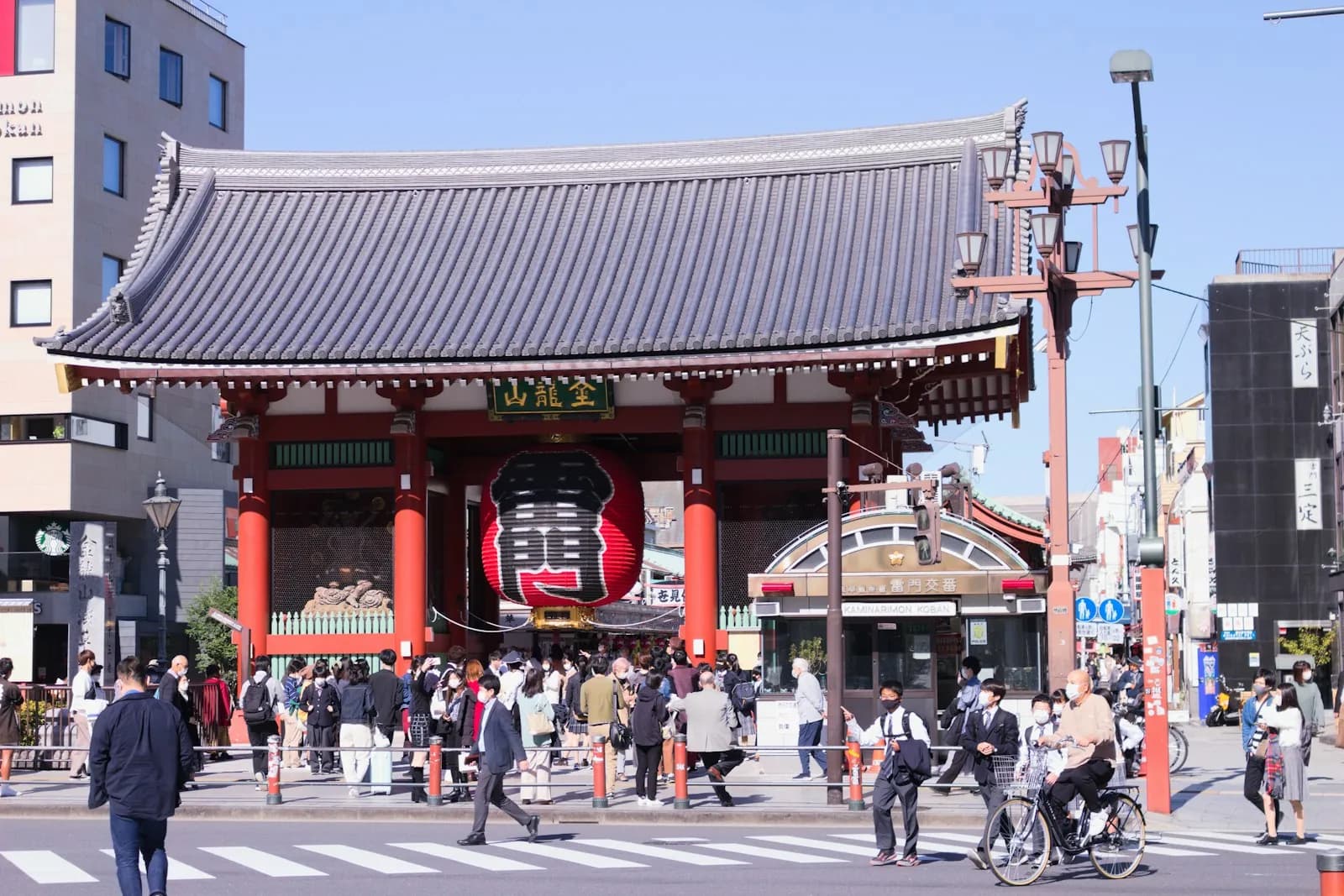
Tokyo Skytree and a Sushi Class in One Day
Plan Tokyo Skytree and a 90-minute sushi class in Asakusa on one day, with the right order, train route and time buffers.
Kappabashi and a Sushi Class in Asakusa
Plan Kappabashi Kitchenware Town and a 90-minute sushi class on one Asakusa day, with practical advice on timing, purchases, and arrival.