Okutama Day Trip & Asakusa Sushi Class
Okutama is the far western corner of Tokyo: steep forested valleys, a clear green river, a reservoir lake and a limestone cave, all still inside the Tokyo city limits and reachable by ordinary commuter trains. In late autumn the valleys turn red and gold, and on any day of the year it is the easiest way to swap neon for mountains without a bullet train.
This guide covers getting to Okutama from Asakusa, the main sights, current closures and timetable cautions, and how to combine the trip with our sushi class. Details were checked on 19 November 2026.
Popular in Tokyo right now — our most recommended experience

Tokyo Sushi Making Class : Sake Ceremony & Matcha Experience in Asakusa
Getting there from Asakusa
Okutama Station is the terminus of the JR Ome Line. The usual route from Asakusa is:
- Tokyo Metro Ginza Line from Asakusa to Kanda, about 10 minutes.
- JR Chuo Line (Rapid) west through Shinjuku to Tachikawa. Some trains continue onto the Ome Line; otherwise change at Tachikawa.
- JR Ome Line to Ome, then change again for the last section to Okutama.
From Shinjuku the journey takes roughly an hour and 40 minutes with the fastest connections, and a route planner we checked listed about ¥1,230 by IC card. From Asakusa, allow two to two and a half hours each way. On weekends and holidays, the Holiday Rapid Okutama runs a few morning trains towards Ome, cutting out one change.
Trains between Ome and Okutama are much less frequent than in central Tokyo, so check the timetable for both directions before you set off and note the last convenient train back.
Planned service changes. The town of Okutama has announced that on 11 December 2026 and on 14, 15, 18 and 19 January 2027, trains between Ome and Okutama will be cancelled from about 8:50 to 14:30 for works, with a replacement microbus. Avoid those dates for a day trip if you can, or check the latest JR East or Okutama Town notice for the replacement service before travelling.
What to see in Okutama
Hatonosu Gorge
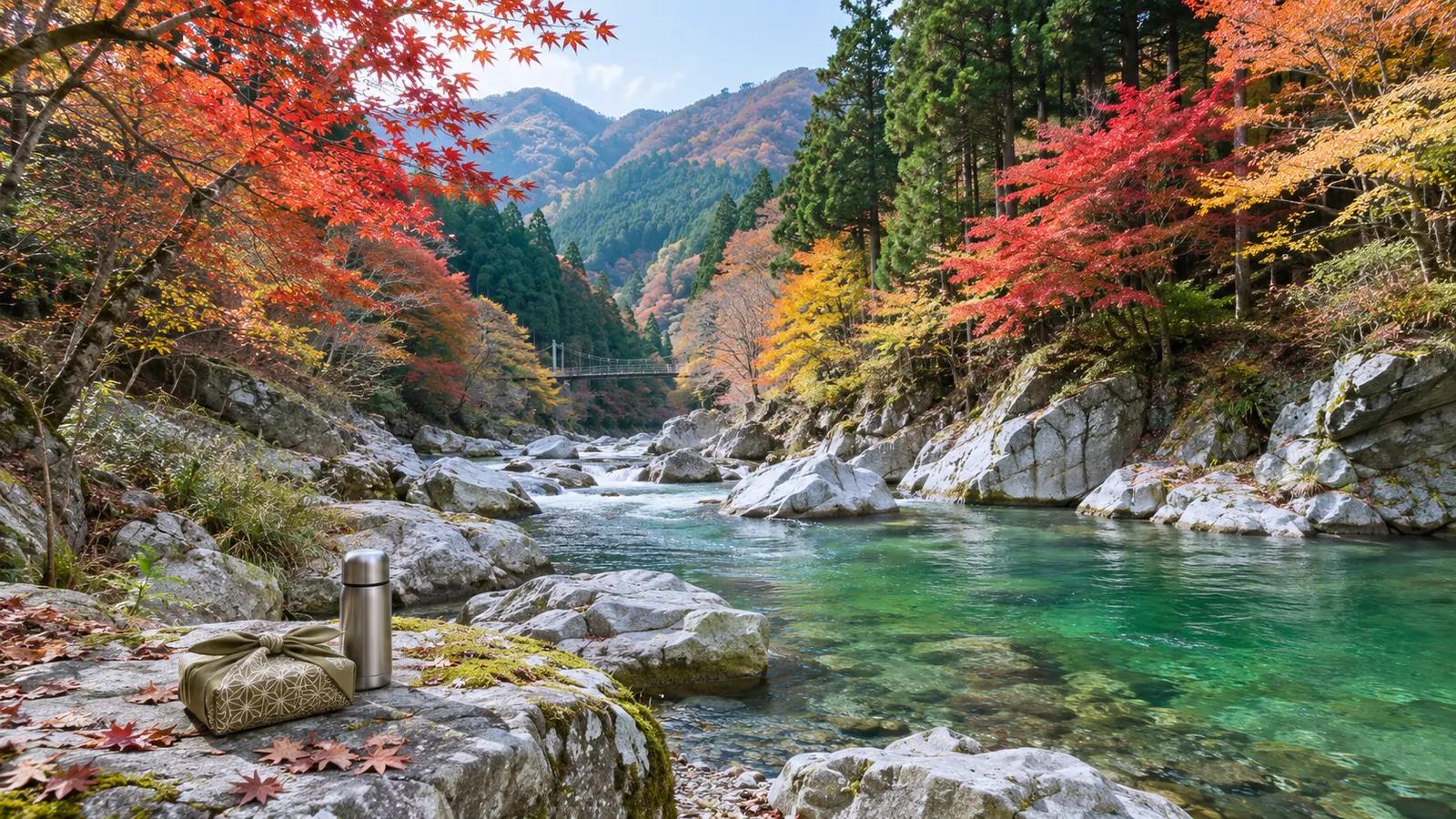
Hatonosu Gorge is about a 10-minute walk from Hatonosu Station, two stops before Okutama. White boulders, emerald water and a small suspension bridge, the Hatonosu Kobashi, make it the most photographed spot on the line. A riverside path continues upstream towards the Shiromaru Dam, about 2 km or 45 minutes on foot, and is a manageable walk if you are not a hiker. The autumn colours usually peak from mid to late November.
Okutama Lake
Okutama Lake is the reservoir behind the Ogochi Dam, one of Tokyo's main water sources. A bus from Okutama Station takes about 15 minutes. The view across the lake from the dam is the main reason to go, and there is a small museum about Tokyo's water supply.
Note: the lake's two floating bridges, Mugiyama and Tomeura, are closed because reservoir works have lowered the water level. The works are scheduled to continue until around late May 2027, but according to the Tokyo Waterworks Bureau the bridges will reopen only after the works finish and the water level recovers. Check the latest notice before travelling.
Nippara Limestone Cave
Nippara Limestone Cave is one of the largest caves in the Kanto region and a Tokyo-designated natural monument. It stays around 11°C all year, so it feels cool in summer and mild in winter. A visit takes about 40 minutes. The bus from Okutama Station takes about 30 minutes; on some days it stops short of the cave and you walk the last stretch, about 20 minutes. Admission is around ¥900 for adults, and the cave is closed over the New Year holiday. Check the official site for current hours and fees before you go, as different sources list different figures.
Sawanoi sake brewery
On the way back towards Ome, near Sawai Station, Ozawa Shuzo, maker of Sawanoi sake, has been brewing in the valley since 1702. Its riverside garden, Sawanoi-en, is a pleasant place to stop, and the brewery runs short guided tours with a tasting. According to the brewery's official page, tours last about 40 minutes, cost ¥700 for adults (free for under-20s, who cannot drink), need to be booked online by the day before and do not run on Mondays. Do not drink if you are going on to the cliffs or the cave afterwards.
Safety and practical cautions
- Bears live in Okutama. The Tokyo Metropolitan Government publishes an official bear sighting map. Stay on main paths, avoid walking alone at dusk and check the latest sightings if you plan anything beyond the gorge path.
- Buses stop early. Some lines in the valley run their last services in the late afternoon. Start early and keep the return bus time in mind.
- The valley gets dark and cold. Days are short in late autumn. Bring a warm layer and walking shoes with a good grip; rocks by the river can be slippery.
- Okutama Visitor Center, about two minutes from Okutama Station, has maps and current trail information. It is closed on Mondays.
Fitting the sushi class into an Okutama day
Our signature sushi and matcha class lasts 90 minutes. You make nigiri and a futomaki roll with an English-speaking instructor, toast with sake, eat what you made and whisk your own matcha. It costs ¥12,000 per person. Session times vary by date, so check the booking calendar first and plan to arrive about 10 minutes before the start.
Option 1: Okutama in the morning, class in the afternoon
Leave Asakusa early, walk Hatonosu Gorge or visit the cave in the morning, and take a train back around midday. With a journey of two hours or more and less frequent trains, this works best with a later class time. Pick the train you need, then add a buffer of at least half an hour.
Option 2: class first, Okutama on another day
Because Okutama takes most of a day, many visitors are better off doing the class on a separate day. If you want an easier mountain on the same day as the class, our Mount Takao guide shows how to fit a shorter hike around a session.
Option 3: another mountain valley instead
If you would rather visit a mountain town with shrines and old streets, our Chichibu day trip guide covers another mountain valley northwest of Tokyo, and the sake and sushi pairing guide is a good read before a brewery visit.
FAQ
Is Okutama really in Tokyo? Yes. Okutama is a town within Tokyo Metropolis, in its far west. The area is mountainous and much quieter than the city centre.
Can I see Okutama in half a day? Only if you choose one sight, such as Hatonosu Gorge, and keep a close eye on the trains. A full day is more comfortable.
Is it worth going in winter? Yes, for the cave and quiet river walks, but days are short and some trails may be icy. Check the planned train cancellations in December and January.
Plan your Okutama day
Choose the class date and time first, then plan the train journey around it. Book the signature class and pair a morning in Tokyo's mountains with sushi in Asakusa.
Related Articles
Nokogiriyama Day Trip & Asakusa Sushi Class
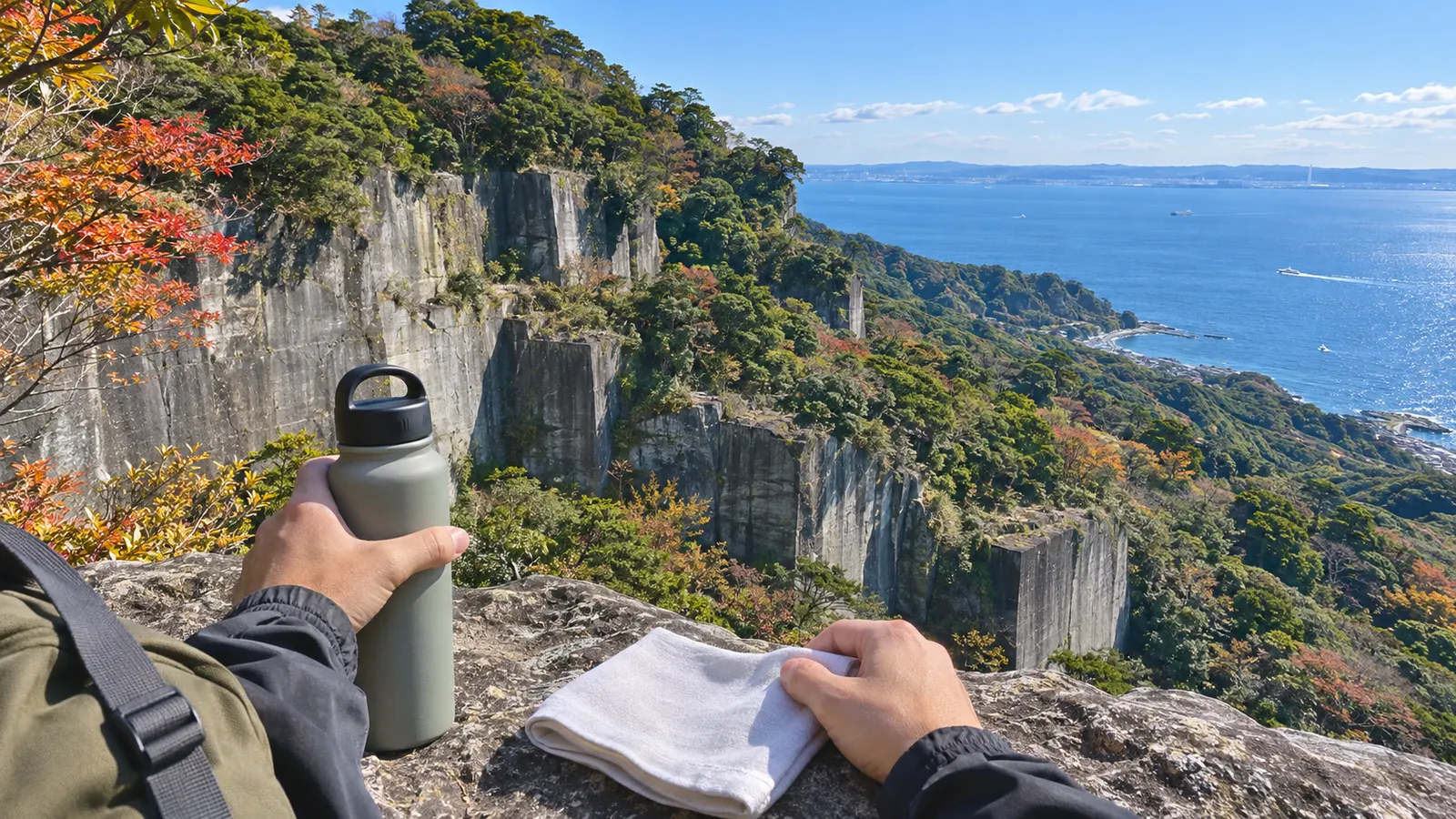
Mount Nokogiri in Chiba: train, ferry and ropeway, Nihon-ji's giant Buddha and Jigoku Nozoki, winter hours, and how to fit a sushi class around the trip.
Sawara Day Trip & Asakusa Sushi Class
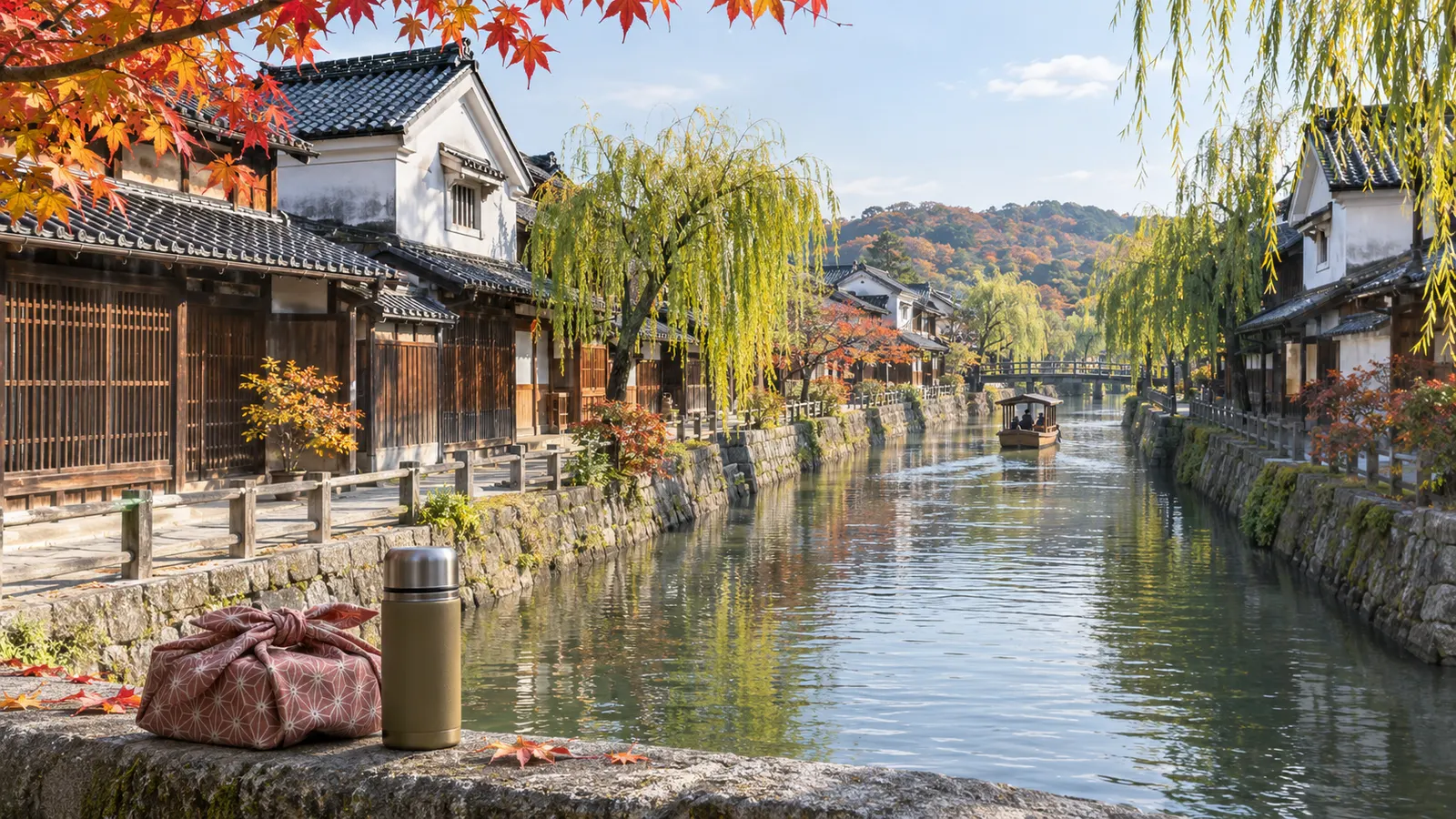
Sawara, Chiba's canal town: train and bus routes, the Ono River boat ride, Ino Tadataka Museum and Katori Jingu, and how to fit a sushi class around the trip.
Atami Day Trip & Asakusa Sushi Class
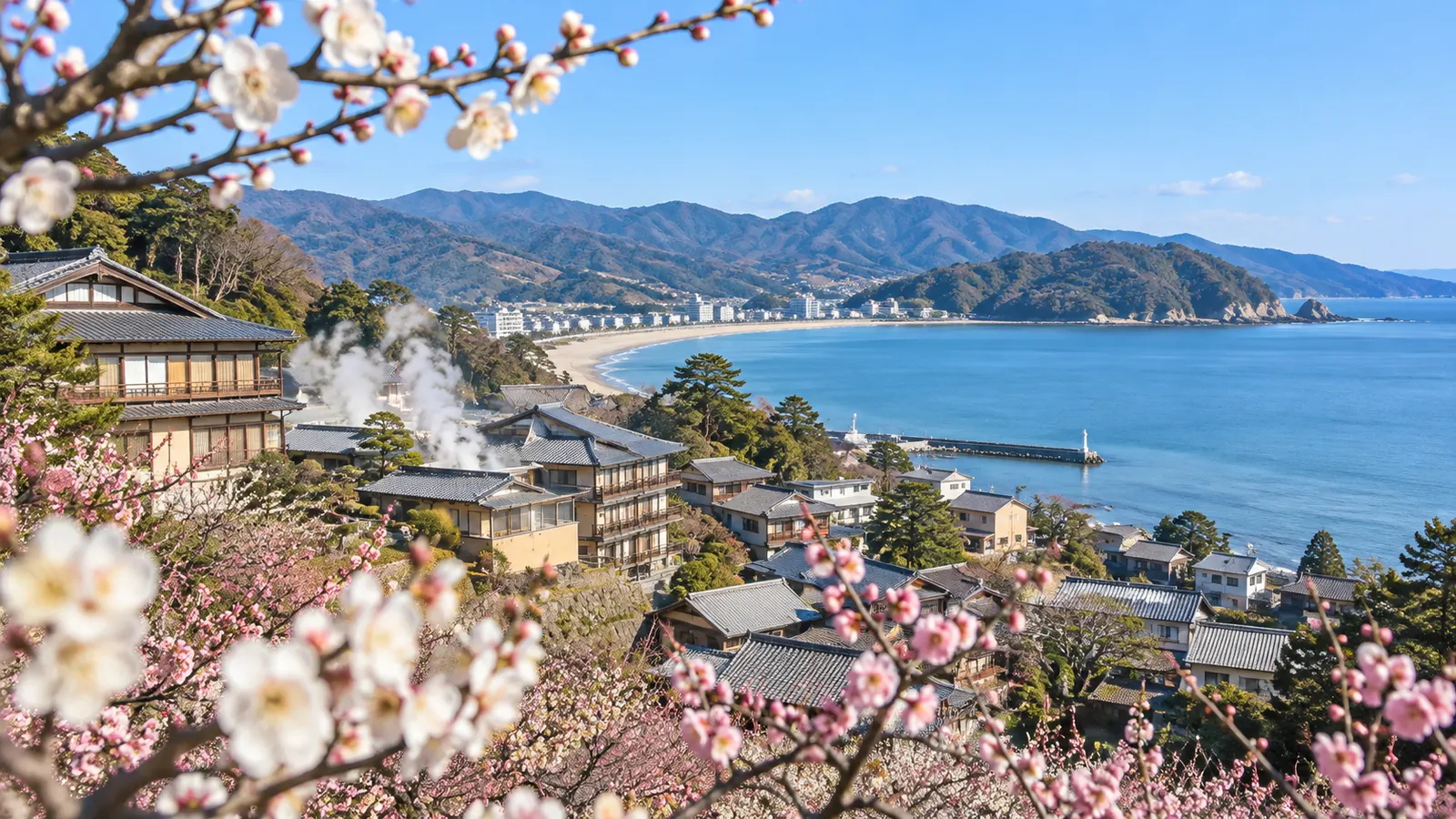
Atami from Asakusa by bullet train or local line: the 2,000-year-old camphor, MOA Museum, early plum blossoms, winter fireworks and fitting in a sushi class.