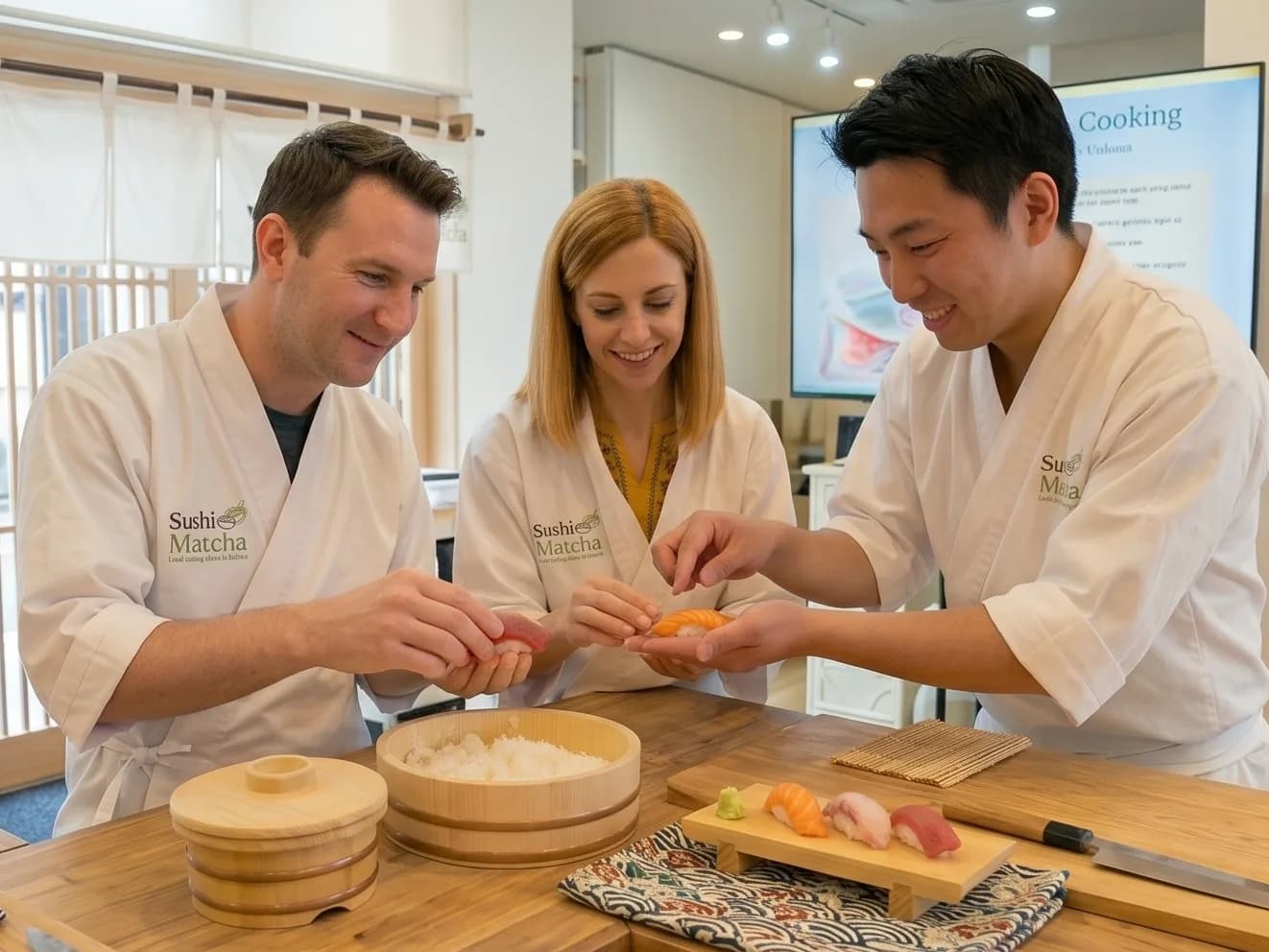
What Do You Make in a Sushi & Matcha Class?
"Sushi class" can describe very different experiences. Some are demonstrations where you mostly watch. Others focus on a single dish or a long list of techniques. Before you book, it helps to know what you will actually do with your hands during the session, and what the class does not try to cover.
This guide describes our Tokyo sushi making class with a sake toast and matcha in Asakusa. It is a 90-minute, hands-on experience taught in English and designed for beginners. Here is what you make, step by step, in the order the class runs.
Popular in Tokyo right now — our most recommended experience
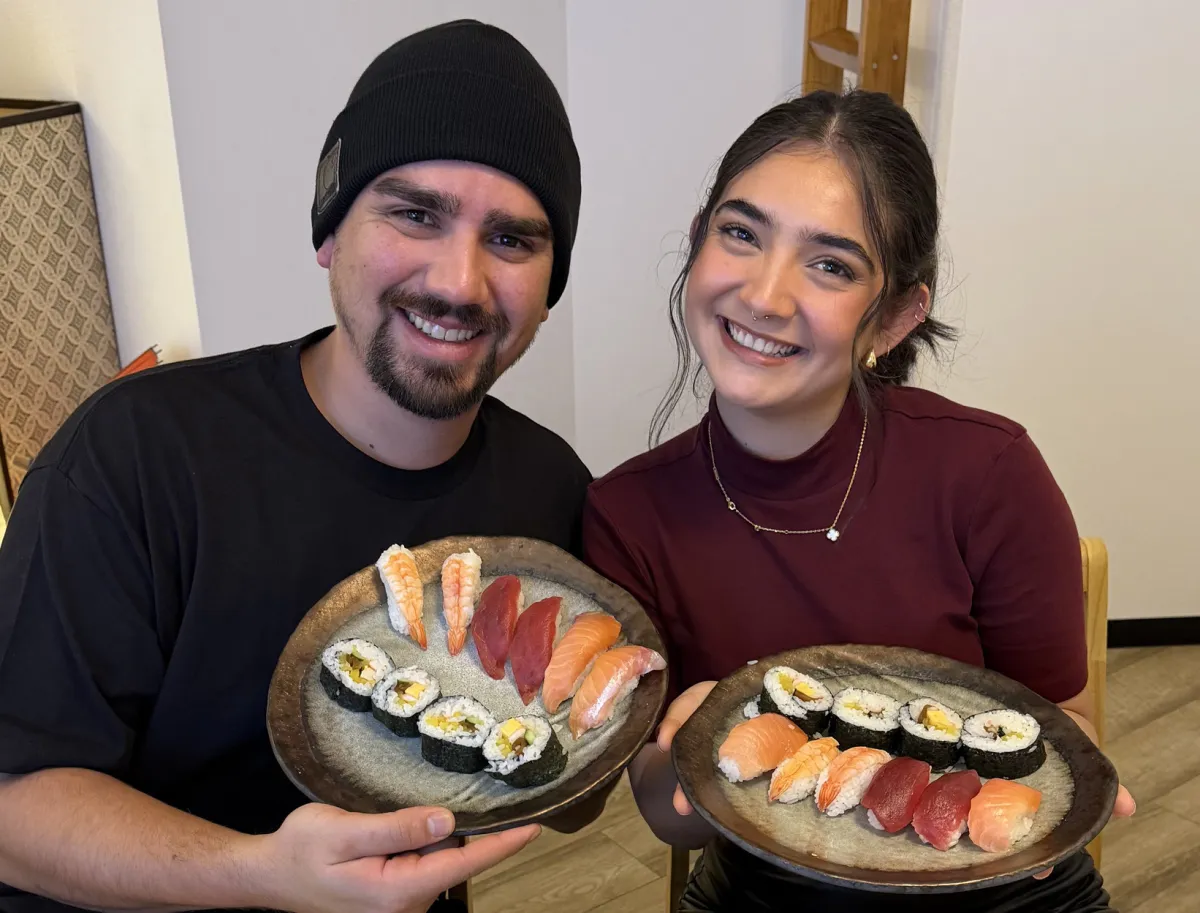
Tokyo Sushi Making Class : Sake Ceremony & Matcha Experience in Asakusa
The short answer
In one session you begin with a shared sake toast, make two styles of sushi, nigiri and maki, eat the sushi you made and finish by whisking your own bowl of matcha. All ingredients and tools are provided, so you arrive with nothing to prepare.
That combination is intentional. Nigiri and maki use different hand movements, which gives you two distinct skills to practise rather than repeating the same step. Matcha adds a different kind of preparation, where the focus moves from shaping to whisking.
The class does not set out to train you as a sushi chef or to teach a full Japanese menu. Ninety minutes is enough to learn the basic movements, try them yourself and leave with a clearer sense of how sushi comes together.
The sake toast
The experience opens with a sake toast. It is a shared moment that gives the session a sense of occasion before the practical work of making sushi begins.
If you do not drink alcohol, or you are travelling with someone who does not, mention it when you book or contact the team before your visit. Taking part in the sushi making does not depend on drinking sake.
Nigiri: shaping rice by hand
Nigiri is the style most people picture first: a small, compact portion of rice with a topping placed over it. It looks simple, but the balance is harder than it seems. The rice needs to hold together without being pressed into a dense block, and the topping should sit neatly on top.
In the class you shape nigiri yourself rather than watching someone else do it. Expect your first pieces to be uneven. That is normal, and it is part of learning why the movement matters. The instructor guides you through each step, so no prior experience is needed.
If you are curious about why the rice is so important, our guide to shari, the vinegared rice at the heart of sushi explains the background. You do not need to read it before attending, but it can make the shaping step more meaningful.
Maki: rolling sushi
Maki is rolled sushi. Instead of shaping each piece individually, you spread rice, add fillings and roll everything into a cylinder before it is cut. The skills are different from nigiri: an even layer of rice, fillings placed where they will end up in the centre, and a roll that is firm enough to hold its shape.
Making both styles in the same class is useful for beginners. If one technique feels awkward, the other may come more naturally, and comparing them shows how much of sushi depends on handling the rice rather than on any single ingredient.
The exact fillings and toppings depend on the ingredients prepared for your session. Treat photographs as illustrations of the style of sushi you make, not as a guaranteed list for your date.
Eating what you made
Once your nigiri and maki are ready, you eat the sushi you made. This is the meal part of the experience, and a natural moment to compare the two styles you practised before moving on to matcha.
Whisking your own matcha
The class finishes with whisking matcha. Rather than being served a finished drink, you prepare your own bowl. Whisking powdered green tea with water into a smooth drink takes a little practice, and it is a very different rhythm from shaping rice.
Here the matcha is part of a sushi class, so the focus is on the practical step of whisking your own bowl. If you would like to know more about matcha before you arrive, our first-timer's guide to matcha in Asakusa covers the basics and what to expect from the flavour.
What is provided, and who the class suits
All ingredients and tools are included. You do not need to bring a knife, a rolling mat or any special equipment. The class is taught in English, and the instructor demonstrates each step so you can follow along and ask questions as you go. If you need support in another language, check with the team before booking.
It is designed for beginners. You do not need to have made sushi before, and you do not need to be confident in the kitchen. If you already cook, the class still offers something specific: the feel of shaping nigiri and rolling maki under guidance.
This format tends to suit:
- Travellers who want to do something with their hands rather than only eat out
- Couples, friends and families who want a shared activity in Asakusa
- First-time visitors who would like an introduction to sushi and matcha in one session
- Anyone who prefers a clear 90-minute block that fits into a day of sightseeing
It may not be what you want if you are looking for professional knife training, a market tour or an extended multi-course cooking lesson.
Check before you book
A few details depend on your date and your party, so confirm them on the current class page rather than relying on any article:
- Available sessions: choose from the times displayed for your travel dates.
- Price and participants: use the booking summary for the total that applies to your group.
- Dietary needs: a vegan menu can be selected when you book. If anyone in your party has an allergy or another dietary restriction, contact the team before booking and wait for a reply. Do not assume a particular arrangement is available.
- Arrival: plan your journey to Asakusa with enough time so you are not rushed at the start.
Ready to make it yourself?
In 90 minutes you join a sake toast, shape nigiri, roll maki, eat what you made and whisk your own matcha, with ingredients, tools and English instruction included. If that sounds like the right introduction for your trip, see the available dates for the sushi making and matcha class in Asakusa and pick a session that fits your plans.
Related Articles

Vegan Sushi Class: What to Check
Planning a vegan sushi class in Tokyo? Check the plant-based menu, shared setting, dietary requests and the right booking option in Asakusa.
Sushi Class with Food Allergies: What to Ask
Joining a sushi class in Tokyo with a food allergy? Learn which questions to ask, how to use the booking form's allergy option and why to wait for a reply.
Sushi Class or Sushi Restaurant in Tokyo?
Take a sushi class or eat at a sushi restaurant in Tokyo? Compare making versus eating, fixed times versus flexibility, and how to do both in one day.