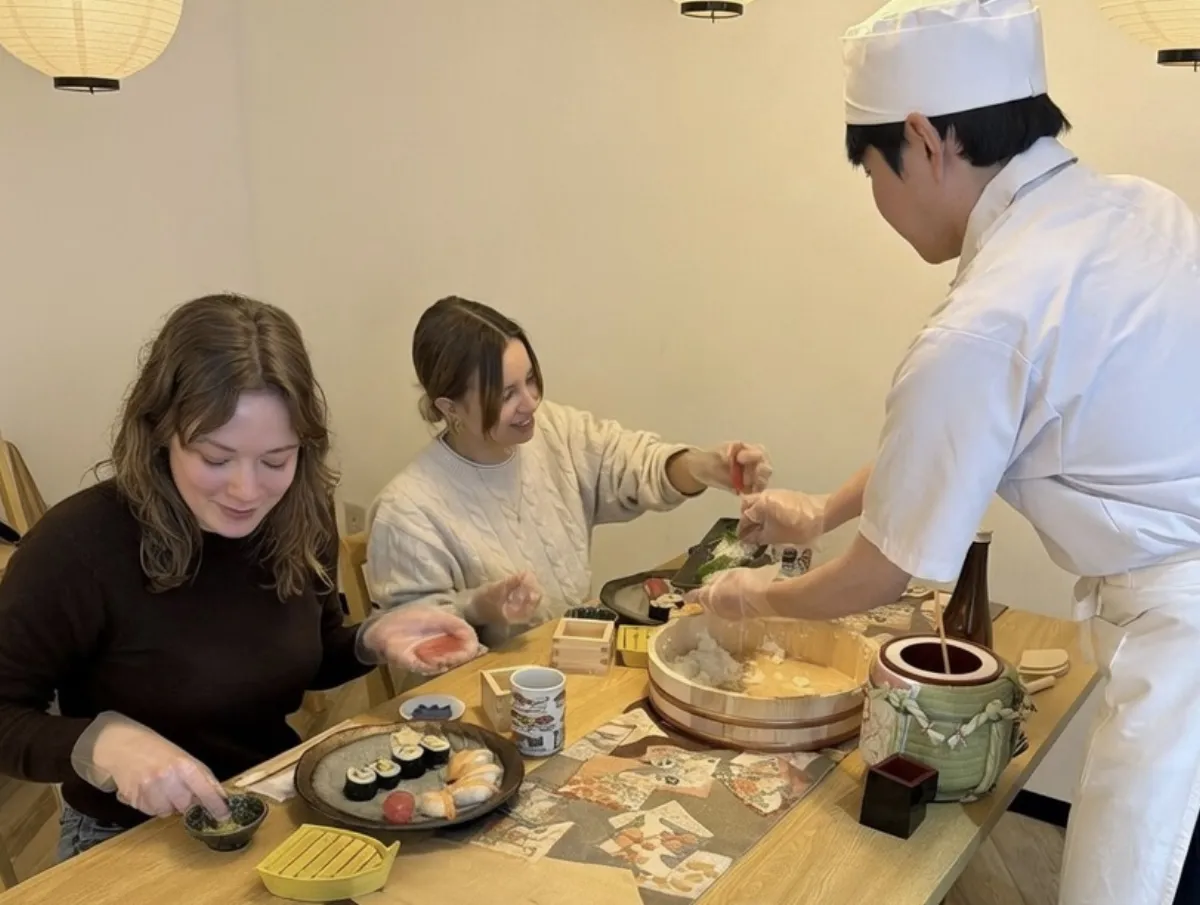
What to Wear to a Tokyo Sushi Class
Booking a cooking class in a country you are visiting for the first time raises small practical questions that nobody wants to get wrong on the day. Do you need special clothes? Should you bring your own tools? What happens to your suitcase if you come straight from the station?
This guide answers those questions for our signature sushi and matcha class in Asakusa, a 90-minute hands-on session taught in English for up to 20 guests at ¥12,000 per person. Most of it applies to any hands-on sushi class in Tokyo, but the specifics below describe our studio.
Popular in Tokyo right now — our most recommended experience
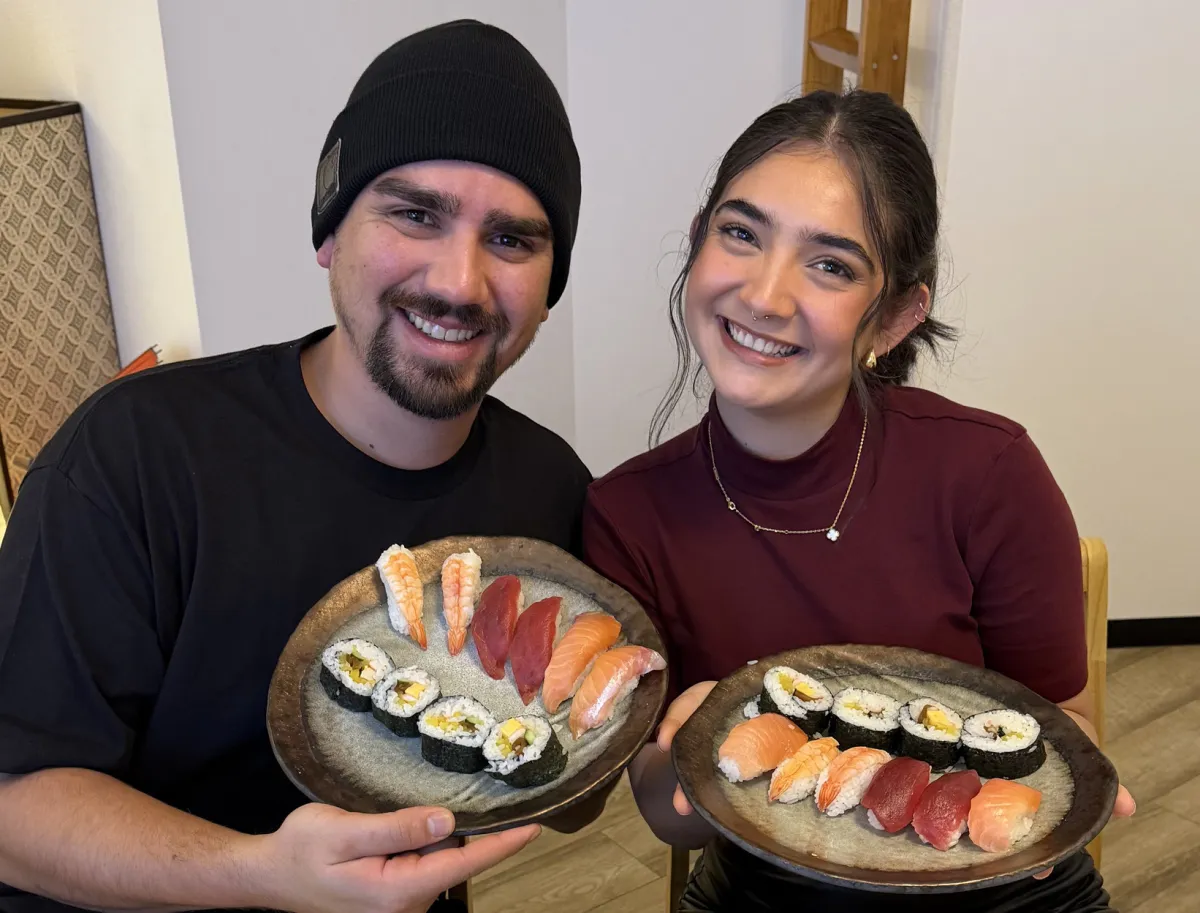
Tokyo Sushi Making Class : Sake Ceremony & Matcha Experience in Asakusa
What to wear
There is no dress code. Comfortable casual clothing is exactly right, and that is what almost everyone wears.
The one thing worth thinking about is your sleeves. You will be handling vinegared rice, fish and nori with your hands, so sleeves that roll up easily make the session more comfortable. Wide, dangling sleeves get in the way. For the same reason, we suggest leaving loose bracelets and rings that catch on things at your hotel, or taking them off before you start.
Beyond that, dress for your day rather than for the class. If you are walking around Senso-ji and Nakamise Street before or after the session, wear whatever suits that. Our studio sits at ground level, so you do not need to plan around stairs.
What is already provided
You do not need to bring any equipment. All ingredients and tools for the class are included, along with a sushi chef coat to wear during the session. The class also includes the sake used for the toast, with free refills while the class is running, water or Japanese green tea for anyone who is not drinking alcohol, the matcha you whisk yourself, and a recipe shared with participants only.
That list is deliberately specific. If you are wondering whether to bring an apron, a knife, a rolling mat or your own bowl, the answer is no. Everything you use during the session is already at your seat.
What to bring
The short answer is: very little. Still, a few things are genuinely useful.
- Your booking details. The confirmation email includes detailed directions with a map, which is the fastest way to find the studio. Our entrance is right under the railway tracks, and the map removes any guesswork.
- A phone or camera. Photos and videos are encouraged. Guests film the sake ceremony, photograph their finished plates, and our instructors are happy to take group photos as well. In a shared class, just be considerate of other guests in your shots.
- A hair tie, if you have long hair. Not required, but several guests are glad they brought one once the rice work starts.
- Notes about your dietary needs. More on this below.
You do not need to bring cash for the class itself. Payment for online bookings is taken at the time of booking by card, so nothing is settled at the door.
Luggage, strollers and step-free access
Many guests arrive with a suitcase because the class fits neatly into the gap before hotel check-in or on the way to the airport. That is fine. We have luggage storage space at the studio, so you can bring your bags with you rather than detouring to a coin locker. Families can store a stroller too, and strollers are welcome inside the studio.
If you are planning that kind of day, our guide to fitting a sushi class in before hotel check-in walks through the timing in more detail.
The studio is at ground level with step-free access, which works for wheelchair users and guests with mobility needs. Tell us when you book so we can set the room up properly for you.
What to tell us before the class
This is the part that matters most, and it is easy to forget while you are thinking about clothes.
Add any dietary requirements when you book rather than mentioning them on arrival. We can prepare vegetarian, vegan and allergen-free options, and common adjustments include gluten-free soy sauce, no-raw-fish choices and shellfish-free ingredients. There is also a dedicated vegan menu with a fully plant-based selection.
Two honest limits are worth stating. We are not halal-certified, although we can prepare sushi without pork or alcohol in the ingredients on request. And because everything is made in one working kitchen, we cannot guarantee an allergen-free environment. If your allergy is severe, contact us before booking so we can talk it through properly instead of discovering the problem at the counter.
The same applies to strollers, accessibility needs and anything else that changes how we set up your table. Advance notice is what makes it work.
Arriving on the day
Please arrive about 10 minutes before your start time. That gives you time to store your belongings, wash your hands and settle in before the class begins.
Getting here is straightforward. The Tobu Skytree Line Asakusa Station North Exit is 30 seconds away on foot, Tokyo Metro Ginza Line Exit 7 is a two-minute walk, Toei Asakusa Line Exit A5 is five minutes, and Tsukuba Express Asakusa Station is nine minutes. Senso-ji Temple and Kaminarimon Gate are also about five minutes away, which is why so many guests combine the two.
We do not have our own parking, but there are several coin parking lots within a three-minute walk if you are driving.
A short checklist
- Comfortable clothes with sleeves you can roll up
- No loose jewellery or dangling sleeves
- Phone or camera, fully charged
- Suitcase or stroller if you have one — storage is available
- Dietary needs and accessibility notes submitted when you book
- Arrive 10 minutes early
If this is your first cooking class in Japan and you want the wider picture rather than just the packing list, our first-timer's guide to cooking classes in Tokyo covers how a session is structured and what to expect from the pace.
When you are ready, open the class page to see the dates and start times currently offered for your party size, and confirm the details there before you book.
Related Articles
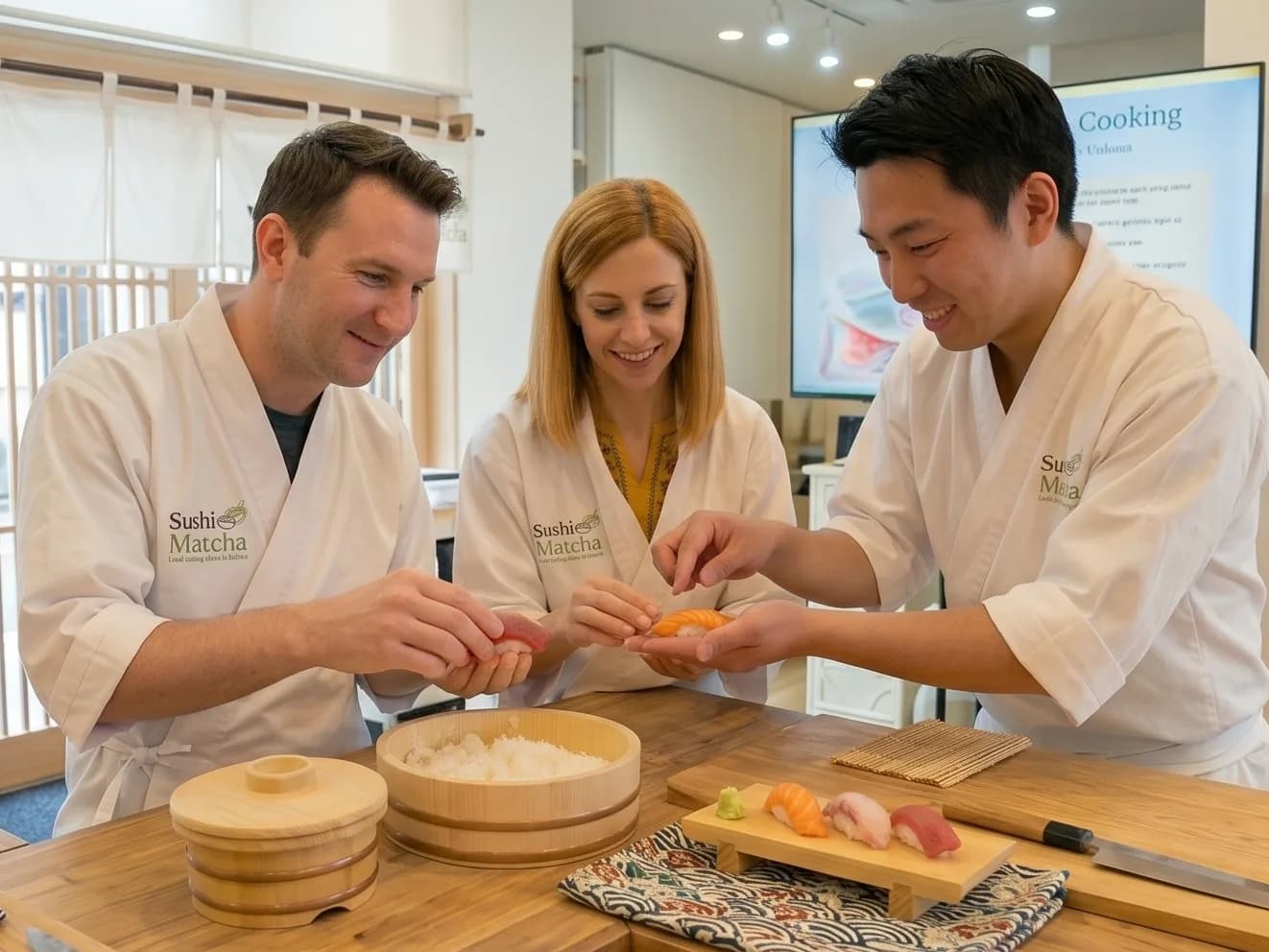
What Do You Make in a Sushi & Matcha Class?
What happens in our 90-minute Asakusa class: a sake toast, hand-shaped nigiri and rolled maki, eating what you made, then whisking your own matcha.

Vegan Sushi Class: What to Check
Planning a vegan sushi class in Tokyo? Check the plant-based menu, shared setting, dietary requests and the right booking option in Asakusa.
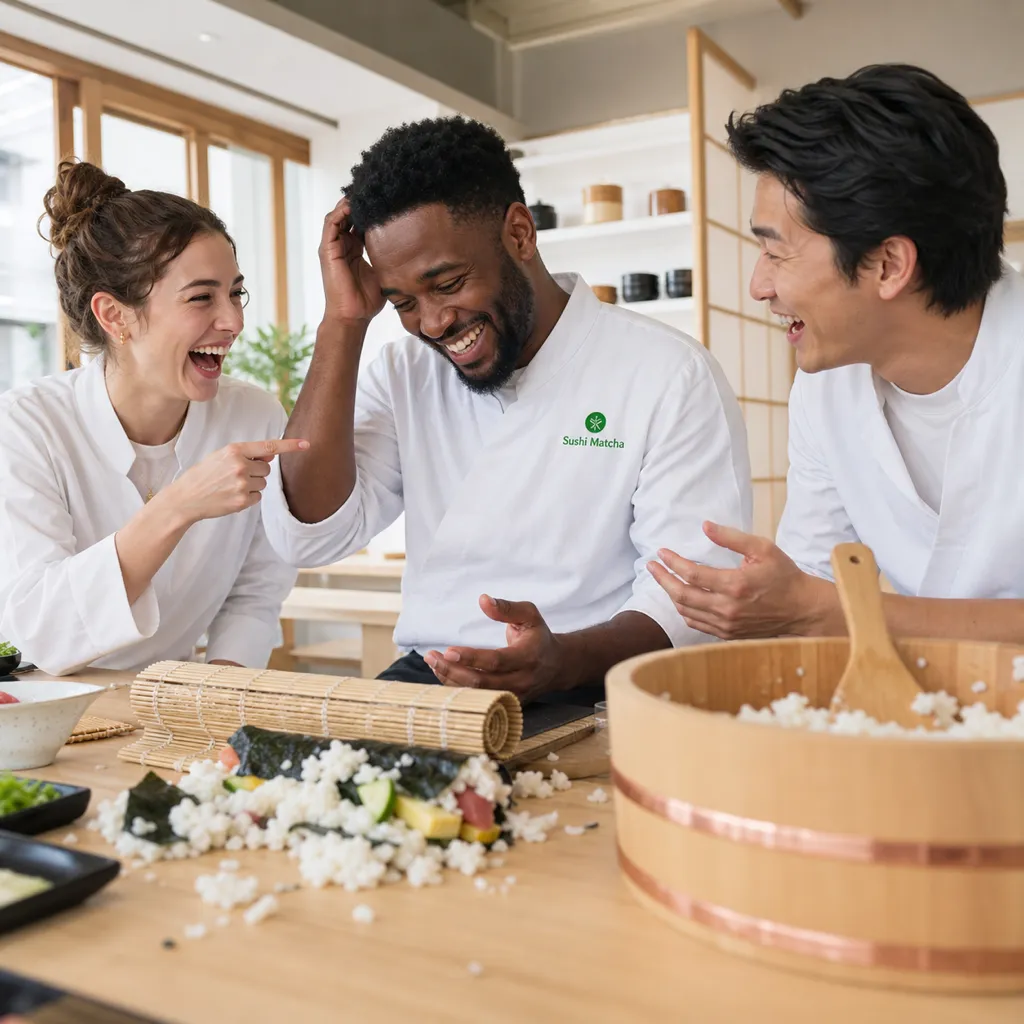
Booking a Tokyo Sushi Class for a Group
Organising a sushi class in Asakusa for friends? Here is the information to collect from everyone first, and how to keep the whole party in one session.