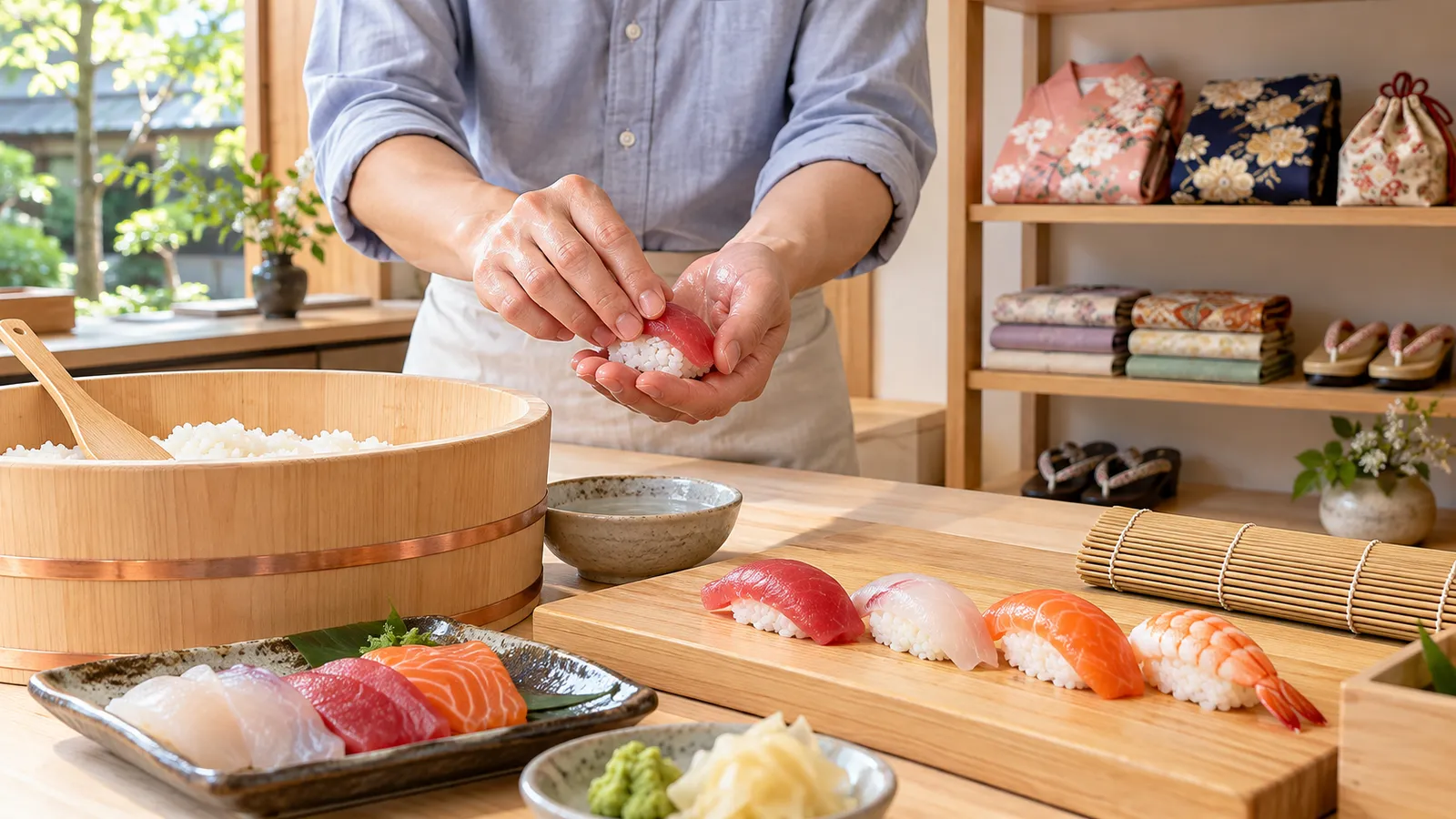
Kimono Rental or a Sushi Class in Asakusa?
Walk from Asakusa Station towards Senso-ji and you will pass people in rented kimono posing under the Kaminarimon lantern, shop signs offering kimono plans, and cooking studios advertising hands-on classes. If you have one free morning or afternoon in Asakusa, it is natural to wonder which of these is worth the time — or whether you can do both.
This guide compares the two honestly. They are very different experiences, and the useful question is not which one is better but which one fits what you want from the day. We run a sushi class, so we say clearly where our own facts end and where you need to check with a rental shop.
Popular in Tokyo right now — our most recommended experience
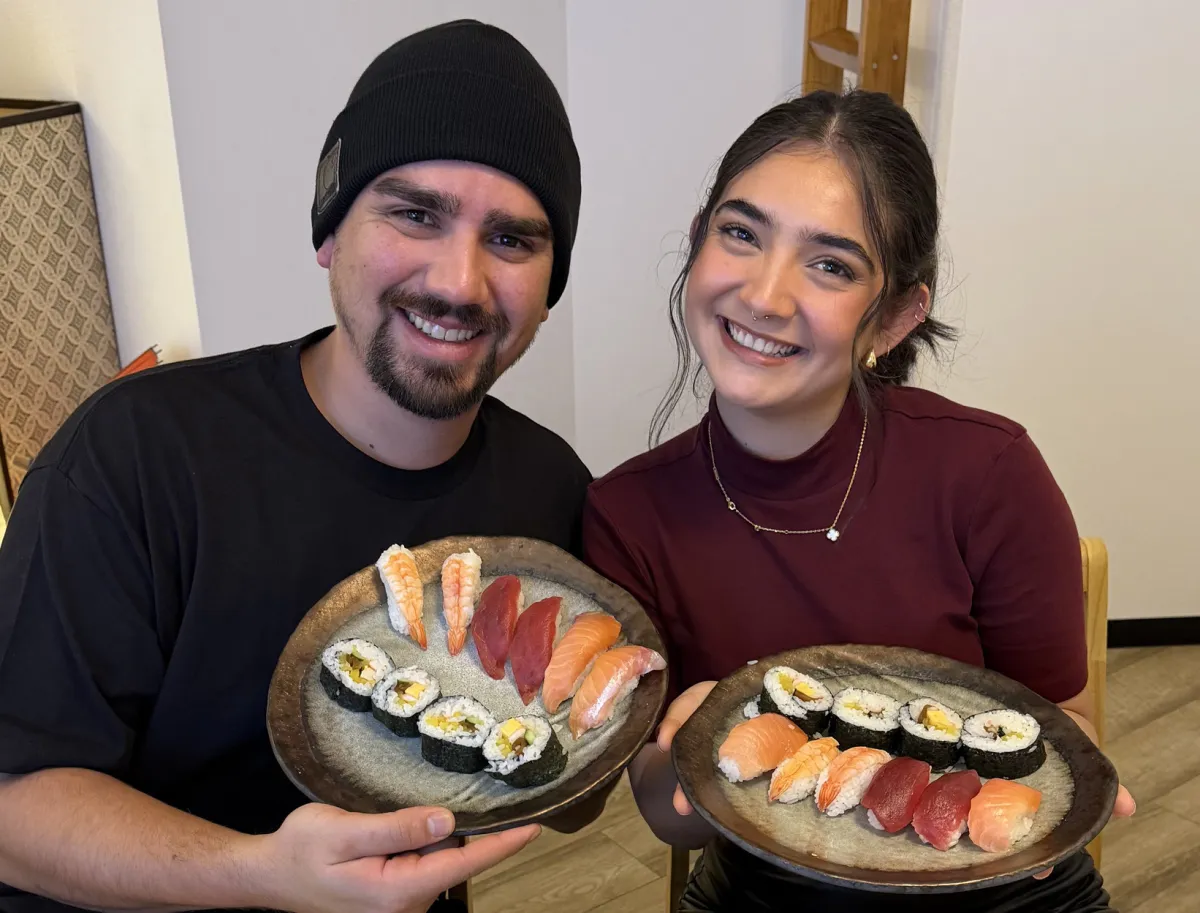
Tokyo Sushi Making Class : Sake Ceremony & Matcha Experience in Asakusa
What each experience actually is
Kimono rental is about wearing something. You choose a kimono and obi at a shop, staff dress you, and you spend the day walking, sightseeing and taking photos in it before returning it. Asakusa has many rental shops close to Senso-ji. Plans typically include the items you need to wear the outfit — for example, one Asakusa shop lists a drawstring bag, Japanese socks and sandals in its plans — and many offer hair styling for an extra fee. Prices vary by shop and plan; some basic plans start at a few thousand yen.
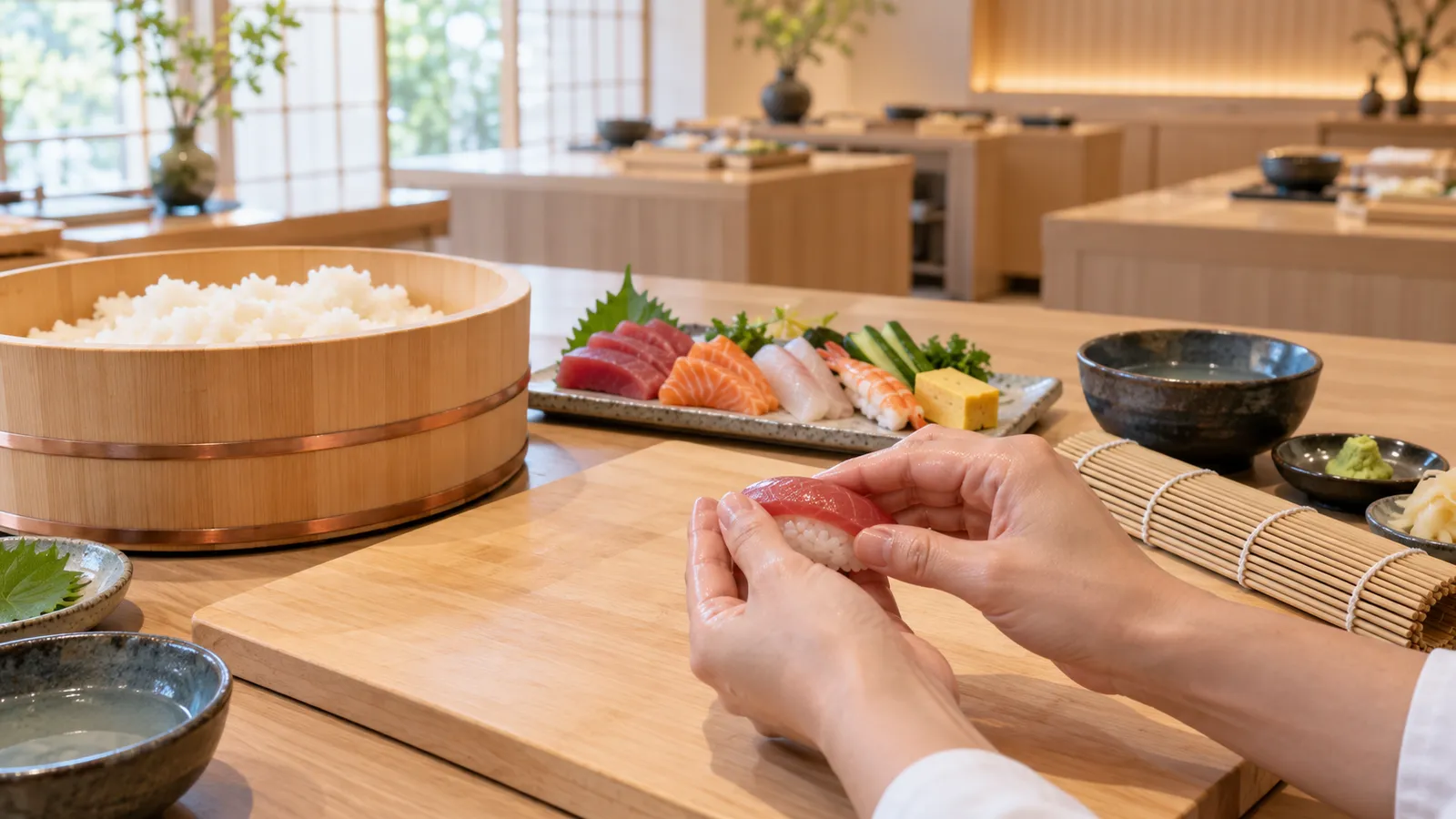
A sushi class is about making and eating something. Our signature sushi and matcha class lasts about 90 minutes and costs ¥12,000 per person. You learn to prepare sushi rice and shape nigiri and maki with an English-speaking instructor, join a sake toast (water or green tea is available instead), sit down to eat what you made as a real meal, and finish by whisking your own bowl of matcha. Most guests make 8 to 10 pieces.
One fills your camera roll; the other fills you up and teaches you a skill you can repeat at home.
Time: the hidden cost of a kimono
The class is a fixed 90-minute block. Arrive 10 minutes early, and you are done in under two hours.
A kimono rental takes more of the day than many visitors expect. Asakusa rental shops describe the process from arrival to walking out — choosing, dressing and optional hair styling — as roughly 40 minutes to an hour, longer when the shop is busy. Then there is the return: many shops ask for kimono back by around 5:00 or 5:30 p.m., and returning and changing back takes another 10 minutes or so. Some shops offer later or next-day returns for an extra fee, so check the conditions of the shop you book.
In practice, a kimono shapes your whole afternoon around a return deadline, while the class takes a defined slice of it.
Sleeves and sushi rice do not mix
This is the practical point that settles most "both on the same day" plans.
Making sushi means handling vinegared rice, fish and nori with your hands. Our FAQ recommends sleeves that roll up easily and suggests avoiding loose jewellery and dangling sleeves. Kimono sleeves are long and hang loose, and rented kimono are someone else's property. Pressing sticky rice, brushing soy sauce or whisking matcha in a rental is not comfortable, and you would be worried about stains the whole time.
So we do not recommend wearing a rental kimono to the class. If you want both, put them in an order that keeps the two apart.
How to do both in one day
Class first, kimono afterwards. Take a morning or midday class in your normal clothes, eat your sushi as lunch, then go to the rental shop. You will walk around Senso-ji in kimono in the afternoon, fed and unhurried, and return the outfit before the shop's deadline. This is the easiest version.
Kimono in the morning, class in the evening. Rent early, take your photos around Senso-ji while the streets are quieter, return the kimono by the afternoon deadline, and join an evening class as dinner. This works well if you want the temple photos with fewer crowds, but leave a margin between the return and the class start, and do not plan a big lunch: the class is a full meal.
Either way, check the class sessions for your date first, because the class has a fixed start time and the rental shop usually has more flexibility. Our guide to Senso-ji and a sushi class on the same day has a walking route for the temple side, and our article on what to wear to a sushi class covers clothing for the class itself.
Which one suits you?
Choose the kimono rental if:
- Photos in traditional dress around Senso-ji are the main thing you want from Asakusa.
- You enjoy walking and have a whole afternoon with no other fixed plans.
- You are travelling as a couple or group who want matching outfits for pictures.
Choose the sushi class if:
- You want to do something with your hands and leave with a skill.
- You would like a meal included rather than a separate lunch.
- You have a limited window, such as a few hours before a train or flight.
- You are travelling with children aged 4 and above, who can join the class. Our guide to a sushi class with kids explains the shared and private options.
And if the matcha is the part that appeals most, our comparison of a matcha café and a matcha class in Asakusa may help too.
A note on weather and season
Both depend a little on the weather. A kimono day is outdoors by nature; on a rainy day, some visitors still enjoy it with an umbrella, while others prefer to switch plans. The class is indoors in our studio near Asakusa Station, so it works as a rainy-day anchor. Our rainy-day Asakusa plan shows how to build a wet day around it.
Whichever shop you choose, ask what is included, how long dressing takes and when you must return before you build the rest of the day around it.
Before you book
If you have decided on the class, or on both, start with the fixed piece. Check live sessions and the current price on the signature class page, then book the rental around it. Free cancellation is available up to 24 hours before the class, and you can tell us about dietary needs when you book.
Related Articles
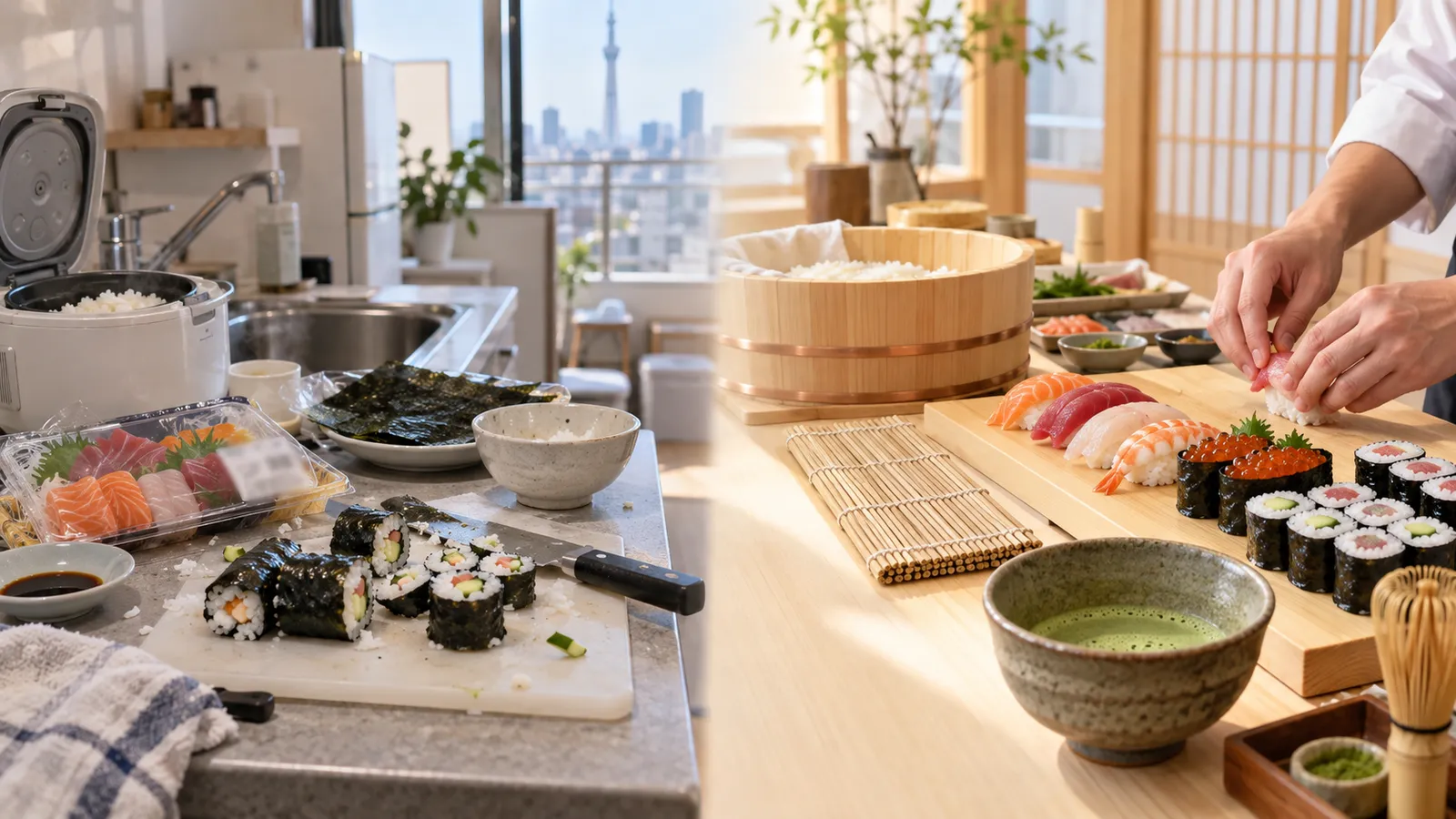
Make Sushi in Your Rental or Take a Class?
Staying in a Tokyo apartment with a kitchen? Compare making sushi yourself with supermarket fish against a guided class, and choose by skill, time and cost.
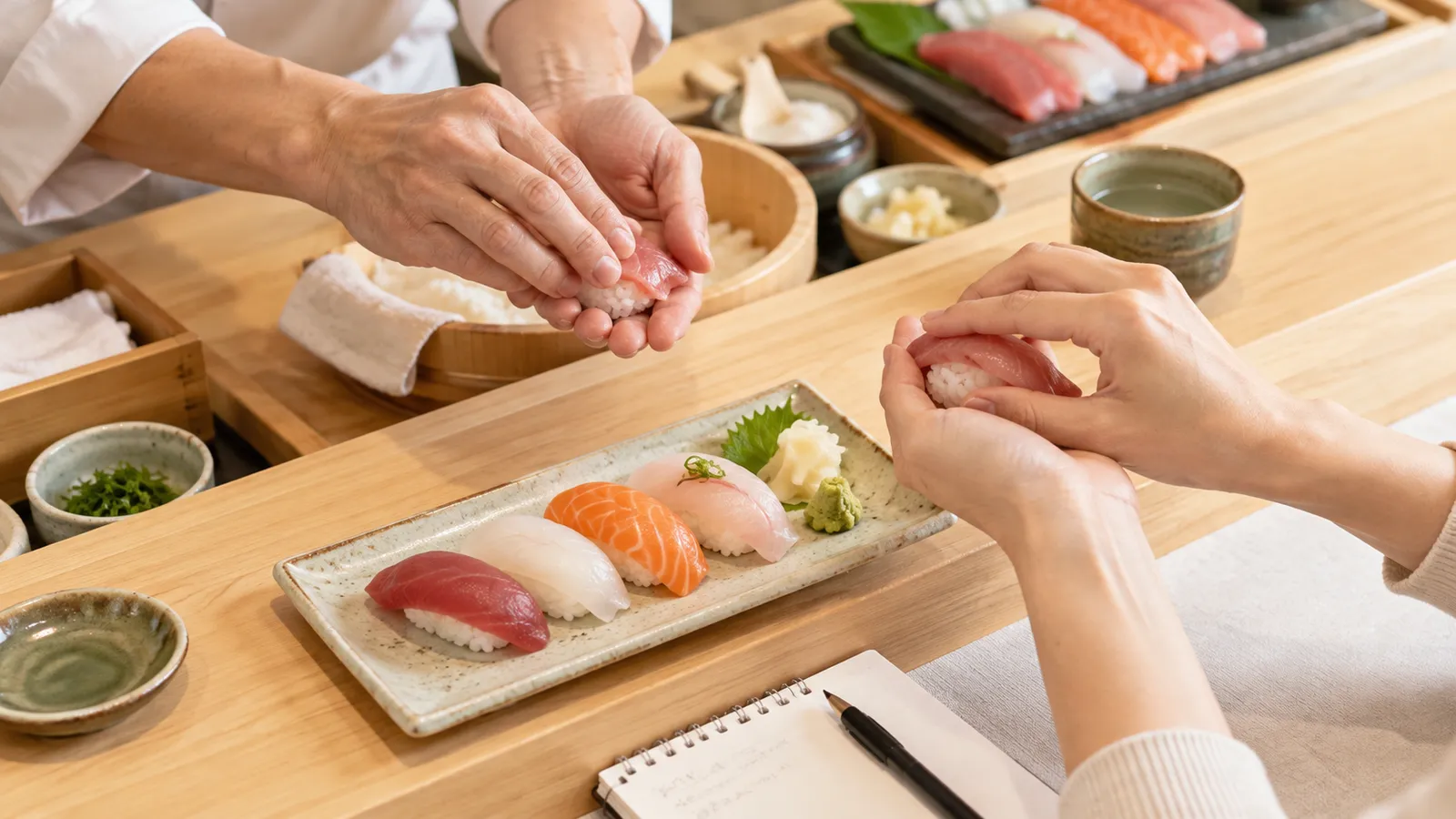
Deaf or Hard of Hearing at a Sushi Class
Deaf or hard of hearing and booking a Tokyo sushi class? What is shown versus spoken, studio sound, interpreters, and what to tell us before you book.
Sensory-Friendly Sushi Class in Tokyo
Sensitive to noise, crowds or sticky textures? What a Tokyo sushi class involves, how a private session differs, and what to ask us before you book.