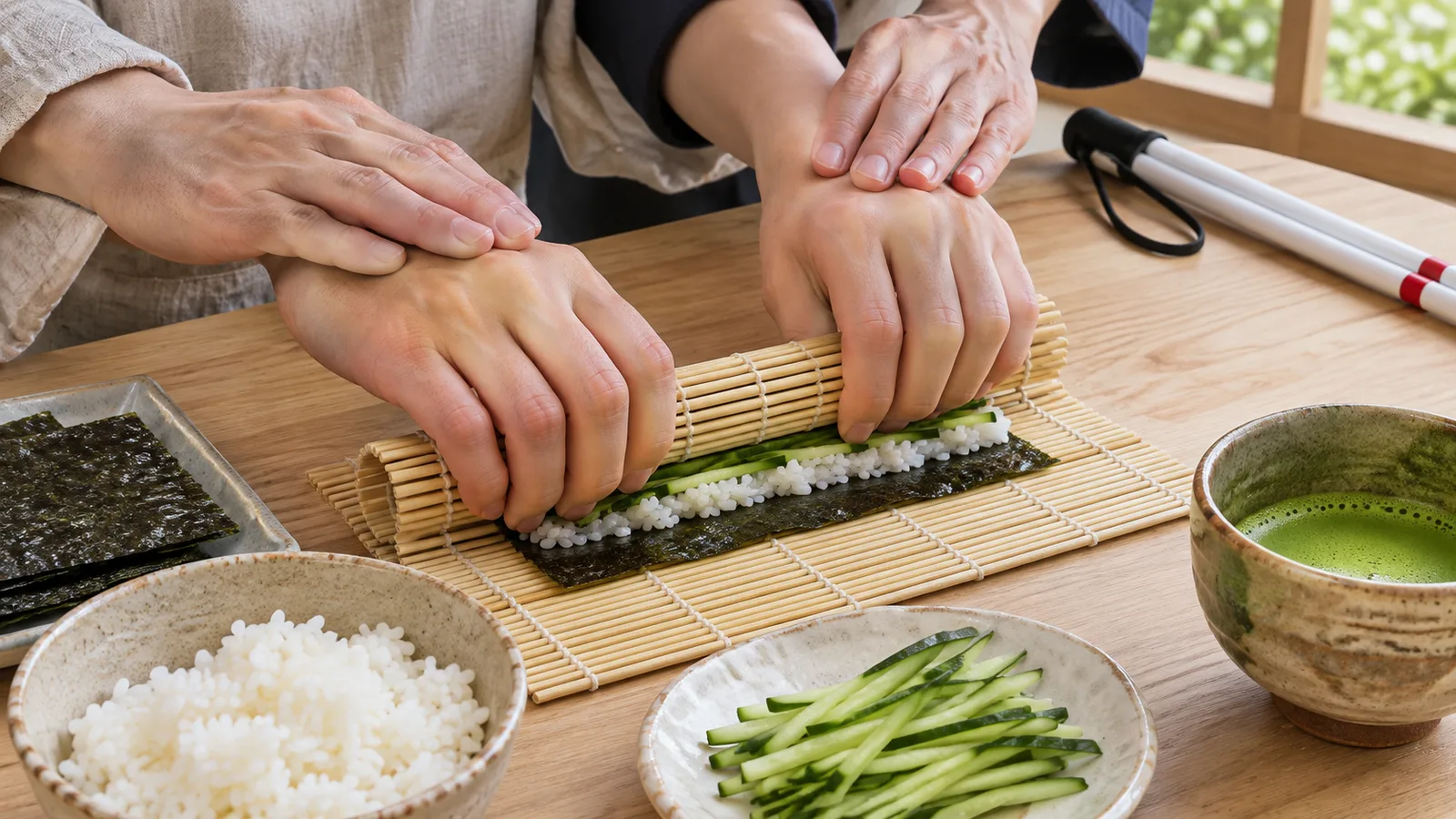
Blind or Low Vision at a Tokyo Sushi Class
Many cooking classes are taught by demonstration: the instructor does something at the front, and everyone copies what they see. If you are blind or have low vision, that raises fair questions before you book. Can you follow along? Will someone describe what is happening? Can your companion or guide dog come too? How do you find the studio in an unfamiliar city?
This guide looks at those questions for our signature sushi and matcha class in Asakusa. It explains which parts of the class rely on touch and which rely on sight, what we can confirm in advance, and what is better settled in a message before you pay. It does not promise any particular arrangement, because the right setup depends on you and on the session you choose.
Popular in Tokyo right now — our most recommended experience
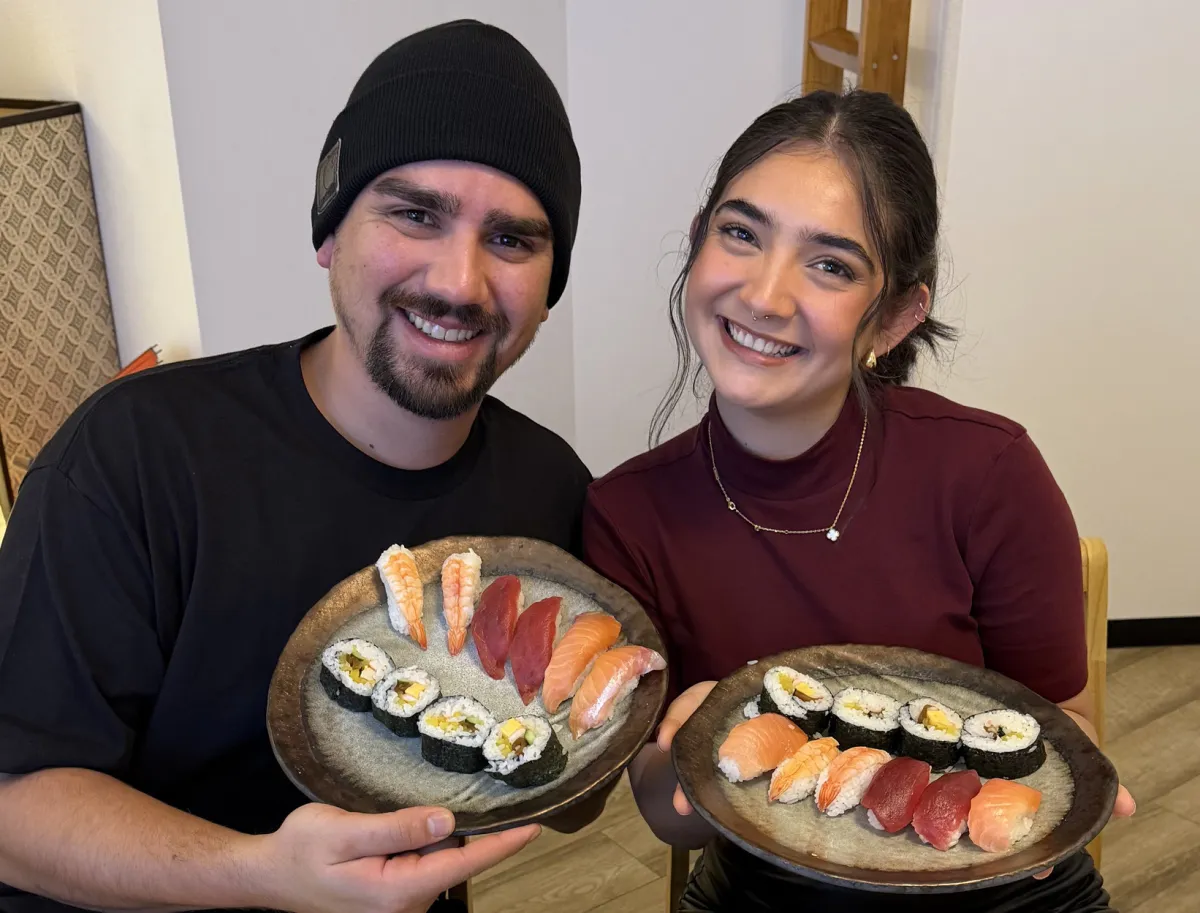
Tokyo Sushi Making Class : Sake Ceremony & Matcha Experience in Asakusa
What the class involves
The signature class lasts about 90 minutes and is a shared session for up to 20 guests, taught in English. The published outline is:
- Welcome. Arrive about 10 minutes early to store your belongings, wash your hands and settle in.
- Introduction. The instructor introduces the day's ingredients and techniques.
- Sake toast. Sake for those who drink; water or Japanese green tea is available instead.
- Sushi making. About half an hour of preparing sushi rice and shaping nigiri and maki.
- Eating. You sit down and eat what you made.
- Matcha. You whisk your own bowl of matcha.
- Photos and farewell.
Which steps are tactile and which are visual
Sushi making is more physical than it looks. Much of it is judged by feel rather than by sight:
- Shaping nigiri. You take a small amount of rice and press it into an oval with your fingers. The right firmness is something you feel: packed enough to hold together, loose enough not to be dense.
- Rolling maki. The roll is formed on a bamboo mat. You feel the filling sit in a line and the mat tighten as you roll.
- Whisking matcha. The whisk moves quickly in a bowl you hold steady. The change from liquid to light foam can be heard and felt through the whisk.
Other moments are more visual: seeing how much rice the instructor takes, where the filling goes on the nori, or what the finished piece should look like. That is where description and hands-on guidance help. In practice that might mean the instructor describing a step in words, letting you feel a finished example, or guiding your hands for the first piece. Ask what is possible for your session rather than assuming a particular method.
If you also have reduced strength or sensation in your hands, our guide to a sushi class with weak or sore hands explains what each step asks of your hands.
Bringing a companion or guide dog
Many blind and low-vision travellers come with a sighted friend, partner or family member. Tell us before you book whether that person will cook as well or only assist you, so you know whether they need a booking of their own and where they can sit.
If you travel with a guide dog, tell us when booking as well. Japan's Act on Assistance Dogs for Physically Disabled Persons requires many businesses open to the public, including restaurants, to accept certified assistance dogs. A cooking studio is still a small working space with food on every table, so a message in advance lets us plan where you and your dog can sit comfortably during the class.
What to tell us before you book
You do not need to share a diagnosis. Practical details are more useful. When you contact the team, it helps to say:
- Whether you have some usable vision, and whether brighter light or high-contrast items help.
- Whether you prefer spoken description, hands-on guidance, or a mix.
- Whether a companion or guide dog is coming, and whether the companion will cook.
- Whether you would like a seat close to the instructor.
- Any food allergies or dietary needs, listed separately.
We will tell you what we can and cannot arrange for your date. A request is not confirmed until we reply, so wait for that answer before relying on it.
Shared class or private session
The shared class is the simplest way to join and the most sociable. If you would prefer more one-to-one attention and a pace set by your own group, the family private sushi class reserves the studio for your party. It runs 90 to 120 minutes for 4 to 8 participants at ¥25,000 per person. Our comparison of shared and private sushi classes sets out the differences in more detail.
Getting to the studio
Our studio is on the ground floor with step-free access, under the railway tracks near Asakusa Station. It is about 30 seconds on foot from the North Exit of Tobu Asakusa Station, two minutes from Tokyo Metro Ginza Line Exit 7, five minutes from Toei Asakusa Line Exit A5 and nine minutes from Tsukuba Express Asakusa Station.
Those times start at the station exit, not the platform, and Asakusa can be crowded around Senso-ji. If you will walk from a station, our step-by-step directions from Asakusa Station describe each route. A taxi to the door is another option; the access page has the address to show the driver. If you need someone to meet you at an exit, ask when you contact us rather than on the day.
Before you book
Choose your date, then send a short message about vision, companions or a guide dog if any of these affect how you will take part. If you also have hearing loss, our guide for deaf or hard of hearing guests covers sound in the studio. When you are ready, check availability for the signature class and add a note when you book. Free cancellation and rescheduling are available up to 24 hours before the start.
Related Articles
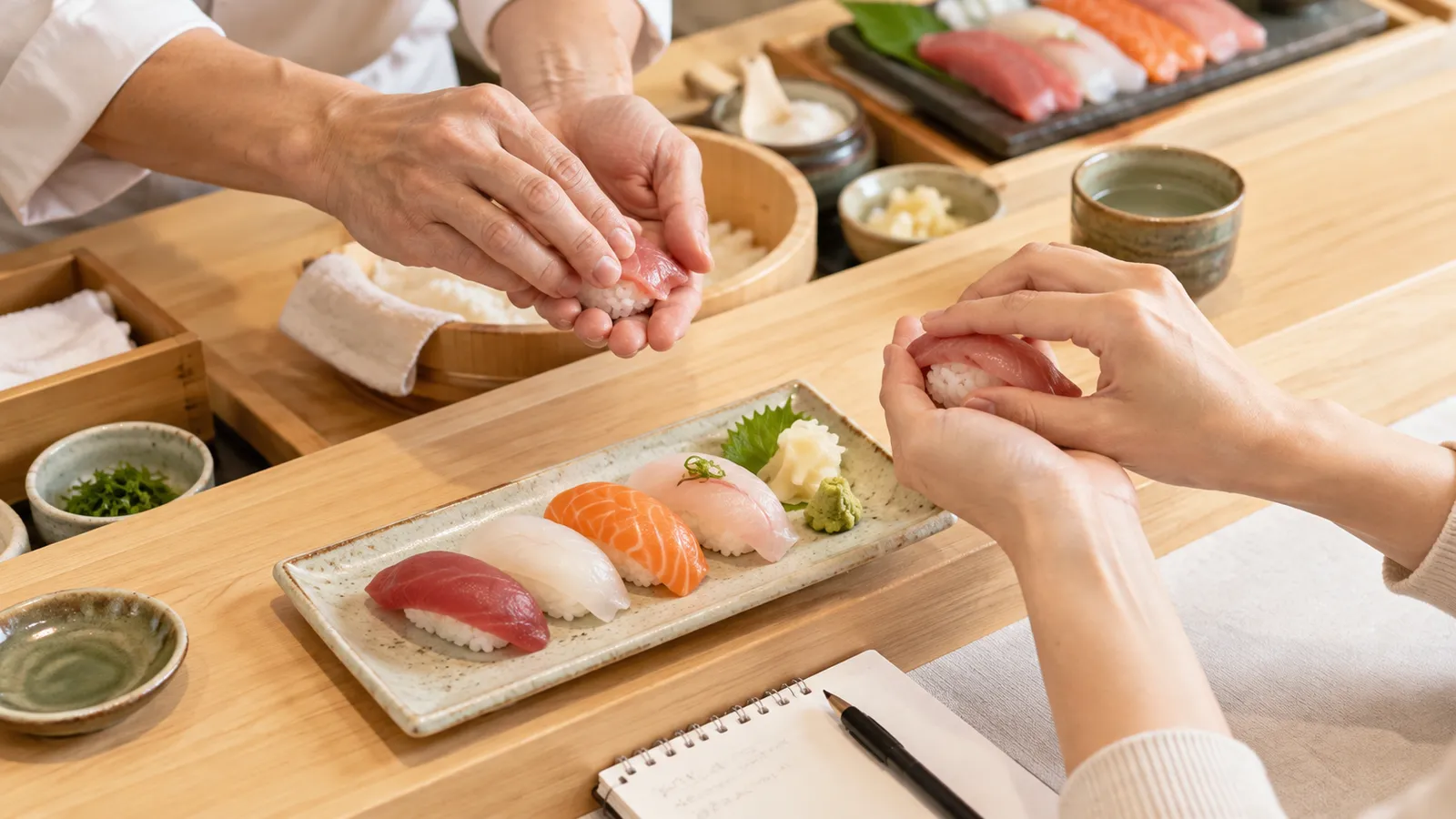
Deaf or Hard of Hearing at a Sushi Class
Deaf or hard of hearing and booking a Tokyo sushi class? What is shown versus spoken, studio sound, interpreters, and what to tell us before you book.
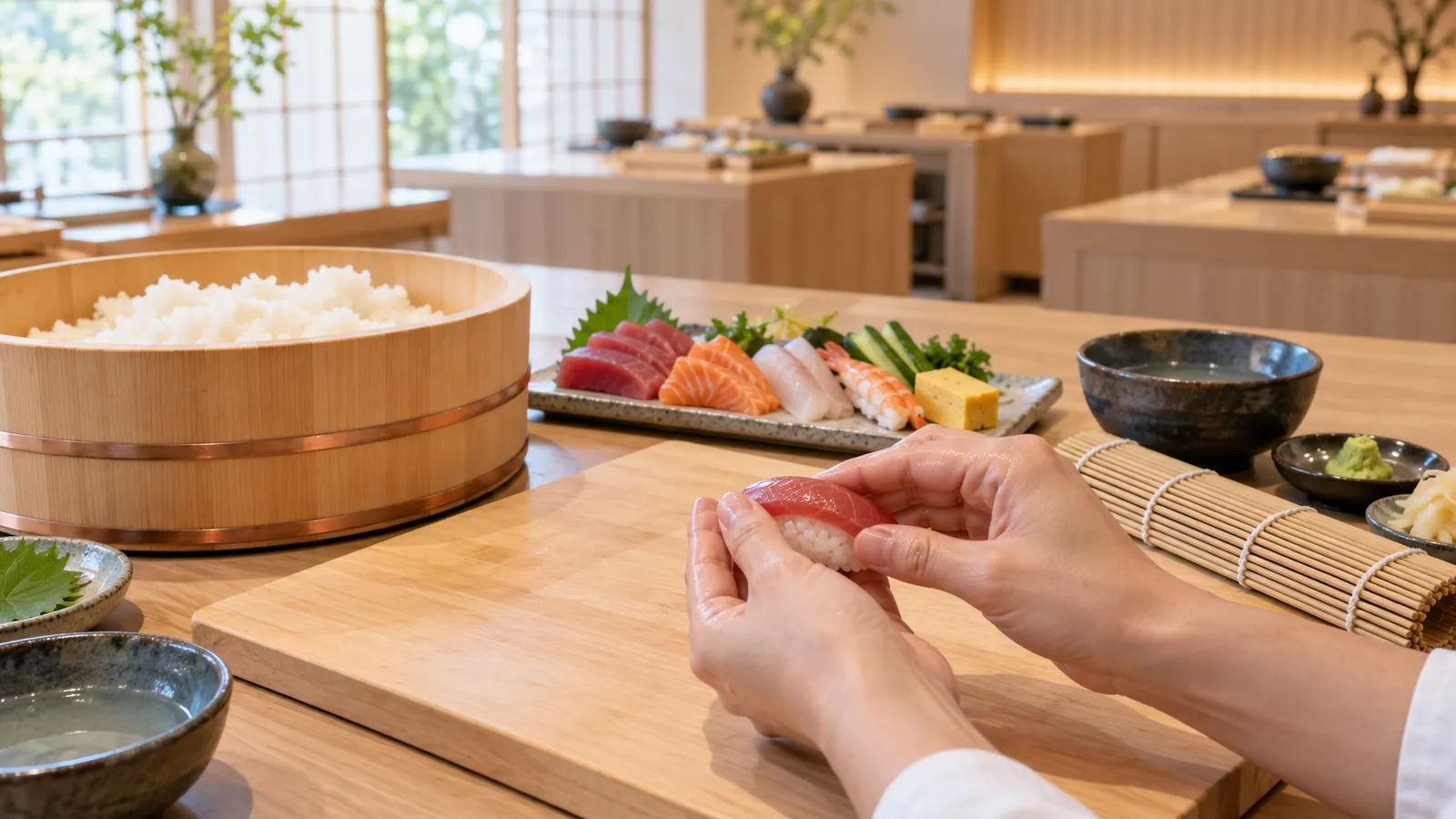
Sensory-Friendly Sushi Class in Tokyo
Sensitive to noise, crowds or sticky textures? What a Tokyo sushi class involves, how a private session differs, and what to ask us before you book.
Jet Lag in Tokyo: Which Day to Book a Class
Flying a long way to Tokyo? How jet lag affects a hands-on cooking class, which day of your trip works best, and when to choose a morning or later session.