Deaf or Hard of Hearing at a Sushi Class
If you are deaf or hard of hearing, a cooking class abroad raises questions that most booking pages do not answer. Will I follow the instructions? Will the room be noisy? Can I bring an interpreter? What happens at the moments everyone else hears a cue?
This guide answers those questions for our signature sushi and matcha class in Asakusa. It describes what the class involves, where hearing matters and where it matters less, and what to tell us so we can tell you honestly what we can arrange. It does not promise any particular service in advance, because the right setup depends on you and on the date you choose.
Popular in Tokyo right now — our most recommended experience
Tokyo Sushi Making Class : Sake Ceremony & Matcha Experience in Asakusa
What the class involves, step by step
The signature class lasts about 90 minutes and is a shared session for up to 20 guests. It is taught in English. The published outline is:
- Welcome. You arrive about 10 minutes early, store your belongings, wash your hands and meet your host.
- Introduction. The instructor shows the day's ingredients and techniques.
- Sake toast. A toast with sake for those who drink; water or Japanese green tea is available instead.
- Sushi making. About half an hour of preparing sushi rice and shaping nigiri and maki rolls.
- Eating. You sit down to eat what you made. Most guests make 8 to 10 pieces.
- Matcha. You whisk your own bowl of matcha.
- Photos and farewell.
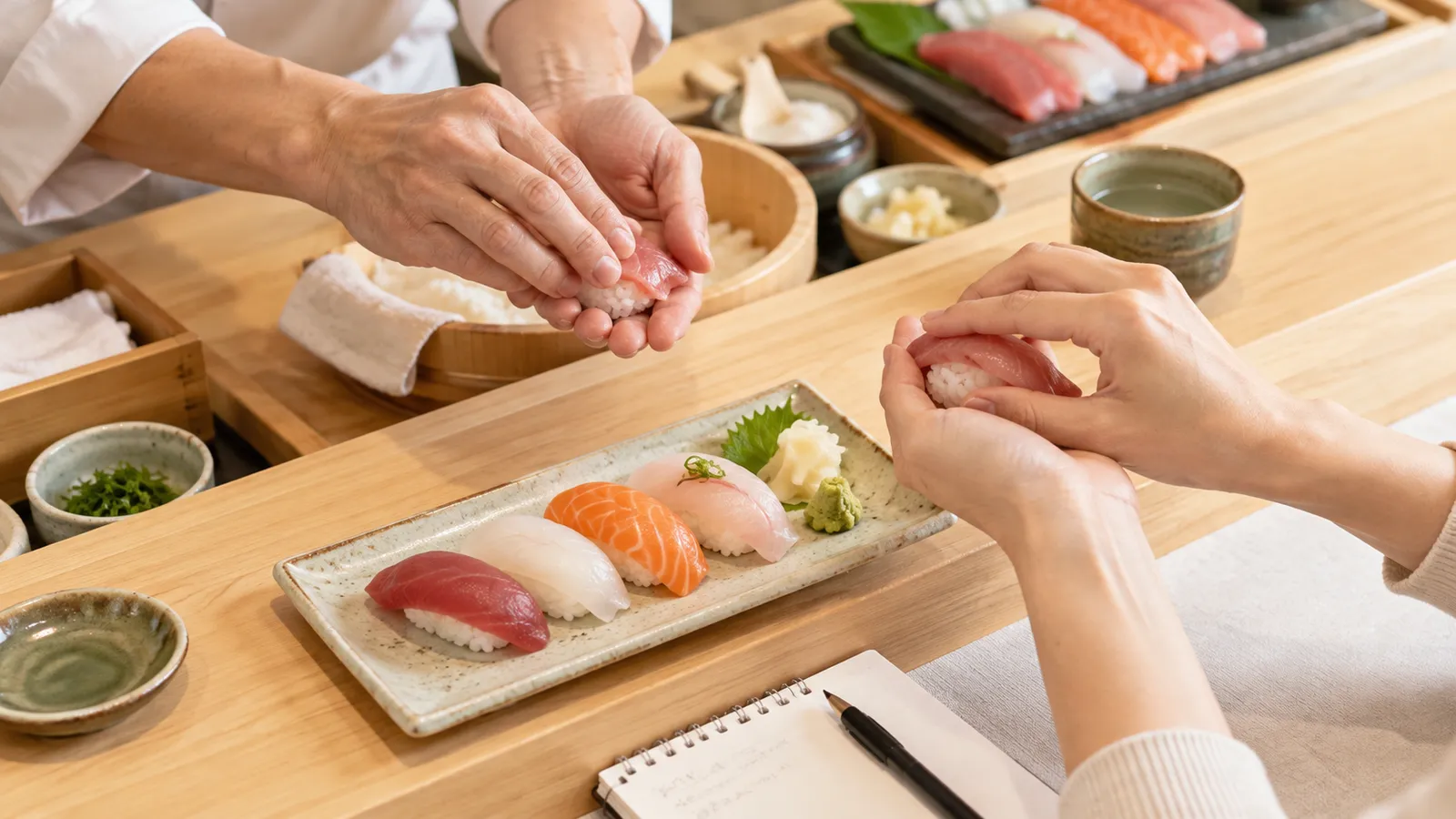
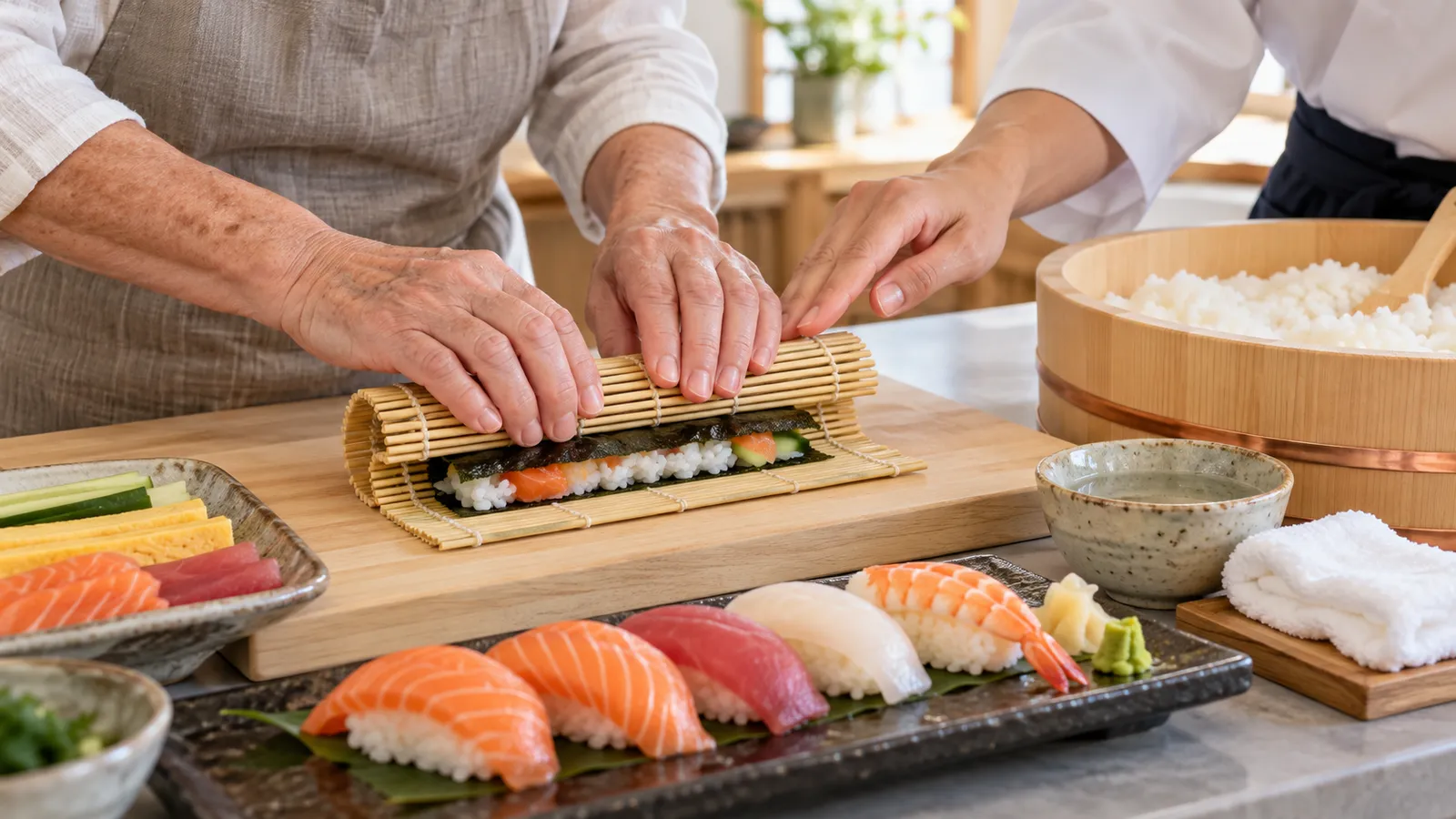
The useful observation is that most of this is physical. Shaping nigiri and rolling maki are learned by watching hands and copying them, and the instructor works through each step in front of the group. Much of what you need is visible. The parts that depend more on hearing are the introductions, explanations of why something is done a certain way, and the timing cues that move the group from one step to the next.
Where sound becomes a challenge
Our studio is in a space under the railway tracks near Asakusa Station, so trains pass overhead during the class. In a full session there is also conversation from other guests and instructions given to the whole room. For people who use hearing aids or cochlear implants, that combination of background noise and several voices can make speech harder to pick out, even when one-to-one conversation is easy.
That is worth knowing before you book, not after. It does not mean the class is unsuitable; it means a few practical choices make a real difference, such as being able to see the instructor's face and hands clearly, and knowing in advance when the toast and the move to matcha will happen.
If you are also sensitive to noise or crowds in general, our guide to a sensory-friendly sushi class covers sound, touch and smell in more detail.
Bringing an interpreter or support person
Our FAQ welcomes guests who need support in another language to bring a private guide or interpreter. If you use a sign language interpreter, or travel with a friend or family member who relays information for you, tell us before you book.
Please do not assume an accompanying person can attend without notice or without being counted. Ask us whether they need a booking of their own, whether they will take part in the cooking, and where they can stand or sit so you can see both them and the instructor. Our guide to a sushi class without speaking Japanese explains how interpreter requests work in general.
Things worth asking for
You do not need to share a diagnosis. Practical details are more useful. When you contact the team, it helps to say:
- Whether you lip-read, use sign language, use hearing aids or implants, or a mix.
- Whether a seat with a clear view of the instructor's face and hands would help.
- Whether a quick written note of the steps, or a tap or wave before the toast and the move to matcha, would make the session easier.
- Whether an interpreter or support person is coming, and whether they will cook.
- Any food allergies or dietary needs, listed separately.
We will tell you what we can and cannot arrange for your date. A request is not confirmed until we reply, so wait for that answer before relying on it.
Photos and videos are welcome during the class, so you can also record a step you want to revisit at home. Our guide to photos and videos in the class explains how that works alongside other guests.
Shared class or a private session
The shared class is the simplest option and the most sociable. If fewer voices in the room matter more to you than meeting other travellers, private formats are worth comparing.
- The family private sushi class reserves the studio for your party, runs 90 to 120 minutes, and has a published group size of 4 to 8 participants at ¥25,000 per person.
- The premium omakase experience is a private session for up to 8 guests at ¥200,000 per group.
A private setting means only your group is talking, and the pace can follow you. Trains still pass overhead, because the studio is the same. Our comparison of shared and private sushi classes sets out the price differences.
On the day
- Arrive 10 minutes early. It gives you time to settle in, choose your position and remind the instructor of anything you agreed in advance.
- Getting there. The quickest walk to the studio is from the North Exit of Tobu Asakusa Station, about 30 seconds. The access page has a map you can follow without phoning anyone.
- Last-minute contact. If you are delayed, message us with your reservation details rather than calling.
Before you book
Choose your date, then contact us first if you need an interpreter, a particular seat or private use of the studio. If the shared class sounds right as it is, check availability for the signature class and add a note about your hearing when you book. Free cancellation and rescheduling are available up to 24 hours before the start.
Related Articles
Sensory-Friendly Sushi Class in Tokyo
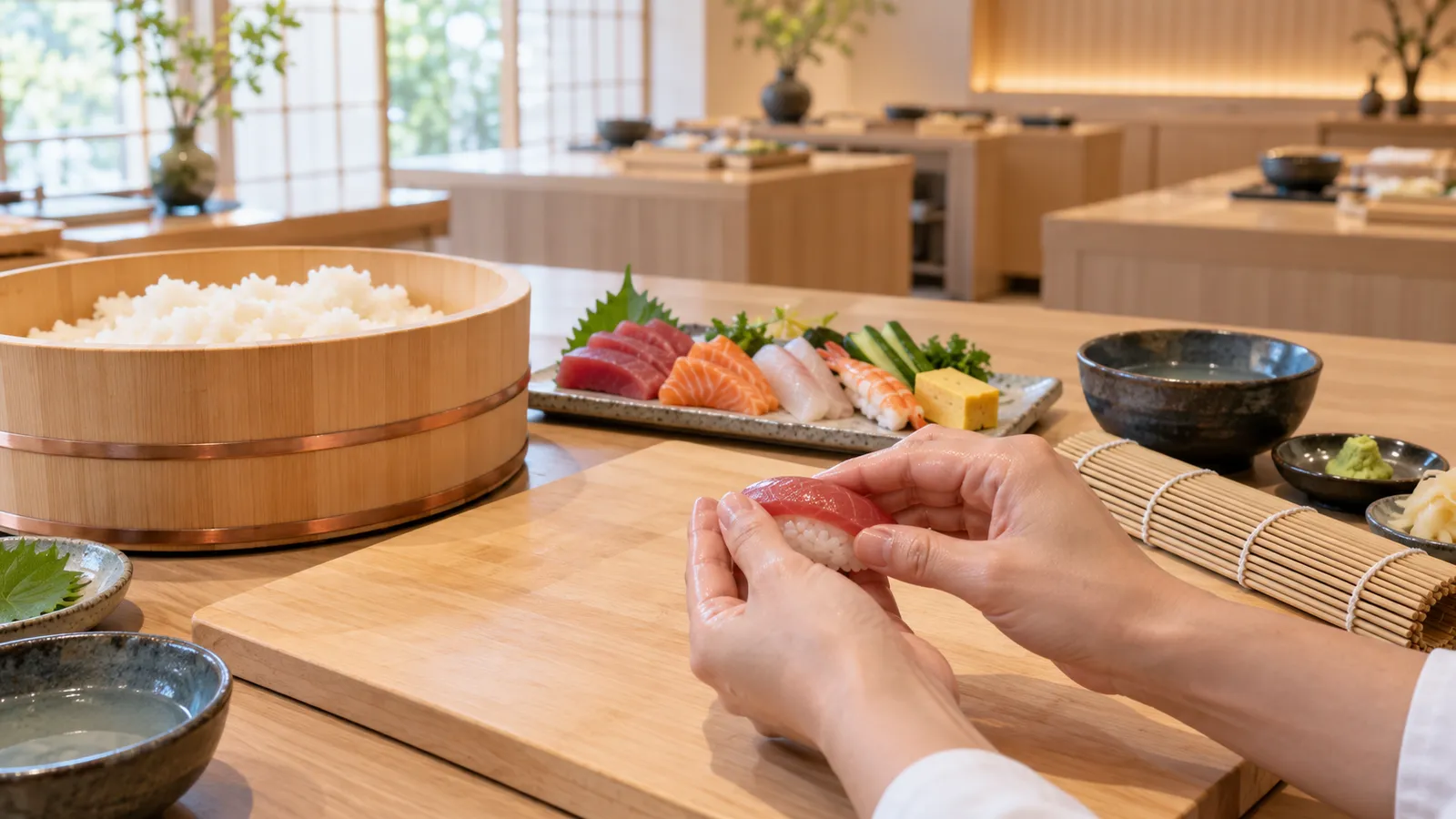
Sensitive to noise, crowds or sticky textures? What a Tokyo sushi class involves, how a private session differs, and what to ask us before you book.
Kimono Rental or a Sushi Class in Asakusa?
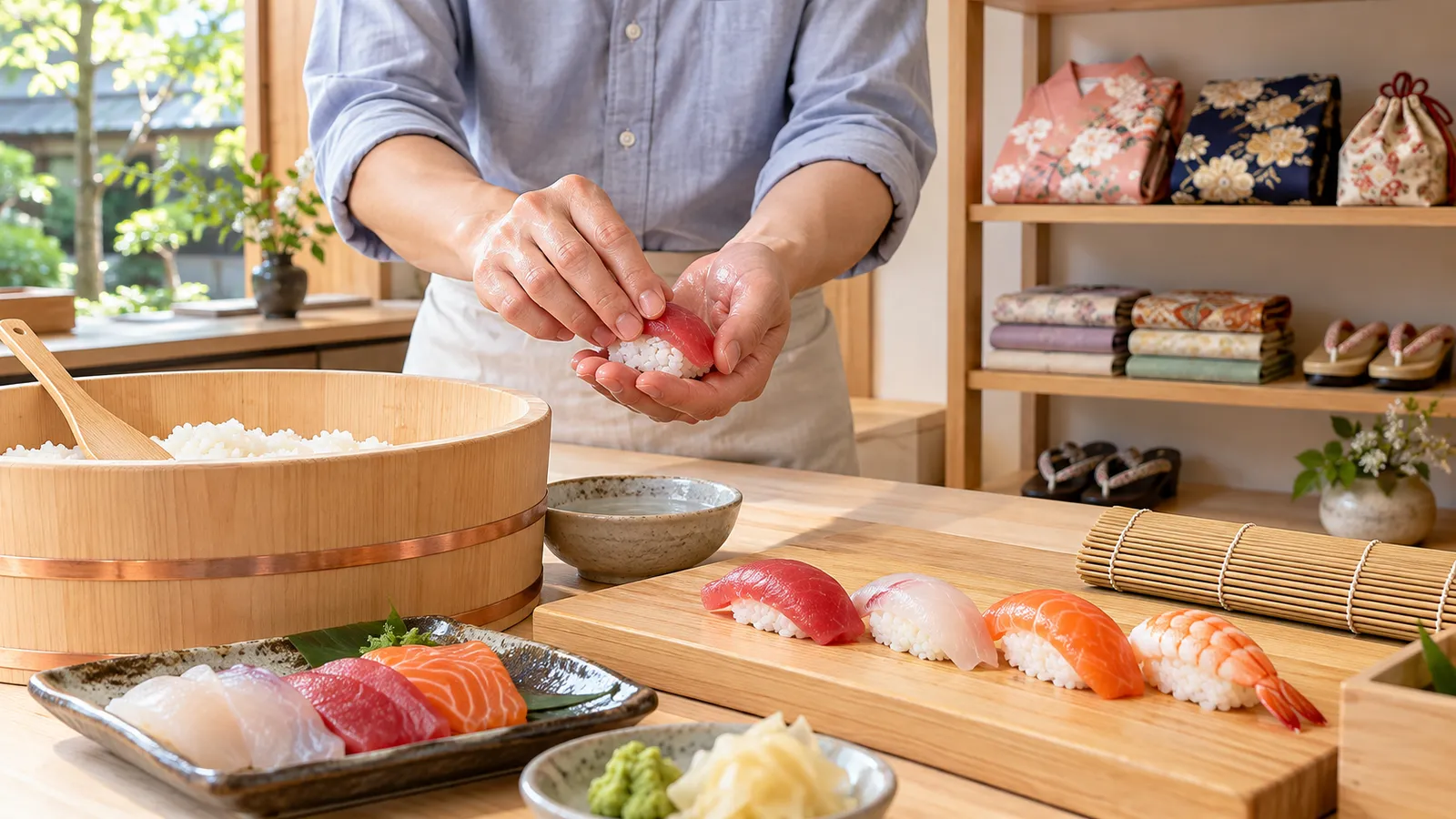
Kimono rental or a sushi class in Asakusa? Compare time, cost and what you take home, and see how to fit both into one day without sleeves in the rice.
Sushi Class With Weak or Sore Hands
Arthritis, a weak grip, a recent hand injury or a tremor? What each step of a Tokyo sushi class asks of your hands, and what to tell us before you book.