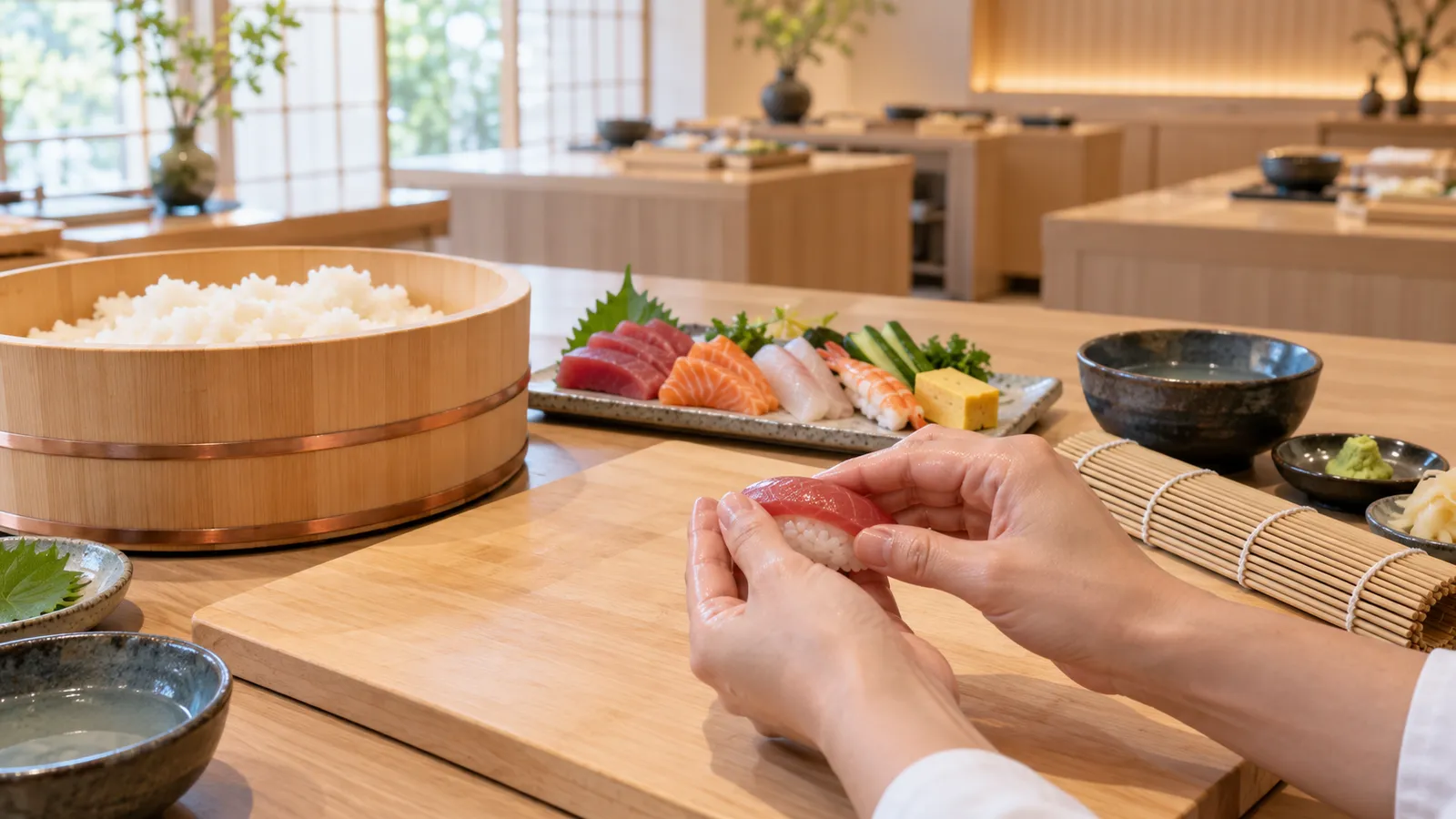
Sensory-Friendly Sushi Class in Tokyo
Some travellers love a busy, chatty cooking class. Others find a full room, unexpected sounds or sticky hands hard work, even when they are excited about the food. That applies to many people: autistic travellers, people with ADHD or sensory processing differences, people with anxiety or migraine, and parents planning for a child who needs a calmer setting.
This guide describes what our sushi class in Asakusa involves from a sensory point of view, so you can decide which format suits you and what to ask before booking. It is not medical advice, and we do not label any session as certified sensory-friendly. The aim is to give you accurate information so you can make your own judgement.
Popular in Tokyo right now — our most recommended experience
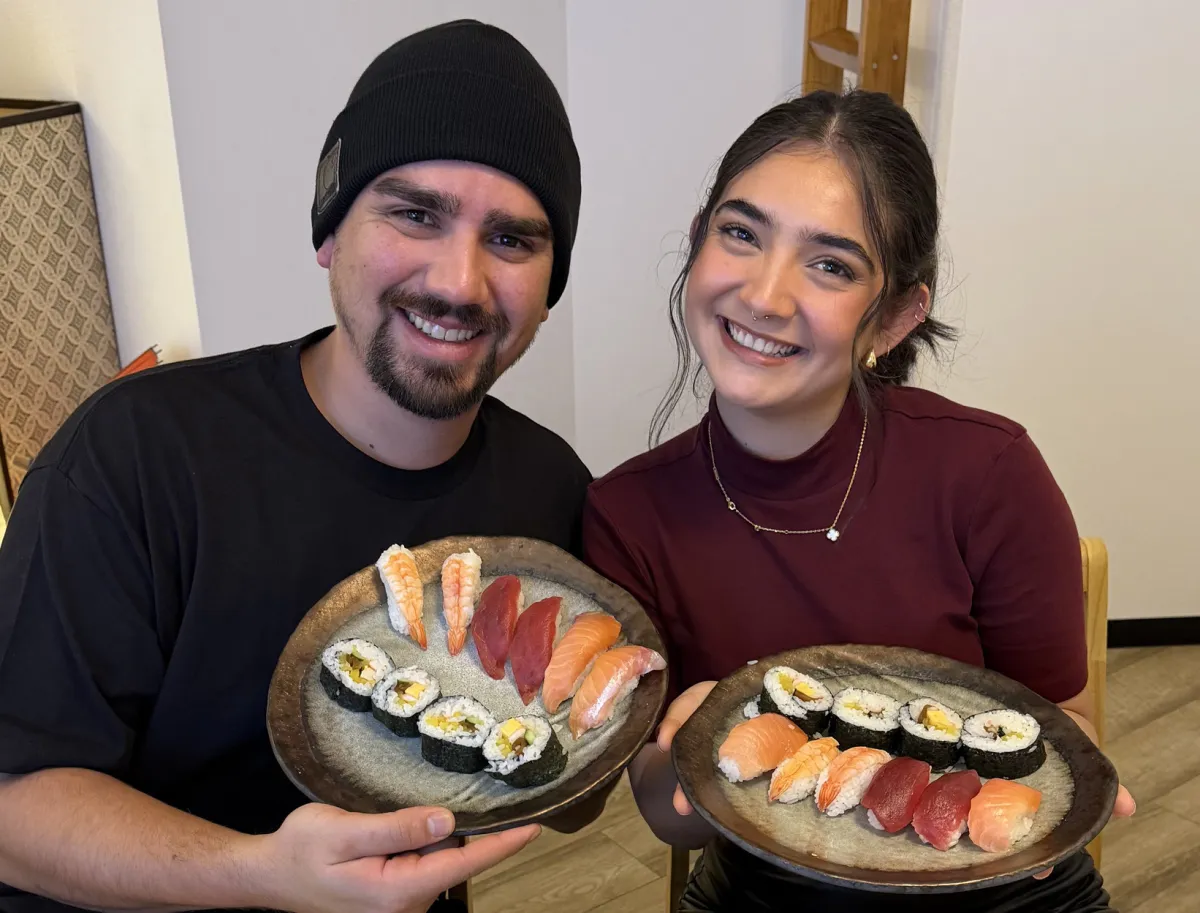
Tokyo Sushi Making Class : Sake Ceremony & Matcha Experience in Asakusa
What the shared class is like
Our signature sushi and matcha class lasts about 90 minutes and is a shared session for up to 20 guests. During that time you will:
- Arrive about 10 minutes early, store your belongings and wash your hands.
- Follow an English-speaking instructor through preparing nigiri and rolling maki.
- Join a sake toast. No one has to drink; water or Japanese green tea is available.
- Sit down to eat what you have made.
- Whisk your own bowl of matcha at the end.
It is a social, interactive format. Guests come from many countries, conversation is normal, and other guests are welcome to take photos and videos. Our guide to photos and videos in the class explains how that works. If background chatter or cameras are a concern, it is better to know that before you choose.
Sound
The studio is in a space under the railway tracks near Asakusa Station, so you may hear trains passing during the class. With a full group there is also conversation, instructions given to the whole room and a toast. Noise-reducing earplugs or headphones are a reasonable thing to bring, and you are welcome to wear them during the class. If you would like the instructor to know you may not hear every spoken cue, tell us when booking.
Touch, smell and texture
Sushi-making is hands-on. Sushi rice is slightly warm, seasoned with vinegar and sticky; you shape it with your fingers, and you handle toppings such as fish and vegetables. Vinegar has a noticeable smell, and so does seafood.
If sticky or wet textures are difficult for you, ask us before booking whether a particular adjustment is possible for your session, rather than assuming. Some people find that frequent hand-wetting and a small towel make the rice easier to handle; the instructor will show you how the water is used.
If the issue is with specific foods rather than texture, our guide to sushi without raw fish explains the routes available, and food allergies should always be confirmed separately in advance.
Crowds and the walk in
The studio is a short walk from several stations. The Tobu Skytree Line Asakusa Station North Exit is about 30 seconds away, and Tokyo Metro Ginza Line Exit 7 about two minutes. Asakusa's main streets near Senso-ji can be very crowded, especially from late morning on weekends and holidays. If crowds are tiring, plan a route that avoids Nakamise Street on the way in; our directions from Asakusa Station show the approach from each exit.
The studio is at ground level with step-free access, and there is space to store luggage and strollers.
Shared, family private or premium private
If a shared room is the main barrier, a private session changes the environment more than anything else.
- Family Private Sushi Class: a fully private session for one family, with no other guests. It runs 90 to 120 minutes with flexible pacing, for 4 to 8 guests at ¥25,000 per person. It includes child-safe utensils, a no-raw-fish option with kid-friendly toppings, matcha for adults and juice for children.
- Premium Omakase Experience: a private session for up to 8 guests at ¥200,000 for the group, built around premium ingredients.
- Shared signature class: up to 20 guests, 90 minutes, ¥12,000 per person.
The family class is a good fit when a child needs breaks, may become overwhelmed, or simply needs a room without strangers. It also gives an adult with sensory needs more control over the pace. Our comparison of shared and private sushi classes covers the wider trade-offs, and the kids' class guide looks at the decision for families in more detail.
A shorter option
Our Onigiri Morning Class starts at 8:00 AM and lasts 60 minutes. Shorter is not automatically calmer, but a 60-minute session can be easier to manage if attention or energy is the limiting factor. Check its details on the booking page before assuming it fits.
What to tell us before you book
You do not need to share a diagnosis. Practical information is more useful. When you contact the team, it helps to mention:
- Which format you are considering and your preferred date.
- What tends to be difficult: noise, crowds, textures, smells, waiting, bright light or something else.
- What helps: a seat near the edge, a quiet spot to take a break, advance warning before the toast, written steps or extra time.
- Whether a support person or carer will attend, and whether they will take part.
- Any food allergies, listed separately.
We will tell you honestly what we can and cannot arrange. A request is not confirmed until we reply, so wait for that answer before relying on it.
Planning the rest of the day
Sensory load builds up over a day of travel. Consider placing the class early in your day, before the busiest hours around Senso-ji, and keep the time just afterwards free. If you use a wheelchair or have mobility needs as well, our accessibility guide covers the approach and the studio layout.
Cancellation and rescheduling are free up to 24 hours before the start, which gives you some room if you need to adjust. When you are ready, check availability for the shared class or ask us about a private session first.
Related Articles
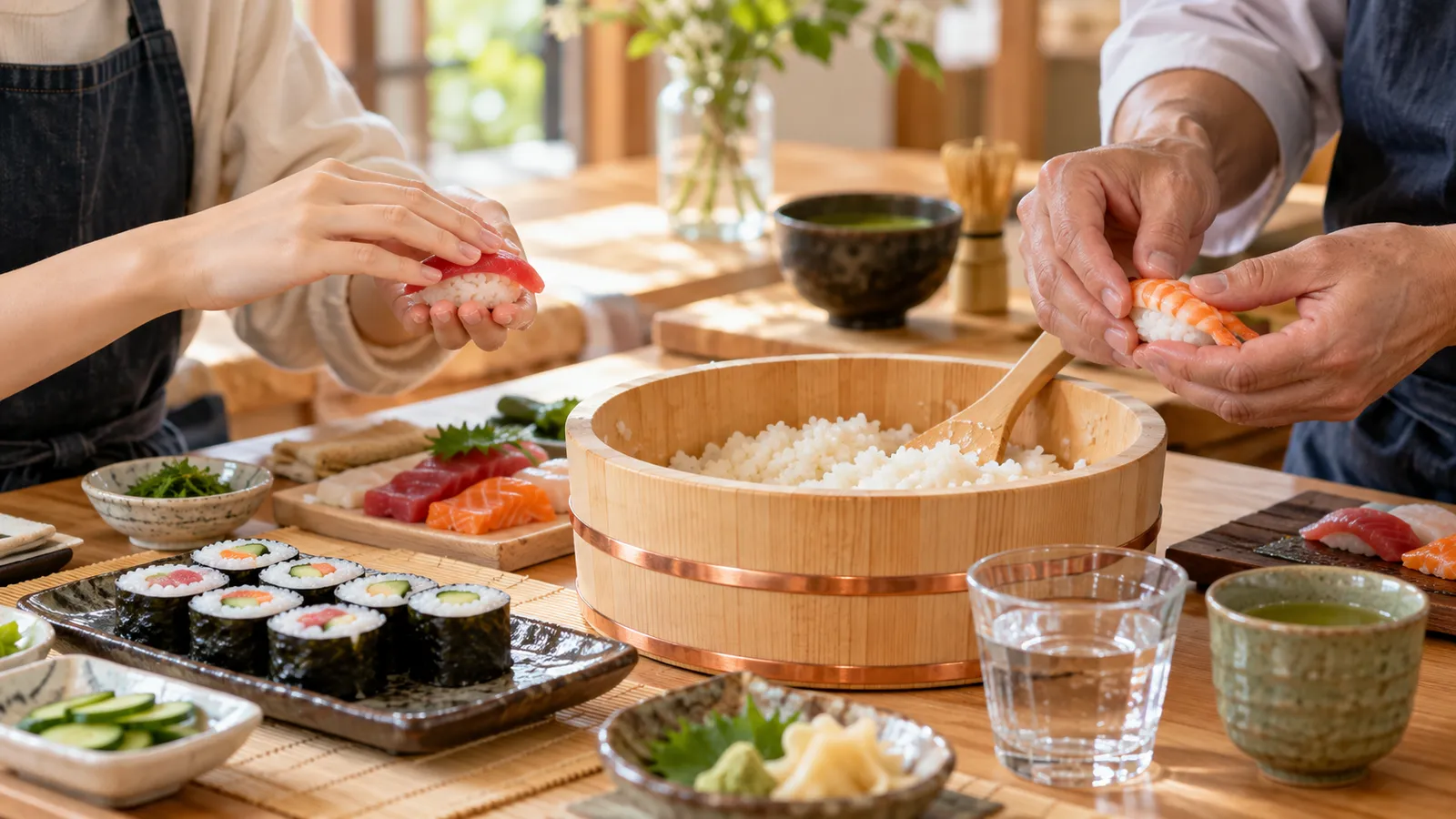
Sushi Class in Tokyo With Teenagers
Travelling with teens? How ticket categories work for ages 13 and up, what happens at the sake toast and when a shared or private sushi class fits best.
Paying for a Tokyo Sushi Class
Which currency will you be charged in, which cards and wallets work, and what happens after you pay? A clear guide before booking a sushi class in Tokyo.
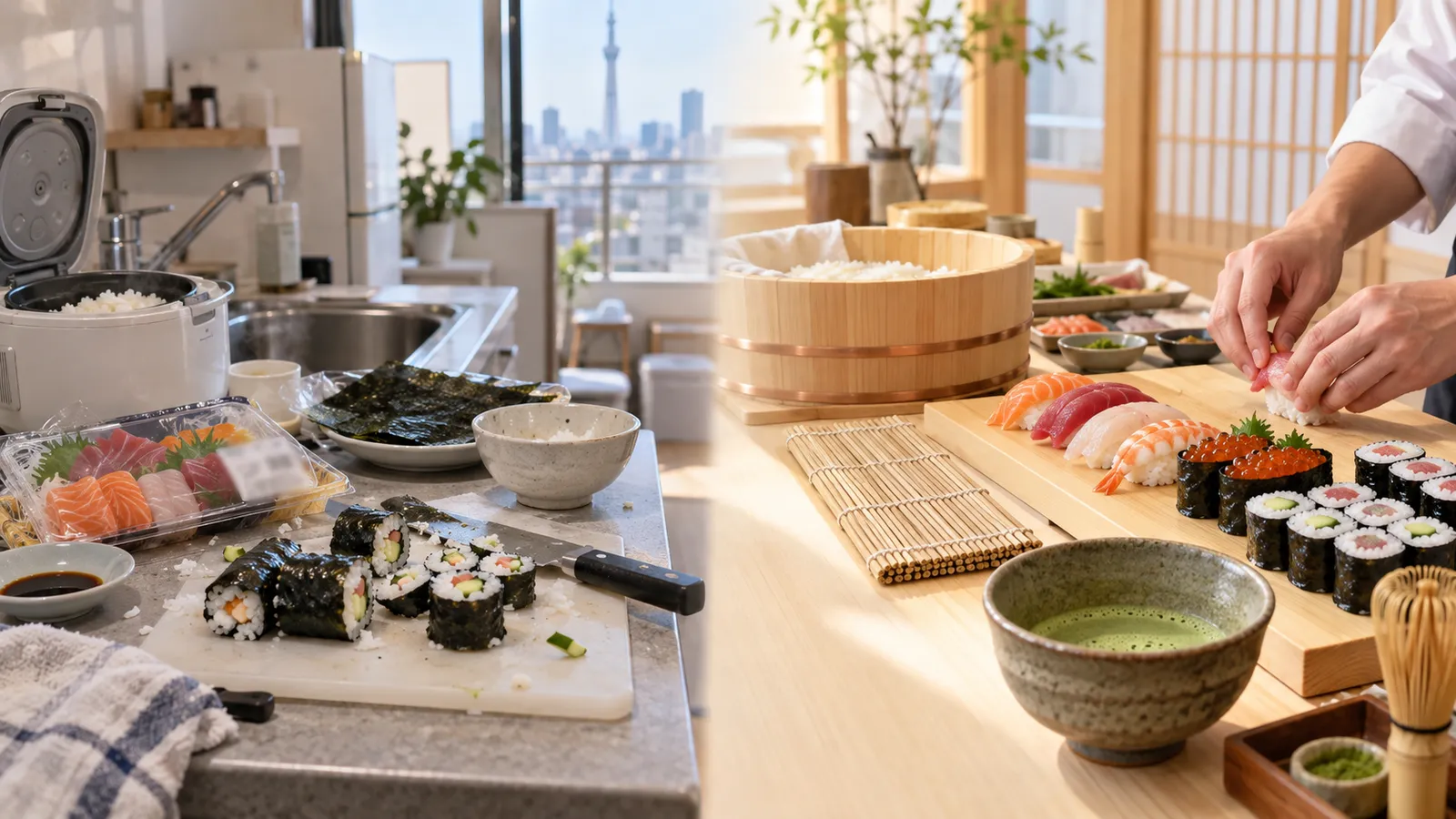
Make Sushi in Your Rental or Take a Class?
Staying in a Tokyo apartment with a kitchen? Compare making sushi yourself with supermarket fish against a guided class, and choose by skill, time and cost.