Sushi Class With Weak or Sore Hands
A sushi class is mostly hand work. That is what makes it fun, but it can also raise a question before you book: what if your hands do not cooperate the way they used to? Arthritis, a weak grip, a wrist still healing from a fracture, a tremor or simply stiff fingers on a cold morning are all common among travellers, and none of them is unusual to mention.
This guide walks through what our signature sushi and matcha class in Asakusa actually asks of your hands, step by step, so you can judge for yourself which parts may be easy and which may need help. It is not medical advice. If a doctor or therapist has given you limits for your hands, follow those first.
Popular in Tokyo right now — our most recommended experience
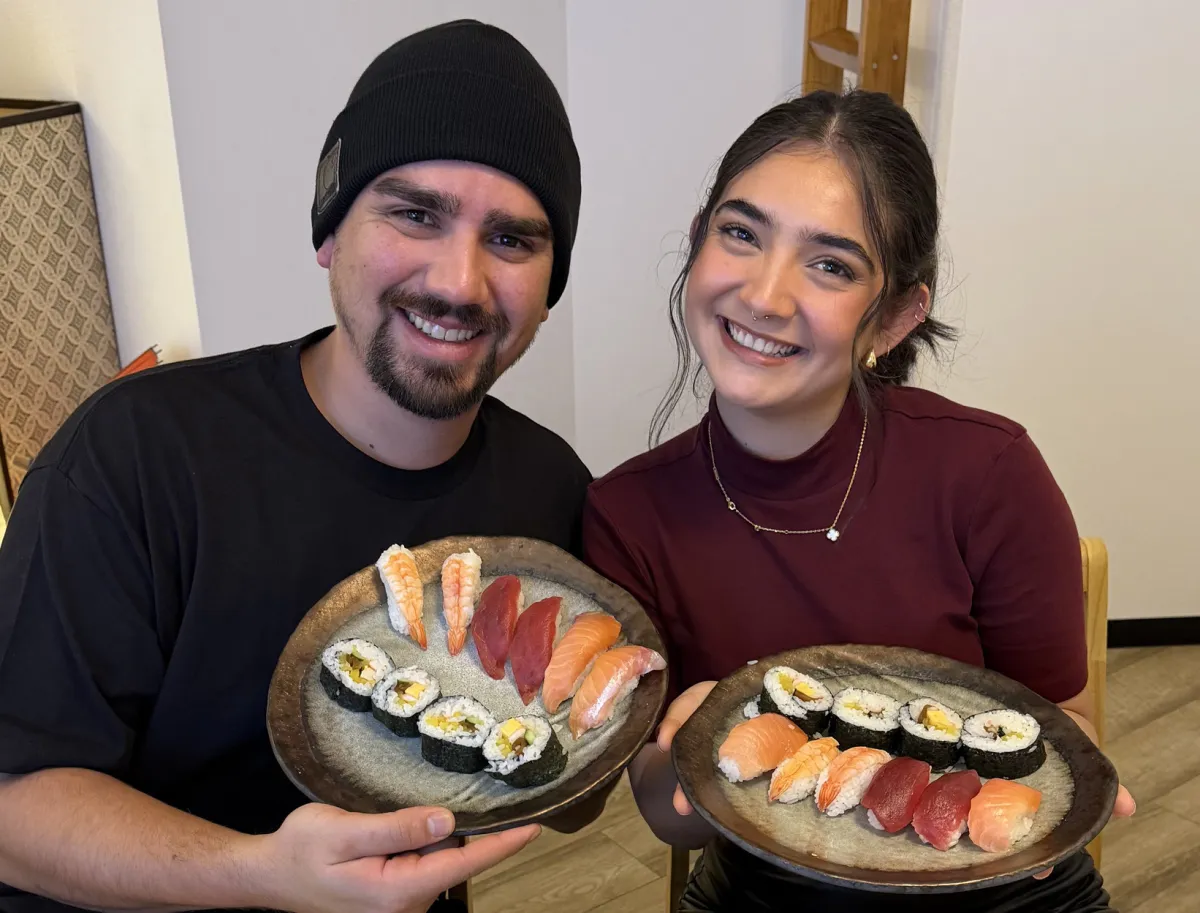
Tokyo Sushi Making Class : Sake Ceremony & Matcha Experience in Asakusa
What the 90 minutes asks of your hands
The class lasts about 90 minutes and is taught in English. After a welcome and a sake toast, the hands-on part runs for roughly half an hour, then you sit down to eat what you made and finish by whisking matcha. Here is what each part involves.
Handling sushi rice
You learn to prepare sushi rice and take small portions of it in your hand. Sushi rice is soft and slightly sticky. Nigiri rice is pressed gently, not squeezed: too much pressure makes it dense. That is good news for weaker hands, because force is not the skill being taught. What it does need is some finger movement to cup and shape a small mound of rice, and wet hands, since you dip your fingers in water to stop the rice sticking.
Shaping nigiri
Nigiri is a small oval of rice with a topping pressed on top. The movement is light pressure between the fingers of one hand and the palm of the other, repeated a few times. Most guests make 8 to 10 pieces of sushi in total across nigiri and maki, so the repetition is limited. If a joint tires quickly, you can rest between pieces.
Rolling maki
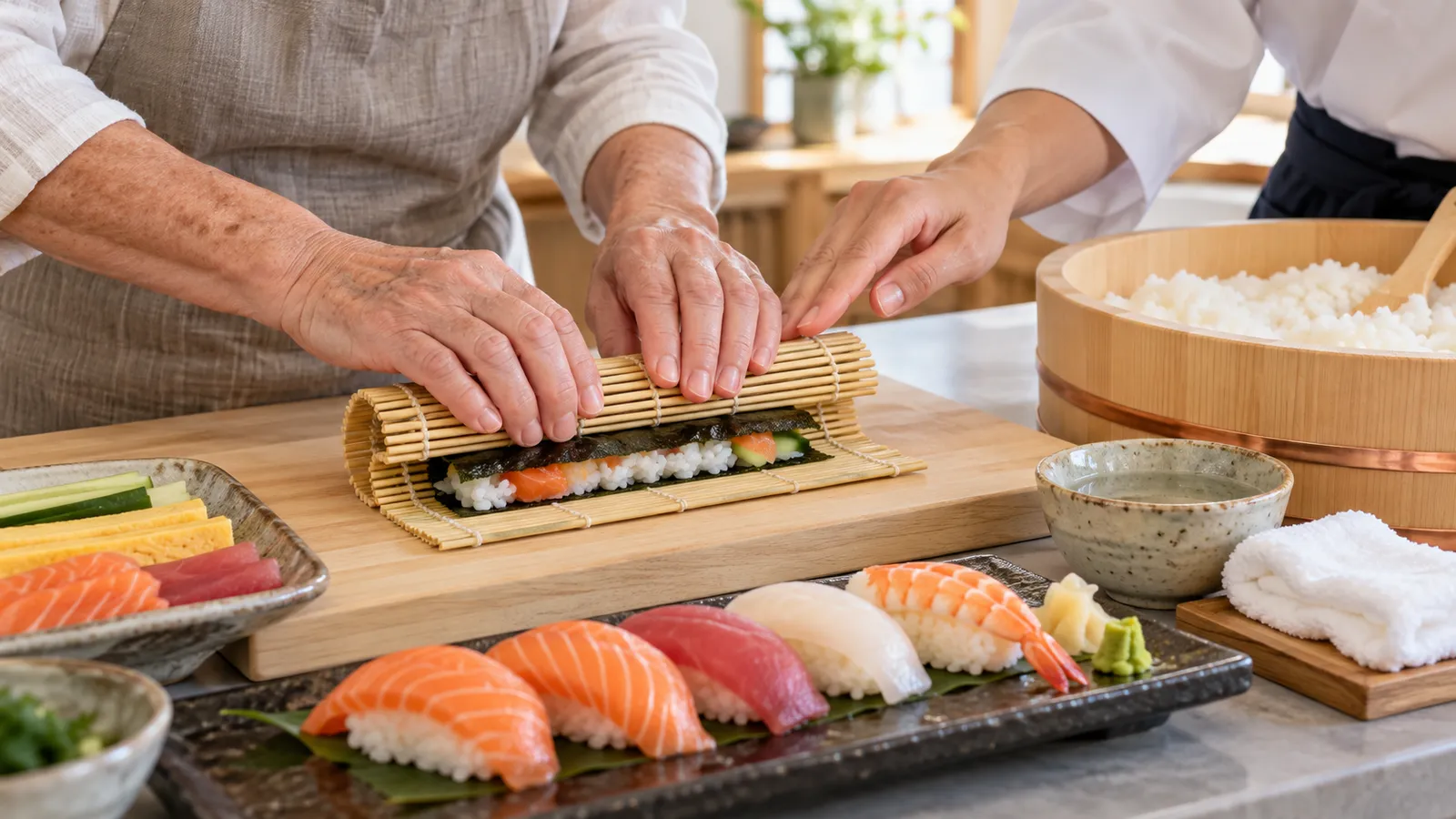
Maki are rolled with a bamboo mat. You spread rice on a sheet of nori, add fillings, then lift the edge of the mat and roll forward while pressing lightly to keep the shape. This uses both hands together and a bit of wrist movement. People with limited use of one hand often find this the step where a little help is most useful, for example someone else lifting the mat edge while you guide the roll.
Eating
You eat your sushi seated, and you can use chopsticks or your fingers. Eating nigiri by hand is perfectly correct in Japan, so if chopsticks are difficult, you do not need them. Our sushi etiquette guide explains how to eat it naturally.
Whisking matcha
Whisking matcha is a quick back-and-forth flick of the wrist with a bamboo whisk, usually for less than a minute, while the other hand steadies the bowl. For sore wrists, this is the most demanding motion of the class, but it is short. You can whisk more slowly, switch hands, or ask a companion to finish it.
Common situations and what usually helps
- Arthritis or stiff fingers: cold can make joints stiffer, so warm your hands before you arrive, especially on winter mornings. Pace yourself; there is no prize for speed.
- Weak grip: nigiri depends on gentle pressure, not strength. Maki rolling and holding the matcha bowl are the parts where a steadying hand helps.
- A recent injury, a cast or a splint: one-handed participation is possible for parts of the class, but a cast or dressing must stay clean and dry around food. Tell us in advance so we can talk through what is practical, and follow any restrictions from your doctor.
- Tremor: small, slower movements are fine. Placing a topping precisely can be harder; it helps to rest your forearms on the counter while you work.
- Long nails, rings or bracelets: you will wash your hands before starting and work directly with rice. We recommend removing loose jewellery, and rolling up your sleeves.
None of this has to be perfect. Uneven nigiri still tastes good, and instructors are used to beginners of every age. Our guide on what beginners actually learn in class shows how much of the lesson is about light touch rather than skill.
Coming with a companion
If someone you trust is joining, it can be easiest to share tasks: you shape the nigiri, they help lift the maki mat; you whisk for a while, they finish. If your helper will not cook or eat, ask us before booking how they should be included; do not assume an extra person can join without notice. The instructor can also show you a step again, but in a shared class of up to 20 guests, they are looking after everyone at the table.
Shared class or private class?
If you would like more time and space, a private class can be more comfortable. Our family private sushi class is for one group of 4 to 8 guests and runs at a more flexible pace, about 90 to 120 minutes. It works for adult groups and multi-generational families too. Our guide to a sushi class with grandparents covers pace, seating and food questions for older travellers, and sensory-friendly planning covers noise and crowds.
Getting to the studio
The studio is about 30 seconds on foot from the North Exit of Tobu Asakusa Station, and has step-free, ground-level access. Please arrive 10 minutes before the start, which gives you time to settle in and wash your hands without rushing. If you are using a mobility aid, our wheelchair access guide explains what to confirm.
What to tell us before you book
A short message saves guesswork on the day. Include:
- which hand or joints are affected, and which movements are difficult (pressing, gripping, twisting the wrist);
- whether a companion will help, and whether they are also taking part;
- whether you need to sit for most of the class or take breaks;
- any dietary needs, listed separately.
Send it through the contact page or in the booking notes, and wait for a reply if a specific arrangement is essential for you. We will tell you honestly what is practical. Bookings can be cancelled free of charge up to 24 hours before the class, and rescheduled free with the same notice, which helps if a flare-up makes you change plans.
When you are ready, check live dates and the current price on the signature class page.
Related Articles
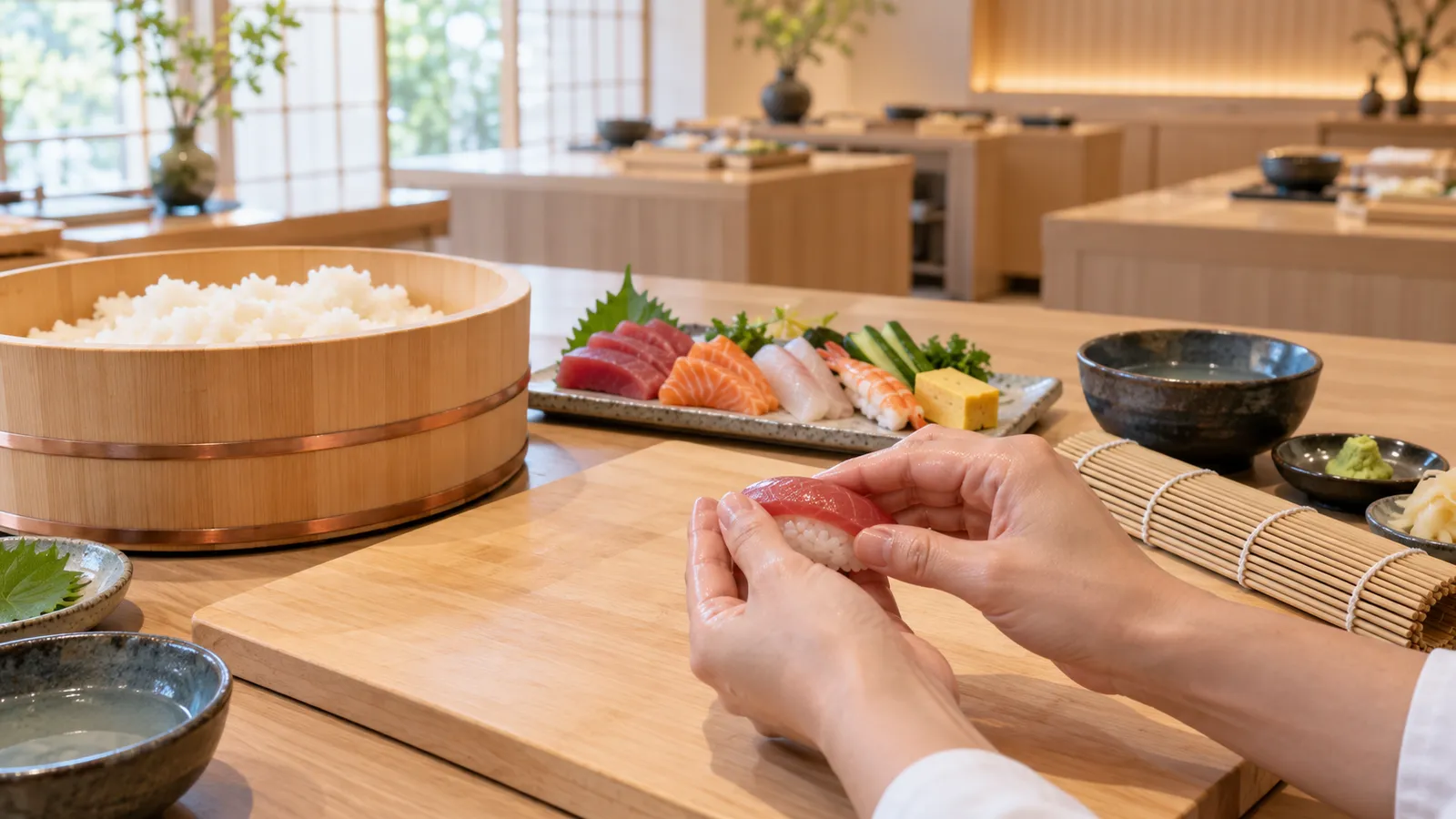
Sensory-Friendly Sushi Class in Tokyo
Sensitive to noise, crowds or sticky textures? What a Tokyo sushi class involves, how a private session differs, and what to ask us before you book.
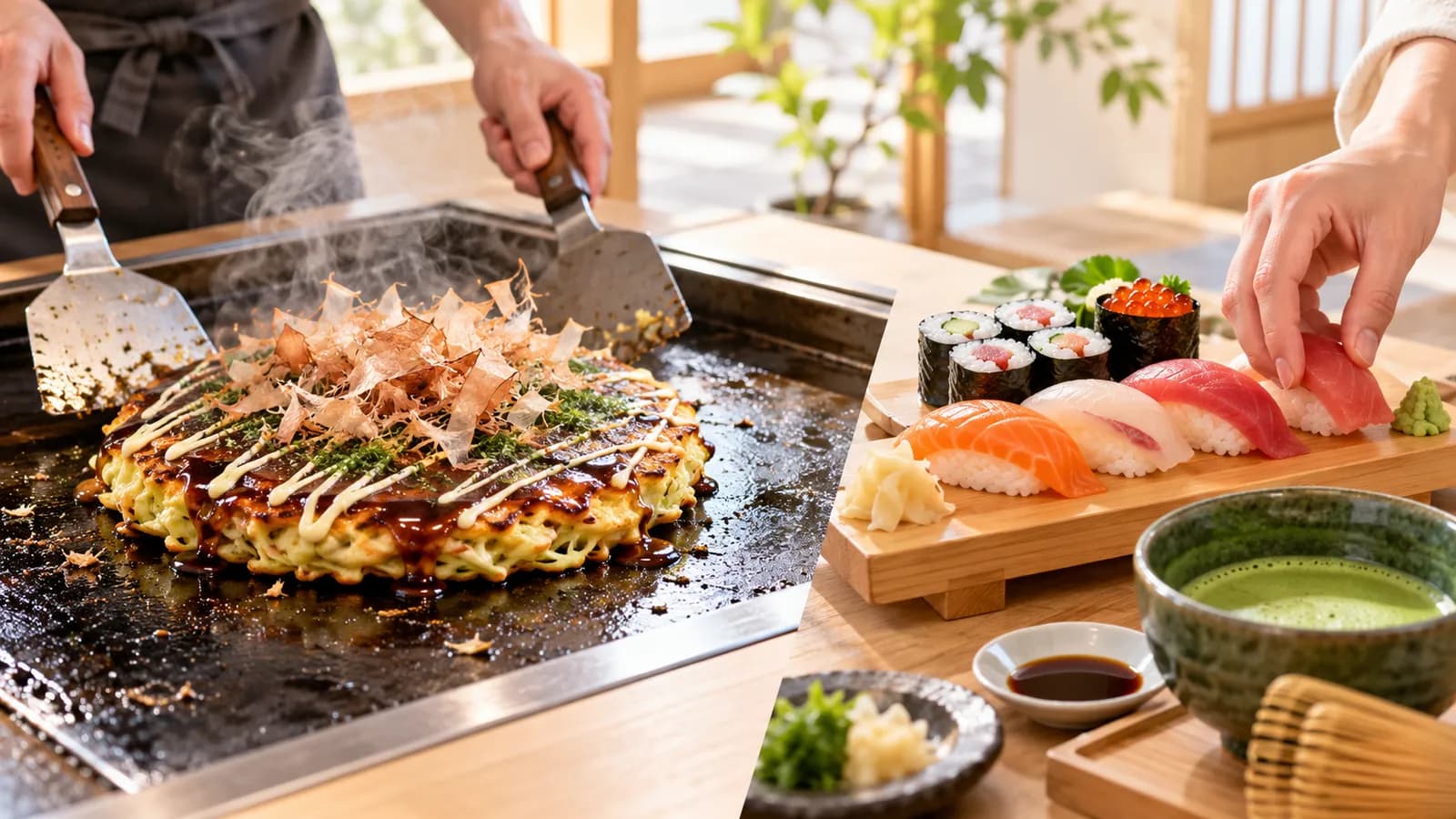
Okonomiyaki or a Sushi Class in Tokyo?
Okonomiyaki or a sushi class in Tokyo? Compare cooking at a table griddle with a guided class: the hands-on work, ingredients, heat and what you take home.

Yokohama and a Sushi Class in One Day
Pair Yokohama's harbour, Chinatown and museums with a sushi class in Asakusa. Train routes, realistic timing and two simple plans for one day.