Left-Handed at a Sushi Class in Tokyo?
If you are left-handed, you have probably spent your life mirroring instructions written for right-handers: scissors, guitars, can openers. Japanese food culture has its own right-handed habits, so it is a fair question before booking a sushi class: will I be at a disadvantage?
Short answer: no. The basic steps of a beginner sushi class can be mirrored, so left-handed guests can take part comfortably. This guide goes through our signature sushi and matcha class step by step, so you know what to expect.
Popular in Tokyo right now — our most recommended experience
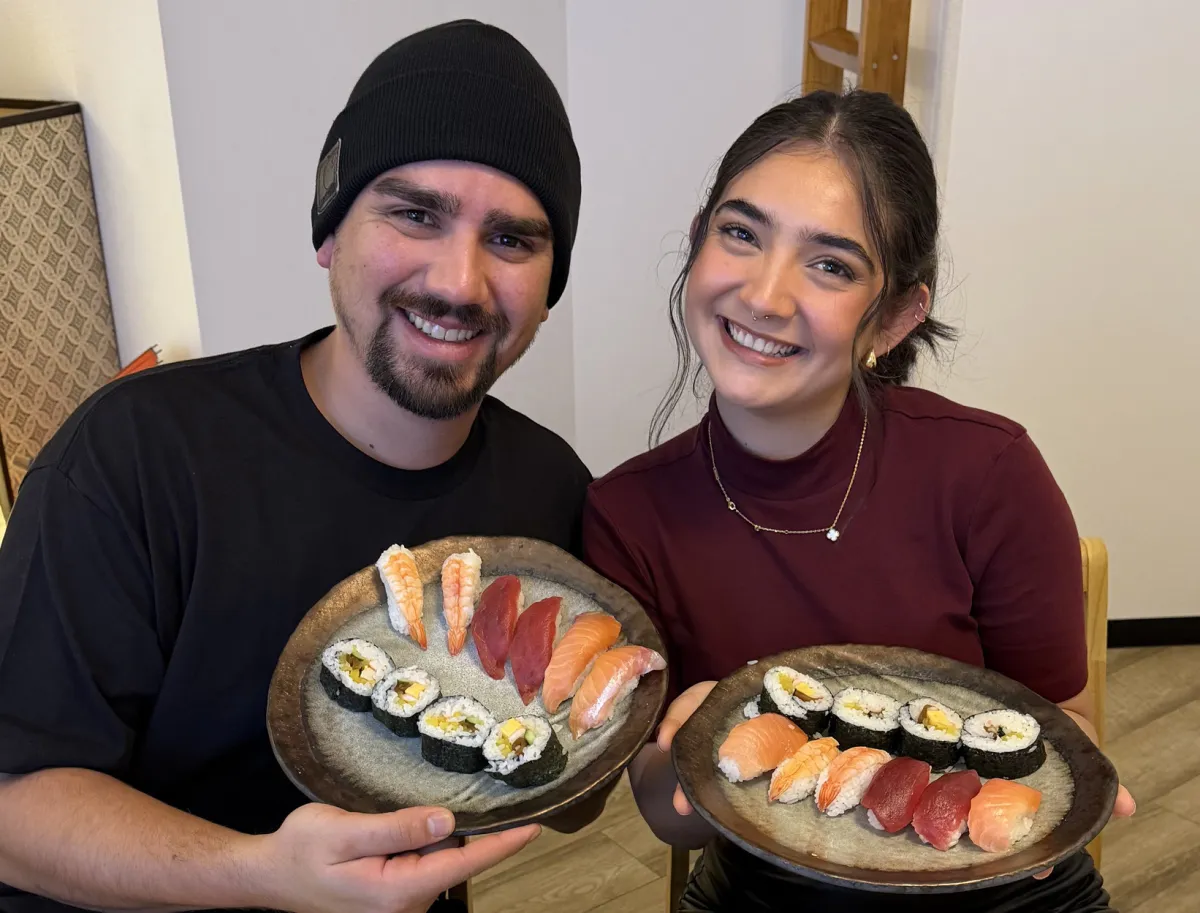
Tokyo Sushi Making Class : Sake Ceremony & Matcha Experience in Asakusa
Why sushi is taught right-handed
In professional kitchens, sushi technique has traditionally been passed on in a right-handed form. Chefs' knives are a good example: a traditional sushi knife such as a yanagiba is sharpened on one side only, and the standard version is made for the right hand. Left-handed versions exist, but they are made separately and usually cost more. Counter layout and the order in which dishes are passed can follow the same right-handed habit.
None of this matters much for a 90-minute class. You will not be buying a knife or working behind a sushi counter. What you do with your hands is shape, press and roll, and those movements work in either direction.
Shaping nigiri: mirror the two hands
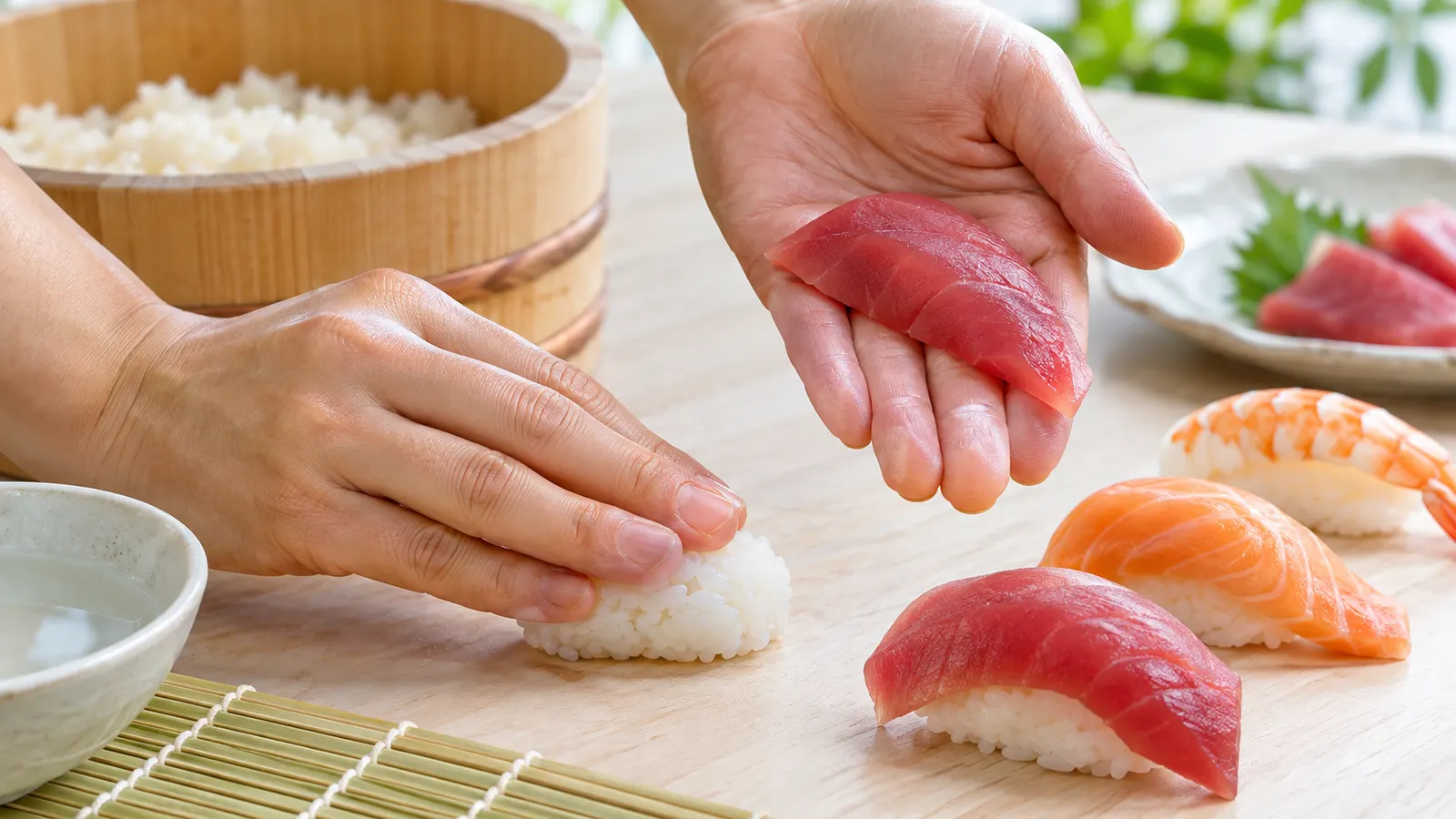
Nigiri are shaped with the kotegaeshi technique, the professional hand-shaping method we teach in class. A right-handed demonstration usually looks like this:
- The topping is held in the left hand.
- The right hand picks up a small portion of rice and forms it lightly.
- The rice is placed on the topping, and the fingers of the right hand press it into shape against the left palm.
- The piece is turned over and pressed again so the topping sits on top.
For a left-handed guest, the easiest approach is to swap the hands completely: topping in the right hand, rice in the left, and press with the fingers of your left hand. Watch the instructor first, then tell them you will mirror the movement. Some left-handed guests find it easier to follow the right-handed version as shown, because the pressure needed is light and neither hand does heavy work. Try both on your first piece and keep whichever feels natural.
The skill here is gentle pressure, not hand dominance. Nigiri rice should hold together without being squeezed, so slow, light presses work better than strong ones. Our guide to what beginners actually learn in a sushi class explains why the first pieces are always a little uneven, whichever hand you use.
Rolling futomaki: both hands together
The futomaki roll is made with a bamboo mat called a makisu. You spread rice on a sheet of nori, lay the fillings across it, then lift the near edge of the mat with both hands and roll it forward, pressing to tighten the roll. Both hands work symmetrically, so left-handed guests need no adjustment at all. If you want to know more about the roll itself, our futomaki guide covers the fillings and why the roll must be tight.
The finished roll is then sliced into pieces. If you are unsure about handling the knife, ask the instructor to show you or to help.
Eating: no rules about hands
You can eat nigiri with chopsticks or your fingers, and either hand is fine. Japanese table manners do have a right-handed default for chopsticks and rice bowls at formal meals, but at a sushi class nobody expects you to change hands. If you are seated at a shared table, a left-handed guest may simply prefer a seat at the end of a row so elbows do not bump; mention it on arrival.
Whisking matcha: the one ritual question
At a formal tea ceremony, the movements are set out for the right hand, and that includes how the tea whisk is held and how the bowl is turned. In a formal setting, left-handed practitioners generally learn the standard form.
Our class is not a formal tea ceremony. You whisk your own matcha with a bamboo chasen, holding the bowl steady with one hand and making quick back-and-forth strokes with the other. Use your stronger hand for whisking if you like; the goal is a smooth, foamy bowl, not a perfect ritual. Our guide to the chasen bamboo whisk explains the motion, and our tea ceremony etiquette guide is useful if you plan to attend a formal ceremony elsewhere.
If you are mixed-handed or ambidextrous
Plenty of people write with one hand and use the other for tools. Start with whichever hand you use for kitchen tasks at home. If you are unsure, follow the instructor's demonstration exactly on the first piece and mirror it on the second, then compare.
What to tell us before the class
Being left-handed does not require any special arrangement. Still, a short note helps the instructor show you the mirrored movement from the start. You can add it to the booking notes or say so when you arrive. If you also have an injury or limited strength in one hand, our guide to a sushi class with limited hand strength explains what to mention.
Please arrive about 10 minutes before the start. The class lasts 90 minutes, is taught in English and costs ¥12,000 per person. It can be cancelled free of charge up to 24 hours before the class.
FAQ
Are there left-handed sushi chefs in Japan? Yes, though traditionally many were trained to work right-handed. Today left-handed chefs often use left-handed knives made for them.
Will I slow the class down? No. Everyone in a beginner class works at their own pace, and mirroring a movement takes only a moment to explain.
Book with confidence
Left-handed guests learn the same nigiri and futomaki steps as every other beginner. Check live dates on the signature sushi and matcha class page, and tell the instructor you would like to mirror the demonstration.
Related Articles
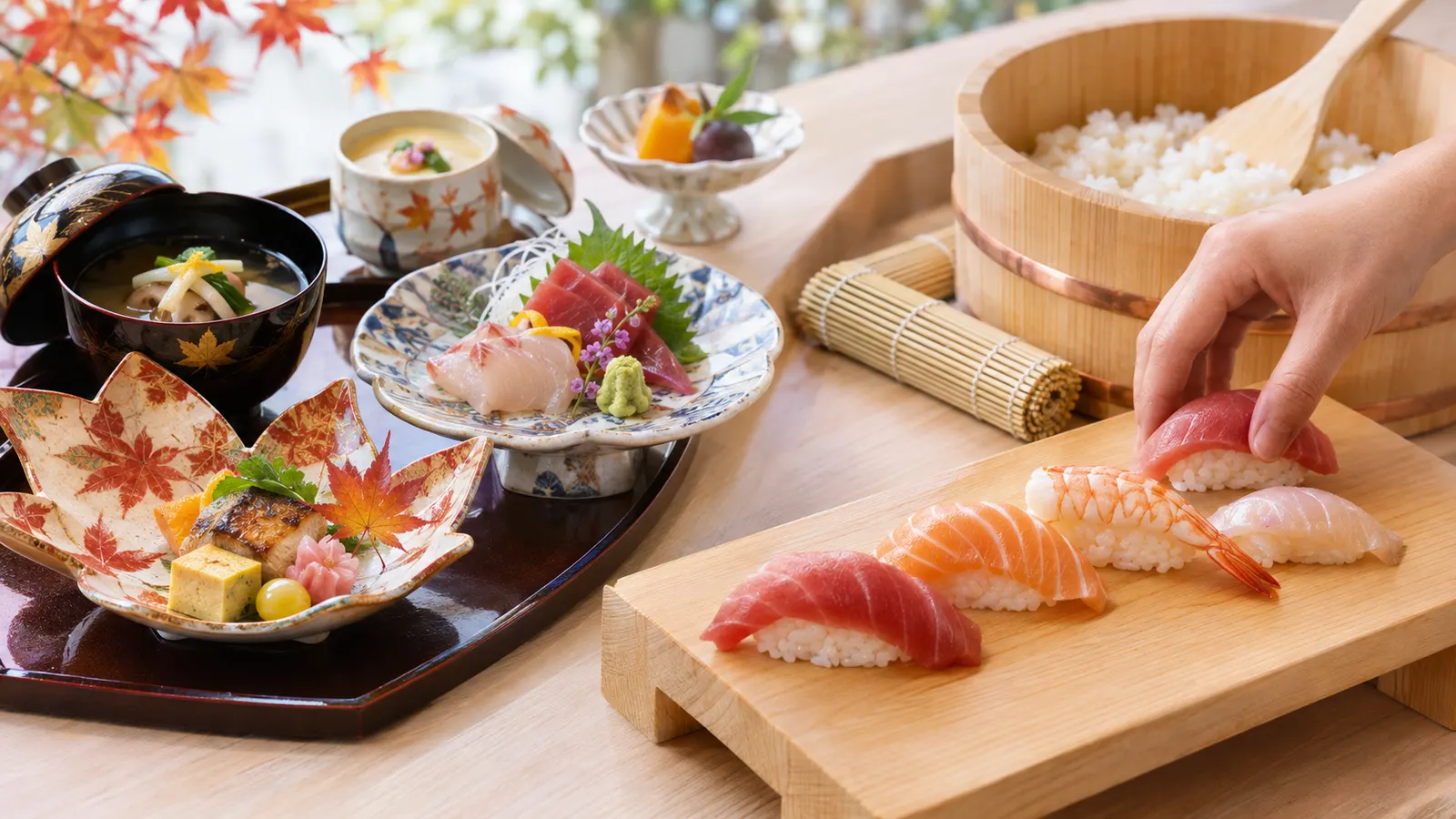
Kaiseki Dinner or Sushi Class in Tokyo?
Kaiseki is a seasonal multi-course meal you are served; a sushi class is one you make. How they differ in time, diet, kids and budget, and how to choose.
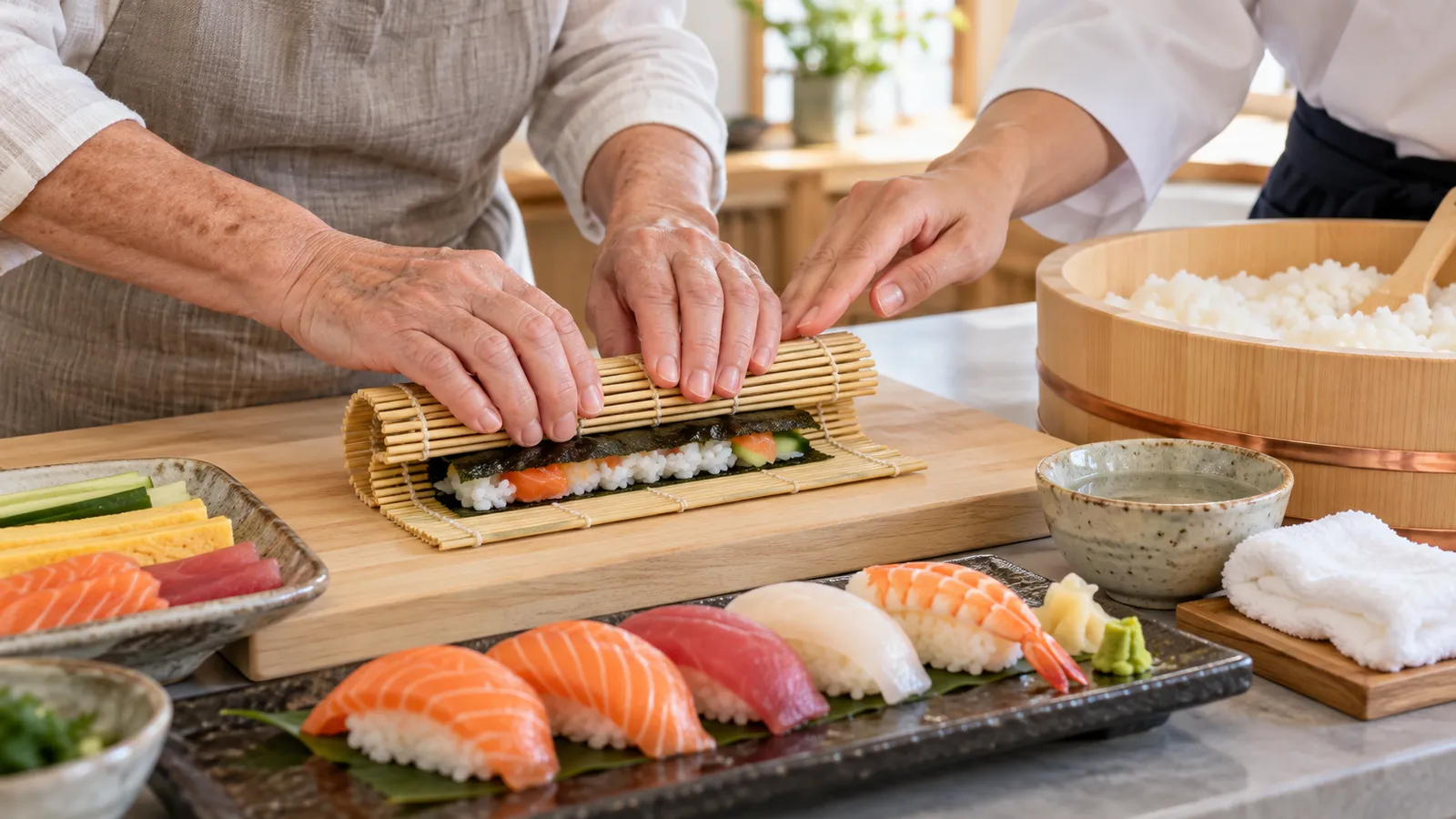
Sushi Class With Weak or Sore Hands
Arthritis, a weak grip, a recent hand injury or a tremor? What each step of a Tokyo sushi class asks of your hands, and what to tell us before you book.
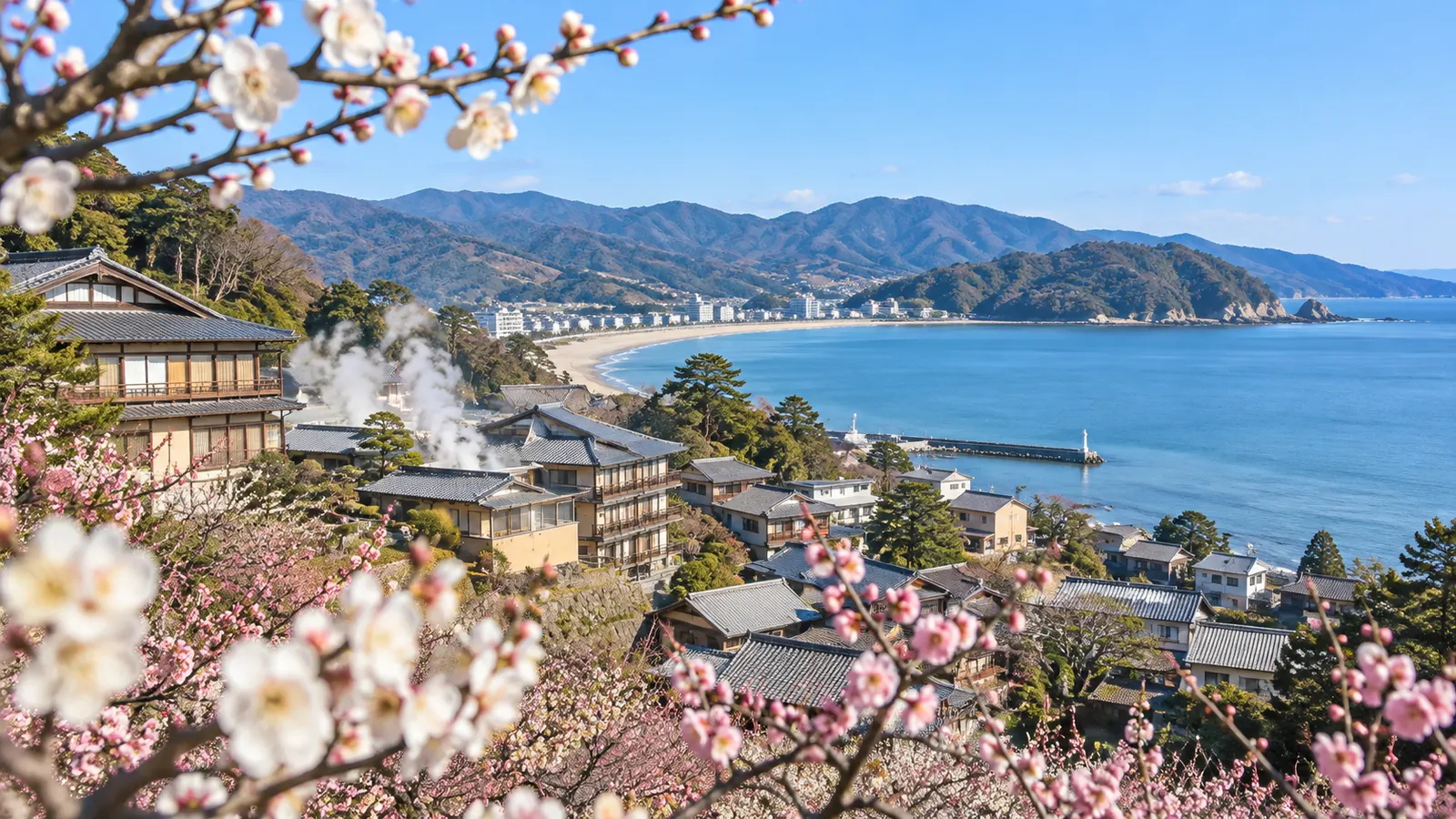
Atami Day Trip & Asakusa Sushi Class
Atami from Asakusa by bullet train or local line: the 2,000-year-old camphor, MOA Museum, early plum blossoms, winter fireworks and fitting in a sushi class.