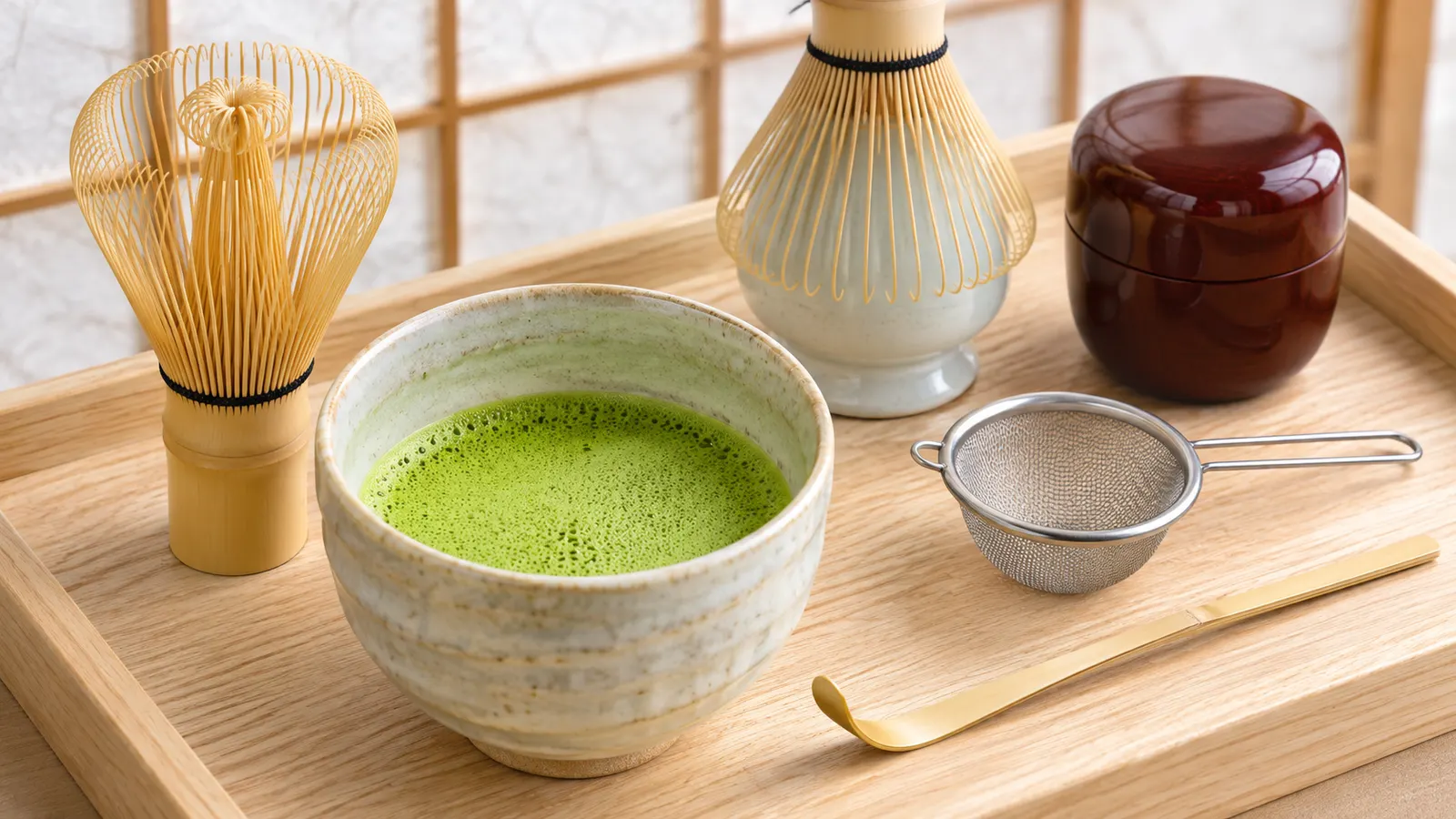
Chasen: Using and Caring for a Matcha Whisk
Of all the tea tools, the chasen is the one people remember. It is a whisk carved from a single piece of bamboo, split into dozens of fine tines that curl inwards at the tips. It is the tool that turns powder and hot water into a smooth, frothy bowl of matcha, and the one many visitors want to take home from Japan.
Because the tines are thin, a chasen is also easy to damage if it is used dry, scraped against the bowl or stored damp. This guide explains where chasen come from, how to hold and use one, how to look after it and when it is time for a new one.
Popular in Tokyo right now — our most recommended experience

Tokyo Sushi Making Class : Sake Ceremony & Matcha Experience in Asakusa
One piece of bamboo, dozens of tines
A chasen starts as a short length of bamboo. The upper part is split into fine strips, the strips are shaved thinner towards the tips, and a thread is woven around the base to separate the tines into an inner and an outer ring.
Ikoma City in Nara Prefecture lists six main stages: splitting, dividing into fine strips, shaving the tips, chamfering the edges, weaving and finishing. Depending on the use and the tea school, the bamboo is split into roughly 60 to 120 tines, all by hand with a small knife. A single slip of the blade can ruin the whisk.
Takayama, the home of the chasen
Most Japanese chasen come from Takayama, a district at the northern edge of Ikoma City. According to the city, whisks have been made there for about 500 years with methods and shapes that have barely changed. Local tradition credits Takayama Sozei, a Muromachi-period figure, with creating the whisk at the request of the tea master Murata Juko.
Takayama chasen are a nationally designated traditional craft, and Nara Prefecture says they account for about 90% of Japan's chasen production. Visitors can see the craft at Takayama Chikurin-en, a bamboo garden and museum in Ikoma, which holds demonstrations on Sundays.
Whisks sold abroad are not always made this way. If origin matters to you, check the label or ask the shop where it was made.
How to hold and whisk
The tea house Ippodo describes a simple method:
- Hold the bowl steady with your other hand.
- Hold the chasen lightly by the handle, with your fingers resting on the ridge.
- Whisk from the wrist in an "M" or zigzag shape, moving forwards and backwards. A circular motion, like whisking eggs, works less well.
- Touch the front and back of the bowl, but do not scrape the bottom hard. That bends and breaks the tines.
- Stop after about 15 seconds. Ippodo notes that whisking longer makes the tea more bitter.
Do not worry if you get little foam at first. Ippodo points out that matcha without foam, whisked slowly, is also a style they make on purpose, with a clearer taste. Foam is a matter of practice, not a test of whether the tea is right. If you wonder why some bowls taste stronger than others, our guide to whether matcha is bitter explains the main factors, and usucha and koicha explains why thick tea is kneaded rather than whisked to a froth.
Before and after each use
Bamboo is strong when it is damp and brittle when it is dry. Ippodo's care steps:
- Soak before use. Dip the tines in water for about one to two minutes so they bend instead of snapping.
- Rinse soon after use, without soap. Use plain water and gently work out any stuck powder with your fingers under the water.
- Dry in the open air. Do not put it away wet.
- Store it on a whisk stand. A stand, often ceramic, holds the tines in shape while the whisk dries. Ippodo warns that the case a chasen is sold in is not meant for storage, because a whisk kept inside it can grow mould.
A small crack in the handle is normal as the bamboo responds to humidity. The thread at the base stops it spreading, and Ippodo says many of the whisks used in its own stores have one.
When to replace a chasen
Each chasen is handmade from bamboo, so it does not last forever. Once many tines have broken and the whisk no longer froths the tea easily, it is time for a new one. Regular soaking, gentle whisking and full drying all make it last longer.
Buying one to take home
Tea shops in Japan usually sell chasen alongside a bowl, scoop (chashaku) and whisk stand. For travel, keep the whisk in its case only while you are on the move, then take it out and let it dry on its stand at home. Our guide to buying and storing matcha from Japan covers the tea itself: how to read the label, how much to buy and how to keep it fresh.
Try a chasen before you buy one
It is much easier to choose a whisk once you have used one. At the end of our signature sushi and matcha class in Asakusa, you whisk your own bowl of matcha after making nigiri and a futomaki roll and toasting with sake. The whole class takes 90 minutes, with instructions in English.
If you are weighing a matcha-only experience against a formal tea gathering, our comparison of matcha workshops and tea ceremonies explains what each involves, and our guide to tea ceremony etiquette covers what guests do with the bowl.
FAQ
Can I use an electric frother instead? It can mix the powder, but it is not the traditional tool, and the texture tends to differ. Learning the chasen is part of the experience, and the technique takes only a few tries.
Should I use hot water to soak it? Ippodo simply says to dip it in water for one to two minutes. The aim is to make the tines flexible before you whisk.
Why did my whisk go mouldy? Usually because it was stored damp or in its case. Dry it fully in the air on a whisk stand.
Whisk your first bowl in Asakusa
A good chasen in your hands teaches more than any video. Book the signature class, whisk a bowl at the end of the session, and take the technique home with you.
Related Articles
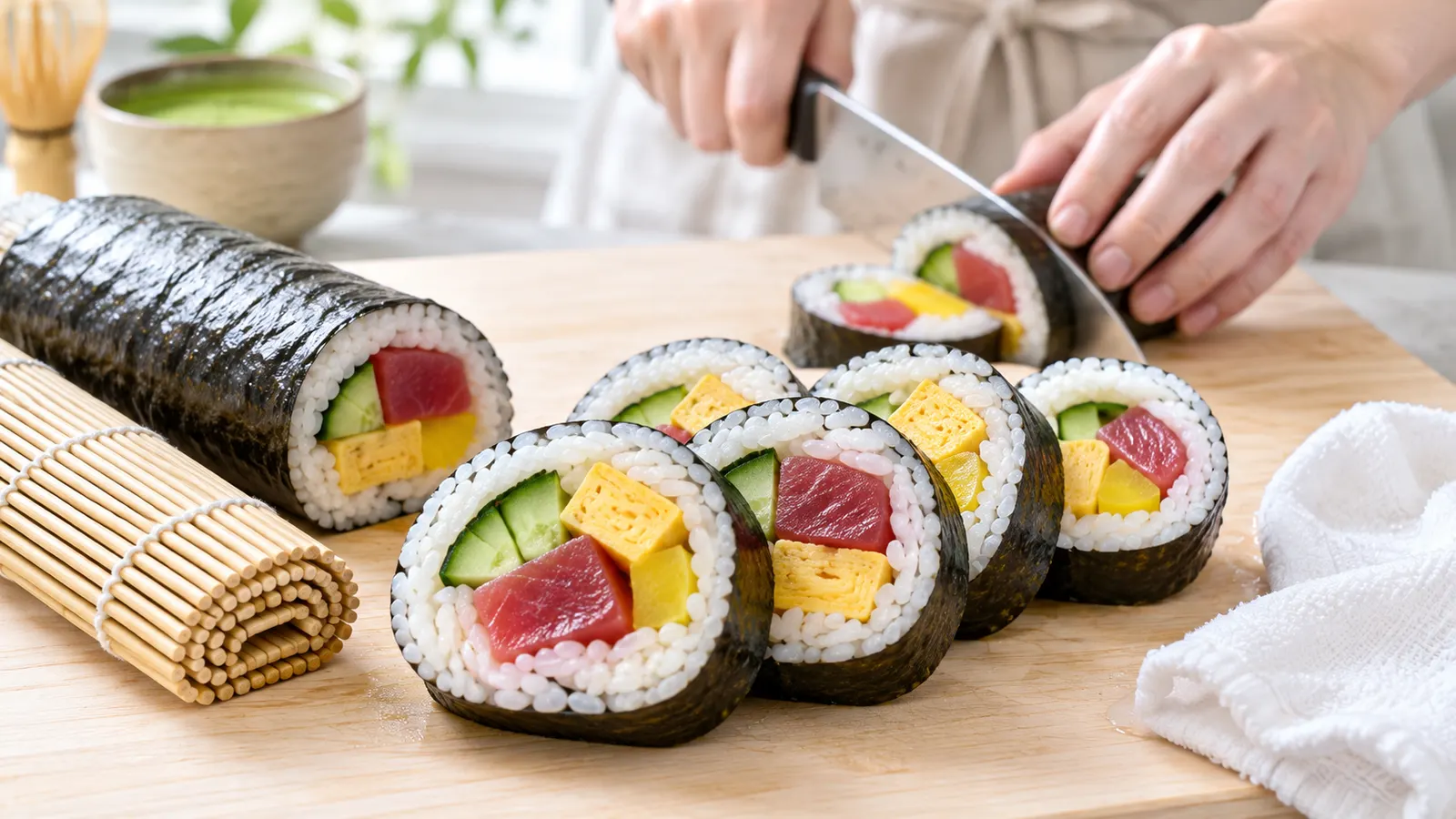
Futomaki: Japan's Thick Sushi Roll Explained
What goes into a Japanese futomaki, how it differs from thin rolls and California rolls, where you meet it in Japan and how to roll one tight.
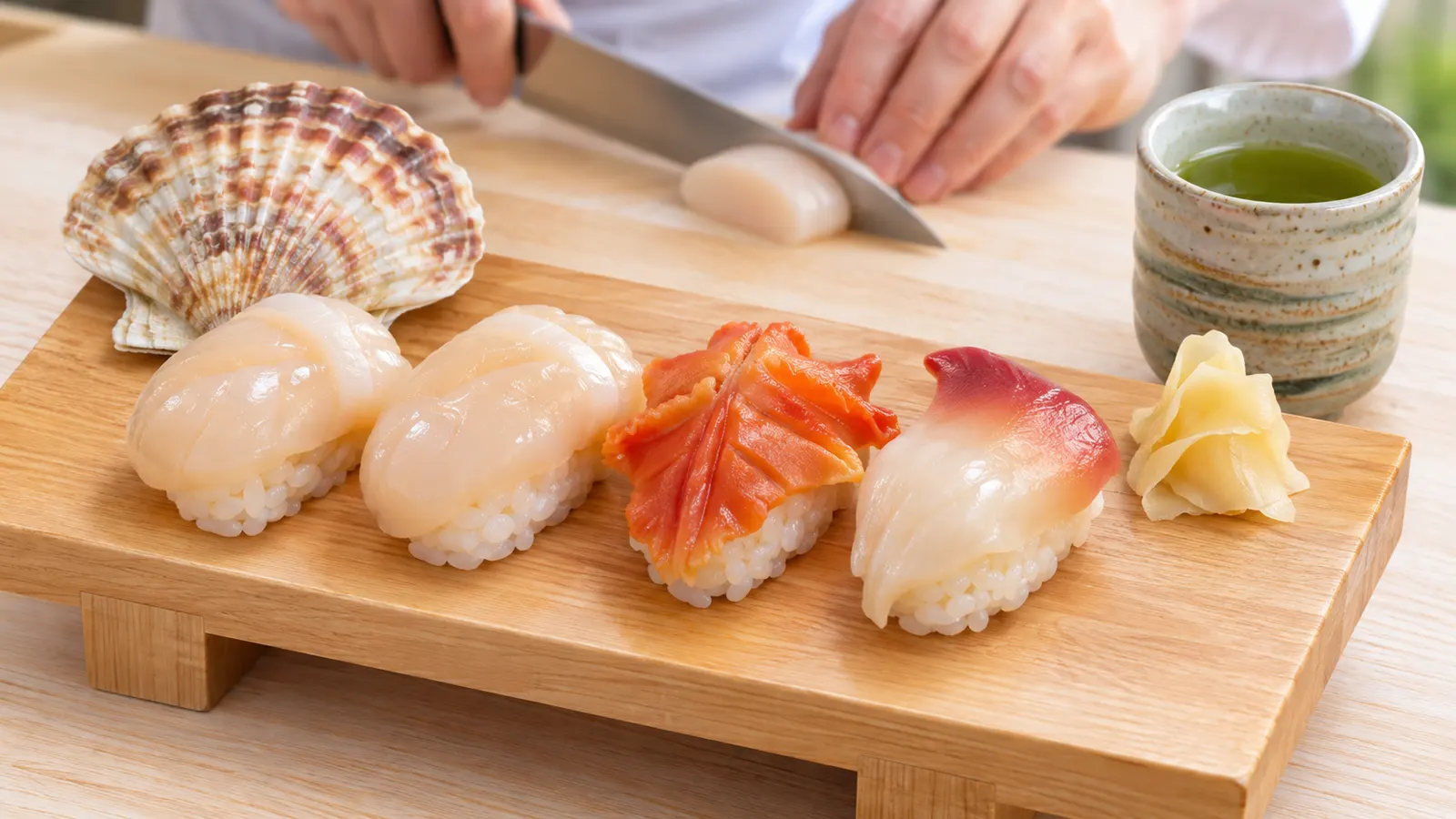
Hotate, Akagai, Hokkigai: Shellfish Sushi
Scallop, ark shell and surf clam are the shellfish you meet most at sushi counters in Japan. How they differ, when they are best and what to say on allergies.
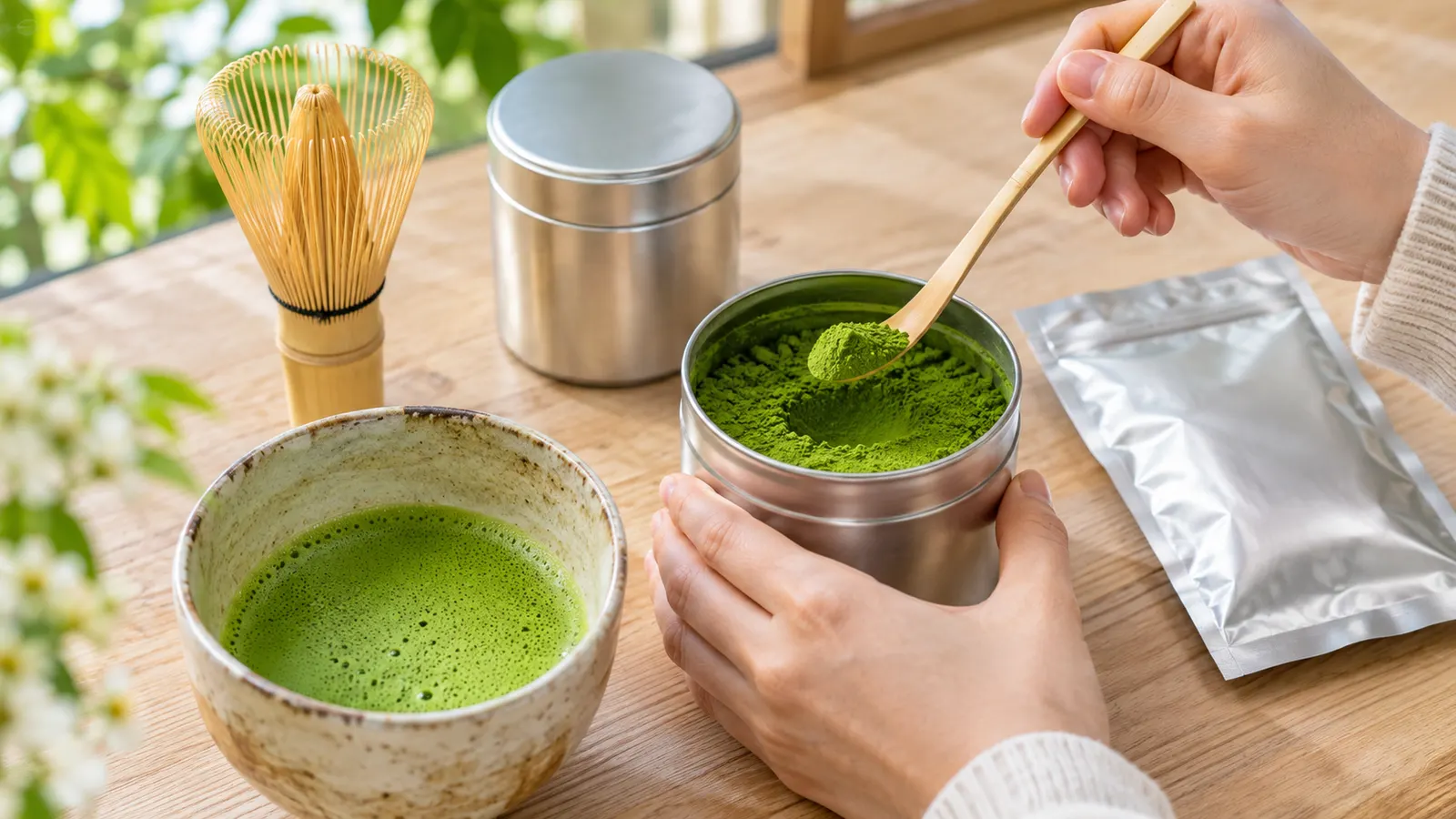
How to Buy and Store Matcha from Japan
Buying matcha to take home from Japan? What to check on the pack, how much to buy, how to keep it fresh and what to know at customs and tax-free counters.