Usucha vs Koicha: Thin and Thick Matcha
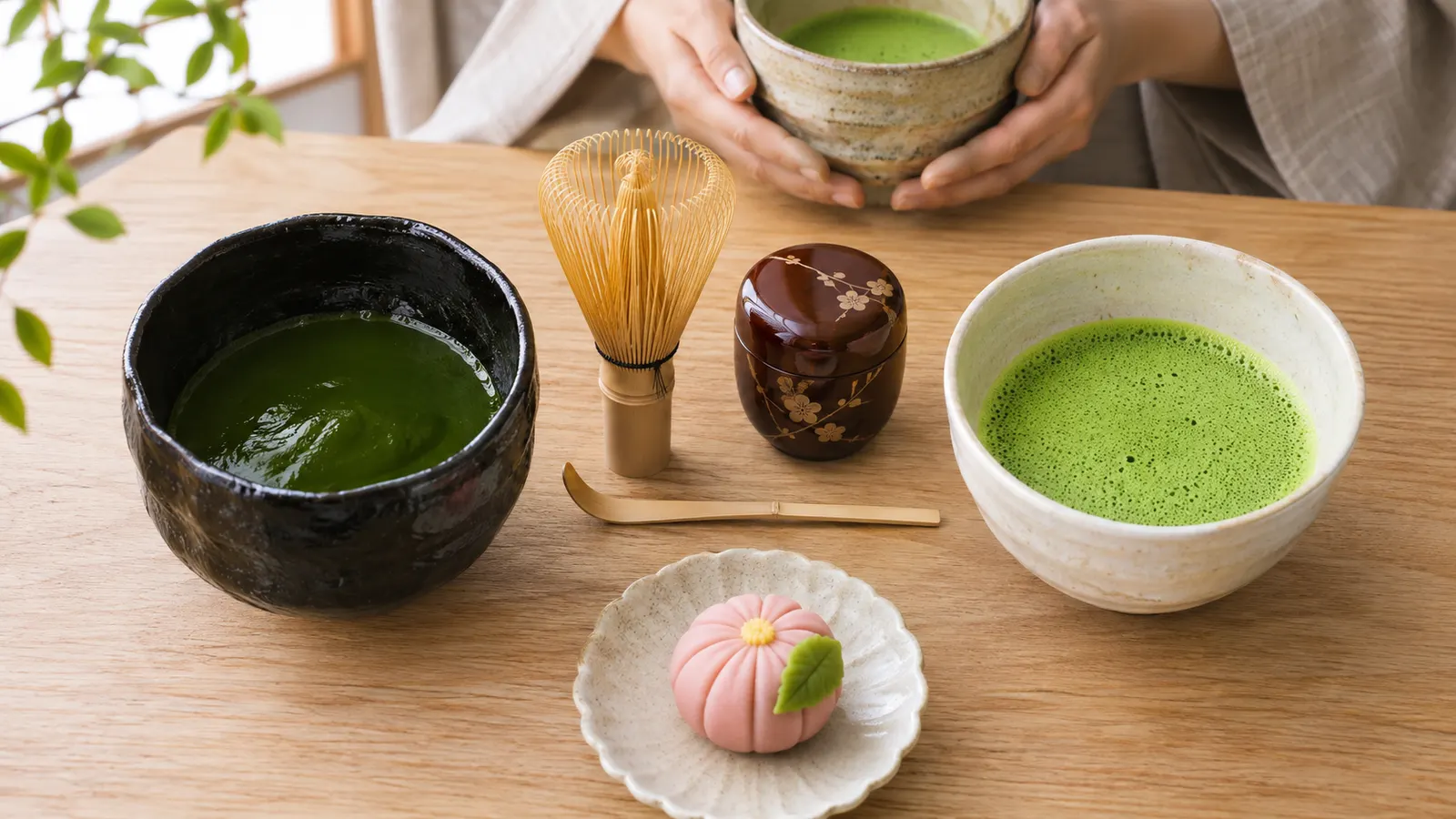
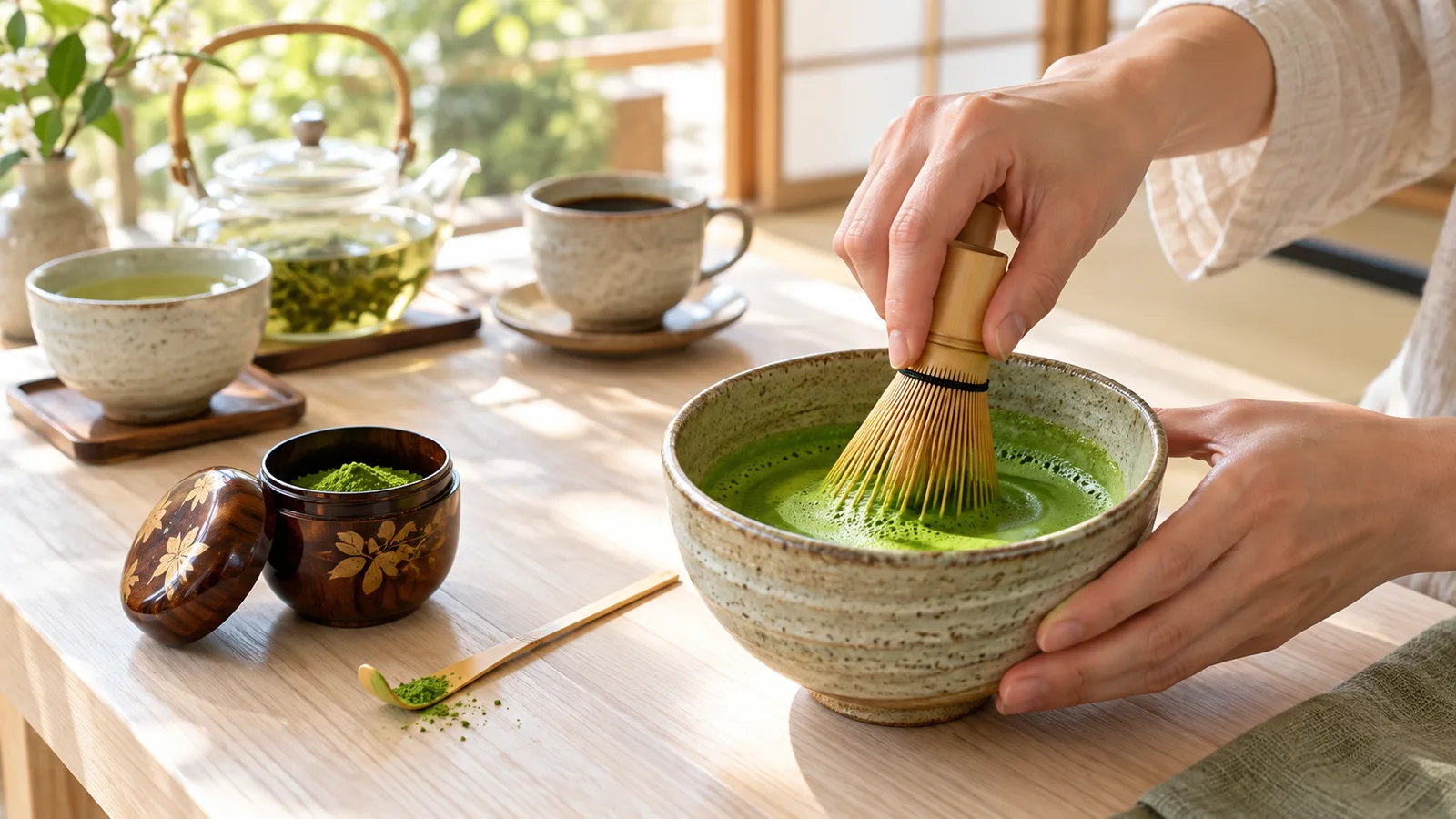
Most people who have tried matcha in Japan have drunk usucha, or "thin tea": a bright green bowl with a fine layer of foam. In the tea ceremony there is a second way to prepare the same powder, koicha, or "thick tea", which is dark, glossy and almost as thick as warm honey. Both appear in a formal tea gathering, and both are matcha. The difference lies in how much powder is used, how much water is added and what the host does with the whisk.
This guide explains how the two differ, why koicha is treated as the high point of a tea gathering, and which one you are likely to meet as a visitor.
Popular in Tokyo right now — our most recommended experience
Tokyo Sushi Making Class : Sake Ceremony & Matcha Experience in Asakusa
The short answer
- Usucha (薄茶, thin tea): a smaller amount of matcha whisked briskly with more water until it is light and frothy. One bowl per guest.
- Koicha (濃茶, thick tea): roughly twice the powder with about half the water, kneaded slowly into a smooth, thick tea with no foam. In a formal gathering, one bowl is shared by the guests.
According to Urasenke, one of the main schools of tea, the powder itself is made the same way for both: tea leaves ground on a stone mill. What changes is the preparation, and, as we explain below, the grade of matcha that suits each one.
Powder and water
Measurements vary by school and by tea merchant, so treat these as typical rather than fixed:
- Usucha: Urasenke gives about 1.8 g of matcha per bowl. The Kyoto tea merchant Ippodo suggests 2 g with 60 ml of water at 80°C, and the tea company Itoen also gives about 2 g per serving.
- Koicha: Urasenke gives about 3.75 g per person. Ippodo suggests 4 g with only 30 ml of water at 80°C.
So koicha uses roughly twice the matcha and half the water. That ratio is what turns it from a drink into something closer to a thin, pourable paste.
Whisking versus kneading
In Japanese you tateru (点てる, "whisk") usucha, but you neru (練る, "knead") koicha. Tea merchants make the distinction clearly.
For usucha, the whisk moves quickly back and forth so that the tea foams. Ippodo describes vigorous whisking for about 15 seconds in an "M" shape. Urasenke aims for a fine foam without large bubbles. Other schools prefer less foam: a teacher of the Omotesenke school writes that they avoid whisking too much. So if you see bowls with very different amounts of froth, both can be correct.
For koicha, the whisk moves slowly through the thick tea to dissolve the powder evenly without creating foam. One tea retailer describes first kneading the tea with part of the water and then adding more to reach drinking thickness. Ippodo compares the result to something between maple syrup and warm honey.
Taste and texture
Itoen describes koicha as rich and viscous, with strong umami and aroma. Usucha takes its name from being lighter by comparison. Ippodo puts it neatly: koicha is "the dark chocolate to usucha's milk chocolate".
Because koicha is so concentrated, good koicha should taste deep and sweet rather than harsh. Ippodo even suggests eating something before drinking it, as it can feel overwhelming on an empty stomach. If you are worried about bitterness in general, our guide to whether matcha tastes bitter explains what affects it.
Why grade matters more for koicha
Any bitterness or roughness in the tea is concentrated in koicha. A tea retailer selling Uji matcha notes that strongly bitter, lower grades are unsuitable for koicha. Tea recommended for koicha can also be whisked as usucha, but tea sold for usucha is not necessarily good as koicha. Ippodo similarly advises choosing a matcha with more sweetness and less sharpness for koicha.
This is also why Japanese tea shops often label matcha as suitable for koicha or for usucha. Outside Japan you will more often see "ceremonial grade" and "culinary grade". Several Japanese tea merchants point out that these are not official standards in Japan. In a Japanese shop, "for koicha" and "for usucha" are the more useful clues.
If you plan to take matcha home, our guide to buying and storing matcha from Japan covers what else to check on the tin and how to keep it fresh.
Some matcha names follow an old naming tradition. The same retailer explains that teas for koicha often end in mukashi (昔), and teas for usucha in shiro (白). Different stories are told about where these names came from, so think of them as a tradition rather than a rule.
How each is served in a tea gathering
The Omotesenke school describes koicha as the central moment of a full tea gathering, or chaji. One bowl of koicha is passed from guest to guest, each drinking a share. Usucha comes afterwards and closes the gathering, with each guest usually receiving their own bowl.
The sweets differ too. Urasenke explains that omogashi, moist sweets such as kinton or steamed buns, are served before koicha, and higashi, dry sweets such as rakugan and senbei, before usucha.
At larger, less formal tea events, and at most tea experiences for visitors, you will usually be served usucha only. Koicha is generally kept for formal occasions.
Usucha vs koicha at a glance
| Usucha (thin tea) | Koicha (thick tea) | |
|---|---|---|
| Matcha per serving | About 1.8–2 g | About 3.75–4 g |
| Water | About 60 ml | About 30 ml |
| Preparation | Whisked (tateru), usually foamy | Kneaded (neru), no foam |
| Texture | Light, frothy | Thick, glossy, like warm honey |
| Serving | One bowl per guest | One bowl shared in a formal gathering |
| Sweets | Dry sweets (higashi) | Moist sweets (omogashi) |
| Matcha grade | Usucha or koicha grade | Koicha grade, less bitter |
Which one will you try in Tokyo?
If you are visiting a matcha café, buying a matcha latte or joining a short tea experience, you will usually be drinking usucha, or a drink made from usucha-style matcha. Koicha is something you are more likely to meet at a formal tea ceremony with a tea teacher.
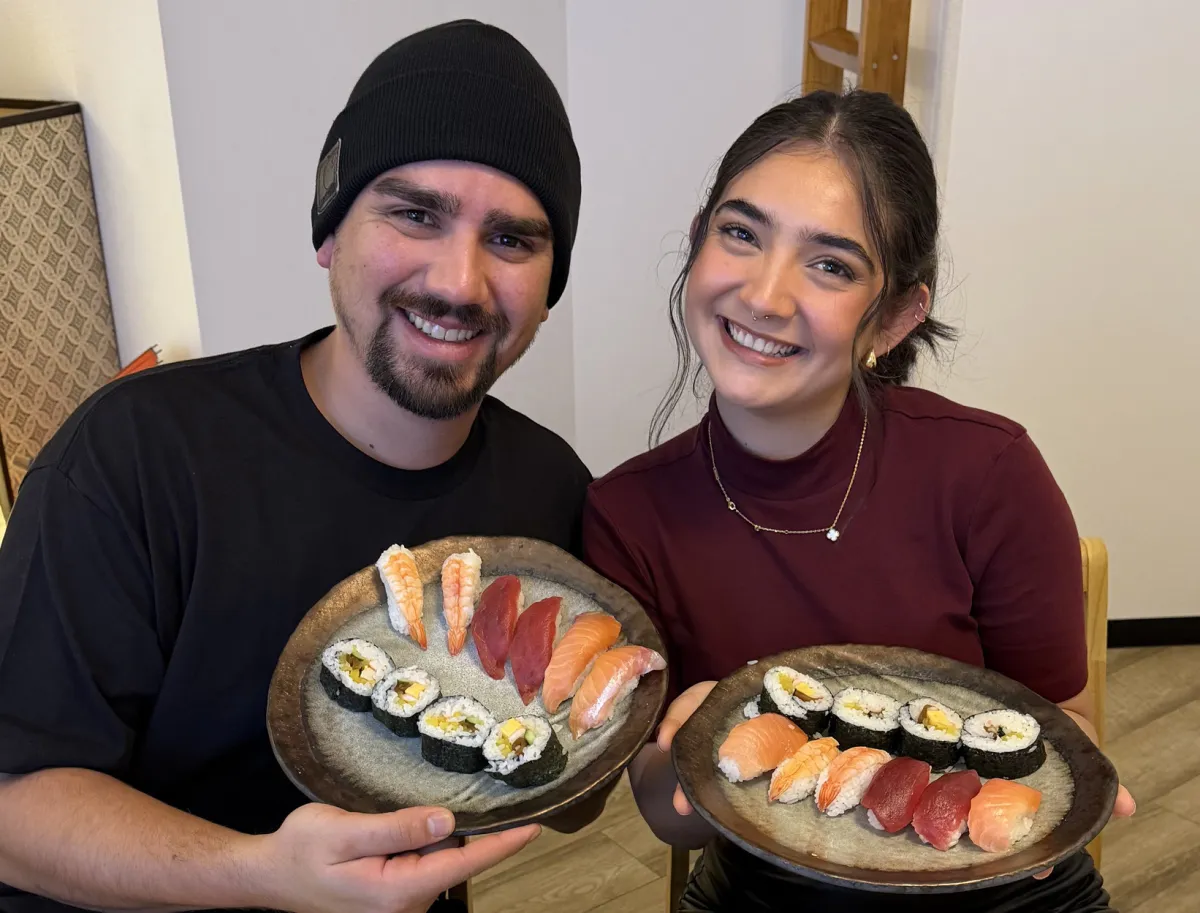
In our Asakusa sushi making class with matcha, the matcha part is usucha. After making and eating your nigiri and maki, you whisk your own frothy bowl of matcha with a bamboo whisk, with instructions in English. It is a combined food and tea class rather than a formal tea ceremony, and koicha is not part of it. If you are deciding between a hands-on class and a tea ceremony, our guide to matcha workshops and tea ceremonies explains what each involves.
If you are still learning the basics of Japanese tea, our comparison of hojicha and matcha covers how roasted and powdered green tea differ, and our guide to caffeine in matcha explains how much is in a bowl of usucha.
A simple way to remember
Usucha is whisked, light and for everyone. Koicha is kneaded, thick and shared. Once you have whisked a bowl of usucha yourself, you will understand why koicha needs a different grade of tea and a slower hand. If you would like to try the first part, book a class and whisk your own matcha after making sushi.
Related Articles
Hojicha vs Matcha: What Is the Difference?
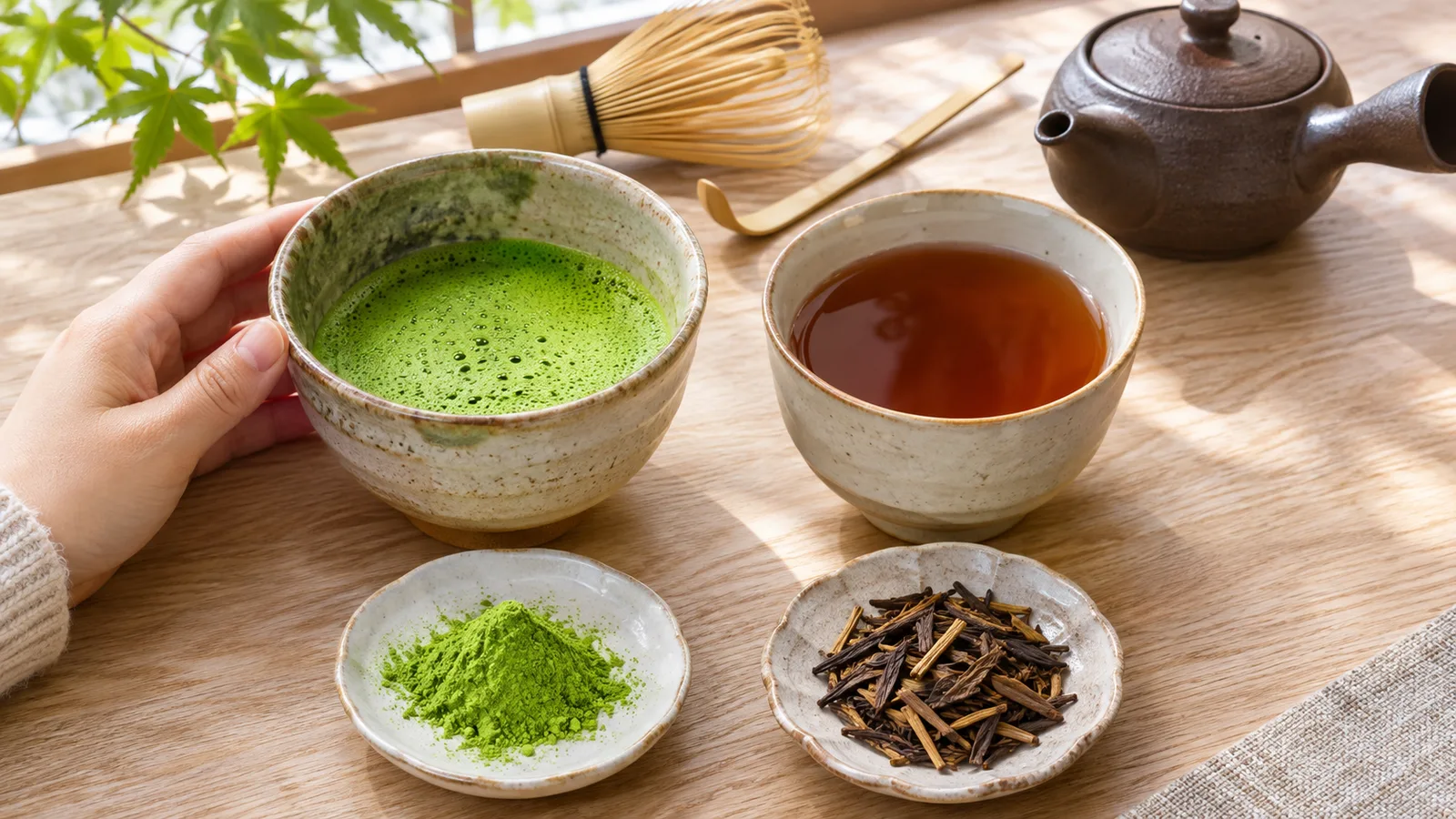
Hojicha and matcha are both Japanese green teas, but one is roasted and one is ground. Compare colour, taste, caffeine, preparation and where to try each.
How to Buy and Store Matcha from Japan
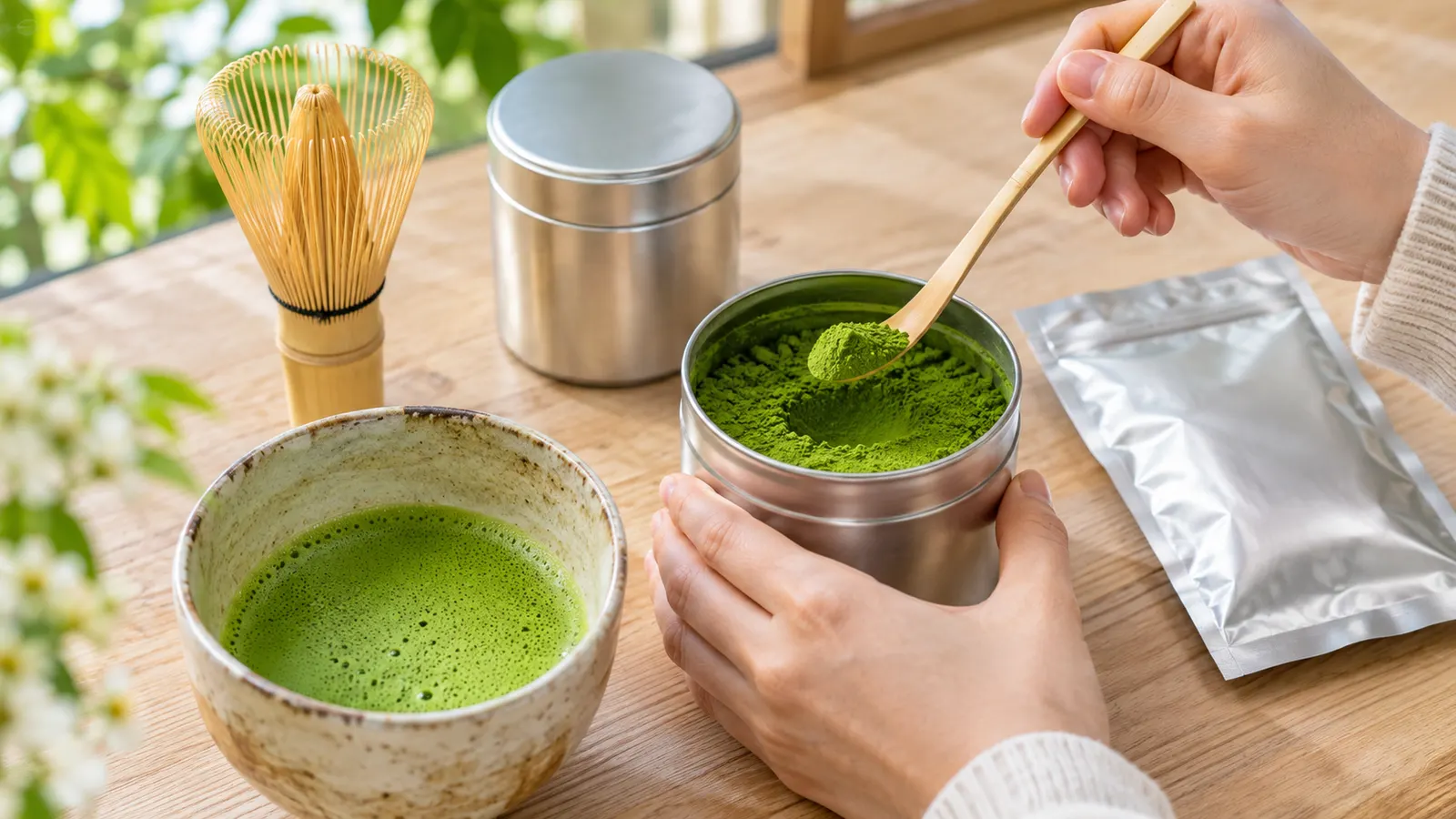
Buying matcha to take home from Japan? What to check on the pack, how much to buy, how to keep it fresh and what to know at customs and tax-free counters.
How Much Caffeine Is in Matcha?
How much caffeine is in a bowl of matcha compared with coffee and sencha? Official figures, guidance for children and pregnancy, and evening class tips.