Hojicha vs Matcha: What Is the Difference?
Walk through any Tokyo convenience store, café or sweet shop and you will see two teas side by side: bright green matcha and reddish-brown hojicha. Both appear as lattes, soft-serve, cakes and bottled drinks, and both are sold as "green tea". If they come from the same plant, why do they look and taste so different? And if you only have time to try one properly in Japan, which should it be?
This guide explains what each tea is, how they differ in the cup, and how to experience them during a trip.
Popular in Tokyo right now — our most recommended experience
Tokyo Sushi Making Class : Sake Ceremony & Matcha Experience in Asakusa
The short answer
Both teas come from the same tea plant. The difference is in how the leaves are grown and processed.
- Matcha is made from tea plants that are shaded before harvest. The leaves are steamed, dried and ground into a fine powder. You whisk the powder into water and drink the whole leaf.
- Hojicha is green tea that has been roasted. It is usually made from leaf tea such as bancha or sencha, and sometimes from stems. You normally steep the roasted leaves in hot water and then remove them, like other leaf teas.
So matcha is ground, and hojicha is roasted. Most of the other differences follow from that.
Colour and aroma
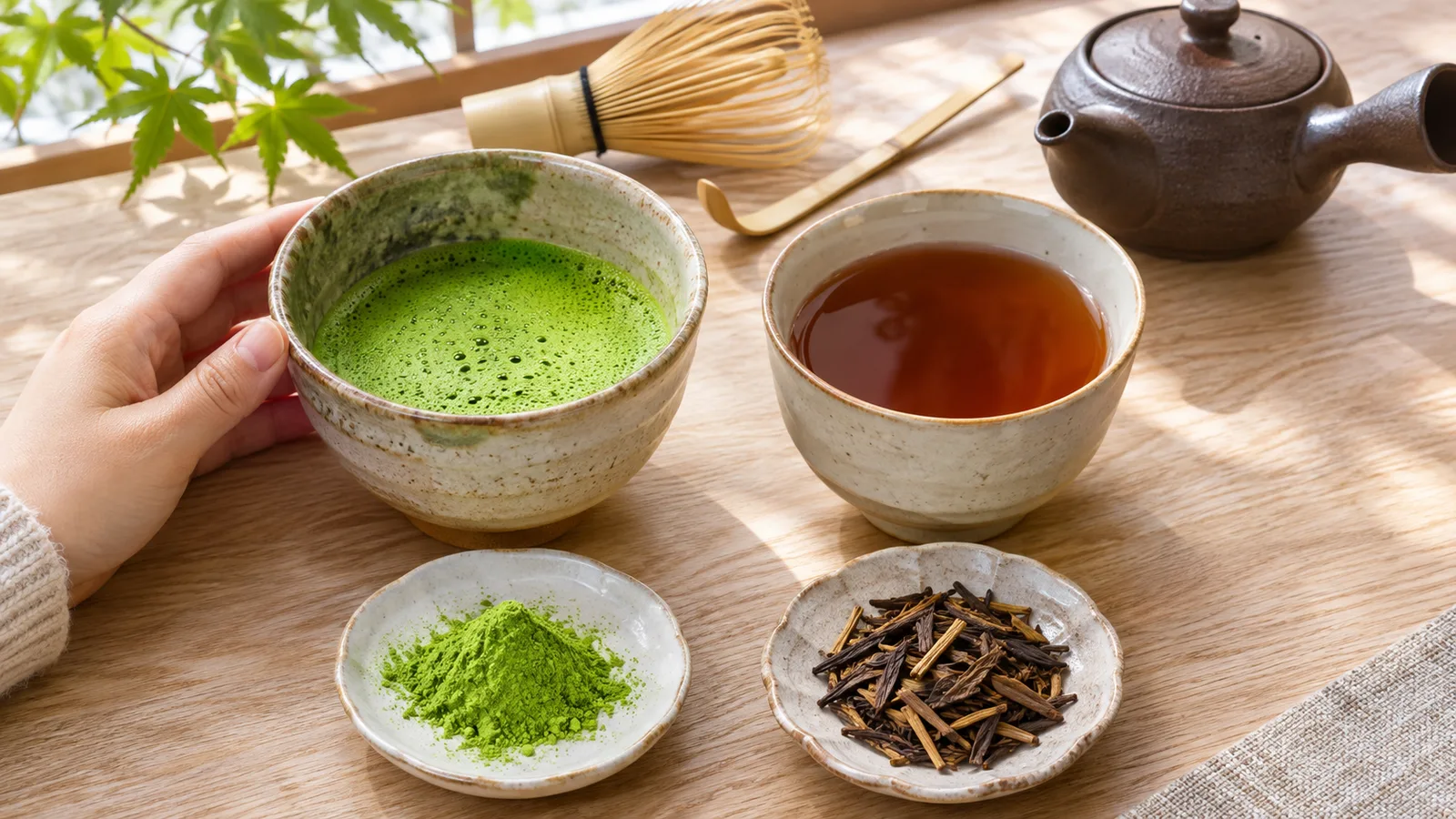
Matcha is vivid green. A well-whisked bowl has a fine, pale foam on top and a fresh, grassy smell.
Roasting turns hojicha leaves brown, and the brewed tea is amber to reddish-brown. The smell is toasty, often described as nutty, caramel-like or a little smoky. Many visitors first notice it in the air outside tea shops that roast leaves in the window.
If you see a brown latte on a Tokyo café menu labelled "green tea", it may well be hojicha, although the label or ingredient list is the reliable way to check.
Taste
Matcha has a full, savoury flavour, often called umami, with a gentle bitterness that varies with the grade and with how it is prepared. Water that is too hot, or too much powder for the amount of water, makes it taste sharper. We cover what to expect in more detail in our first-timer's guide to matcha.
Hojicha is softer and rounder. Roasting reduces much of the grassy, astringent edge that some people dislike in green tea, which is why hojicha is often recommended to people who find green tea bitter. It is easy to drink with food, and it is common in Japan to drink it after a meal.
Neither tea is "better". They suit different moments: matcha when you want something concentrated, hojicha when you want something comforting and everyday.
Caffeine
Both teas contain caffeine, but hojicha is generally considered the lower-caffeine choice. Roasting and the leaves usually used for hojicha both play a part. Matcha tends to deliver more per serving because you drink the whole ground leaf rather than an infusion.
Exact amounts vary widely between products, serving sizes and preparation methods, so treat any single figure you see online with caution. If you are sensitive to caffeine, check the label of the product you buy, choose smaller servings and avoid either tea late in the evening. If you are pregnant or have medical advice about caffeine, follow that advice.
How each is prepared
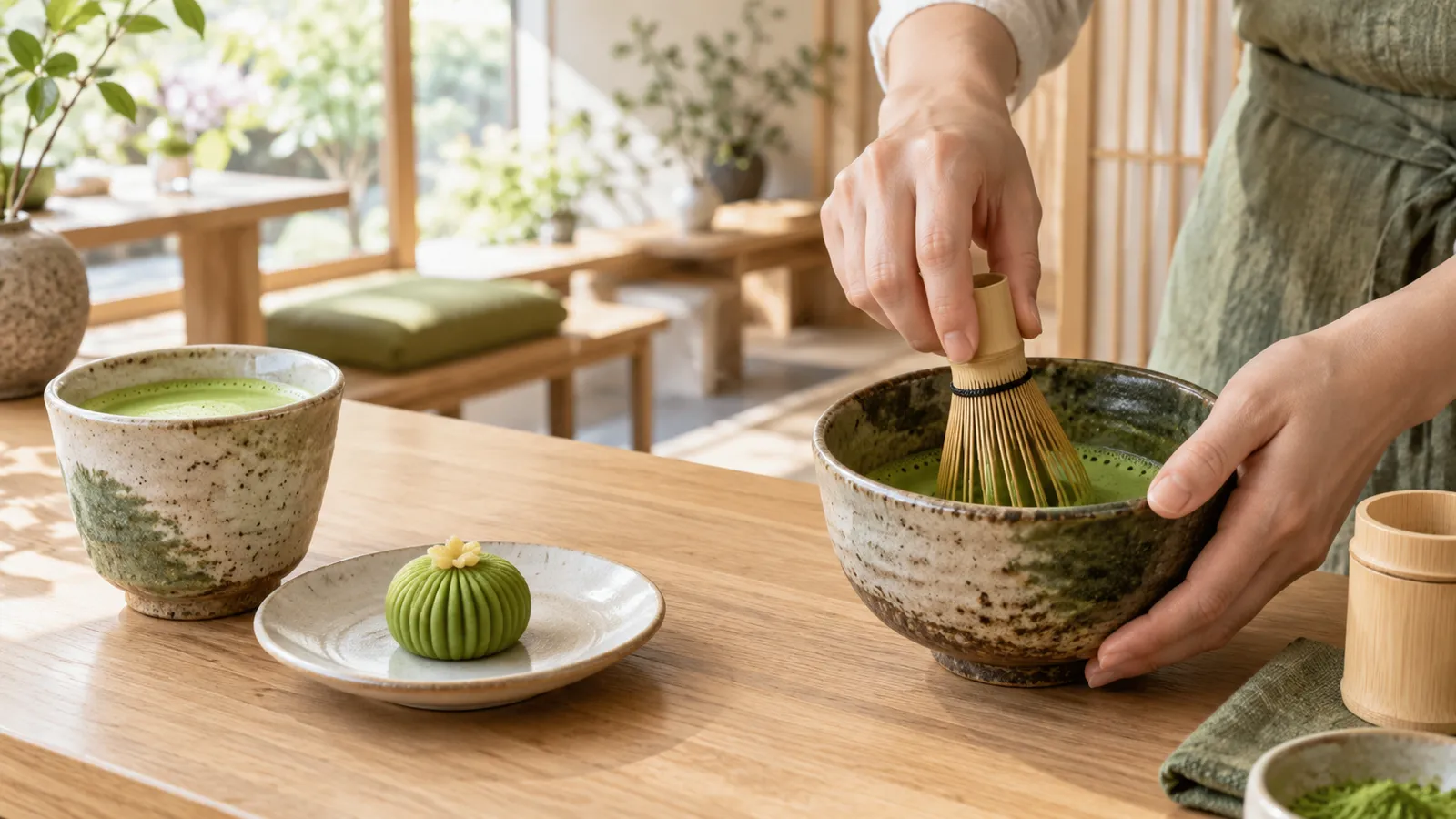
Matcha needs a few simple tools: a bowl, a bamboo whisk (chasen), a scoop (chashaku) and a small sieve. You sift the powder, add warm rather than boiling water and whisk quickly in a zigzag motion until a fine foam forms. The technique is simple to learn but takes practice to do well.
Hojicha is easier. Put the leaves in a teapot, pour in hot water, wait a short time and pour. There is no whisking. Hojicha powder also exists and is used for lattes and sweets, but the classic way to drink it is as a brewed leaf tea.
This is the most practical difference for a traveller. Matcha is something you can learn to make; hojicha is something you mostly just enjoy.
Hojicha vs matcha at a glance
| Matcha | Hojicha | |
|---|---|---|
| Processing | Shade-grown leaves, ground into powder | Green tea leaves or stems, roasted |
| Colour | Bright green | Amber to reddish-brown |
| Flavour | Rich, savoury, gently bitter | Toasty, mellow, low bitterness |
| Caffeine | Usually higher per serving | Usually lower |
| Preparation | Whisked powder | Steeped leaves |
| Typical moment | Whisked at home, in cafés or tea experiences; also used in tea ceremony | Everyday, with or after meals |
Which should you try in Tokyo?
Try both if you can, because they are easy to find and inexpensive in casual forms. A hojicha latte or hojicha soft-serve is a pleasant afternoon snack, and many tea shops sell small bags of roasted leaves to take home.
Matcha is the one that rewards a little guidance. The difference between a café latte and a bowl you whisk yourself is large: you see how the powder, water and whisk work together, and you taste matcha in its traditional form rather than mixed with milk and sugar. Our comparison of a matcha café or a matcha class in Asakusa explains when each choice makes sense.
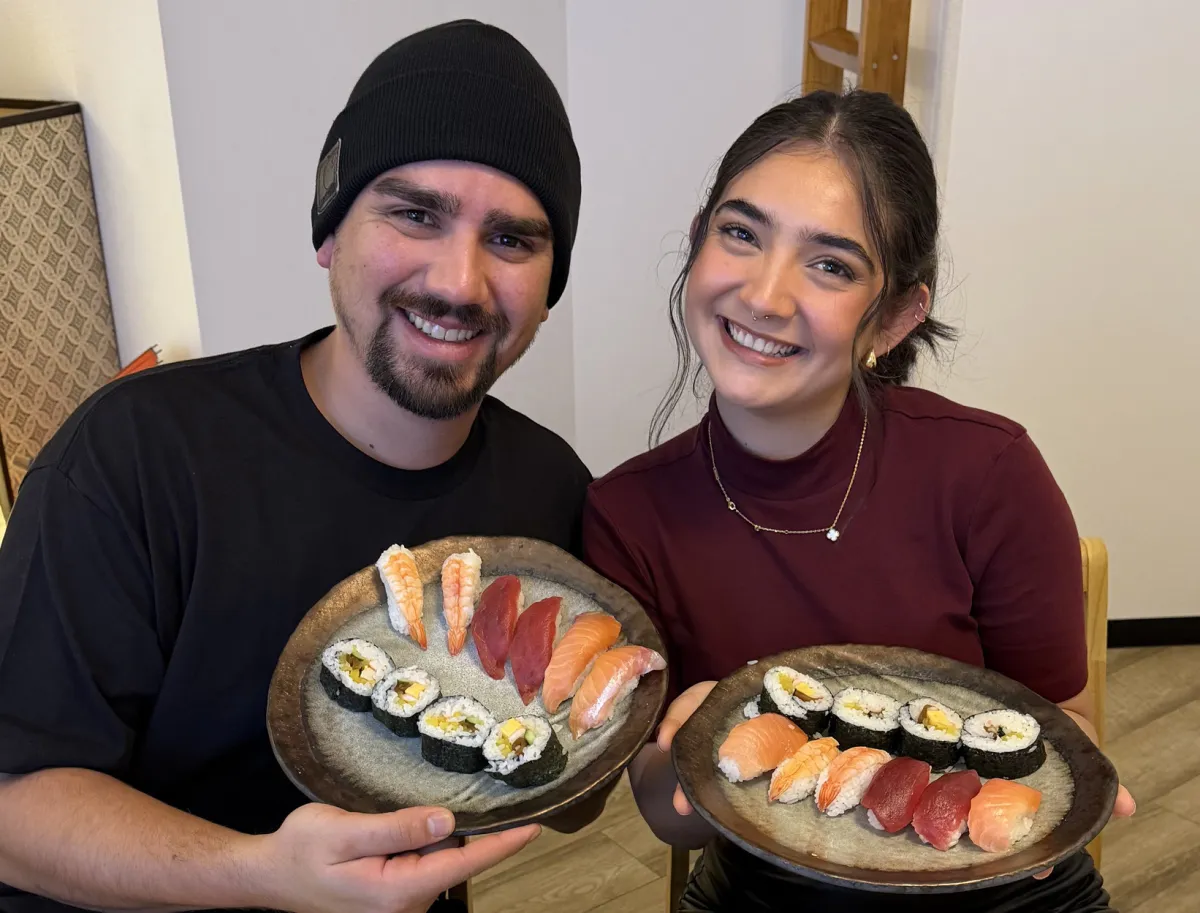
If you want to whisk matcha yourself, our Asakusa sushi making class with matcha includes whisking your own bowl after you make nigiri and maki, with English-language instruction. It is a combined food and tea class rather than a formal tea ceremony; this guide to matcha workshops and tea ceremonies explains the difference before you book. If you eat a plant-based diet, the vegan sushi class runs in the same 90-minute format and also includes whisking matcha.
Matcha itself can be prepared in two very different ways. Our guide to usucha and koicha explains the thin, whisked matcha most visitors drink and the thick, kneaded tea served at formal tea gatherings.
The class focuses on matcha. We do not promise hojicha as part of it, so plan a café or tea shop stop if you want to taste the roasted tea too.
Buying tea to take home
- For matcha, look for a fresh, bright green powder in a small, sealed tin or pouch, and check the production or best-before date. Once opened, keep it sealed and away from heat and light. Matcha intended for drinking straight is usually labelled differently from matcha intended for cooking and lattes.
- For hojicha, leaf tea keeps well and is easy to brew at home with only a teapot or a strainer. It is a practical gift for friends who do not want to buy whisking tools.
Check your home country's customs rules for food and plant products before you fly. Packaged, commercially sealed tea is usually straightforward, but rules differ.
A simple way to remember
Matcha is the tea you whisk; hojicha is the tea you roast and steep. Matcha is green and concentrated, enjoyed in everyday drinks as well as in the formal tea ceremony. Hojicha is brown, gentle and the kind of tea many Japanese people drink with dinner.
To understand matcha properly, try whisking a bowl yourself. To understand hojicha, order a cup with a meal and notice how easily it sits alongside food.
Related Articles
Usucha vs Koicha: Thin and Thick Matcha
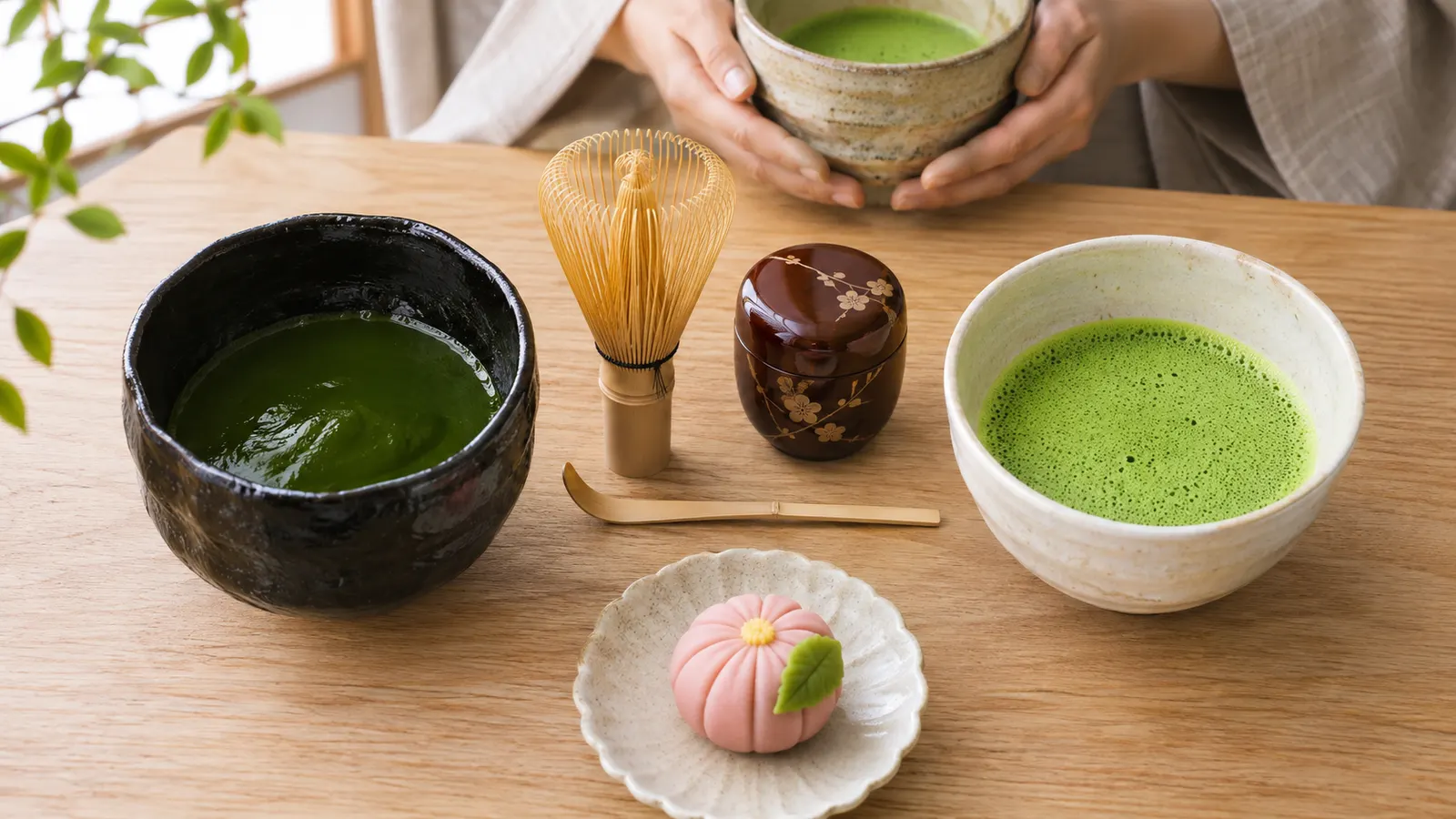
Usucha is whisked thin matcha; koicha is thick matcha kneaded to a glossy paste. How they differ in powder, water, taste and etiquette.
Is Matcha Bitter? What to Expect
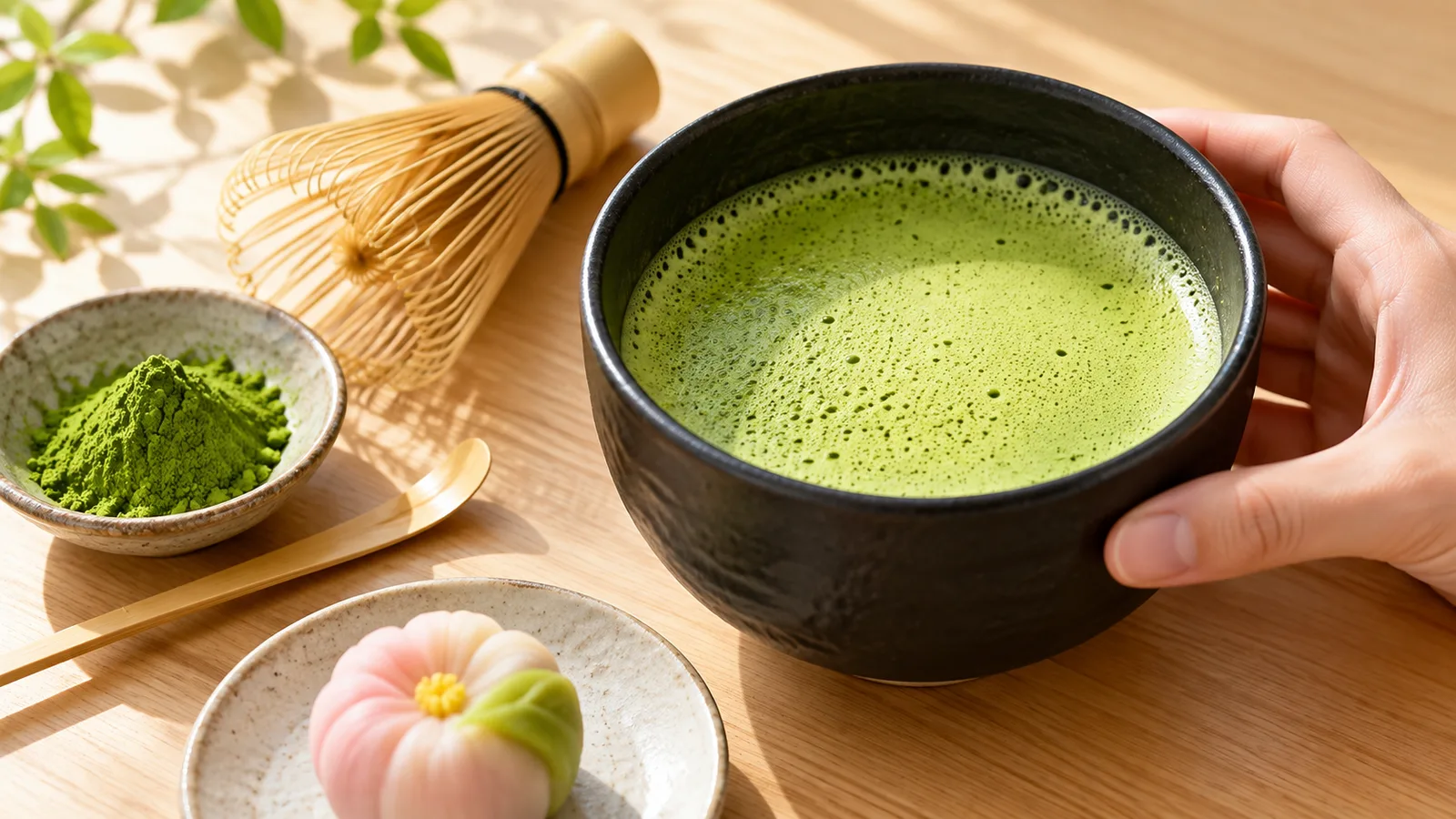
Worried matcha will taste too bitter? Why it can, why well-made matcha tastes smooth and savoury, and how whisking it yourself changes the cup.
Matcha in Asakusa: Café or Whisk Your Own?
Want matcha in Asakusa? Compare a café stop with whisking your own bowl in a class: time, booking, what you taste and how to fit both into one day.