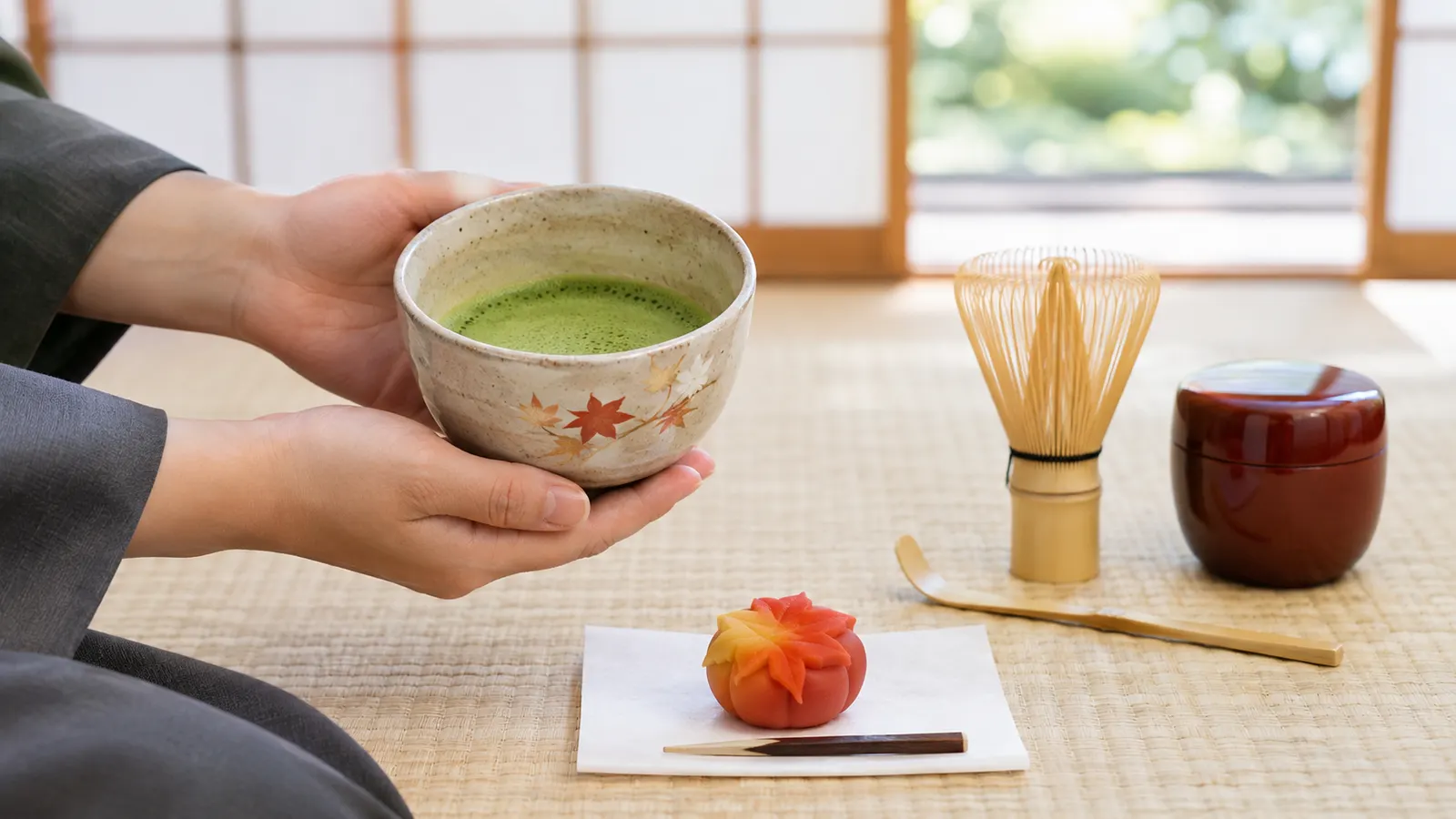
Tea Ceremony Etiquette for Guests in Japan
Many visitors want to try matcha in Japan, and many worry about the same thing: doing it wrong. Will you be expected to know when to bow, which way to turn the bowl or what to say? This guide walks through what a guest does when served a bowl of matcha in the traditional way, based on what the main tea schools publish, and explains which parts matter at a relaxed matcha experience.
The short version: the host's job is to make you comfortable. Nobody expects a first-time visitor to know the full form. Knowing the basic steps simply lets you relax and enjoy the bowl.
Popular in Tokyo right now — our most recommended experience

Tokyo Sushi Making Class : Sake Ceremony & Matcha Experience in Asakusa
Schools differ, and that is normal
The Japanese way of tea (chado or sado) has several schools. The best-known are Urasenke, Omotesenke and Mushakojisenke. They share the same basic flow, but details such as the exact words, the direction you turn the bowl and the order of the last steps vary. The steps below follow the published guides from Urasenke and Omotesenke. If your host shows you something different, follow the host.
Step 1: the sweet comes first
In the procedures the tea schools describe, a Japanese sweet (wagashi) comes before the tea. Its sweetness prepares your palate for the gentle bitterness of matcha.
- Moist sweets (omogashi) are taken onto your own paper with a pick. Urasenke explains that the guest uses a single pick, called a kuromoji, to take the sweet.
- Dry sweets (higashi) are usually taken by hand onto your paper.
- The paper is called kaishi. At a visitor experience, follow the host on whether paper or a plate is provided.
Finish the sweet before the tea arrives. In formal tea, moist sweets go with the thick tea (koicha) and dry sweets with the thin tea (usucha), but at a relaxed visitor experience you may receive a single sweet, or none at all. Our guide to usucha and koicha explains the two styles of tea.
Step 2: receive the bowl and greet
When the bowl is placed in front of you:
- If there is a guest after you, place the bowl between you and say "Osaki ni" ("Excuse me for going first") with a small bow. Urasenke describes this greeting to the next guest.
- Bring the bowl back in front of you and bow to the host with a phrase of thanks. Urasenke's guides give "Otemae chodai shimasu" or the more formal "Otemae chodai itashimasu", roughly "I gratefully receive your tea".
If you forget the words, a quiet bow is still a polite way to show your thanks.
Step 3: hold the bowl and turn it
Pick up the bowl with your right hand and rest it on the palm of your left hand, with your right hand supporting the side. Lift it slightly as a gesture of thanks.
The front of the bowl, usually the side with the most attractive pattern, faces you when it is served. To avoid drinking from the front, you turn the bowl before you drink. Both Urasenke and Omotesenke describe turning it twice. Urasenke's guide turns it towards you with the right hand. Japan's national tourism organization gives the simple version: rotate it slightly so you are not drinking from the front.
The idea behind it is modesty: you leave the best side of the host's bowl untouched.
Step 4: drink and finish
Drink calmly, savouring the tea. The schools' guides for beginners do not set a fixed number of sips for usucha. A site run by the head family of Urasenke notes that the last sip is drawn in with a slight sound, which tells the host you have enjoyed every drop. It is not rude in this setting.
Our guide to whether matcha is bitter explains what to expect from the taste the first time.
Step 5: wipe, look and return
When you have finished:
- Wipe the rim. Use the thumb and index finger of your right hand to wipe the spot where you drank, then wipe your fingers on your paper.
- Turn the bowl back so the front faces you again, as when it was served.
- Look at the bowl. Place it in front of you, put your hands down and take a moment to admire its shape. Keep it low, because tea bowls can be valuable.
- Return it to where it was served. In Urasenke's guide, you turn it twice more with your right hand before setting it down.
Both Urasenke and Omotesenke describe turning the bowl back before admiring it, but small details, such as the direction of each turn, differ between schools. If your host does it differently, follow the host.
Sitting, clothing and small courtesies
- Seiza. In a tatami room, guests traditionally kneel in seiza. It is tiring if you are not used to it. Some venues for visitors offer chairs or allow you to sit differently; ask. Tea at a table is also a recognized form: Urasenke's 11th grand master created a style using chairs, called ryurei.
- Jewellery and watches. Tea utensils are handled with care, so a common recommendation is to remove rings, watches and bracelets that could knock against a bowl.
- Socks. Many tea rooms are tatami-floored, and clean white socks are a traditional courtesy. At a casual venue, clean socks are enough.
- Phones and photos. Ask the host before taking photos.
A full ceremony or a relaxed matcha experience?
A formal tea gathering follows all of the steps above, and some last much longer. Many experiences for visitors are lighter: you may watch a demonstration, whisk your own bowl and drink it at a table. Our guide to choosing a matcha workshop or a tea ceremony helps you decide which suits you.
Our signature sushi and matcha class in Asakusa belongs to the relaxed side. It is a 90-minute sushi making class, not a formal tea ceremony. After making and eating your sushi, you whisk your own bowl of matcha with an English-speaking instructor, and there is no etiquette test. Knowing why you might turn the bowl or wipe the rim simply adds meaning to a few quiet minutes at the end of the class.
Wear comfortable clothes with sleeves you can roll up; our guide on what to wear and bring to a sushi class has the details. Check the booking calendar for open dates, then enjoy your first bowl of matcha without worrying about getting it wrong.
Related Articles
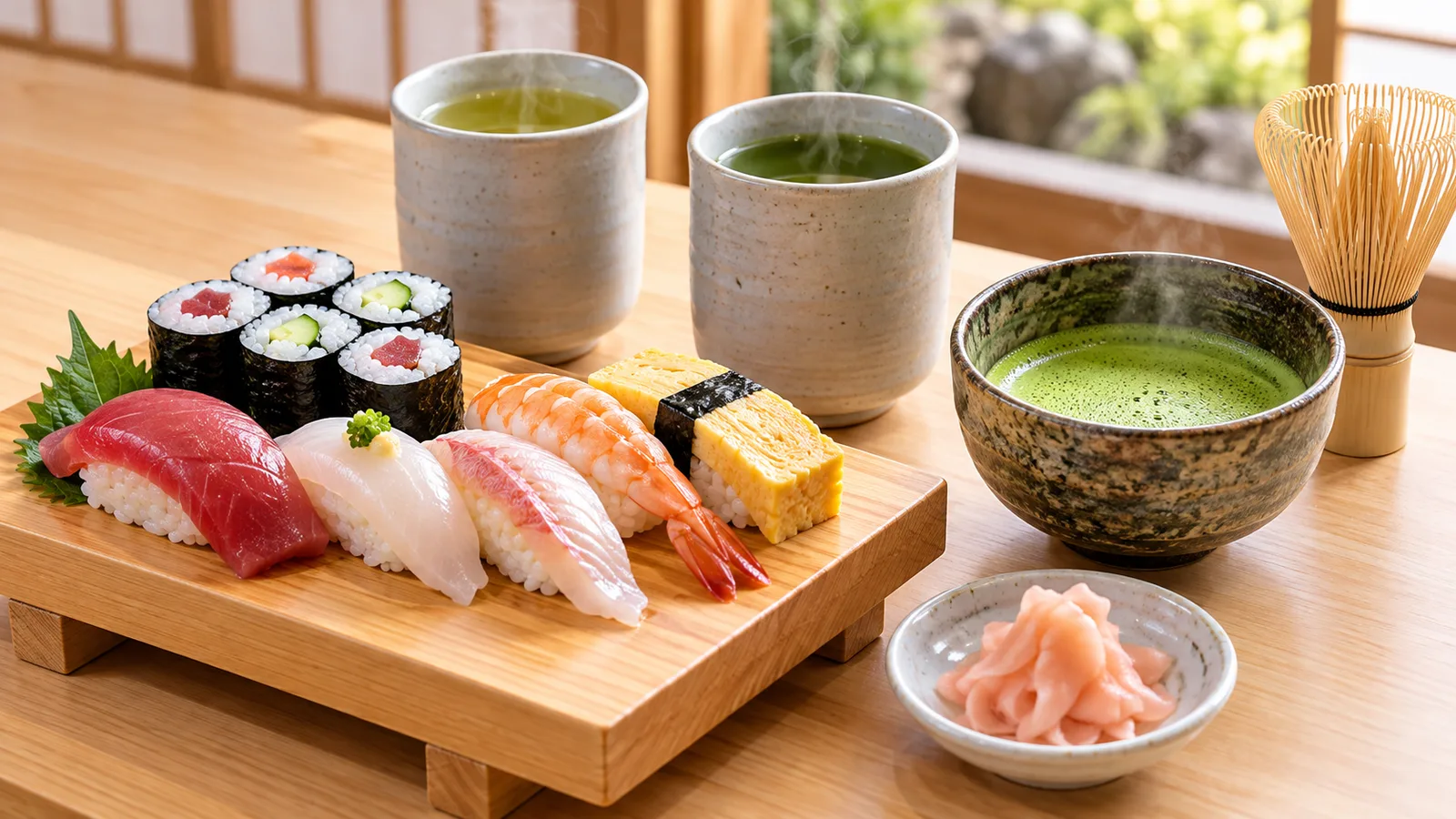
Green Tea With Sushi: Agari, Sencha, Matcha
Why sushi shops in Japan serve green tea, what agari means, and how sencha, powdered tea and matcha differ, plus where each fits in a sushi class.
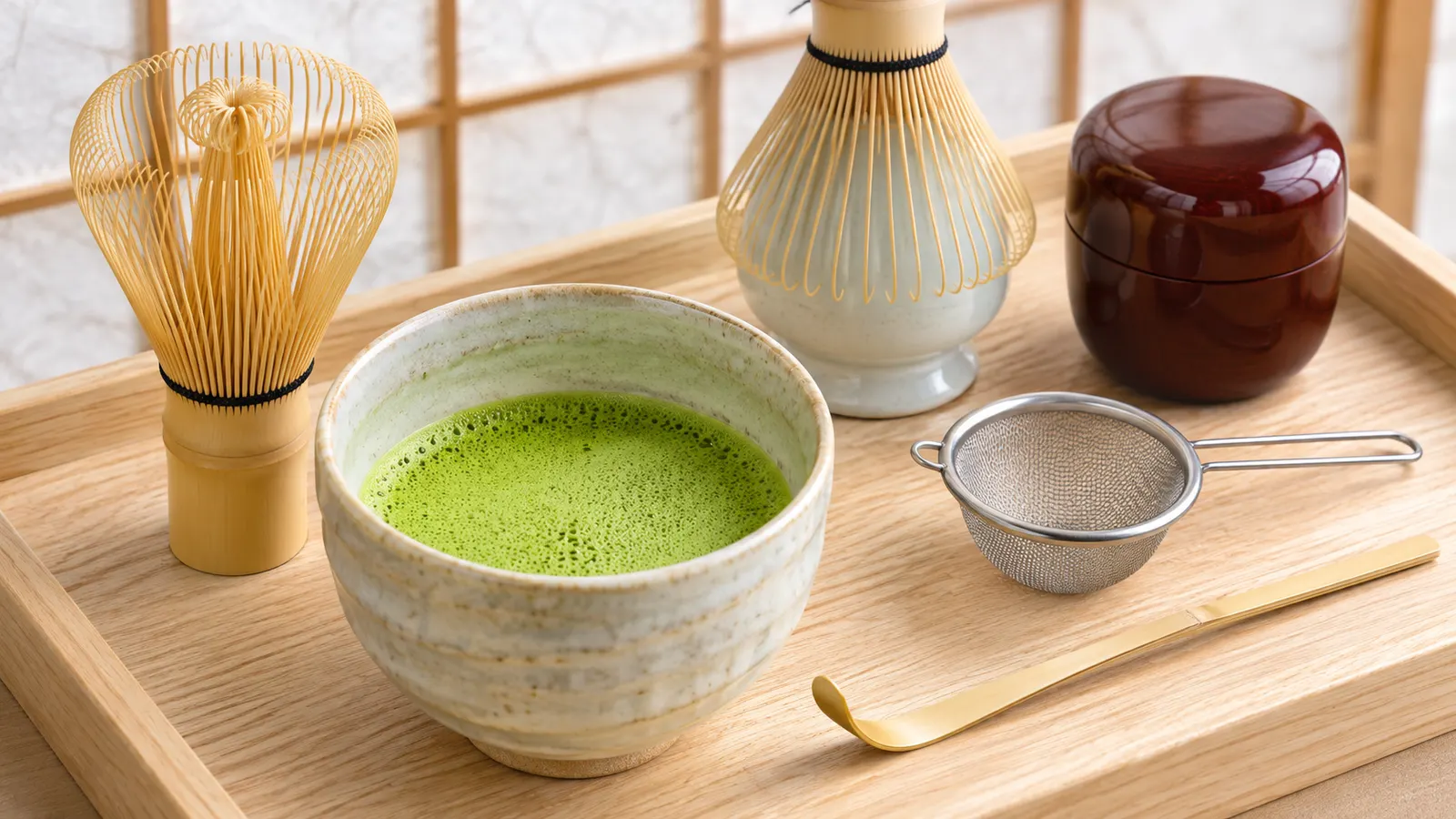
Chasen: Using and Caring for a Matcha Whisk
The bamboo matcha whisk explained: where chasen are made, how to whisk in 15 seconds, how to soak, clean and dry one, and when to replace it.
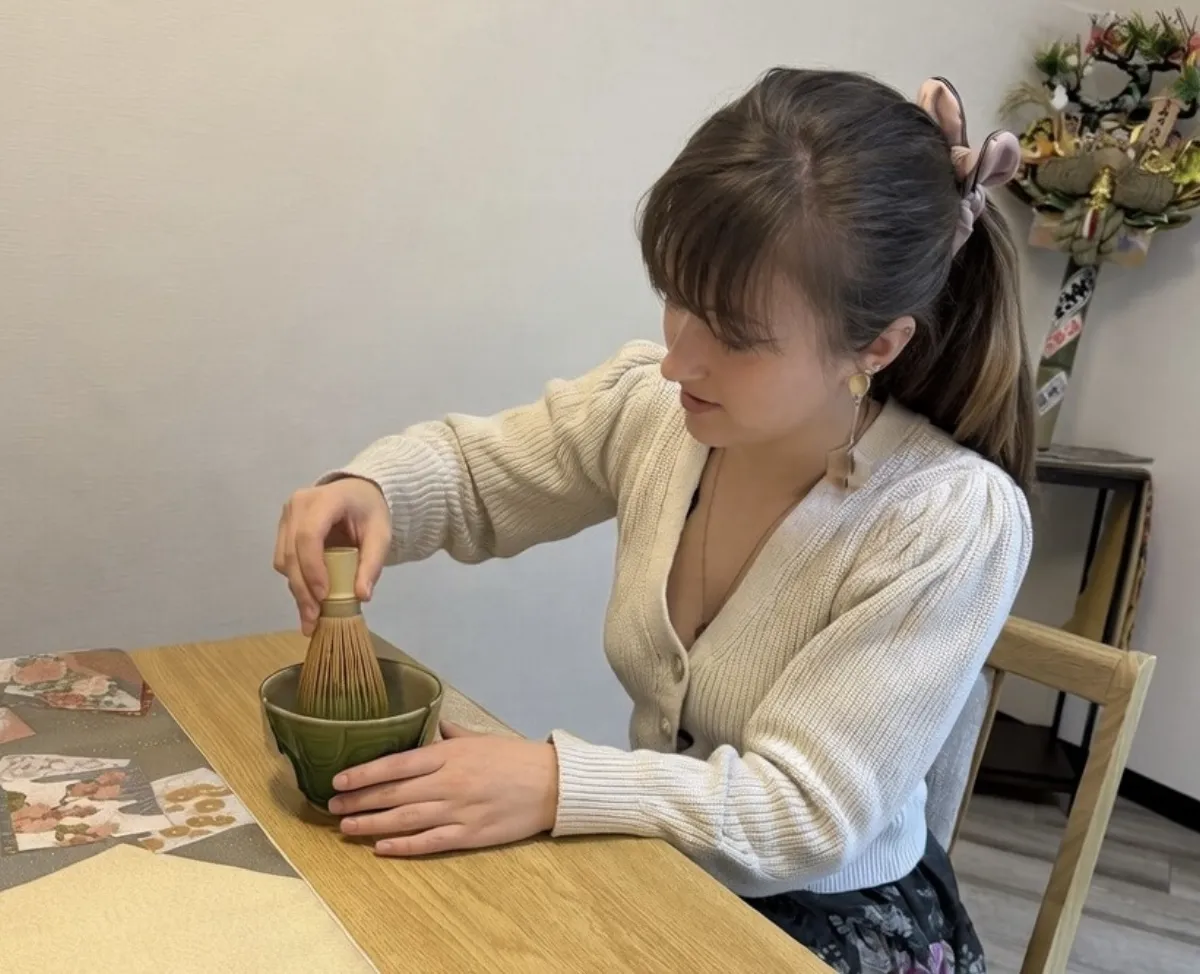
Matcha Workshop or Tea Ceremony?
Choose a matcha experience in Tokyo by what you want to do: whisk tea, explore tea ceremony, or combine matcha with a sushi class in Asakusa.