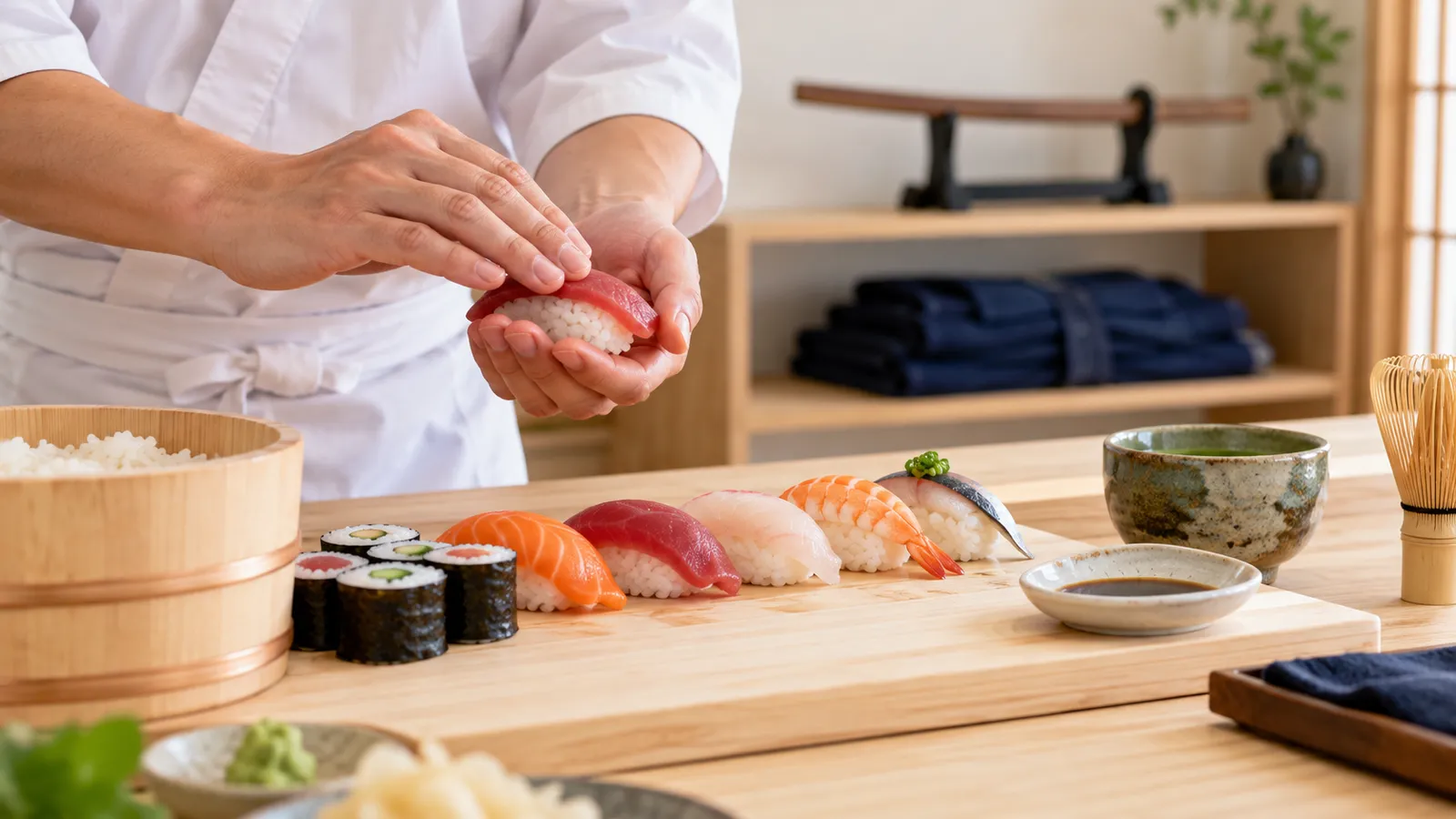
Samurai Experience or Sushi Class in Tokyo?
A samurai experience and a sushi class are two of the most booked hands-on activities for visitors to Tokyo, and both are easy to find in Asakusa. They often end up competing for the same free afternoon. They are very different activities, though, and the right choice depends less on which one sounds more "Japanese" and more on what your group wants to do with its hands, how long you have, and whether you need to eat.
This guide compares the two honestly. We run a sushi class, so we have a view, but a samurai experience is the better choice for some travellers, and many people can fit both into one day.
Popular in Tokyo right now — our most recommended experience
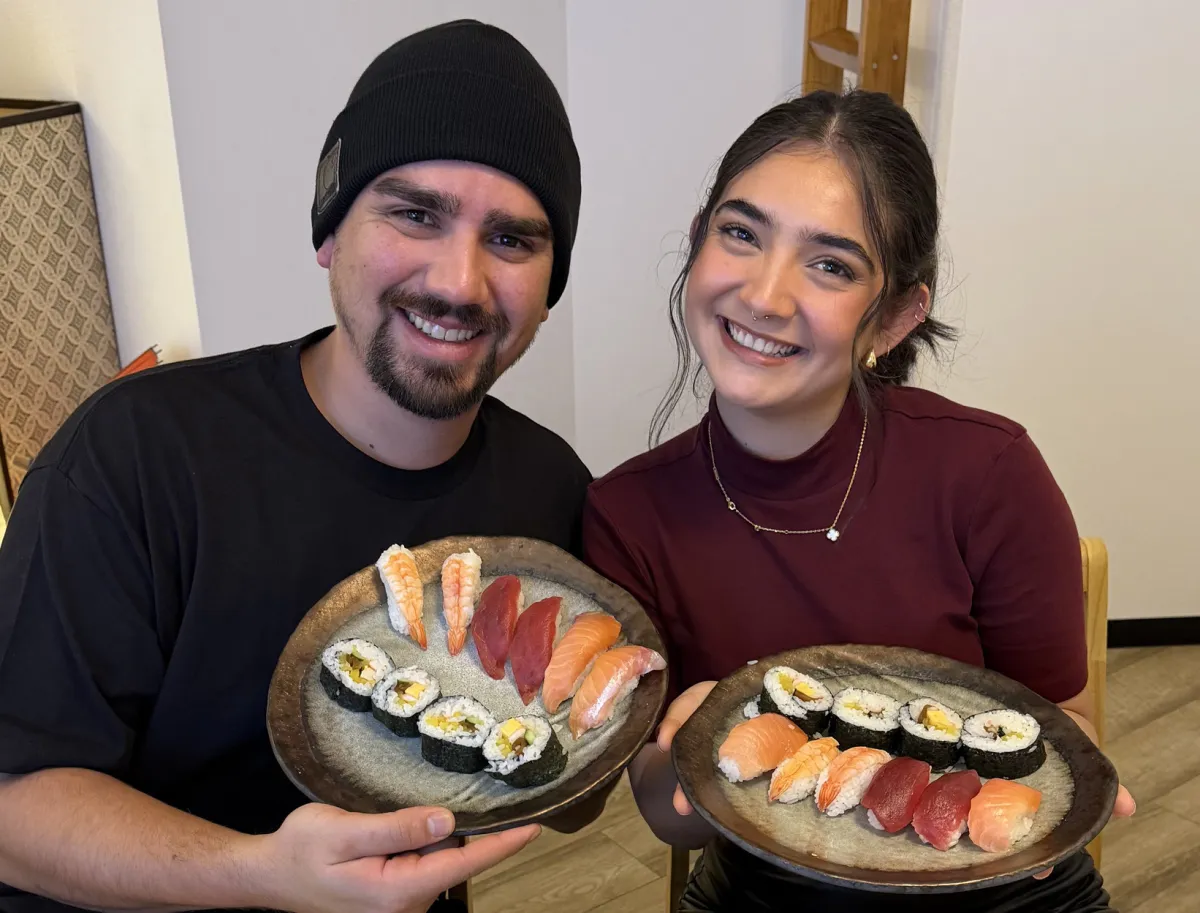
Tokyo Sushi Making Class : Sake Ceremony & Matcha Experience in Asakusa
What each experience actually is
A samurai experience is a broad label. In Asakusa it usually means one of two things. Shorter plans, around an hour, combine a guided tour of a small museum about samurai history with trying on armour or a helmet for photos. Longer plans, around two hours, add a costume such as a hakama and a lesson in how to hold and swing a sword, usually with practice or replica blades. Some plans include cutting a rolled mat under supervision. What is included varies a great deal between operators and between plans from the same operator, so read the plan page rather than the headline.
Our sushi class is a 90-minute session in our studio near Asakusa Station. You learn to prepare sushi rice, shape nigiri and roll maki, guided in English. Each person usually makes 8 to 10 pieces, then sits down to eat them as a full meal. The class includes a sake toast (water or green tea is available instead) and finishes with each guest whisking their own bowl of matcha. You can see the details on the signature sushi and matcha class page.
Time and cost
Both activities take a similar slice of the day: roughly one to two hours for a samurai plan and about 90 minutes for the sushi class, plus 10 minutes to arrive early.
The cost comparison needs care because the two products include different things. On one Asakusa samurai museum's own website, plans range from about 3,500 yen for a guided tour with armour try-on to about 8,000 yen for a two-hour sword experience. Our signature class is listed at 12,000 yen per adult. That price includes the ingredients, the sushi you eat as a meal, the sake toast and the matcha, so it also replaces lunch or an early dinner. When you compare, add the cost of the meal you would otherwise buy after a samurai session. Our guide to what is included in the class price lists everything.
Prices and plans change, so check the current figures on each booking page.
Food: the biggest practical difference
A samurai experience is not a meal. A sushi class is. That matters for planning:
- If you book a samurai session over lunchtime, you still need to find food afterwards, which in central Asakusa can mean queues.
- If you book the sushi class at midday, it becomes your lunch, and the rest of the afternoon is free.
- If you do both, put the sushi class where your main meal would be and keep the other meal light. Our guide to planning meals around a sushi class has simple patterns.
Dietary needs also play out differently. They rarely matter for a samurai experience, while a sushi class can adapt: no-raw-fish options, a fully plant-based menu in the same session, and allergy alternatives if you tell us when booking.
Ages, groups and physical effort
Samurai operators often welcome young children for the costume and photo parts, but plans with sword handling or cutting can have higher minimum ages. Check the age rule for the specific plan, especially if you have children under about 10.
Our shared class accepts children aged 4 and above. Children aged 4 to 12 have their own ticket category, and guests aged 13 and over book as adults. Children under 4 can come along and share with a parent if you tell us when booking.
Physically, a sword lesson involves standing, stepping and swinging with both arms, sometimes for a long stretch. The sushi class is done standing at a table with light hand work and a long seated meal. Neither is strenuous, but they suit different bodies. If grip strength or standing for long is a concern, our guide to a sushi class with limited hand strength may help.
Photos and souvenirs
Samurai experiences are built around photos: armour, helmets and costume shots are often the main souvenir. If striking pictures are your priority, that is a real advantage.
In the sushi class, photos and videos are welcome throughout, and instructors are happy to take group shots. The souvenir is different: you leave knowing how to make sushi, and you have eaten what you made. If you want a skill you can repeat at home, the class fits better. If you want a picture to frame, the samurai experience fits better.
Which one suits you?
Choose a samurai experience if your group loves Japanese history or martial arts films, photos are the main goal, you have already eaten or will eat elsewhere, or you are travelling with young children who mainly want to dress up.
Choose the sushi class if you want a hands-on skill, you need a meal in the plan anyway, anyone in your group is a food lover, or you want something that works well for mixed dietary needs.
Do both if you have a full day in Asakusa. Because both are close to Senso-ji, the logistics are simple.
How to do both in one day
- Morning: samurai experience. Some Asakusa operators open from 9:00. Finish by late morning.
- Short break. Walk through Senso-ji and Nakamise rather than eating a large snack. Our guide to Senso-ji and a sushi class on the same day suggests a route.
- Midday: sushi class as lunch. Arrive 10 minutes early to store bags and wash hands.
- Afternoon: free. Take a river cruise, visit Skytree, or rest.
You can reverse the order and take an evening class, but avoid putting a long sword lesson directly before the class if your arms tire easily. Leave at least 30 minutes between the two to allow for overruns.
If you are also weighing up other traditional activities, our comparisons of kimono rental and a sushi class and a matcha workshop and a tea ceremony work in the same way.
Before you book
Book the activity with the least flexible schedule first. Then check live sessions and the current price on the signature class page. Cancellation is free up to 24 hours before the class, and you can add dietary needs when you book. If something is unclear, contact us before reserving.
Related Articles
Kimono Rental or a Sushi Class in Asakusa?
Kimono rental or a sushi class in Asakusa? Compare time, cost and what you take home, and see how to fit both into one day without sleeves in the rice.
Sumida River Cruise and a Sushi Class
Combine a Sumida River water bus from Asakusa with a sushi class: which order works, how long to allow, and what to check before you board.
Ghibli Museum and a Sushi Class in One Day
Fit the Ghibli Museum in Mitaka and a sushi class in Asakusa into one day. How tickets work, the train route, timing and two plans that leave enough margin.