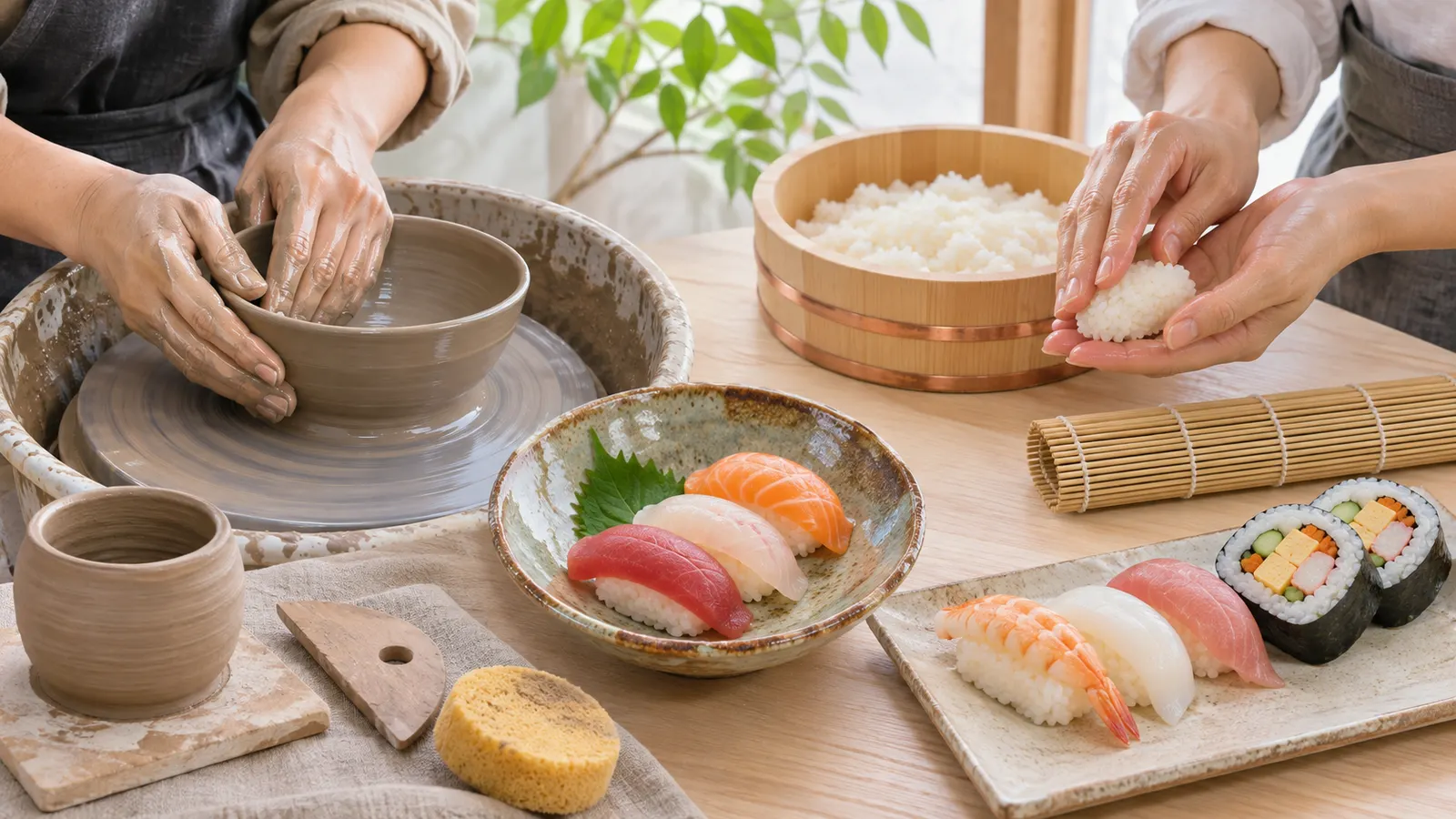
Pottery Class or Sushi Class in Tokyo?
Japanese ceramics are one of the things many visitors fall for in Tokyo, from the bowls in Kappabashi to the tea bowls used for matcha. So it is natural to wonder whether to spend a few hours making a cup or bowl yourself in a pottery (togei) workshop, or to spend them in a sushi class. Both are hands-on, both welcome beginners, and both are easy to find in central Tokyo, including around Asakusa.
They differ in one way that surprises many travellers: what you can actually take with you at the end of the day. This guide compares the two on what you do, the waiting time for your piece, food, ages, clothes and how to do both. We run the sushi class, so we describe our own class from our current class information. Pottery studios vary a lot, so the pottery side is based on what several Tokyo studios publish on their own websites; check the studio you choose before booking.
Popular in Tokyo right now — our most recommended experience
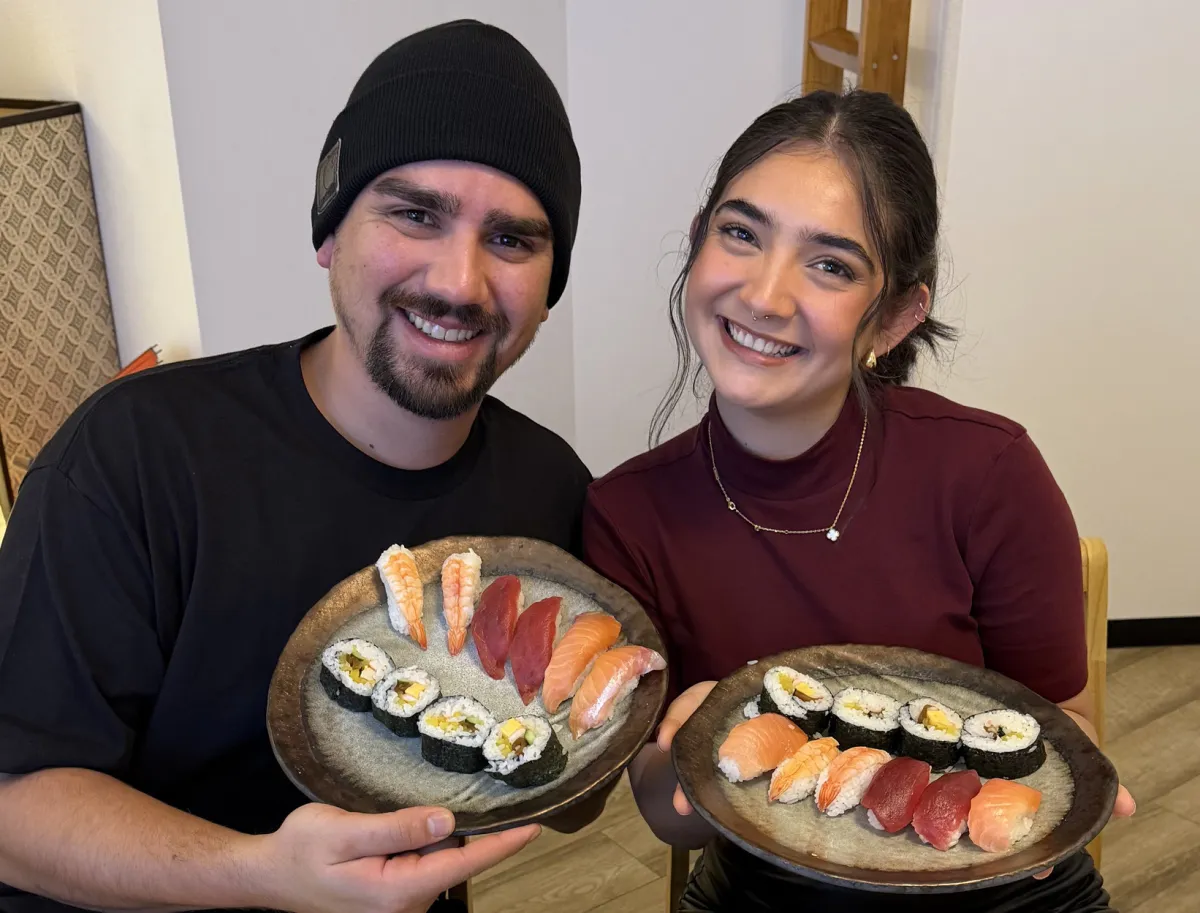
Tokyo Sushi Making Class : Sake Ceremony & Matcha Experience in Asakusa
What each experience is
A pottery workshop usually offers two or three formats:
- Wheel throwing (denki rokuro): you centre clay on an electric wheel and pull up a cup or bowl with wet hands. It is the hardest to get right first time, so an instructor often helps with the trickiest steps.
- Hand-building (tebineri): you pinch, coil and shape clay by hand without a wheel. It is slower and calmer, and easier for children.
- Painting (etsuke): you decorate a piece that has already been shaped and fired once.
At the Tokyo studios we checked on 21 November 2026, such as dakota kobo in Asakusa, Ray Ceramic Studio in Harajuku and TNCA in Minami-Aoyama, trial sessions run from about one hour to about two hours. Published prices range from a few thousand yen to over ¥10,000, depending on the format, the studio and whether you book alone or with others. Check each studio's current page, because prices and schedules change.
Our sushi class is a 90-minute session in Asakusa. With an English-speaking instructor, you learn to shape nigiri and roll a futomaki, toast with sake, sit down to eat everything you made and finish by whisking your own bowl of matcha. The signature class costs ¥12,000 per person, with ingredients, tools, sake and matcha included.
The big difference: the wait for your piece
When you finish at the wheel, your cup is not finished. It has to dry, be trimmed, glazed and fired in a kiln, which the studio does after you leave. The studios we checked give finishing times from a little over two weeks to around two months: dakota kobo in Asakusa says one to one and a half months, TNCA about one month and Ray Ceramic Studio about two months.
That matters if you are only in Japan for a week or two. You will usually need to collect the piece on a later trip or have it sent. Some studios do not ship abroad (Ray Ceramic Studio says so on its English page); others offer international shipping for an extra fee. Ask three questions before you book:
- How many weeks until the piece is ready?
- Do you ship abroad, and how much does it cost?
- Can it be sent to a hotel address in Japan before I leave?
Painting is the exception. Because the piece is already shaped, the wait is often shorter, and some studios offer quick-fired raku-style painting with same-day collection. This is not available everywhere, so if having the object in your suitcase is the point, confirm the firing method and collection time before booking.
With sushi, there is nothing to wait for. You eat the result on the spot and take home the skill and the recipe, shared with participants after the class. Our article on the skills beginners learn in a sushi class explains what the instructors focus on.
Food and dietary needs
Pottery involves no food, which makes it simple for anyone with allergies or strict diets.
A sushi class is a meal as well as an activity, so plan it as lunch or dinner. Our signature class uses fresh ingredients, with the fish depending on the day. If someone in your group is vegan, there is a plant-based version of the class, and our guide to sushi class options without raw fish explains what to ask if someone does not eat raw fish. Raise any food allergy before you pay.
Ages, groups and atmosphere
Age rules at pottery studios vary widely. Some accept small children for hand-building or painting, while others set a minimum age such as seven for wheel sessions. Wheel throwing also takes some arm strength and patience, so it suits teenagers and adults better than young children.
Our regular sushi class accepts children aged four and above, and younger children can come along and share with a parent. Families who prefer the room to themselves can book the family private class.
The mood is different too. Pottery is focused and fairly quiet, especially at the wheel. A sushi class is social: you share a table, toast together and eat together, though drinking is optional.
Clothes and mess
Wet clay gets everywhere. Studios commonly ask you to wear clothes you do not mind getting dirty, some lend work clothes, and wheel sessions are easier in trousers and with short nails. Remove rings and bracelets before you start.
Sushi is less messy, but rice, soy sauce and tea can still mark clothing. Our guide to what to wear and bring to a sushi class has the details.
Which one suits you?
Choose pottery if:
- you want to make a lasting object, such as a cup or a matcha bowl;
- you can wait several weeks for it, or will pay for shipping;
- you enjoy quiet, focused work with your hands.
Choose a sushi class if:
- you want a finished result today, in the form of a meal;
- you would like a skill you can repeat in your own kitchen;
- you are travelling as a family, couple or group and want something social.
If you love Japanese ceramics but cannot wait for a kiln, buying a piece may be the answer. Our guide to choosing a matcha bowl covers shapes, pottery styles and how to carry one home. For other comparisons, see calligraphy or a sushi class and kimono rental or a sushi class.
Doing both in one day
Two sessions of 90 minutes to two hours can fit into one day if the studios are reasonably close and you leave enough time for travel, cleaning up and meals. A morning pottery session followed by sushi as a late lunch works well, because you can wash the clay off and arrive hungry. Leave at least an hour between them for travel and a break. If your studio is near Asakusa, our Kappabashi guide shows how to add a walk along Tokyo's kitchenware street, where you can see plenty of Japanese tableware for sale.
FAQ
Can I make a matcha bowl at a pottery class? Many studios let you make a bowl, and some offer tea-bowl courses. Remember that it will reach you weeks later. In our sushi class you whisk matcha the same day, in a bowl we provide.
Do I need to speak Japanese? Some pottery studios teach in English; ask before booking. Our sushi class is taught in English.
Which is better on a rainy day? Both are indoors. Our studio is about 30 seconds on foot from the North Exit of Tobu Asakusa Station.
Before you book
Decide what you want to take home from the day: an object that arrives weeks later, or a meal and a skill today. If it is the second, book the signature class first, then fit a pottery studio around it. Free cancellation is available up to 24 hours before the class.
Related Articles
Calligraphy or Sushi Class in Tokyo?
Choosing between a Japanese calligraphy (shodo) workshop and a sushi class in Tokyo: what you do, what you take home, food, ages, clothes and doing both.
Nokogiriyama Day Trip & Asakusa Sushi Class
Mount Nokogiri in Chiba: train, ferry and ropeway, Nihon-ji's giant Buddha and Jigoku Nozoki, winter hours, and how to fit a sushi class around the trip.
Sawara Day Trip & Asakusa Sushi Class
Sawara, Chiba's canal town: train and bus routes, the Ono River boat ride, Ino Tadataka Museum and Katori Jingu, and how to fit a sushi class around the trip.