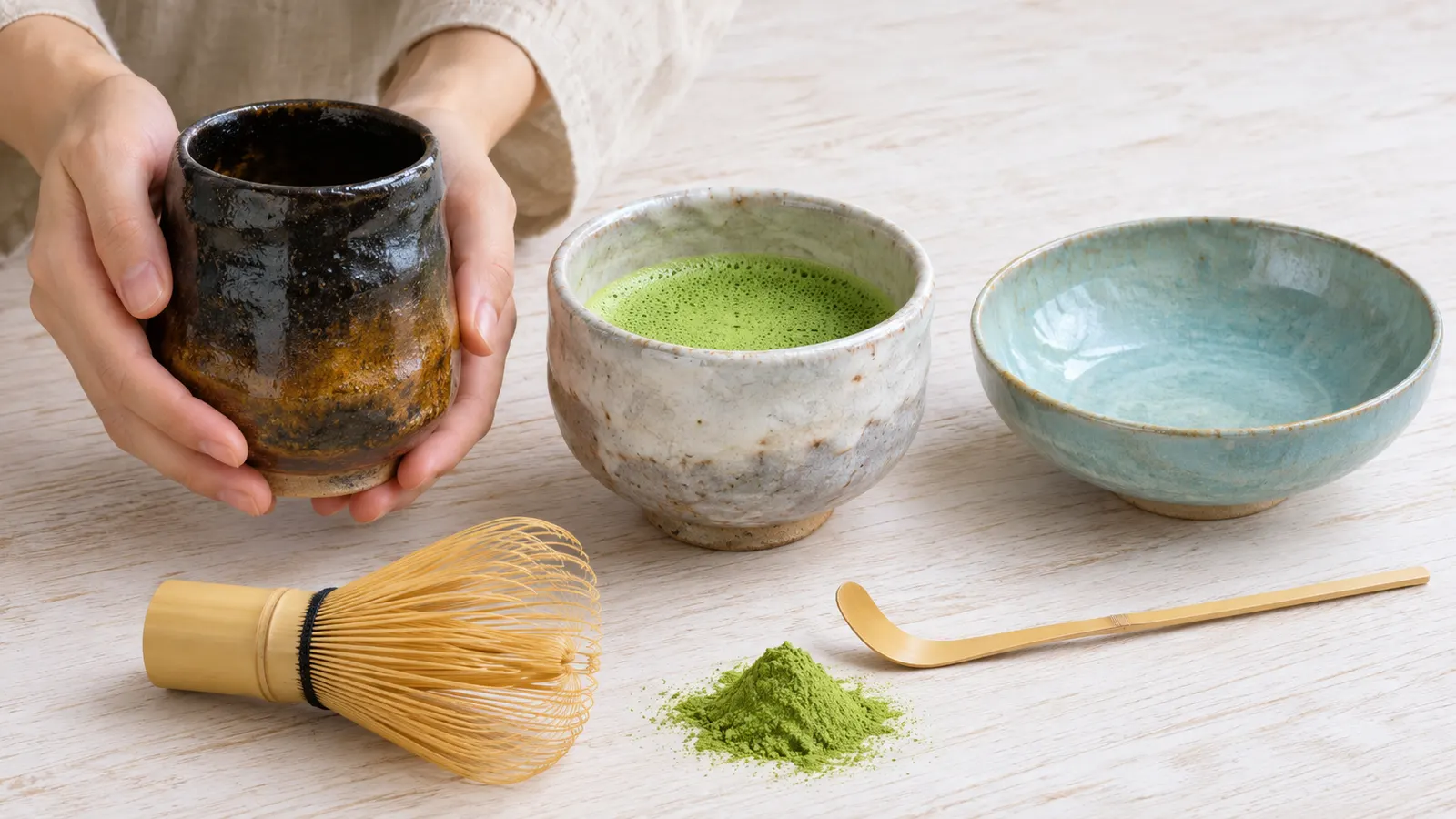
Chawan: How to Choose a Matcha Bowl
A chawan is the bowl you whisk and drink matcha from. It looks simple, but it is the piece of tea equipment people spend the most time choosing. A good bowl gives the whisk room to move, sits comfortably in two hands and keeps the tea warm long enough to drink it slowly.
If you are thinking of bringing one home from Japan, this guide covers the size and shape that work best for a first bowl, why tea rooms change bowls with the seasons, the pottery names you will see in shops, and how to look after a bowl once you have it.
Popular in Tokyo right now — our most recommended experience

Tokyo Sushi Making Class : Sake Ceremony & Matcha Experience in Asakusa
What makes a bowl a matcha bowl
A matcha bowl is wider and deeper than a rice bowl, with enough space for a bamboo whisk to move quickly from side to side. The base usually has a raised foot ring (kodai), which keeps hot tea away from the table and gives your fingers something to hold.
Tea guides commonly describe a standard bowl as about 12 cm across and about 7–8 cm tall, and they recommend this size for a first bowl. A bowl that is too small makes whisking awkward and splashes; one that is too large is hard to hold and lets the tea cool quickly. If you can, pick the bowl up in the shop and cup it in both hands as if you were drinking.
Shapes and the seasons
In formal tea settings, bowls are often chosen to suit the season, although tea schools and hosts differ.
- Tsutsu-chawan (cylindrical bowls) are tall with a narrow opening. They hold heat well, so they are associated with winter, when the room is cold.
- Hira-chawan (flat bowls) are shallow with a wide mouth, often 14 cm or more across and about 5 cm tall. The tea cools quickly, which is why they are associated with summer.
- Standard bowls sit between the two and can be used all year.
For a first bowl, the standard shape is the safest choice because it gives the whisk comfortable room to move. Some beginners find the narrow opening of a cylindrical bowl less convenient, and a flat bowl lets the tea cool sooner. If you already own a standard bowl, a tsutsu-chawan makes a good second bowl for winter.
Pottery names you will see
Bowls are often labelled by the pottery tradition (-yaki) rather than by shape. An old saying among tea people ranks favourite bowls as "first Raku, second Hagi, third Karatsu". You do not need to follow it, but it explains why these names appear so often.
- Raku (Kyoto) bowls are traditionally shaped by hand rather than on a wheel and are often fired at relatively low temperatures. They tend to feel light and soft to hold, but they can be more delicate, and authentic pieces from the Raku family are expensive.
- Hagi (Yamaguchi) bowls often have a soft, pale glaze. The ware is often relatively porous, so it may develop a patina and change colour with use. Some people love this; others prefer a bowl that stays the same.
- Karatsu (Saga) bowls have earthy colours and simple, sturdy shapes.
- Mino (Gifu) covers styles such as Shino and Oribe and is one of Japan's largest pottery regions, so it is easy to find at a range of prices.
- Kyo-yaki (Kyoto) bowls are often brightly painted, with seasonal motifs such as cherry blossoms or autumn leaves.
In Tokyo, department stores, tea shops and tableware streets such as Kappabashi sell everything from inexpensive machine-made bowls to signed pieces by individual potters. A bowl that comes in a wooden box with the potter's name on the lid is usually a hand-made piece and is priced accordingly.
Choosing your first bowl
- Start with the standard size, about 12 cm across.
- Check the inside. A smooth, gently rounded bottom makes whisking easier. Deep ridges or a sharp angle where the wall meets the base catch the whisk and can damage its tines.
- Feel the weight. A bowl that feels light and balanced in both hands is easier to drink from.
- Look at the rim. It should feel comfortable against your lips and have no chips.
- Think about care. If you want a bowl that tolerates everyday use, a harder-fired, well-glazed bowl is easier than soft Raku or porous Hagi.
Your whisk matters as much as the bowl. Our chasen guide explains how to use a bamboo whisk without scraping the bottom of the bowl, and our guide to buying and storing matcha from Japan covers the tea itself.
Caring for a chawan
- Warm it first. Pour hot water into the bowl, rest the whisk in it for a moment, then pour the water away and wipe the bowl dry. This keeps the tea warm and softens the whisk.
- Rinse after use. Use warm water and a soft cloth. Many tea shops advise not using detergent, especially for absorbent wares such as Hagi and Raku, because the clay can take on the smell.
- Dry it fully before you put it away, upside down on a cloth. A bowl stored damp, especially in its wooden box, can develop mould.
- Avoid the dishwasher and microwave unless the shop tells you the bowl is suitable. Care varies by piece, so follow the maker's or shop's instructions where you have them.
Packing a bowl for the flight home
Ceramics are fragile rather than restricted. Wrap the bowl in clothing or the shop's padding, keep it in its box if it has one, and carry it in your hand luggage if you can, where it will not be thrown around. Many shops will pack a bowl for travel if you tell them you are flying.
Whisk a bowl before you buy
It is much easier to choose a bowl once you have whisked tea in one. At the end of our signature sushi and matcha class in Asakusa, you whisk your own bowl of matcha after making nigiri and a futomaki roll and toasting with sake. The class lasts 90 minutes, costs ¥12,000 per person and is taught in English.
If you want to understand what happens to the bowl in a formal setting, our guide to tea ceremony etiquette explains why guests turn the bowl before drinking, and usucha and koicha explains the two strengths of tea a bowl may hold.
FAQ
Can I use a large mug or a cereal bowl instead? For a casual cup, yes. The problem is usually the shape: a narrow mug leaves no room for the whisk, and a thin bowl lets the tea cool quickly.
Is an expensive bowl better for the tea? Not in taste. The price reflects the potter, the materials and the work involved. A well-shaped, inexpensive bowl makes perfectly good matcha.
Which bowl should I buy in winter? For a first bowl, a standard shape. If you already have one and want a seasonal bowl, look at tsutsu-chawan.
Try it in Asakusa
Hold a bowl, whisk a bowl and taste the result before you shop. Book the signature class and take home a clearer idea of the bowl you want.
Related Articles
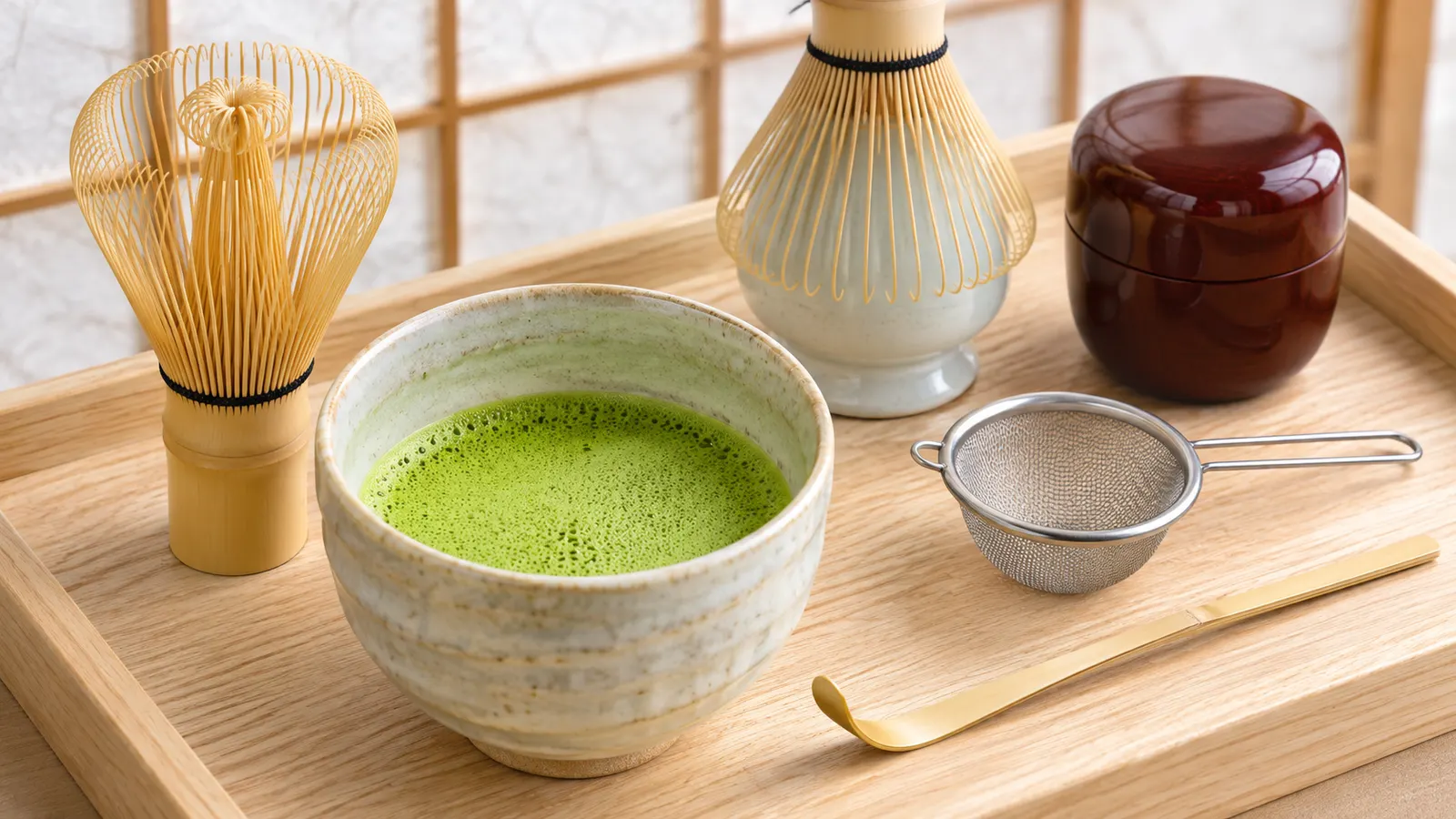
Chasen: Using and Caring for a Matcha Whisk
The bamboo matcha whisk explained: where chasen are made, how to whisk in 15 seconds, how to soak, clean and dry one, and when to replace it.
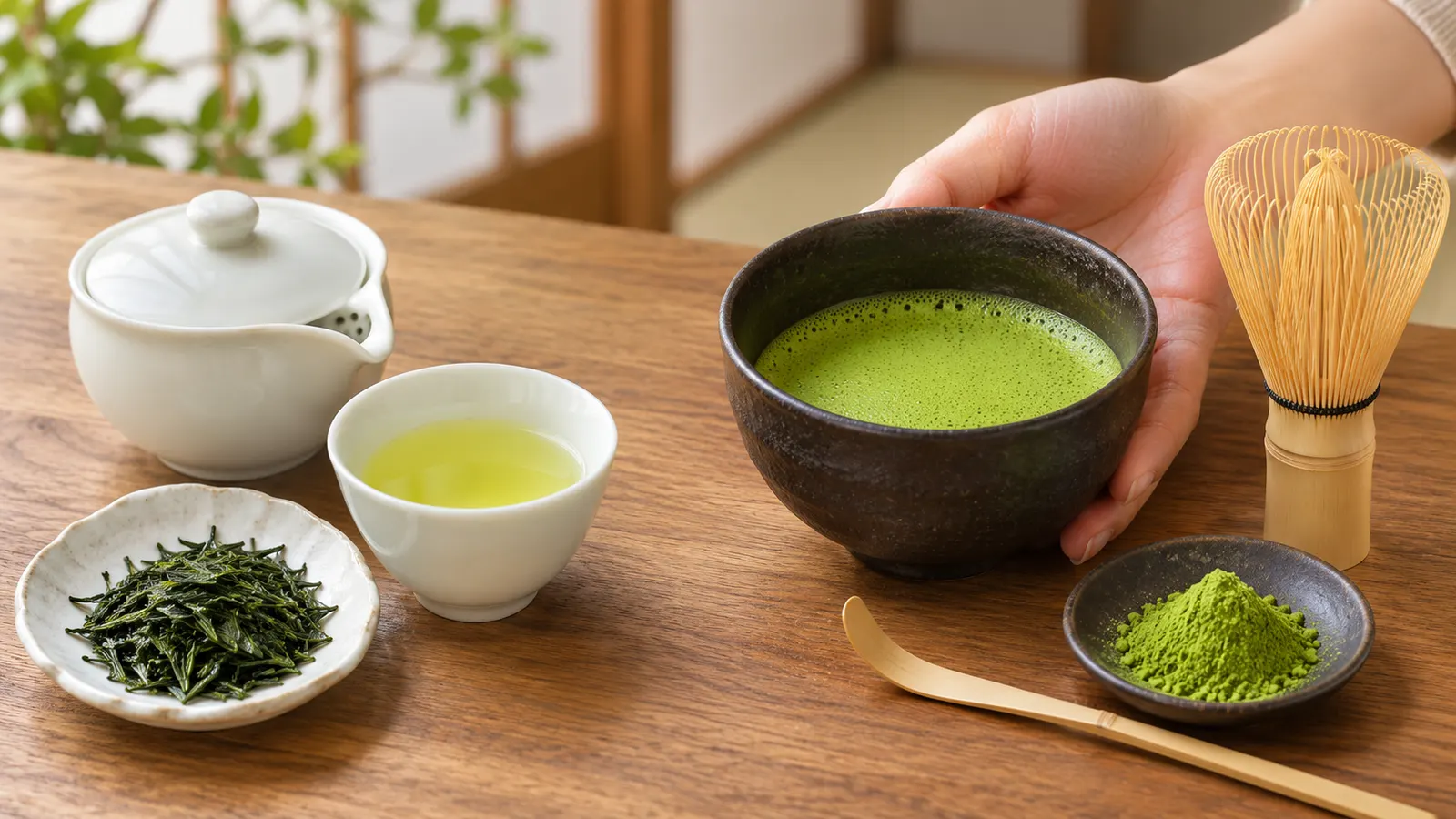
Gyokuro vs Matcha: What Is the Difference?
Gyokuro and matcha are both shade-grown Japanese teas. How the leaves are processed, brewed and tasted differs, plus which to try first in Tokyo.
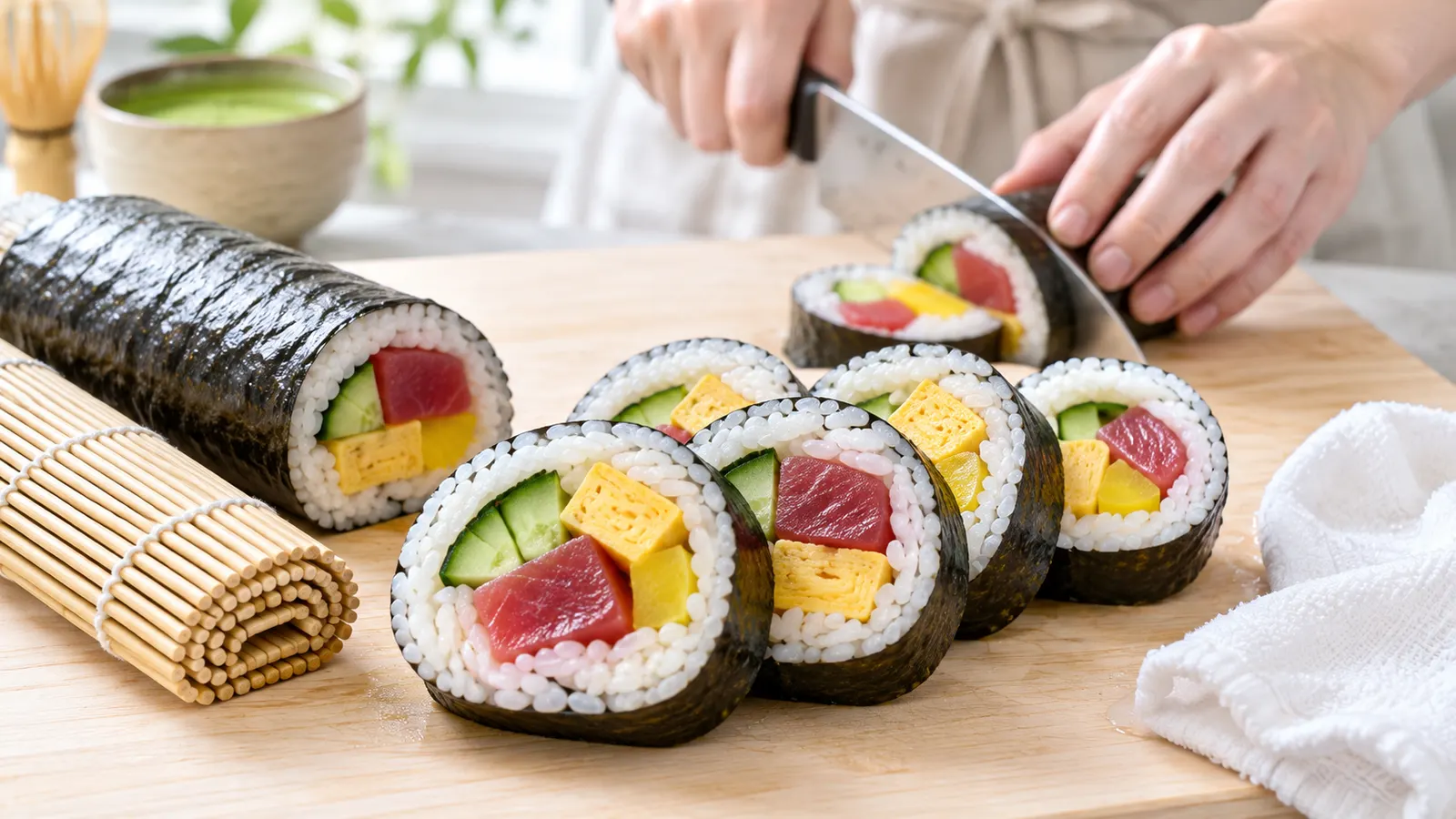
Futomaki: Japan's Thick Sushi Roll Explained
What goes into a Japanese futomaki, how it differs from thin rolls and California rolls, where you meet it in Japan and how to roll one tight.