Gyokuro vs Matcha: What Is the Difference?
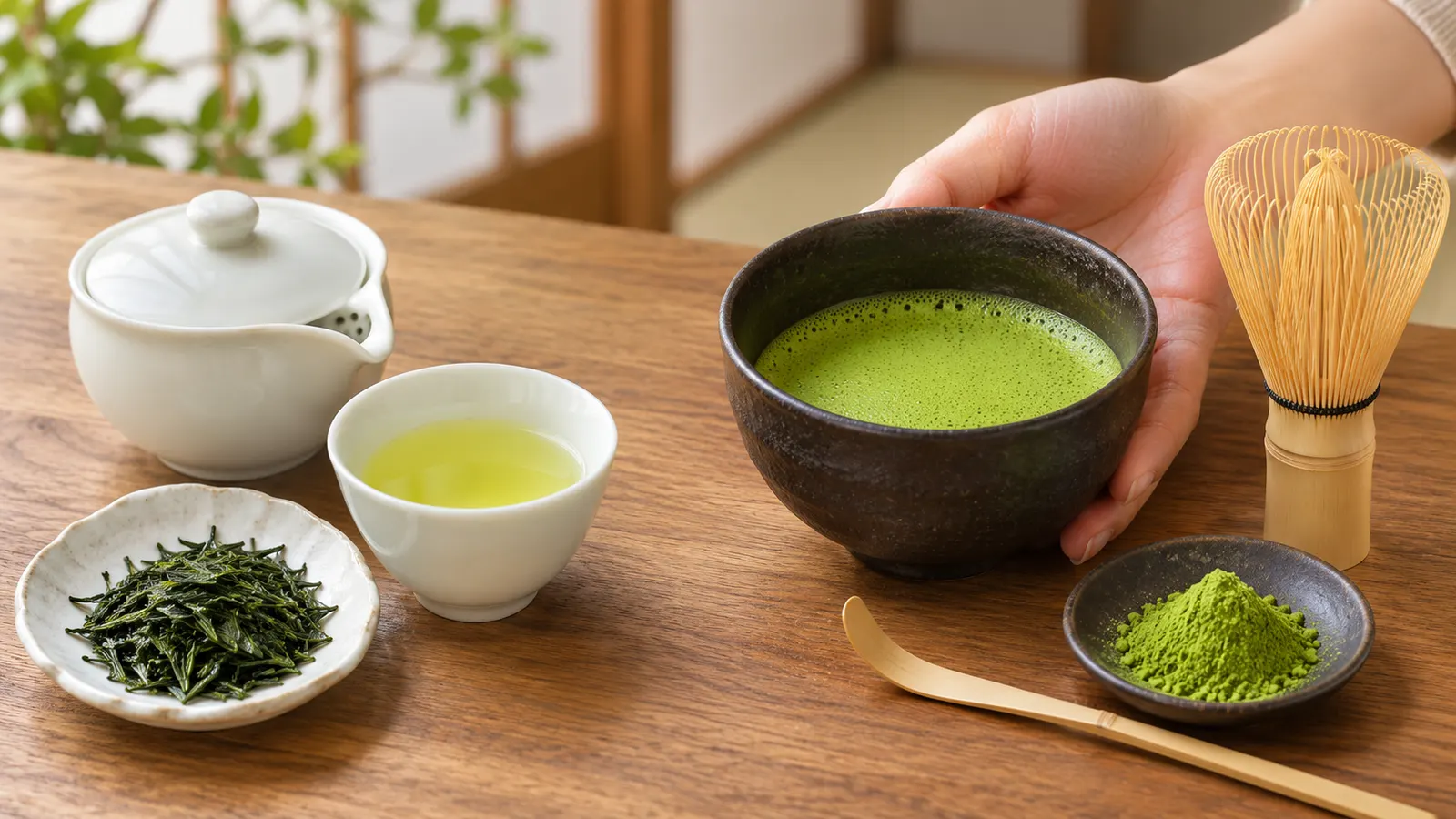
Gyokuro and matcha are often described as Japan's two "premium" green teas, and they really are related. Both come from tea bushes that are covered for a few weeks before the harvest, and both are prized for a deep, savoury sweetness that ordinary green tea rarely has. But they leave the farm in very different forms, and you prepare and drink them in completely different ways.
This guide explains where the two teas split, how each one tastes, how to prepare them, and which one makes more sense to try first on a trip to Tokyo.
Popular in Tokyo right now — our most recommended experience
Tokyo Sushi Making Class : Sake Ceremony & Matcha Experience in Asakusa
The short answer
- Gyokuro is a leaf tea. The shaded leaves are steamed, rolled and dried into thin, dark green needles, like a richer version of sencha. You steep the leaves in cool water and drink the liquid; the leaves stay behind.
- Matcha is a powder. The shaded leaves are steamed and dried flat without rolling to make tencha, then stems and veins are removed and the leaf is ground very finely. You whisk the powder into water and drink all of it.
So the difference is not the tea field but what happens afterwards: gyokuro is rolled and infused, matcha is ground and whisked.
Where they start: shade-grown tea
Most Japanese green tea, including everyday sencha, grows in full sun. For gyokuro and tencha, farmers cover the tea plants before the spring harvest, traditionally with straw or reed screens and today often with black synthetic cloth. Japanese tea makers describe this shading as lasting about 20 days for gyokuro and 20 days or more for tencha.
Less sunlight changes the leaf. The plant keeps more of its amino acids, especially theanine, which gives a mellow, brothy taste, and builds up less of the catechins that make tea astringent. The leaves also turn a deeper green and develop a distinctive aroma that Japanese tea makers call ōika, sometimes translated as "covered aroma": a soft scent often compared to seaweed or fresh greens.
That shared starting point is why gyokuro and good matcha taste closer to each other than either does to a cup of sencha.
Where they split: rolling or grinding
After picking, both teas are steamed quickly to stop the leaves from oxidising. Then the paths divide.
Gyokuro follows the same basic steps as sencha. The leaves are rolled and pressed repeatedly while they dry, which shapes them into fine needles and helps their flavour come out when they meet water.
Tencha, the raw material for matcha, is not rolled at all. The steamed leaves are dried flat, broken up, and separated from stems and veins. Only the soft leaf flakes are stone-milled or ground into matcha. That is why matcha is so smooth and so vivid: it is just the tender part of the leaf, reduced to a powder.
How they taste
Gyokuro is small, concentrated and savoury. A first infusion brewed with cool water can taste almost like a light broth, with sweetness and very little bitterness. Many people are surprised by how little liquid is served, often just a few sips in a small cup.
Matcha has a fuller body because you drink the whole leaf. Usucha, the thin matcha you will meet most often, is creamy and fresh with a gentle bitterness that balances its sweetness. Quality makes a big difference: good ceremonial matcha is smooth, while cheaper powder for cooking can be harsh when drunk on its own. Our guide to whether matcha is bitter explains what to expect.
How each is prepared
| Gyokuro | Matcha | |
|---|---|---|
| Form | Rolled leaf | Fine powder |
| Equipment | Small teapot and small cups | Bowl, bamboo whisk and scoop |
| Water | Cool, often about 50–60°C | Hot but not boiling, often about 70–80°C |
| Method | Steep, then pour off the liquid | Whisk the powder until frothy |
| Re-brewing | Yes, two or three infusions | No, one bowl per serving |
| What you drink | The infusion only | The whole leaf |
Gyokuro. Use a generous amount of leaf in a small teapot, pour in water that has cooled well below boiling, and wait before pouring every last drop into small cups. Shizuoka Prefecture's tea guide suggests 10 g of leaves for three people, about 20 ml of water per cup, and 50°C for two minutes for top grades or 60°C for about two and a half minutes for standard grades. A second infusion needs only about 30 seconds.
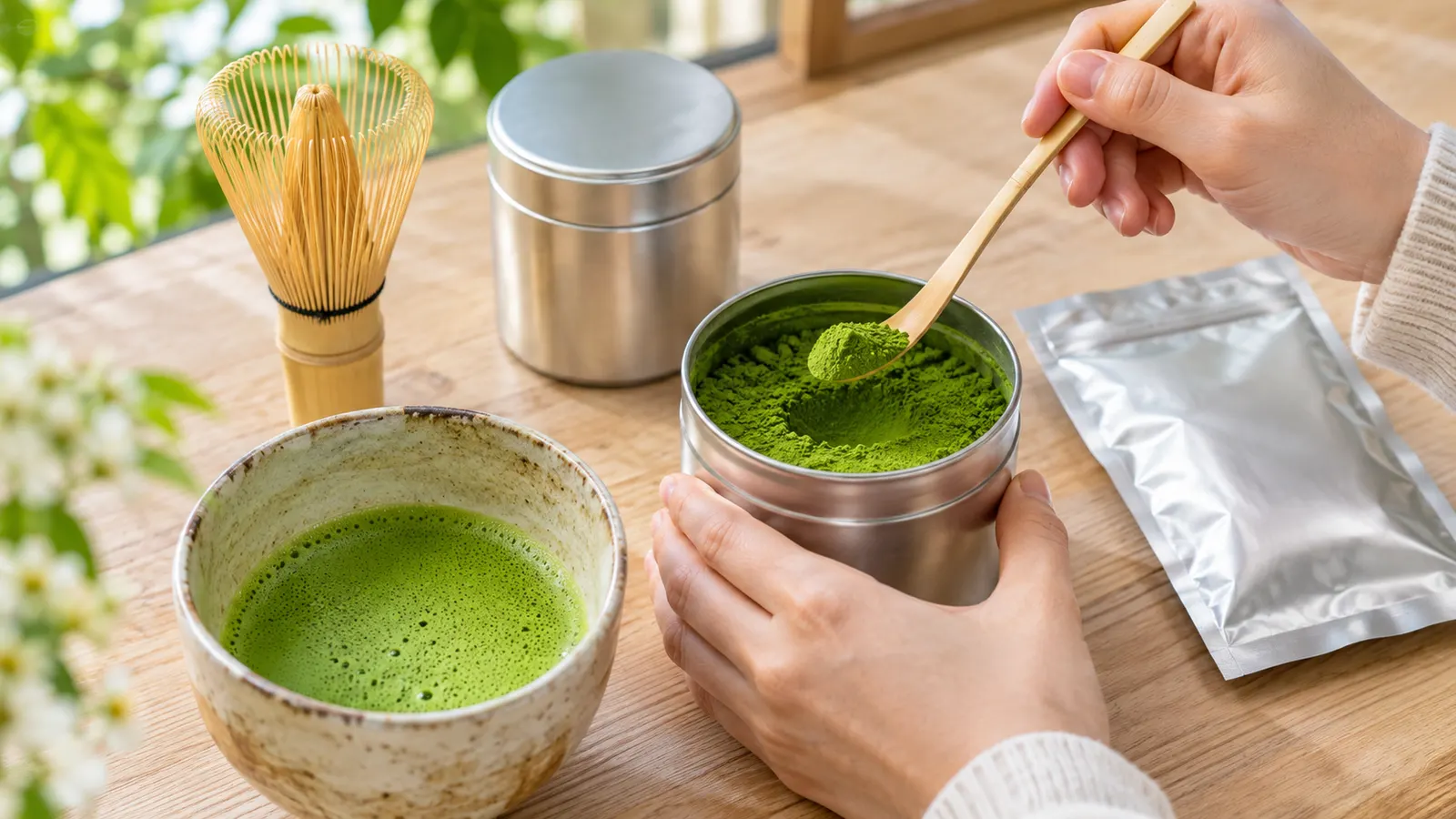
Matcha. Sift a small scoop of powder into a bowl, add a little hot water and whisk briskly with a bamboo chasen until a fine foam forms. There is no second infusion; the powder is part of the drink. If you plan to buy a whisk, our chasen guide covers how to choose and care for one.
Caffeine
Both teas are among the higher-caffeine Japanese teas. Japan's food composition tables list 160 mg of caffeine per 100 ml for gyokuro brewed with 10 g of leaves in 60 ml of water at 60°C for 2.5 minutes, but because it is served in very small cups, one serving contains less than that figure suggests. For matcha, the tables list 3.2 g of caffeine per 100 g of powder, so a typical bowl made with about 1.5 g of powder contains roughly 48 mg. Our article on how much caffeine is in matcha compares both with coffee and other teas.
Where they come from
Well-known gyokuro areas include Yame in Fukuoka, Uji and the surrounding area in Kyoto, and Okabe in Shizuoka. Tencha, the leaf for matcha, has grown quickly as matcha has become popular abroad. In the 2023 harvest, Japan's agriculture ministry listed Kagoshima, Kyoto and Shizuoka as the three largest producers. Kyoto's Uji area remains the name most closely tied to matcha, but it is no longer the only major source.
Which should you try in Tokyo?
If you want to taste the difference rather than read about it, the easiest path is:
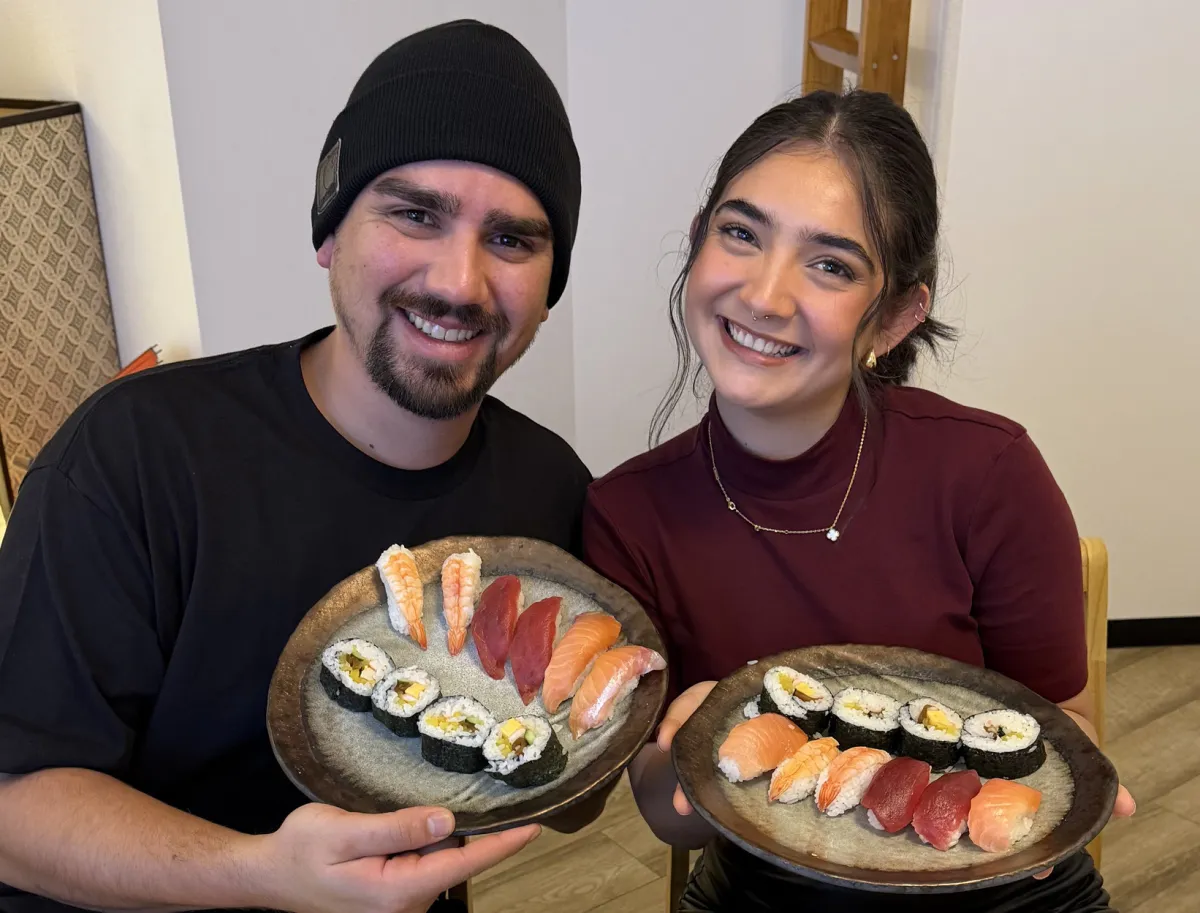
- Try matcha first, and make it yourself. Whisking a bowl shows you instantly why matcha is a powder tea: you can see the foam form and taste the whole leaf. In our signature sushi and matcha class in Asakusa, you make nigiri and a futomaki roll, toast with sake and finish by whisking your own matcha. The class lasts 90 minutes and costs ¥12,000 per person.
- Order gyokuro at a specialist tea shop or café. Gyokuro is less common in casual cafés than matcha. At a specialist tea shop it is often worth sitting down, because staff may brew it in front of you or explain how to brew it yourself.
- Compare with everyday tea. At a sushi restaurant you will usually get a large cup of hot agari. Our guide to green tea with sushi explains how that differs.
If you enjoy roasted flavours more than green ones, hojicha vs matcha is a useful next comparison.
Buying to take home
- Gyokuro generally keeps its quality longer than matcha, but its aroma still fades after opening. Buy a small quantity, reseal it tightly, store it somewhere cool and dark, and follow the producer's guidance on how soon to use it.
- Matcha is more delicate: buy small tins or bags, keep them airtight, away from light and heat, and use them soon after opening. Our guide to buying and storing matcha from Japan covers labels, storage and customs.
- Equipment differs. Gyokuro needs a small teapot and cups; matcha needs a bowl and a whisk. If you only want one, choose the tea whose ritual you would actually repeat at home.
A simple way to remember
Gyokuro and matcha share a field and a shade cloth. After that, gyokuro is rolled and steeped like a precious leaf tea, while matcha is ground and whisked so that you drink the leaf itself. Learn to whisk matcha with your own hands first, then look for a quiet cup of gyokuro, and you will understand both.
Related Articles
Chawan: How to Choose a Matcha Bowl
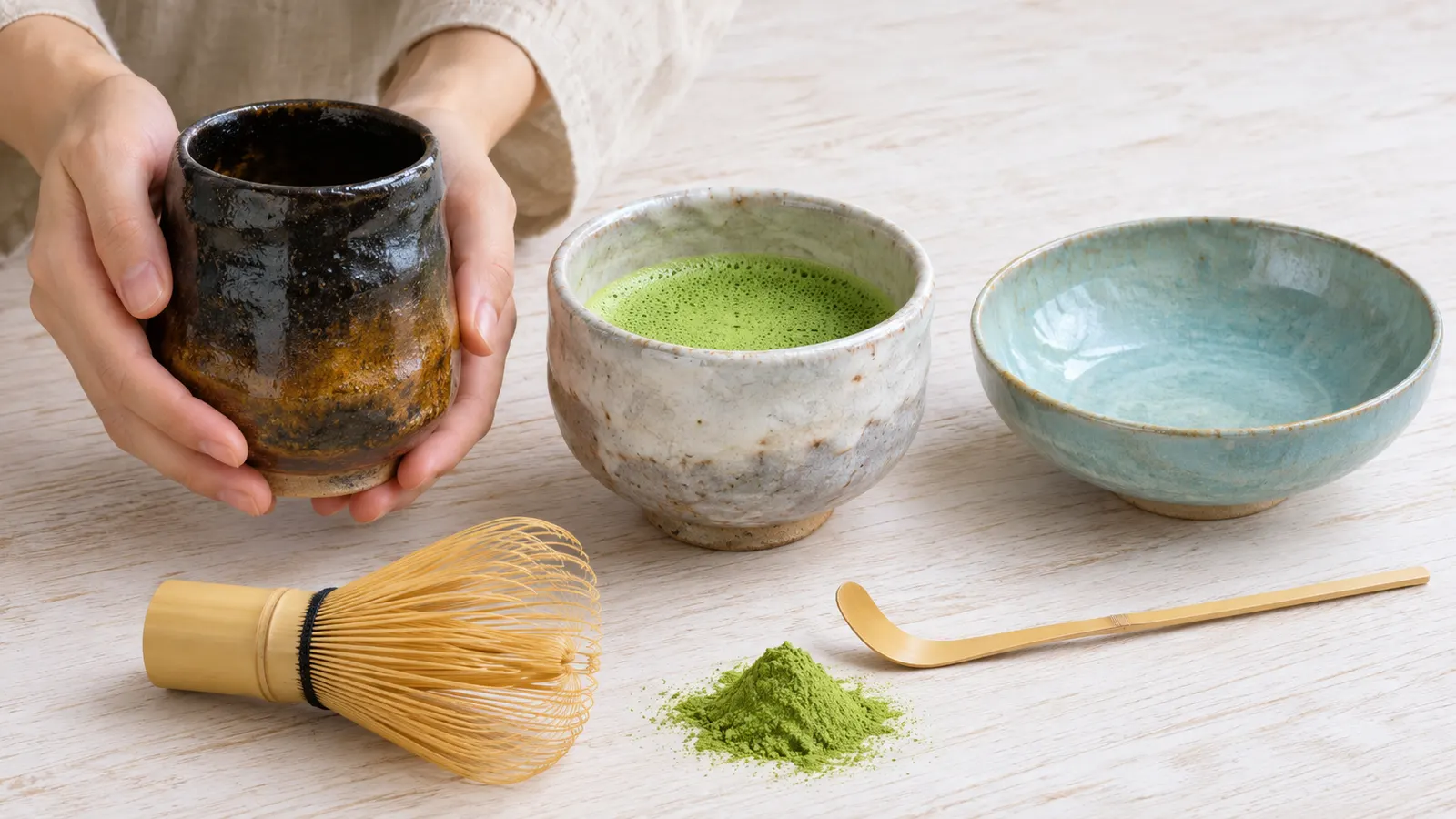
How to choose a matcha bowl in Japan: size, shape, seasonal bowls, Raku, Hagi and other wares, and how to warm, wash and pack a chawan for the trip home.
Chasen: Using and Caring for a Matcha Whisk
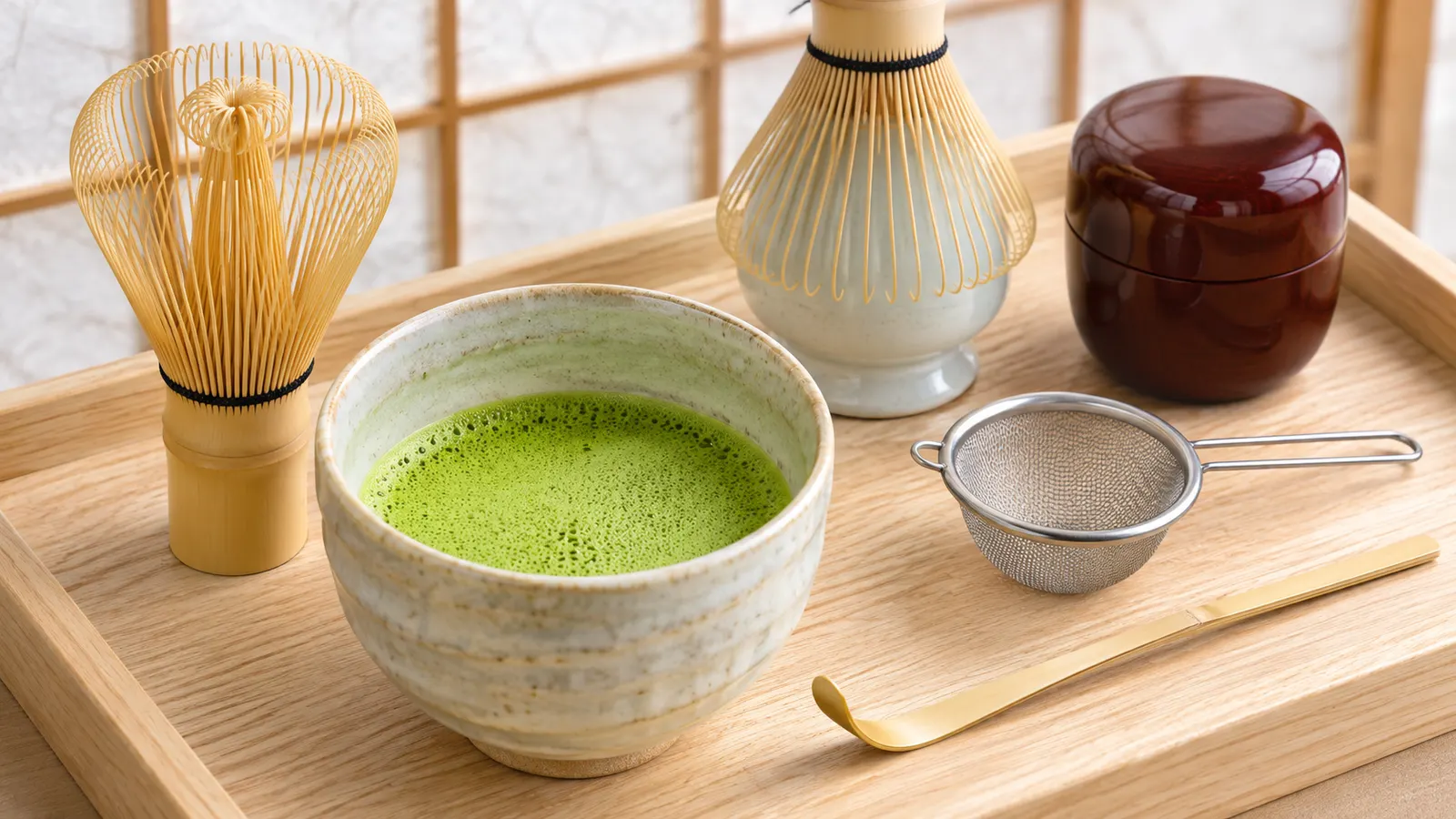
The bamboo matcha whisk explained: where chasen are made, how to whisk in 15 seconds, how to soak, clean and dry one, and when to replace it.
How to Buy and Store Matcha from Japan
Buying matcha to take home from Japan? What to check on the pack, how much to buy, how to keep it fresh and what to know at customs and tax-free counters.