Make Sushi in Your Rental or Take a Class?
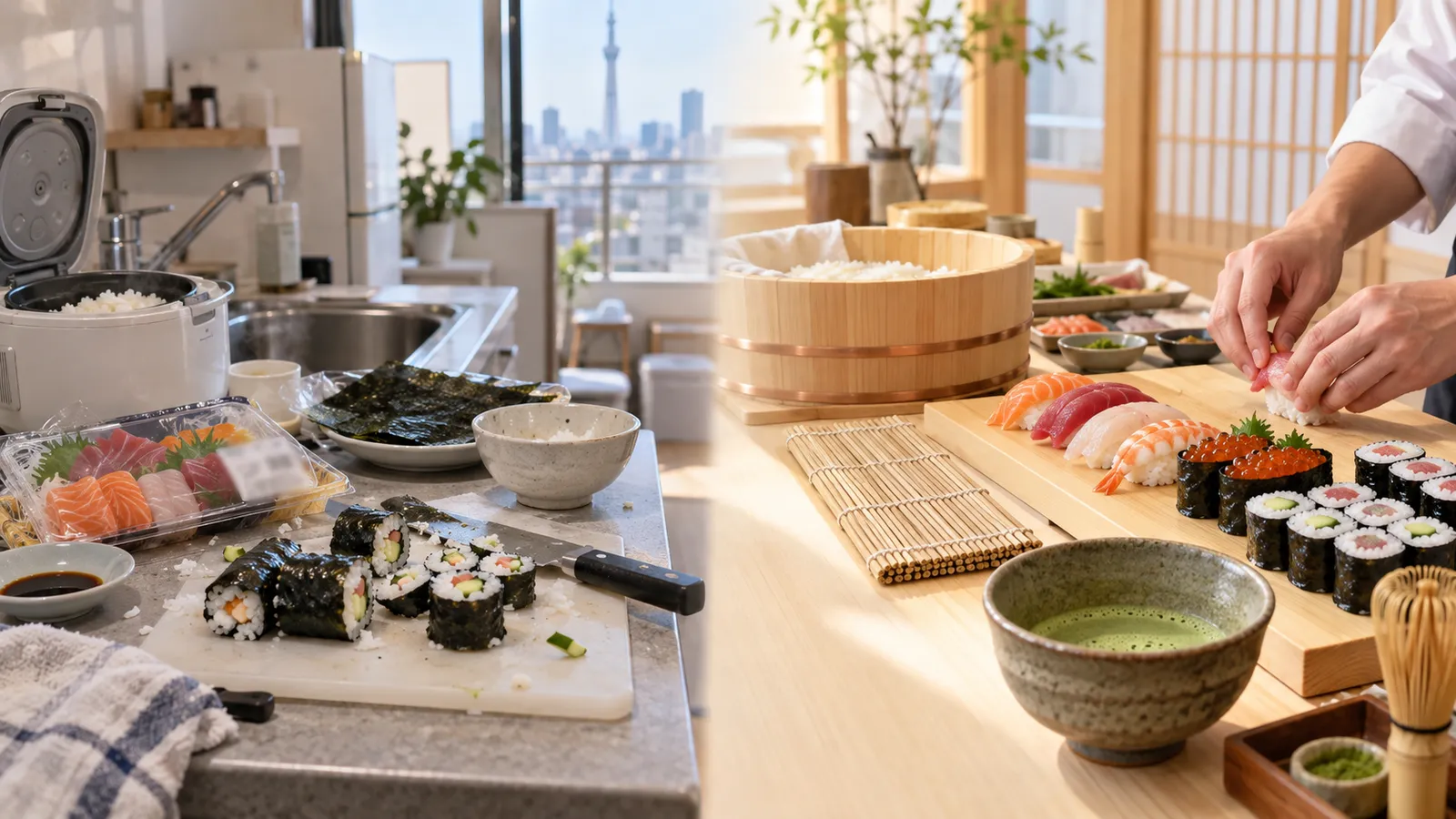
Many travellers now stay in apartments with a small kitchen, and Tokyo supermarkets sell fish that is clearly meant to be eaten raw. It is natural to wonder whether you could simply buy a few packs, cook some rice and make sushi in your rental instead of booking a class. Both are reasonable plans. They give you different things, and the right choice depends on what you want to come away with.
Popular in Tokyo right now — our most recommended experience
Tokyo Sushi Making Class : Sake Ceremony & Matcha Experience in Asakusa
What you are really choosing between
A home session is a meal you assemble yourself. You control the timing, the budget and the menu, and nobody is watching your technique. A class is a guided lesson: someone shows you each step, corrects your hands while you work and explains why the rice and fish are handled the way they are.
A useful way to decide is to ask which result matters more to you:
- A relaxed dinner with sushi-style food — a home session can do that well.
- Learning how nigiri and maki are actually shaped — that is much easier with an instructor in front of you.
- Both — some travellers take a class early in the trip, then repeat what they learned in their rental later.
What a home session involves in Tokyo
Buying the fish is often the easy part. Japanese supermarkets and department-store food halls sell sashimi packs and blocks that are labelled for raw eating. Our guide to the best fish for sushi explains what to look for and how to think about freshness and safety.
The harder parts tend to be everything around the fish:
- Rice. Sushi depends on short-grain rice cooked with the right amount of water, then seasoned while warm. Many rental kitchens have a rice cooker, but not all do, and you will need rice vinegar, sugar and salt. Our article on shari, the vinegared rice explains why this step matters so much.
- Tools. A bamboo rolling mat, a large bowl for mixing rice and a sharp knife make a real difference. Rental kitchens are often equipped for simple meals, not for sushi.
- Space and cleanup. Seasoning rice and slicing fish on a small counter takes more room than people expect. Plan time for washing up before checkout.
- Leftover ingredients. Rice vinegar, nori and wasabi are usually sold in sizes meant for a household, not one meal. Think about what you will do with the rest.
If you want to buy your own tools, the kitchen shops of Kappabashi are close to Asakusa. Our plan for Kappabashi and a sushi class in one day shows how some travellers combine shopping with a lesson.
What a class adds
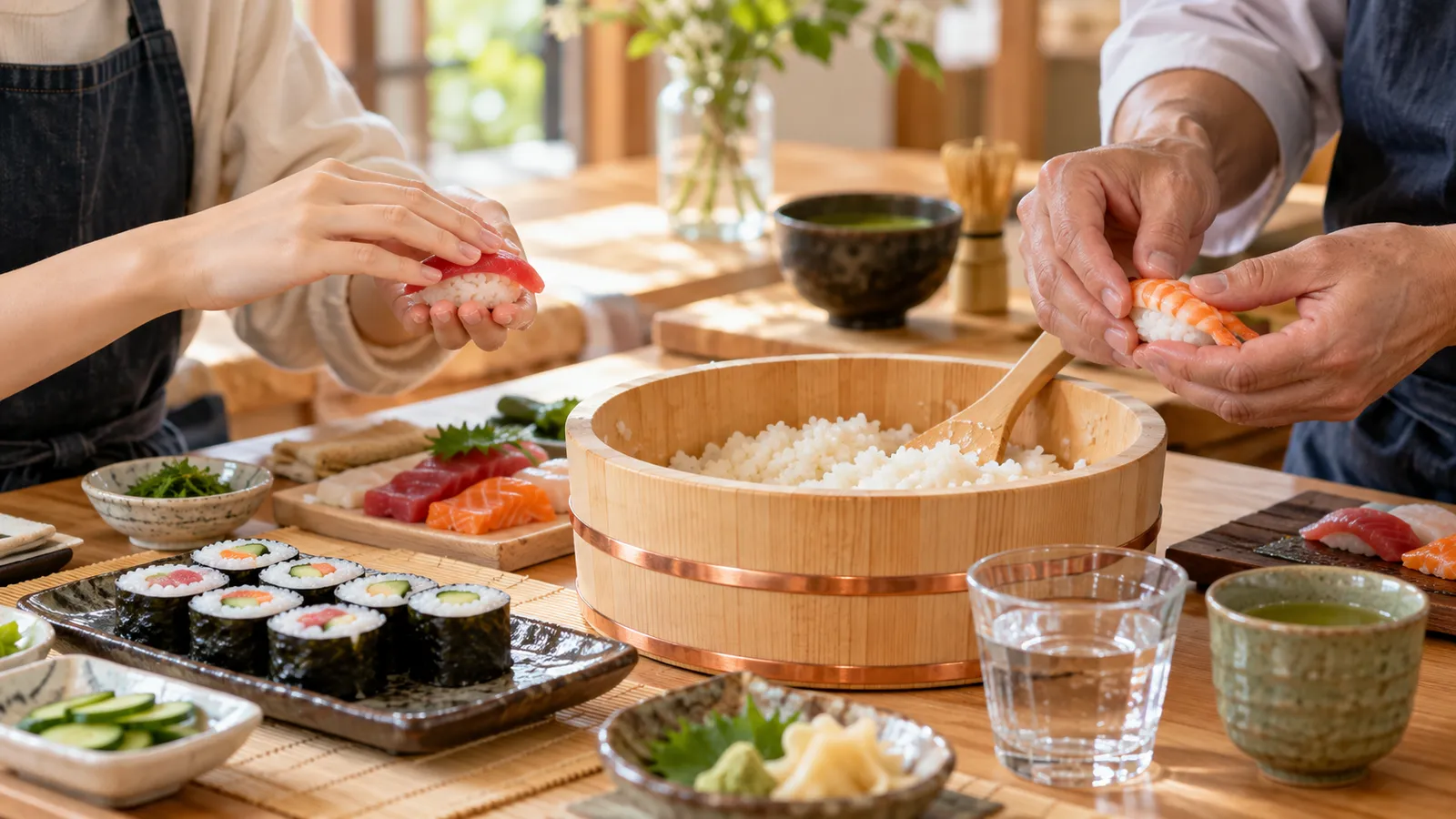
The main difference is feedback. Shaping nigiri looks simple, but most first attempts are either too firm or fall apart. In a class, the instructor demonstrates first and then watches while you try, so you can adjust the pressure and size while the rice is still in your hands. Our article on the skills beginners learn in a Tokyo sushi class describes what that progression usually looks like.
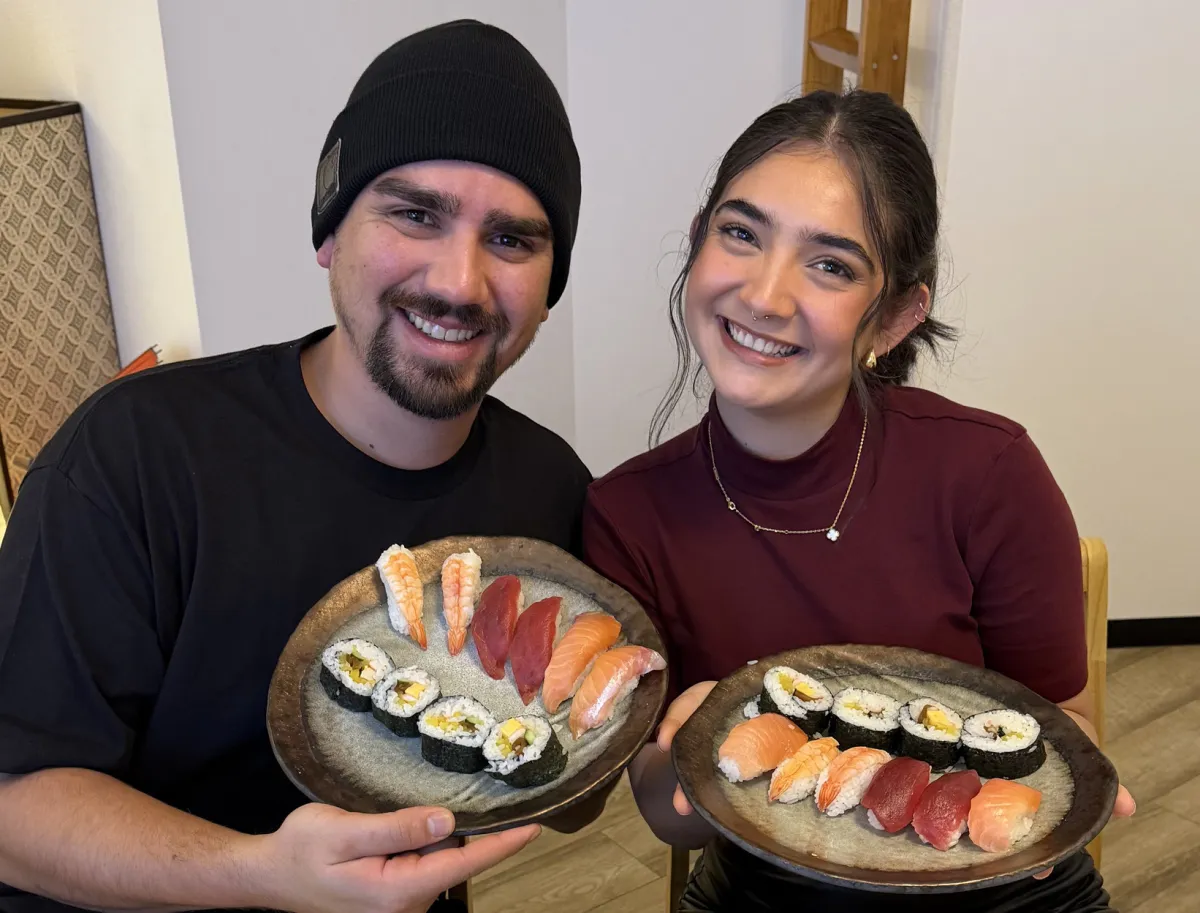
A class also removes the preparation work. In our signature Sushi & Matcha class, all ingredients and tools are included, and the session lasts 90 minutes. You make nigiri and maki, eat what you made, take part in a sake toast and whisk your own matcha at the end. Water or Japanese green tea is available for guests who do not drink alcohol, and instruction is given in English.
What a class does not give you is complete control. It runs at a set time with a set menu, and a shared class includes other guests. If you want a very specific menu or a late-night meal on your own schedule, cooking at your rental may suit you better.
Comparing time and cost honestly
Home sushi can look much cheaper, and for a group that already has a well-equipped kitchen it may be. The comparison is fairer when you include everything:
- the fish, rice, nori, vinegar and condiments, including amounts you may not use;
- any tools you need to buy;
- the time spent shopping, cooking rice, preparing and cleaning up;
- the risk that the first attempt does not turn out as planned.
A class has a fixed price per person and a fixed length. For the signature class, the price covers the ingredients, tools, drinks and matcha, and you leave with nothing to clean. Check the class page for the current price for your date and participants rather than relying on a figure quoted elsewhere.
Safety and fish handling
If you cook at home, keep raw fish cold, buy it on the day you plan to eat it, and follow the storage and date labels on the pack. Use a clean board and knife, and do not leave seasoned rice and fish at room temperature for long. If anyone in your group is pregnant, very young or has a weakened immune system, consider cooked or vegetable toppings instead of raw fish.
In a class, fish handling and preparation are done for you. If you already know that someone in your group avoids raw fish, mention it when booking so the instructor knows before the session starts.
Which choice fits your trip
A home session tends to suit:
- travellers who already cook confidently and want a casual meal;
- groups on a tight budget who have a rice cooker and space;
- anyone who wants to experiment with a menu of their own.
A class tends to suit:
- first-timers who want to learn technique rather than guess it;
- travellers without the right tools or kitchen space;
- people who want sushi, a sake toast and matcha as one planned activity in Asakusa;
- anyone who would rather spend the evening sightseeing than washing up.
Doing both is also a good plan. Learning the basics in a class first makes a later home session far more satisfying, because you already know how the rice should feel and how firmly to shape each piece.
Plan your sushi day
If you have a kitchen in Tokyo, there is nothing wrong with making your own sushi. If you want to learn how it is done properly, with ingredients ready and a clear demonstration, choose a date for the signature Sushi & Matcha class and use what you learn for the rest of your trip.
Related Articles
Sushi Class in Tokyo With Teenagers
Travelling with teens? How ticket categories work for ages 13 and up, what happens at the sake toast and when a shared or private sushi class fits best.
Paying for a Tokyo Sushi Class
Which currency will you be charged in, which cards and wallets work, and what happens after you pay? A clear guide before booking a sushi class in Tokyo.
Sushi Class or Ramen Class in Tokyo?
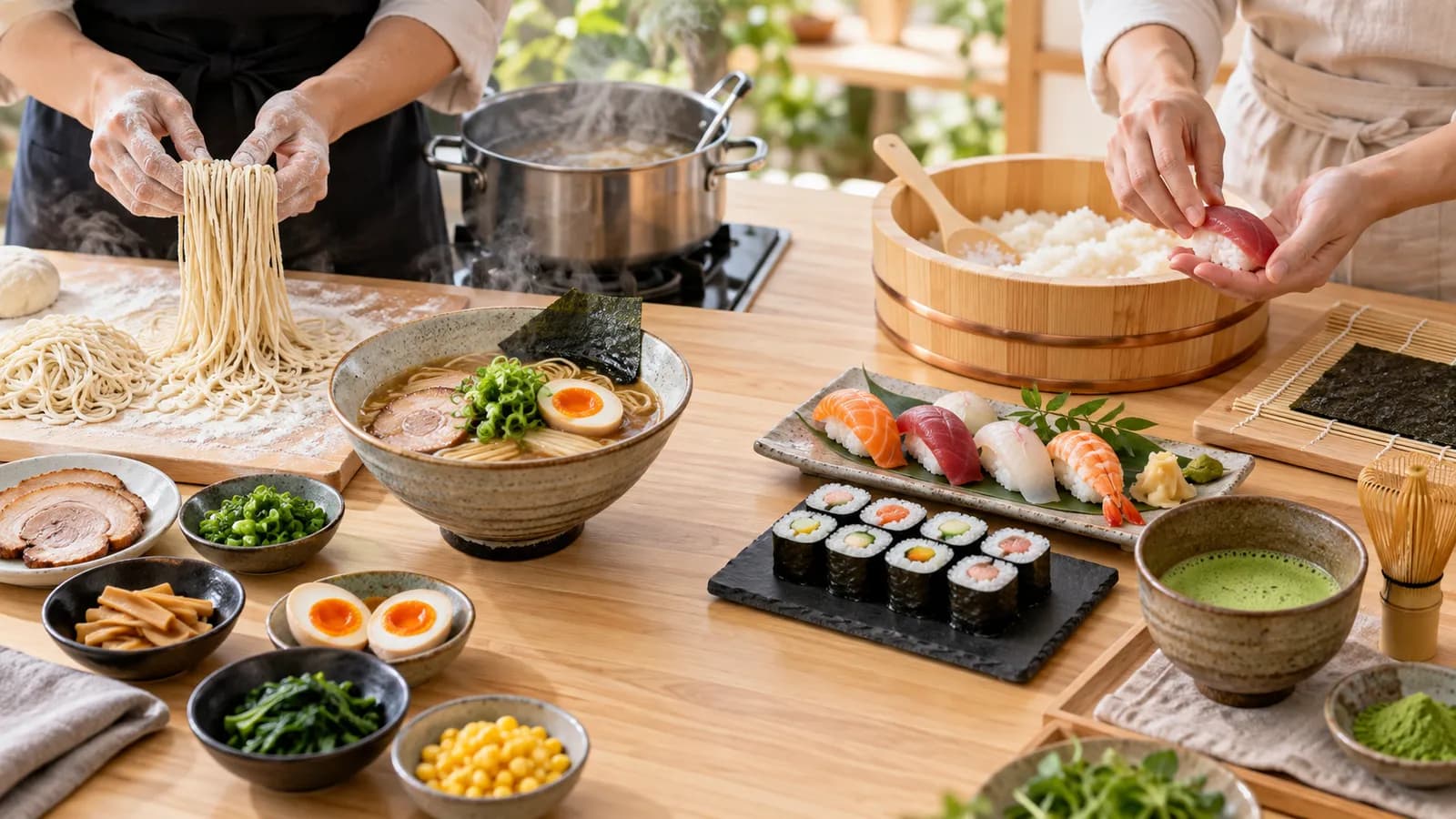
Torn between a sushi class and a ramen class in Tokyo? Compare what you make, how long it takes, what you eat and which one suits your group and trip.