Team Sushi Event in Tokyo: Studio or Office?
When a company decides that a sushi-making session would make a good team event, the next question usually comes from the person who has to organize it: do we take everyone to a studio, or bring the workshop to our own building? Both formats exist at Sushi Matcha, and both include the same core ideas — hands-on nigiri and maki, the sake barrel-opening toast and matcha. What changes is who travels, how many people can join at once, what the venue must provide and how the price is built.
This guide compares the two routes using the information currently published on our corporate pages, so you can shortlist one before asking for a quote.
Popular in Tokyo right now — our most recommended experience
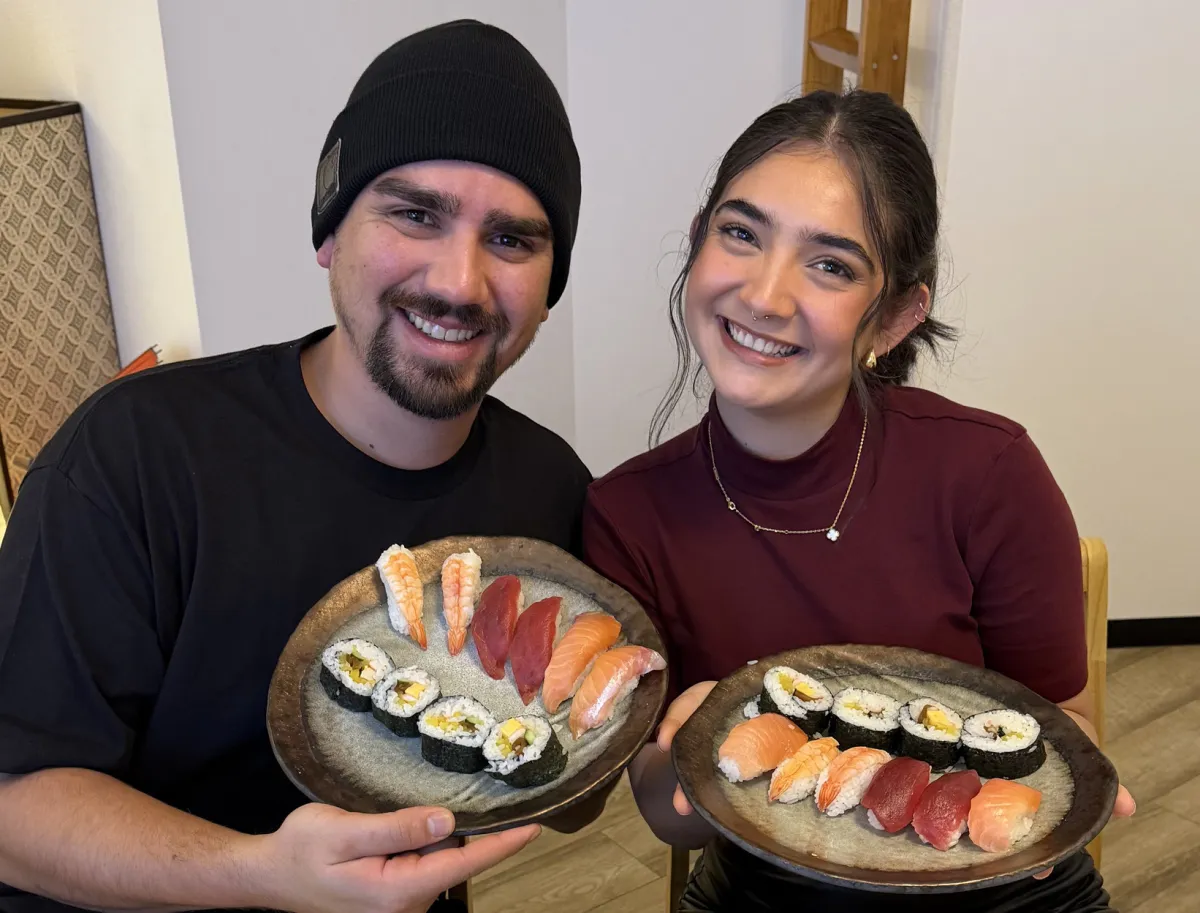
Tokyo Sushi Making Class : Sake Ceremony & Matcha Experience in Asakusa
The short answer
Choose the Asakusa studio when your group is roughly 4 to 20 people, you want a finished, purpose-built setting and you are happy for everyone to travel to Asakusa. Choose a workshop at your office or venue when moving the group is the harder problem, when you already have a suitable room, or when your headcount is larger than one studio session.
Our office workshop page states the comparison plainly: a mobile workshop wins on zero travel for your team, while for up to about 20 people a private buyout of the studio can be more economical. We are happy to quote both.
Option 1: the Asakusa studio
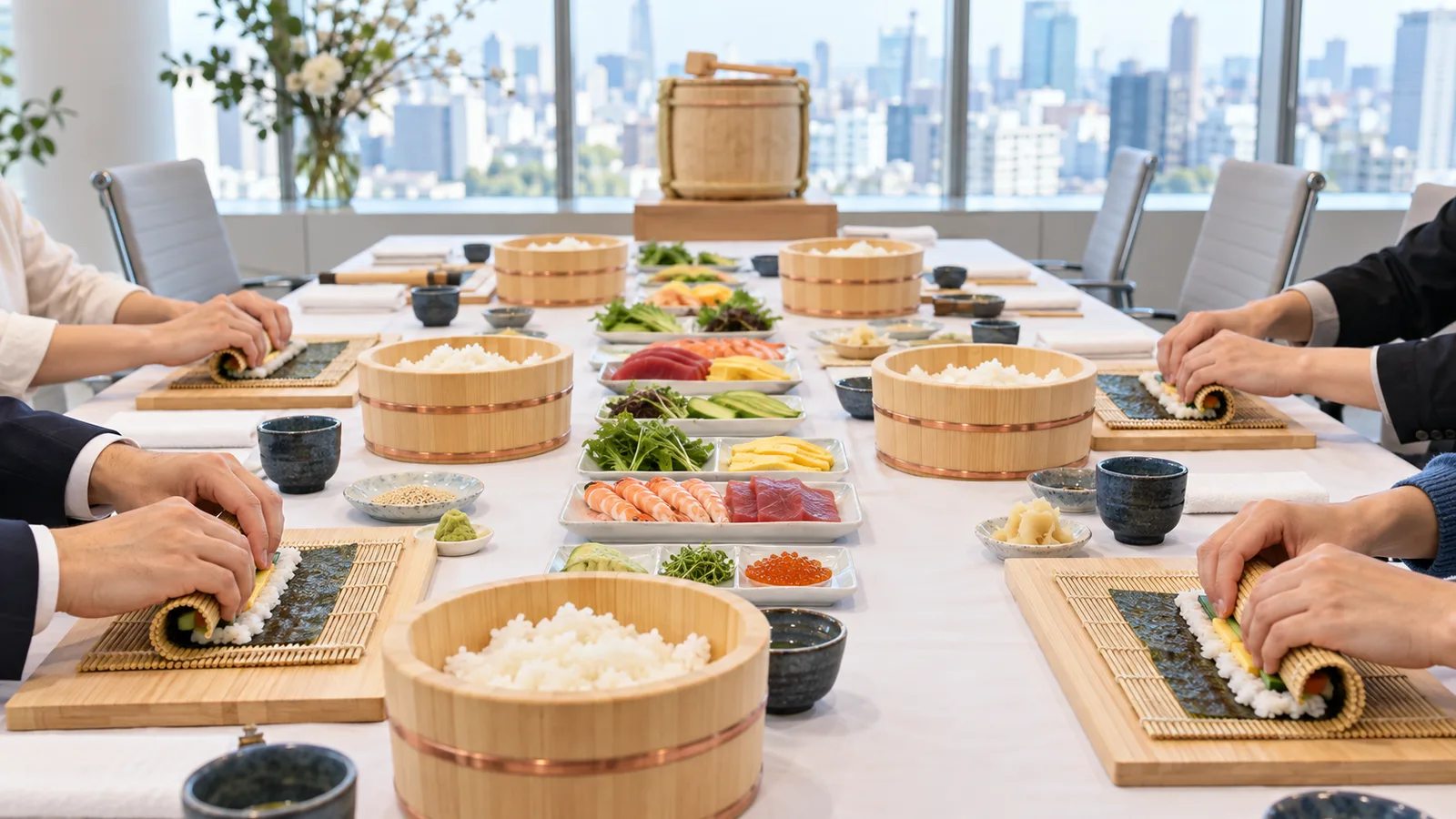
The corporate team building page describes a 90-minute program built around three moments. The team opens a sake barrel together with wooden mallets (kagami-biraki) and toasts with masu cups, everyone makes nigiri and maki at their own station with English-speaking instructors, and the session closes with each person whisking a bowl of matcha.
The published studio options are:
- Standard Group — ¥12,000 per person, for corporate groups of 4 to 20, with receipts and invoices available.
- Private Buyout — ¥120,000 to ¥150,000 per session for exclusive use of the studio, with a customizable program and timing.
- Executive & VIP — a custom quote for client entertainment with premium sake and ingredients.
Prices include tax. The page also notes that final quotes depend on group size, season and customization, and that weekend and peak-season sessions may carry a surcharge. Treat these figures as the starting point for a quote, not as a promise for your exact date.
The studio hosts up to 20 guests per session. For 21 to 60 guests, the team proposes back-to-back or parallel sessions. It is about four minutes from Asakusa Station, and coach parking is nearby, which matters if the group arrives together by bus.
The studio format suits teams who want the event to feel like an outing: people leave the office, see a different part of Tokyo and can extend the afternoon at Senso-ji or along the river afterwards.
Option 2: a workshop at your office
The office workshop page describes the mobile format. No kitchen is needed; tables, chairs and roughly a meeting room's worth of space are enough, and the venue does not need fire or running water. Our team brings ingredients, tools and hygiene equipment, arrives early to set up, runs the session and cleans up. The sake barrel moment can come to your office too.
The published price guide for a mobile workshop is ¥12,000 to ¥15,000 per person as an indicative, tax-included figure. The minimum fee and travel costs are quoted individually, the duration is about 90 to 120 minutes and flexible, and the service area is central Tokyo, with nearby areas on request. Mobile workshops are currently offered on a consultation basis, so every event is quoted individually.
On food safety, the office page states that ingredients arrive via cold-chain transport and are handled by hygiene-trained staff, and that no-raw-fish menus, cooked or vegetarian, are available.
The mobile format suits all-hands after-parties, office-opening celebrations, conference evening programs and visiting teams who already have a full schedule in your building.
How the two compare on what organizers ask first
Headcount. The studio is capped at 20 per session, with multiple sessions for up to 60. The mobile format scales by adding instructors, and larger groups are invited to ask. If you need everyone in one room at the same time and the number is well above 20, the office route is the one to discuss.
Cost. For a group of up to about 20, a private studio buyout can come out cheaper because there is no travel or minimum fee to add. For larger groups, compare the per-person guide with the cost of moving everyone to Asakusa, including lost work time.
Travel time. A studio event costs the team a trip across Tokyo; a mobile event costs them nothing but a walk to the meeting room. If your office is far from Asakusa, count the return journey, not only the outbound one.
Atmosphere. A studio visit feels like a day out. An office session changes the usual place into something special, which is sometimes the point — especially for welcomes and celebrations.
Paperwork. Both routes support formal quotations, invoices and receipts in your company's name. The corporate page lists bank transfer, credit card and on-site payment, and asks you to share your company's standard payment terms.
Dietary needs and alcohol
Mixed teams are common. The corporate page lists halal, vegetarian, vegan, no-raw-fish and allergy options with advance notice. Collect requirements per person rather than as one note for the group; our guide to a group with vegan and fish eaters shows how to lay that out.
The sake toast is part of both formats, but no one has to drink. Water or green tea can replace it, and our article on joining a sushi class without drinking alcohol explains how that works in practice. If some colleagues need halal arrangements, read what to confirm for a halal sushi class before sending your headcount.
Timing, quotes and cancellation
For groups of eight or more, the corporate page recommends booking three to four weeks ahead; short-notice requests are welcome when availability allows. Send the form with your date, headcount and budget, and a formal quotation is issued within one business day.
Corporate bookings can be cancelled free of charge until 8 days before the event. Headcount can be adjusted until 3 days before, and later reductions are charged in full. The exact terms are stated on your quotation, so check that document rather than relying on a summary.
Which one should you request?
Write down four things: your headcount, your preferred date and time, whether you have a room with tables for everyone, and the budget per person. If the headcount is 20 or fewer and a short trip is acceptable, start with the studio. If the room is ready and moving people is the obstacle, start with the office workshop. If you are unsure, ask for both quotes at once.
Planning something smaller and less formal — friends, a family reunion or a club? The group sushi class page and our checklist for booking a sushi class for a group of friends cover shared and private options without the corporate paperwork.
Related Articles
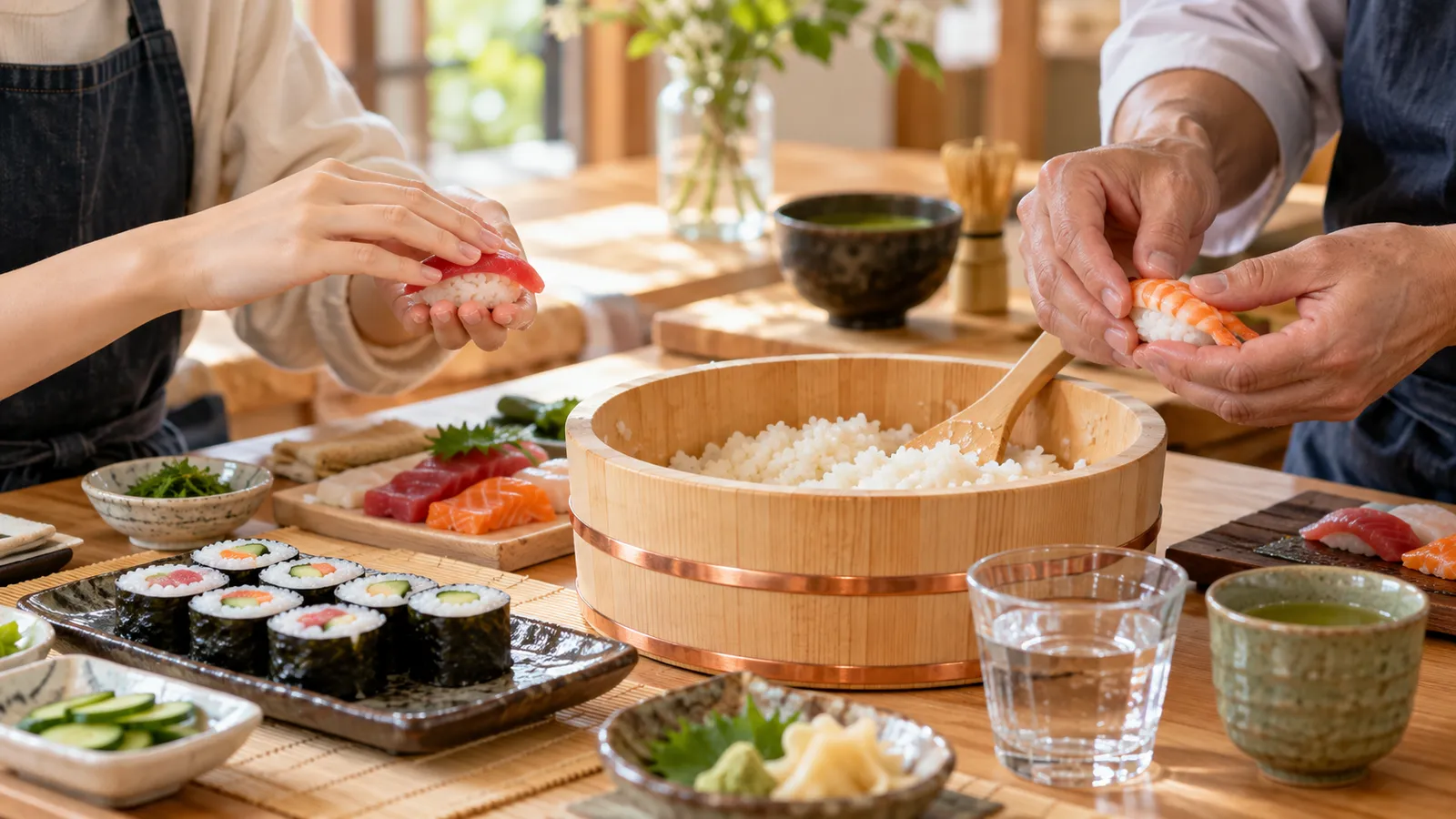
Sushi Class in Tokyo With Teenagers
Travelling with teens? How ticket categories work for ages 13 and up, what happens at the sake toast and when a shared or private sushi class fits best.
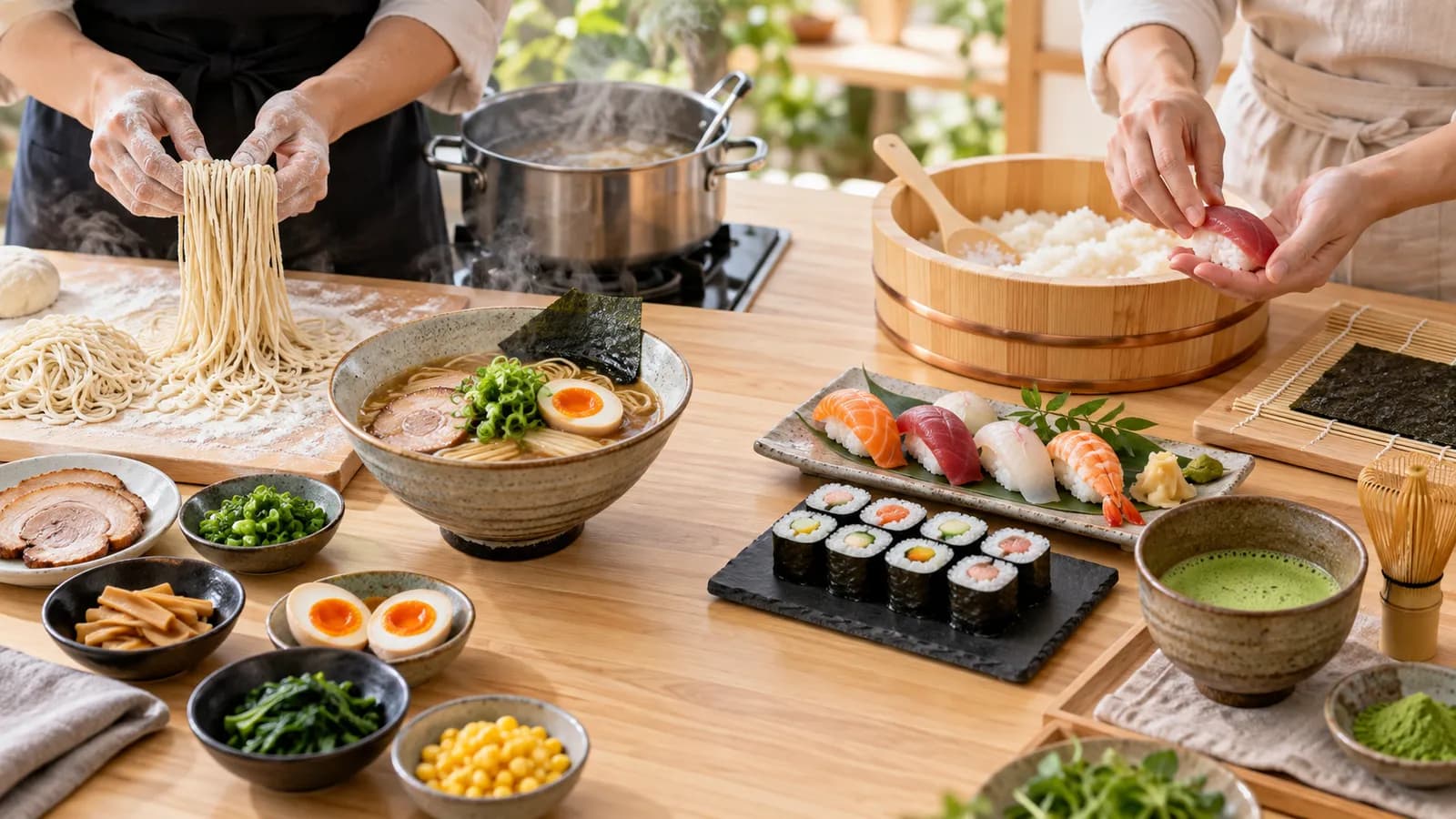
Sushi Class or Ramen Class in Tokyo?
Torn between a sushi class and a ramen class in Tokyo? Compare what you make, how long it takes, what you eat and which one suits your group and trip.
Paying for a Tokyo Sushi Class
Which currency will you be charged in, which cards and wallets work, and what happens after you pay? A clear guide before booking a sushi class in Tokyo.