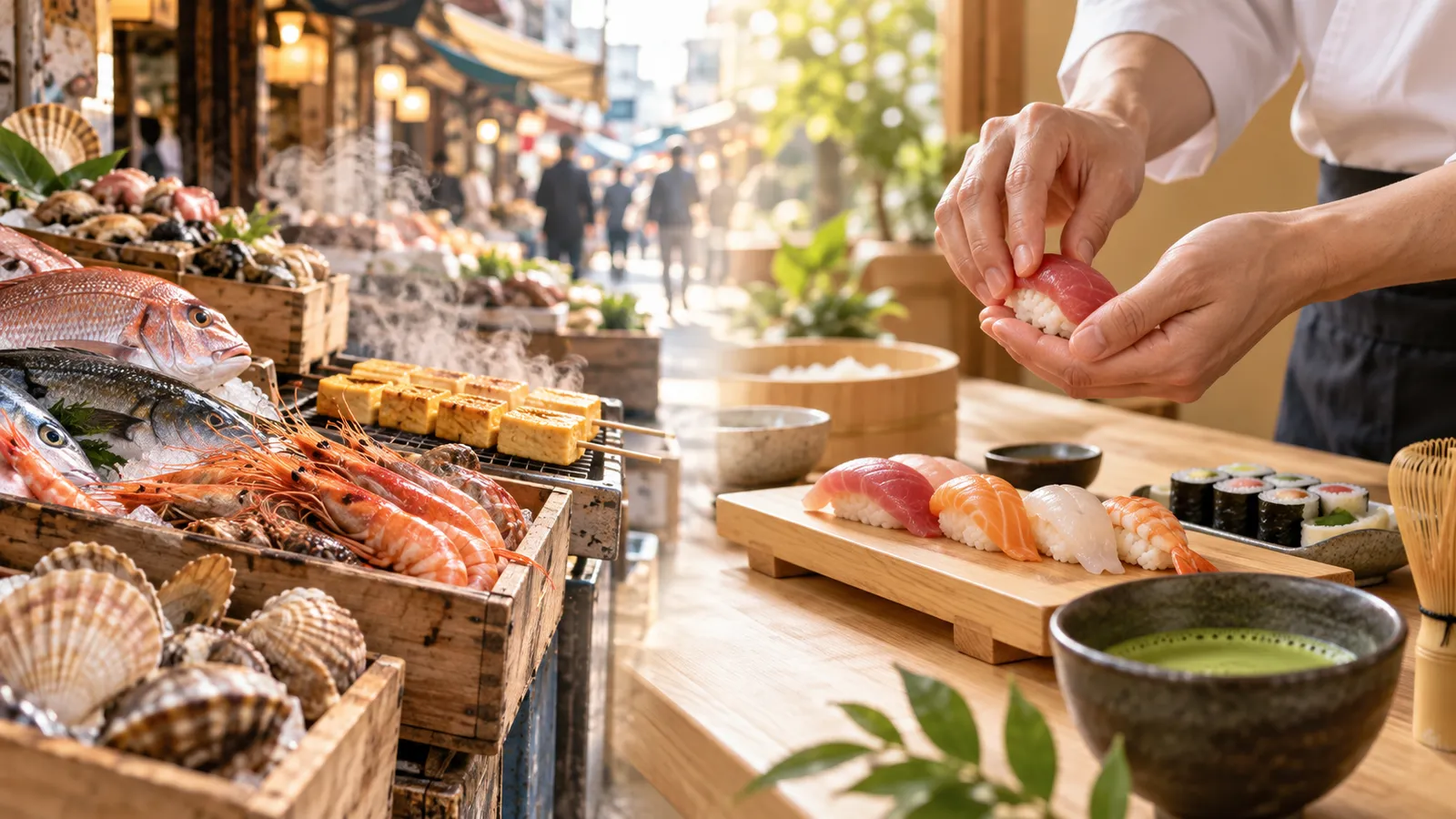
Tsukiji Market or a Sushi Class in Tokyo?
Many visitors who love sushi put two things on their Tokyo list: a morning at Tsukiji and a sushi-making class. Both are about fish, rice and Japanese food culture, so it is easy to treat them as alternatives. In practice they give you quite different experiences. One is a busy market district where you look, shop and taste. The other is a lesson where you make sushi yourself and then sit down to eat it.
This guide explains how the two differ, what to check before you go, and how to combine them without overloading your day. We describe Tsukiji using the market's own published information, and our class using its current booking page. For shop-by-shop details, always check the market or the individual shop directly.
Popular in Tokyo right now — our most recommended experience
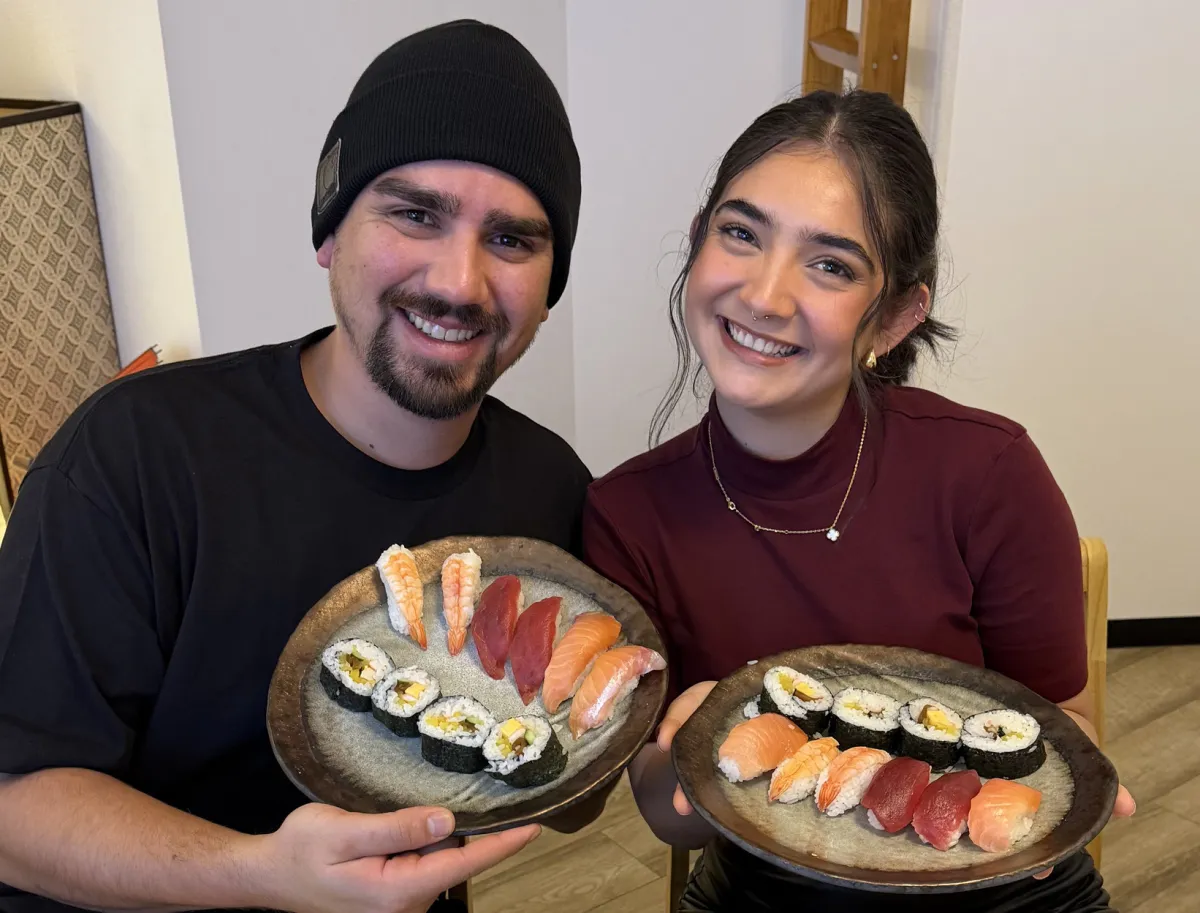
Tokyo Sushi Making Class : Sake Ceremony & Matcha Experience in Asakusa
What Tsukiji is today
The wholesale fish market that made Tsukiji famous has moved to Toyosu. What remains in Tsukiji is the Tsukiji Outer Market: a neighbourhood of shops and small restaurants selling seafood, knives, dried goods, tea, tamagoyaki and snacks. Its official website notes that the wholesale market where fish auctions take place is no longer located there.
That matters for expectations. At Tsukiji today you are a visitor walking narrow streets, buying snacks, browsing kitchen tools and perhaps eating at a counter. You are not watching a tuna auction, and you are not learning to prepare sushi.
What a sushi class gives you instead
Our signature sushi and matcha class in Asakusa is a 90-minute, English-taught session. You shape nigiri and roll maki, join a sake toast, whisk a bowl of matcha and then eat what you made as a real meal. No cooking experience is needed.
The difference in one sentence: at the market you taste what others have made, while in a class you make it yourself and learn why it works. Our comparison of a sushi class and a sushi restaurant explores the same "make or be served" question in more depth.
Timing: mornings versus a fixed session
The Tsukiji Outer Market publishes general hours on its calendar page: roughly 6:00 to 9:00 for professional buyers and 9:00 to 14:00 for general shoppers, with more variable opening after that. Closing days follow the Tokyo Central Wholesale Market calendar, and the market notes that each shop keeps its own business schedule. In short, Tsukiji is a morning-to-early-afternoon place, and some shops will be closed on certain days.
A class runs at a fixed time you book in advance. The published guidance asks you to arrive 10 minutes before the start, and the signature class lasts about 90 minutes. Check the class page for the start times offered on your date.
Before you commit to a Tsukiji morning, look at the official market calendar for your date. Before you commit to a class, confirm the session on the booking page.
Food: grazing versus one meal
This is where many itineraries go wrong. Tsukiji is built for grazing: a skewer here, an oyster there, a slice of tamagoyaki. Our class ends with a full plate of the nigiri and maki you made, which is a proper meal rather than a tasting.
If you plan both on the same day, do not eat your way through the market and then arrive at class already full. Either keep Tsukiji light, or put the class first and treat the market as a later snack stop on another day. Our guide on planning meals around a sushi class covers this timing in detail.
Who each option suits
- Choose Tsukiji if you want to wander, try many small bites, look at kitchen knives and dried goods, and set your own pace. It suits travellers who enjoy crowds and browsing.
- Choose a sushi class if you want to use your hands, understand how nigiri and maki are formed and sit down to a meal you made. It suits beginners, families with children aged four and above, and groups who want a shared activity.
- Dietary needs. In a class you can raise requirements before booking and request a suitable menu, including a vegan option. At the market you will be checking each stall yourself.
- Language. Our class is taught in English. At market stalls, communication varies from shop to shop.
Can you do both in one day?
Yes, if you give each one enough room. Tsukiji and Asakusa are connected by the Toei Asakusa Line: Higashi-ginza Station, about a three-minute walk from the Outer Market according to its access page, is on the same line as Asakusa Station, so there is no need to change trains. From Asakusa Station Exit A5 it is about a five-minute walk to our studio in Hanakawado, and the Tobu Asakusa Station North Exit is about 30 seconds away. The access page has the details for each line.
A realistic pattern looks like this:
- Morning at Tsukiji. Arrive after 9:00, when general shoppers are welcome. Browse and keep tastings small.
- Travel to Asakusa. Allow time for the train, the walk from the station and finding the exit, rather than counting only the ride.
- Class in the afternoon. Arrive 10 minutes early, cook and eat for about 90 minutes.
- Evening in Asakusa. Walk to Senso-ji after the class, when you are no longer watching the clock.
If you only have a morning, choose one. Rushing from Tsukiji to a class with no margin tends to spoil both.
A simple way to decide
Ask yourself what you want to remember from the day. If it is the sights, sounds and small bites of a working food district, go to Tsukiji and check the shops' own days. If it is the feeling of shaping rice and fish with your own hands, followed by a relaxed meal, book a class. For many sushi lovers, the best answer is both, on different days or with plenty of space between them.
Still weighing a guided walk instead of a market visit? Our sushi class or food tour comparison helps with that choice. When a hands-on session sounds right, open the signature class page to see the dates and times available for your group.
Related Articles
Booking a Sushi Class for Someone Else
Booking a Tokyo sushi class for parents, a partner or friends? What to enter at checkout, what to ask them first and how to share the confirmation.

Sushi Class Without Raw Fish in Tokyo
Avoiding raw fish? Compare cooked toppings, a plant-based menu and the questions to confirm before booking a Tokyo sushi class.
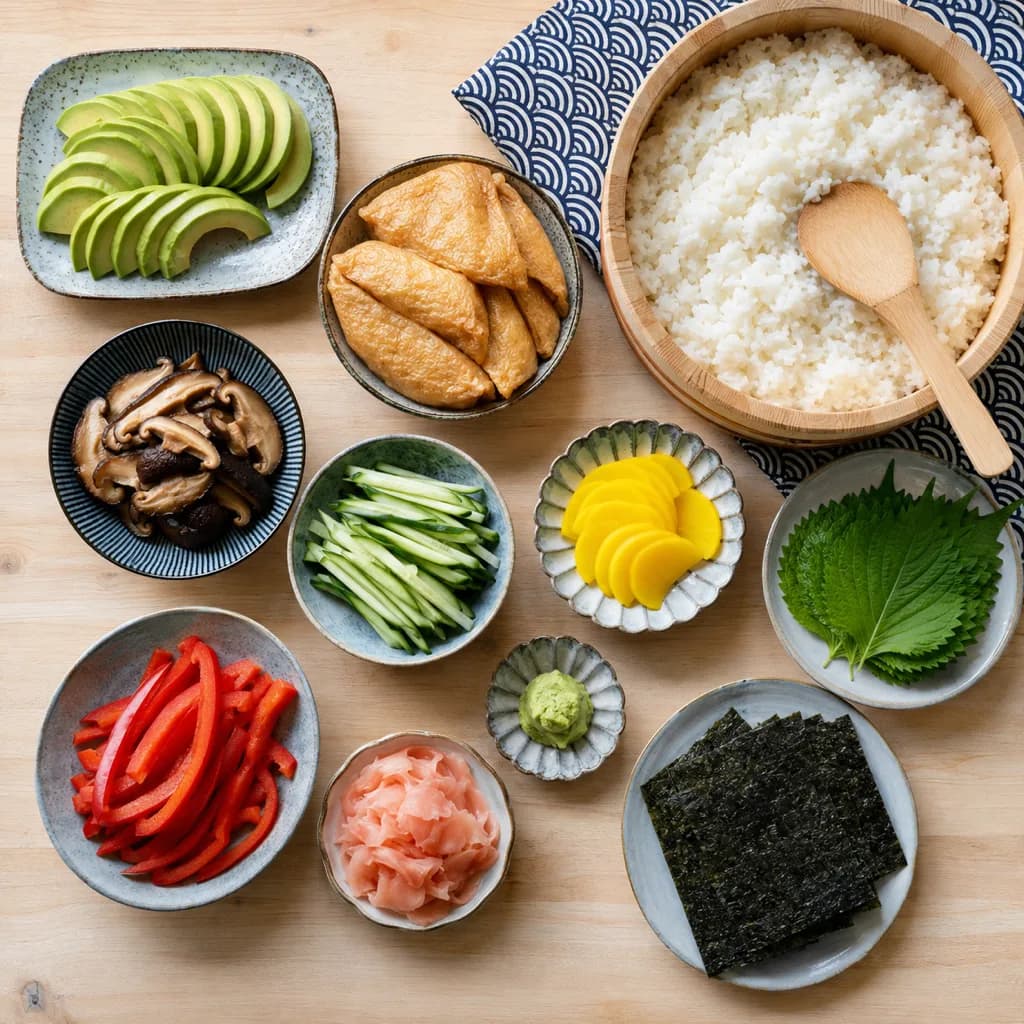
Halal Sushi Class in Tokyo: What to Confirm
Looking for a halal sushi class in Tokyo? Check certification, ingredients, shared tools and the reply you need before booking.