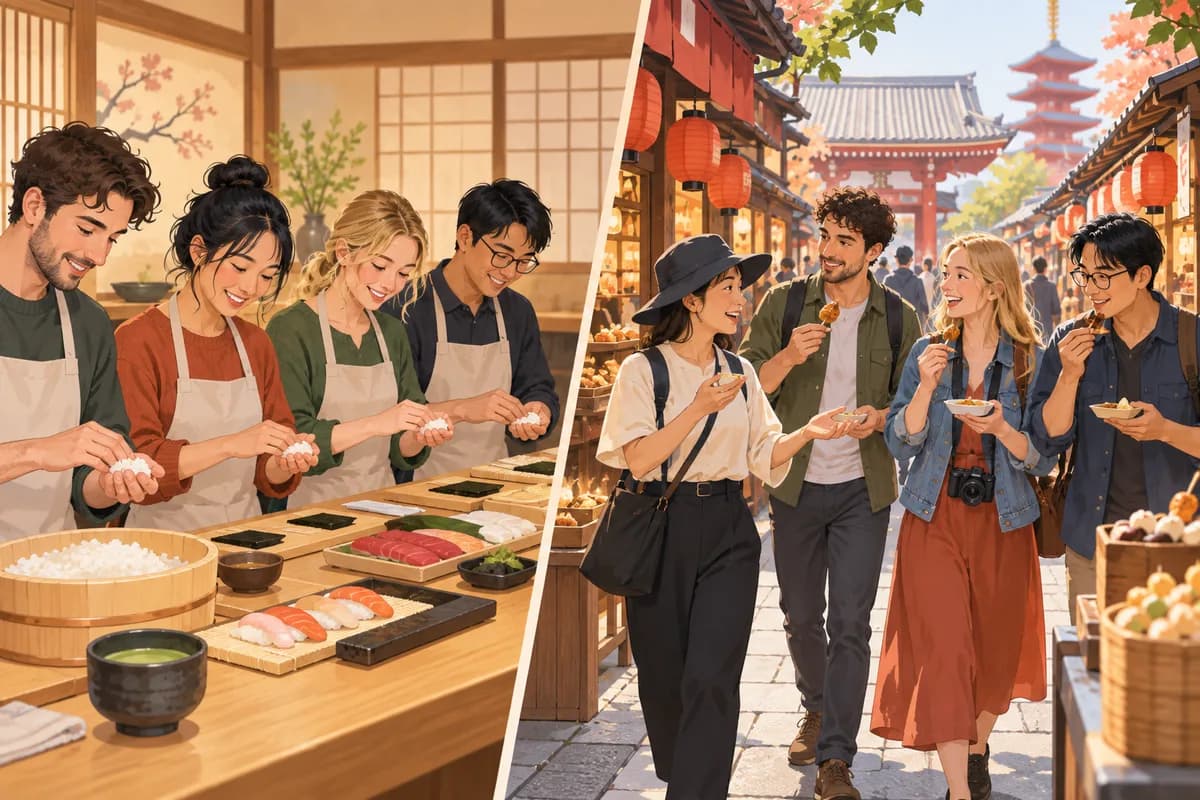
Sushi Class or Food Tour in Tokyo?
Many visitors have room for one food activity in a Tokyo itinerary and end up comparing two quite different ideas: learning to make sushi, or joining a food tour. Both can be good uses of a few hours. They answer different questions, though, and the choice is easier when you start with what you want to be doing during that time rather than with a long list of search results.
This guide does not rank food tours or describe any particular tour. Tour programmes vary by operator, so their own pages are the place to check routes, stops and what is included. What we can describe is our own signature sushi and matcha class in Asakusa: a 90-minute experience, taught in English, in which you make nigiri and maki and whisk your own matcha. Use it as one concrete reference point while you compare.
Popular in Tokyo right now — our most recommended experience
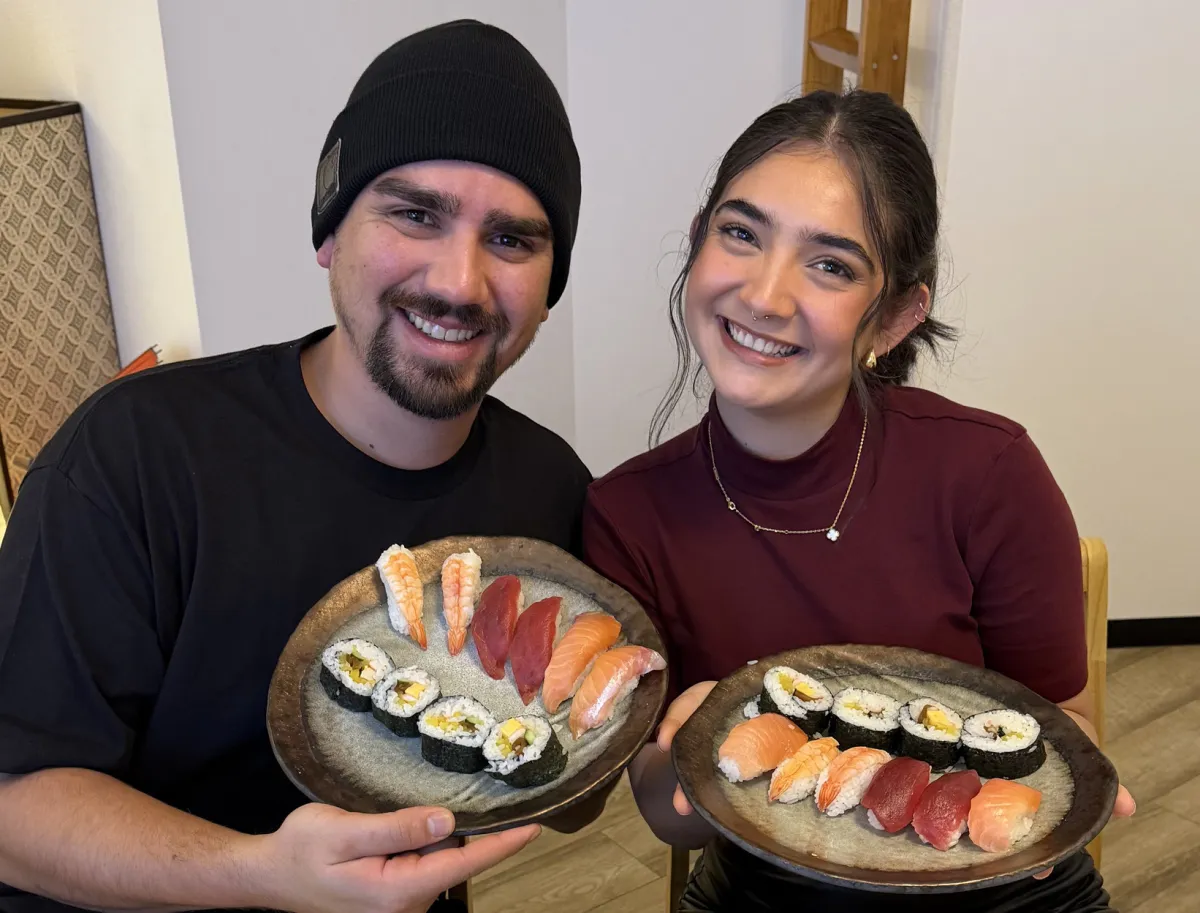
Tokyo Sushi Making Class : Sake Ceremony & Matcha Experience in Asakusa
Start with the verb: make, or taste?
A helpful way to decide is to finish this sentence: "During this activity, I mainly want to…"
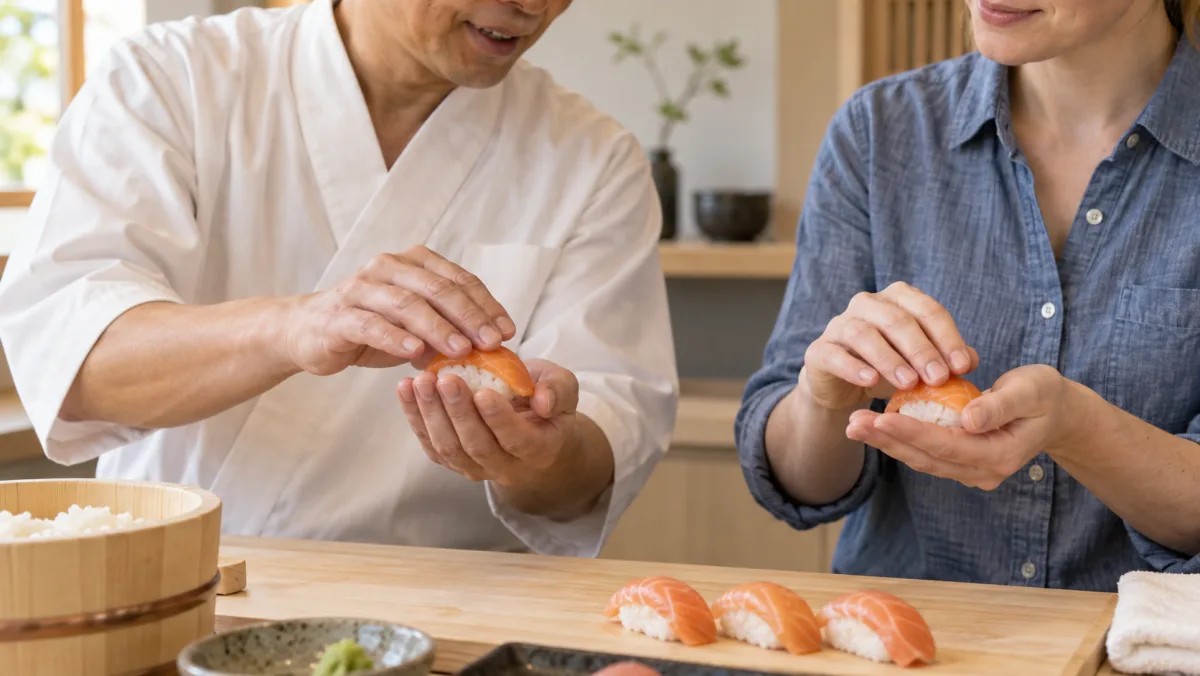
If the answer is "make something with my own hands", a class fits that goal directly. You spend the session shaping nigiri, rolling maki and preparing matcha. The focus stays on one craft and the steps behind it.
If the answer is "try many different things", "move around a neighbourhood" or "have someone guide me through local eating", you are describing something closer to what people usually look for in a tour. Read how each provider explains its own format before assuming it will cover a particular food, area or number of tastings.
Some travellers want both. That is fine, but it helps to decide which one is the priority for the day, because the practical planning is different.
How the time is used
A class happens in one place. With our signature class, you plan around a 90-minute session and the published guidance to arrive 10 minutes before it starts. Because you stay in the studio, you do not need to plan a walking route during the activity itself, and it is simple to think about what comes before and after.
If you are comparing a tour, check how long it lasts, where it begins and ends, and how much walking or travel is involved, using the operator's own information. An activity that finishes somewhere other than where it started changes what you can sensibly schedule next.
Neither format is automatically shorter or more relaxed. The useful comparison is the whole block of time each one takes out of your day, including getting there and moving on afterwards. Our guide for first-time cooking class guests gives more background on what a hands-on session involves if you have never taken one.
What you take away
Think about what you would like to remember afterwards.
A class gives you a direct experience of technique. After shaping nigiri yourself, you have a clearer sense of how the rice is handled, how much pressure a piece needs and why rolling maki evenly takes practice. Whisking matcha adds a different, quieter skill to the same session. If you enjoy understanding how something is made, that is the main thing a class offers.
People who choose a tour are usually looking for breadth: variety, stories about places and a sense of how food fits into a district. Whether a specific tour delivers that depends on the operator, so compare their descriptions rather than general expectations.
It also helps to be realistic about skill. A 90-minute beginner class is an introduction, not professional training. If you are wondering whether you need something more structured, our comparison of a sushi class and chef training in Tokyo explains how those goals differ.
Who you are travelling with
Your group often decides this more than the food does.
- Mixed interests. A class gives everyone the same task at the same time, which can suit a group where not everyone is equally excited about eating out.
- Different energy levels. If someone in your party prefers not to walk for long, a single-location activity may be easier to plan around. Check any tour's walking expectations directly with the operator.
- Language. Our signature class is taught in English. For any other activity, confirm the language of the guide or instructor before booking.
- Dietary needs. Whatever you choose, raise dietary requirements with the provider before paying rather than assuming a menu can be changed on the day.
Questions to ask before booking either option
Whichever direction you lean, a short checklist keeps the comparison fair:
- What will I actually be doing for most of the time: making, tasting, walking or listening?
- How long is the activity, and how much extra time do I need to arrive and leave?
- Where does it start, and where does it finish?
- What language is it conducted in?
- Which dietary or access needs should I raise before paying?
- What does the booking page say about the date, participants and cancellation terms?
Answer these from each provider's current booking information. Blog articles, including this one, are not a substitute for the page where you actually reserve.
Can you fit both into one trip?
Often you can, as long as you do not squeeze them too tightly together. Two food-focused activities back to back can simply leave you too full to enjoy the second one. Putting them on different days, or leaving a generous gap between them, usually works better than stacking them.
If you do plan a class and something else on the same day, our guide to how long a sushi class takes and how to plan your day walks through the timing.
Making the decision
Choose a sushi class if your main wish is to make sushi yourself, stay in one place and come away understanding a little about how nigiri, maki and matcha are prepared. Look at a food tour if your priority is variety and moving around a neighbourhood, and read that operator's own description carefully.
When a hands-on session sounds right, open the signature sushi and matcha class page to check the dates currently offered for your party. Confirm the details there before you arrange the rest of your day around it.
Related Articles
Book a Sushi Class Early or on the Day?
Reserve a Tokyo sushi class in advance or try on the day? Weigh certainty against flexibility and know what to check before counting on a same-day place.
Sushi Class or Chef Training in Tokyo?
Choose a Tokyo sushi course for your actual goal: a hands-on holiday experience or structured professional study. Know what to check before booking.
Sushi Class Without Speaking Japanese
Do you need Japanese for a Tokyo sushi class? Learn the teaching language, useful questions and what to confirm if you need an interpreter.