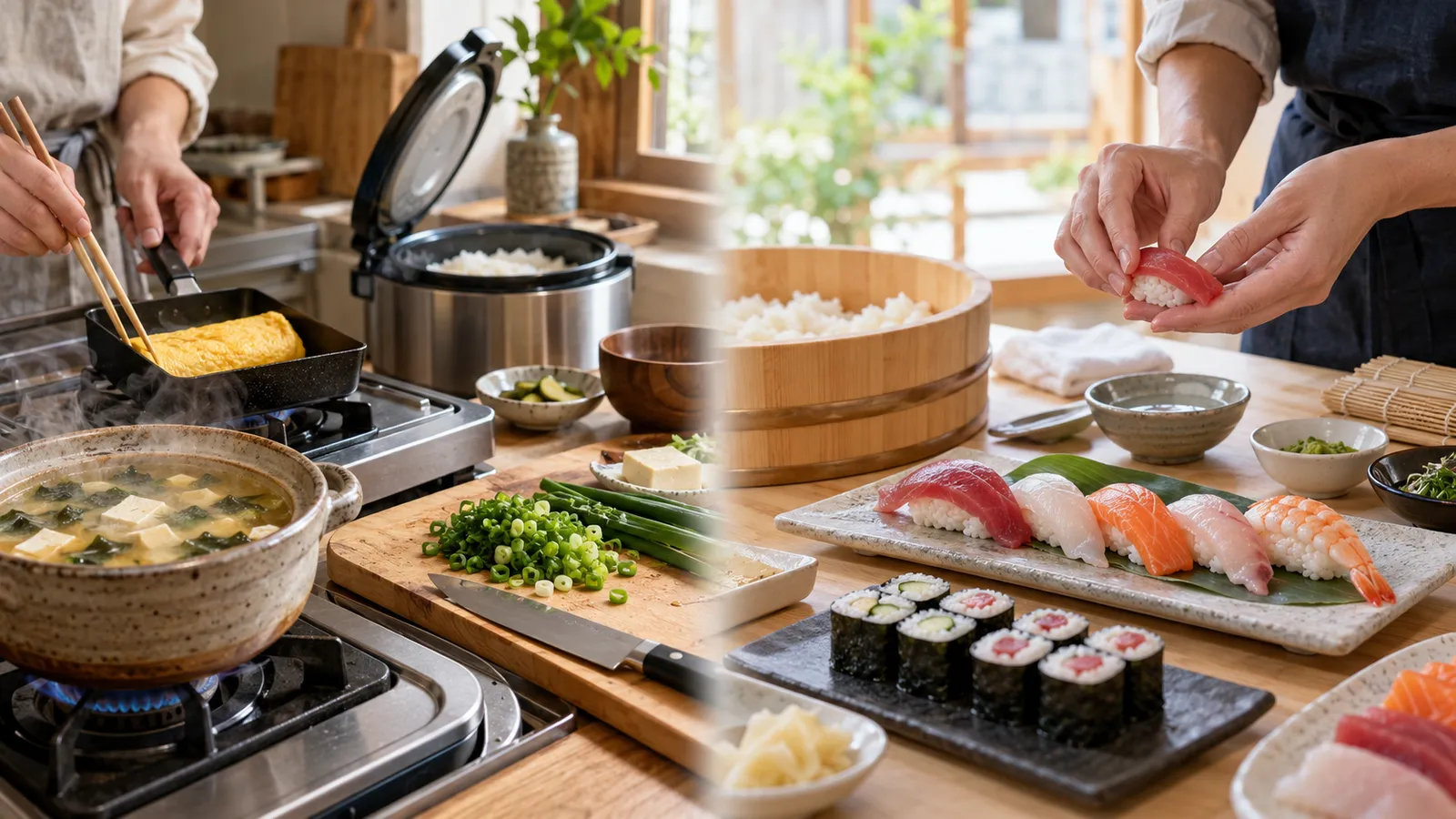
Home Cooking Class or Sushi Class in Tokyo?
Search for a cooking class in Tokyo and two kinds of listing come up again and again. One is a Japanese home cooking class: a local host welcomes a few guests into a home or small private kitchen and teaches everyday dishes. The other is a dedicated class with one clear focus, such as a sushi class in a purpose-built studio. Both are genuine ways to learn about Japanese food, but they suit different travellers and different days.
This guide compares the two honestly, so you can decide which fits your trip. We run the signature sushi and matcha class in Asakusa, so we describe that format precisely. Home cooking classes vary a lot from host to host, so treat what we say about them as general patterns and check each listing for the details.
Popular in Tokyo right now — our most recommended experience
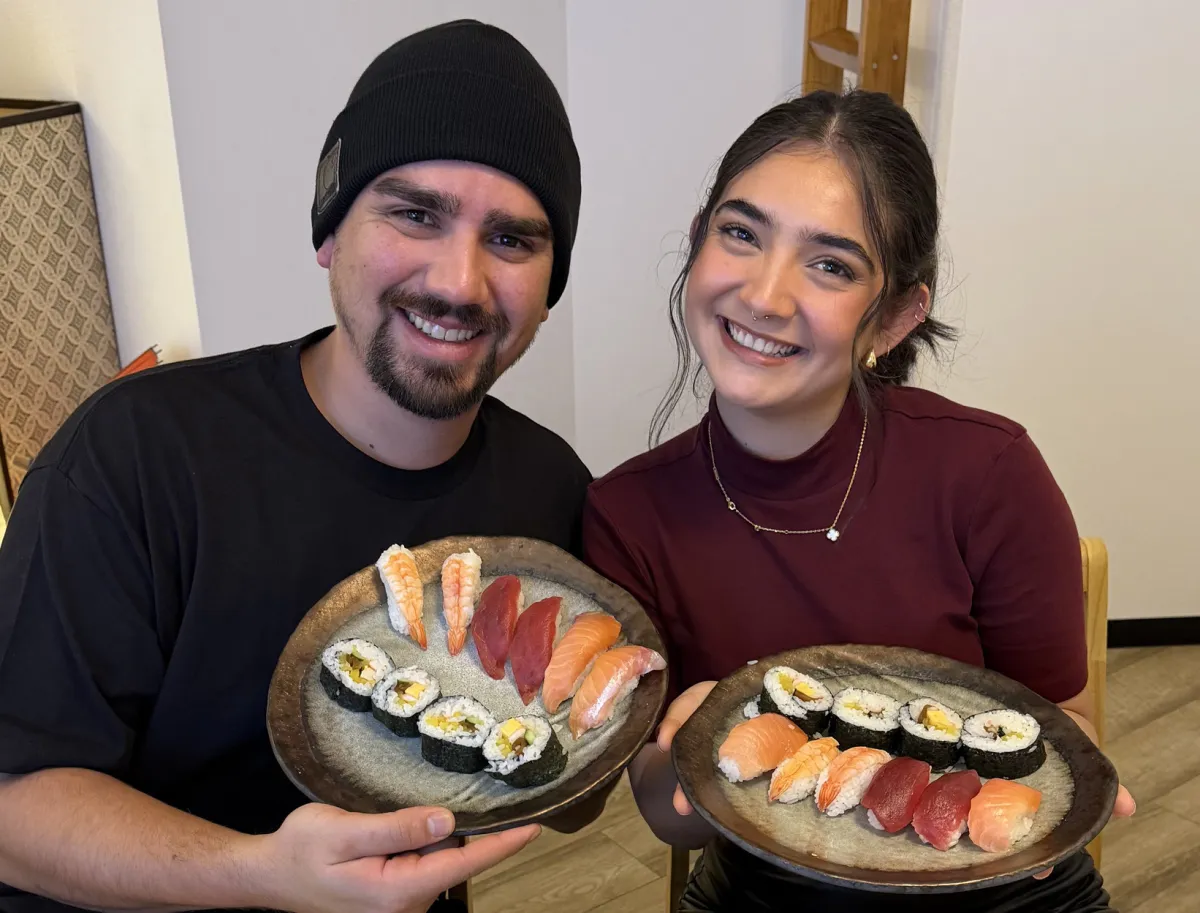
Tokyo Sushi Making Class : Sake Ceremony & Matcha Experience in Asakusa
What you actually cook
Home cooking classes usually teach the food Japanese families eat on an ordinary day. Menus often include things like miso soup, a rolled omelette, rice dishes, simmered vegetables or gyoza, and they change with the host and sometimes with the season. You learn several dishes, each in a little less depth, and you end with a home-style meal.
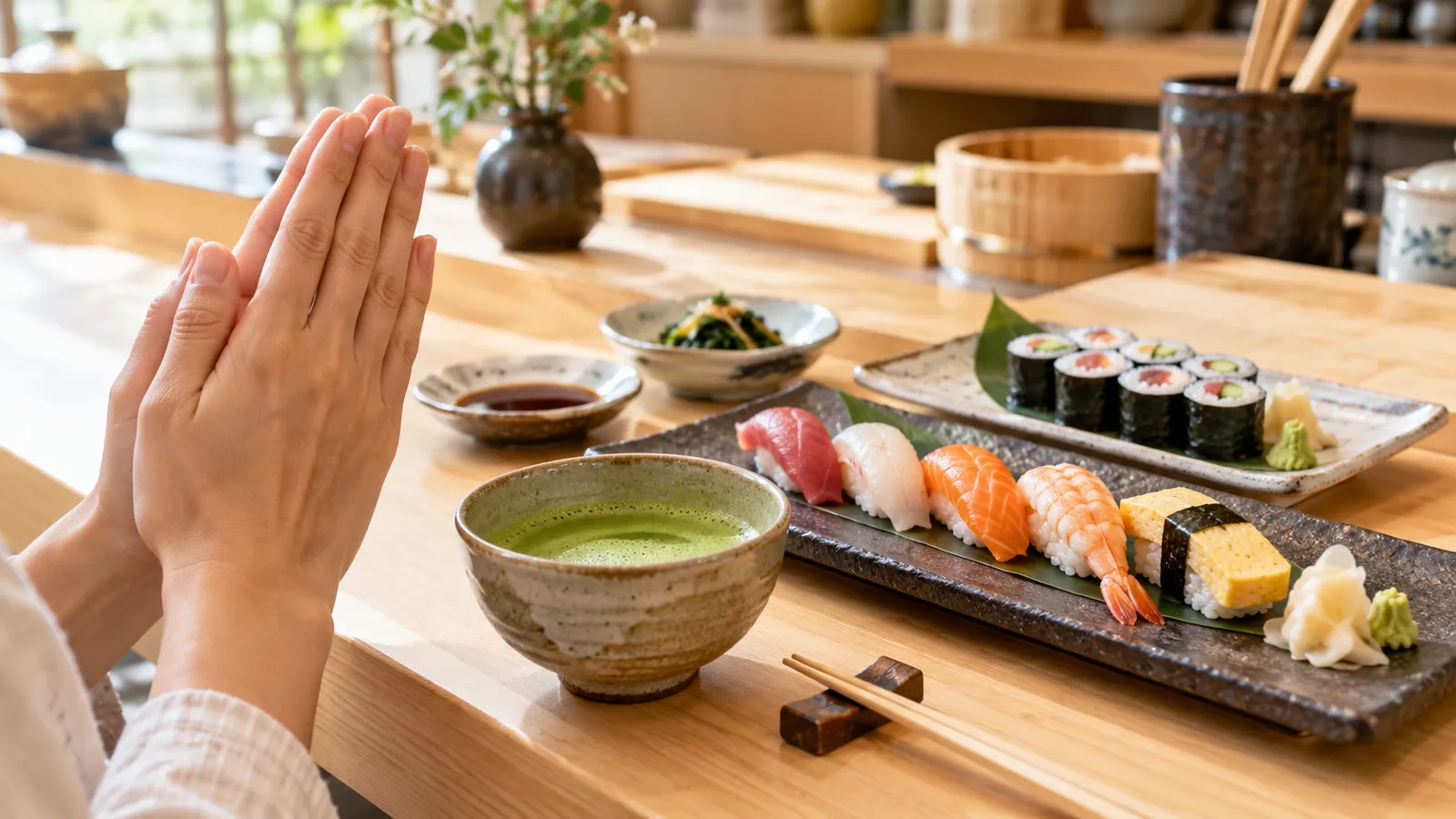
A sushi class goes deep on one craft. In our signature class you make nigiri and maki rolls with ingredients and tools already prepared at your place. An instructor demonstrates each step and then helps you shape rice, place toppings and roll. Our guide to what you make in a sushi and matcha class lists the steps in order.
If your goal is "I want to cook a Japanese dinner for my family back home", a home cooking class may teach you more dishes. If your goal is "I want to understand how sushi is made and try it with my own hands", a sushi class is the more direct route.
The setting and the people
A home cooking class is often intimate: a few guests, a host's own kitchen and conversation about daily life in Tokyo. That is a big part of the appeal. It also means the experience depends heavily on the individual host, the space and who else books that day.
Our studio is a dedicated space under the railway tracks in Asakusa, set up for teaching. The signature class takes up to 20 guests, so you cook alongside other travellers, which many solo guests enjoy. Couples, families and friends who would rather be on their own can choose a private format instead; our comparison of shared and private sushi classes explains the options.
Time and how it fits your day
Home cooking classes are commonly two to three hours or more, because several dishes are prepared and then eaten together. Many also start with a trip to a local supermarket or market, which adds time but can be a highlight.
Our signature class takes about 90 minutes from welcome to farewell, including a sake toast, eating what you made and whisking your own matcha. That shorter, fixed block is easier to fit around sightseeing. Senso-ji is about five minutes on foot from the studio, so the class slots neatly into an Asakusa day. See how long a sushi class takes for sample timings.
Getting there
Home kitchens are spread across Tokyo's residential neighbourhoods, and the exact address is often shared only after you book. That is normal for a private home, but it is worth checking the travel time from your hotel before you commit.
Our studio is about a 30-second walk from the Tobu Skytree Line Asakusa Station North Exit and about two minutes from Tokyo Metro Ginza Line Exit 7. Guests are asked to arrive 10 minutes early to store belongings and wash hands. There is luggage space at the studio, which helps on check-in or check-out days.
Language and dietary needs
Many home cooking hosts speak good English, but levels vary, so read reviews that mention communication. Our classes are conducted in English by fluent instructors, with bilingual Japanese-English staff.
For dietary needs, a home kitchen can sometimes be very flexible, and sometimes cannot avoid an ingredient at all. Ask the host directly. We regularly host vegetarian, vegan, pescatarian and gluten-free guests when they tell us in advance, and we run a dedicated vegan sushi class in the same 90-minute format. We cannot guarantee a fully allergen-free kitchen, so please mention severe allergies when booking.
Booking and price
Home cooking classes are usually booked through a platform or the host's own page, and the price, cancellation terms and confirmation process differ by listing. Some are on-request and confirmed by the host later.
Our signature class is ¥12,000 per person, tax included, with all ingredients, tools, sake for the toast, water or green tea and matcha. Cancellation is free up to 24 hours before the class. Live availability is on the class page, so you can see which dates are open before you plan around them.
Which one should you choose?
Choose a home cooking class if:
- you want to learn a range of everyday dishes to cook at home,
- an evening in a local's kitchen is the experience you are after,
- you have three hours or more and do not mind travelling to a residential area.
Choose a sushi class if:
- sushi is the dish you most want to understand and make yourself,
- you prefer a fixed, shorter session that fits around sightseeing,
- you want English instruction, a set menu with dietary options and a central location next to Senso-ji.
Some travellers do both on different days: a home cooking evening for everyday food and a sushi class for the dish they came to Japan for. If you are still weighing other ways to experience Japanese food, our comparison of a sushi class or a food tour looks at tasting versus making.
Check a date that works
If a hands-on sushi session sounds right, open the signature class page, look at the live dates for your stay and pick the one that fits your plans. The rest of your Tokyo food itinerary can be built around it.
Related Articles
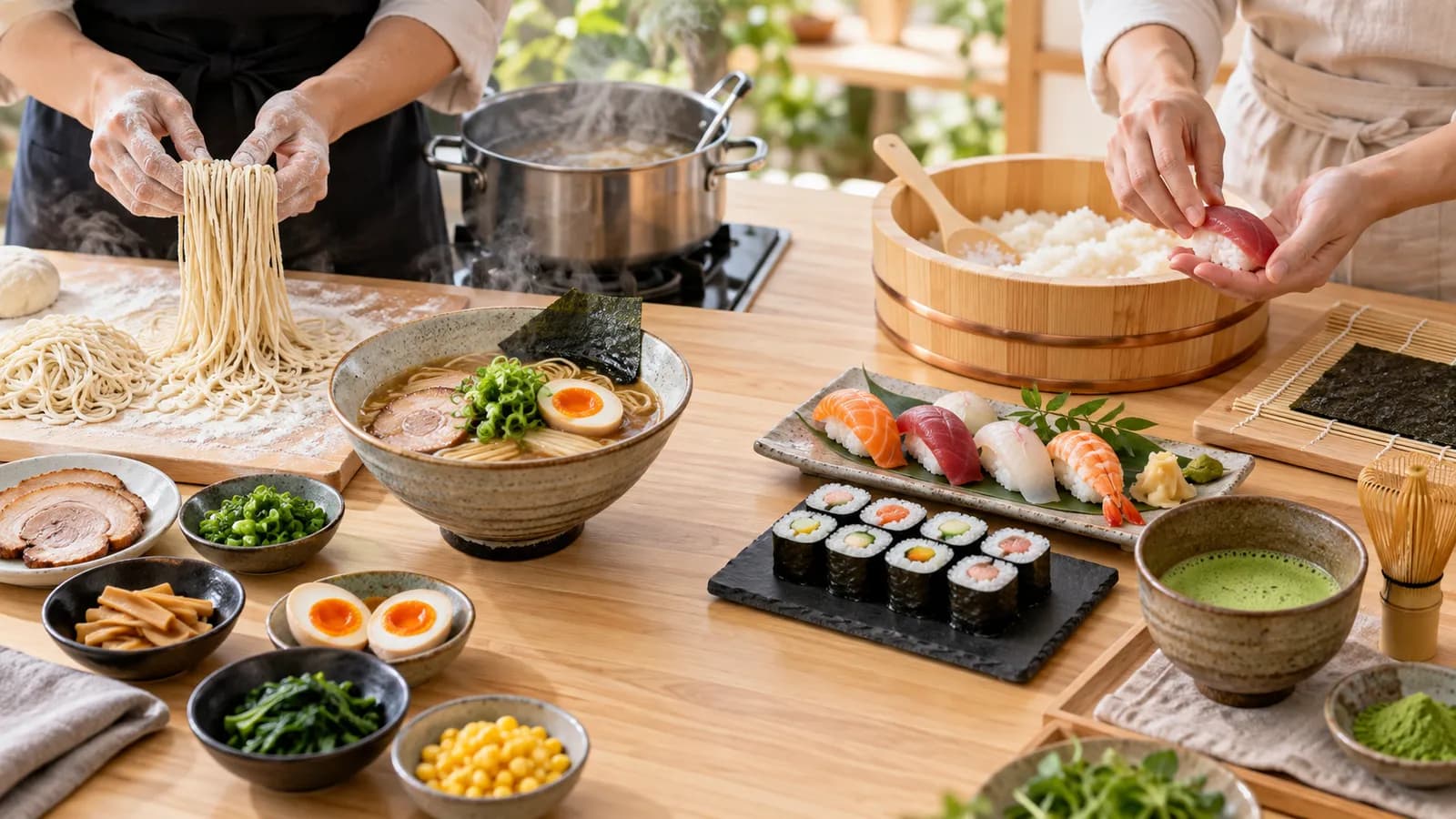
Sushi Class or Ramen Class in Tokyo?
Torn between a sushi class and a ramen class in Tokyo? Compare what you make, how long it takes, what you eat and which one suits your group and trip.
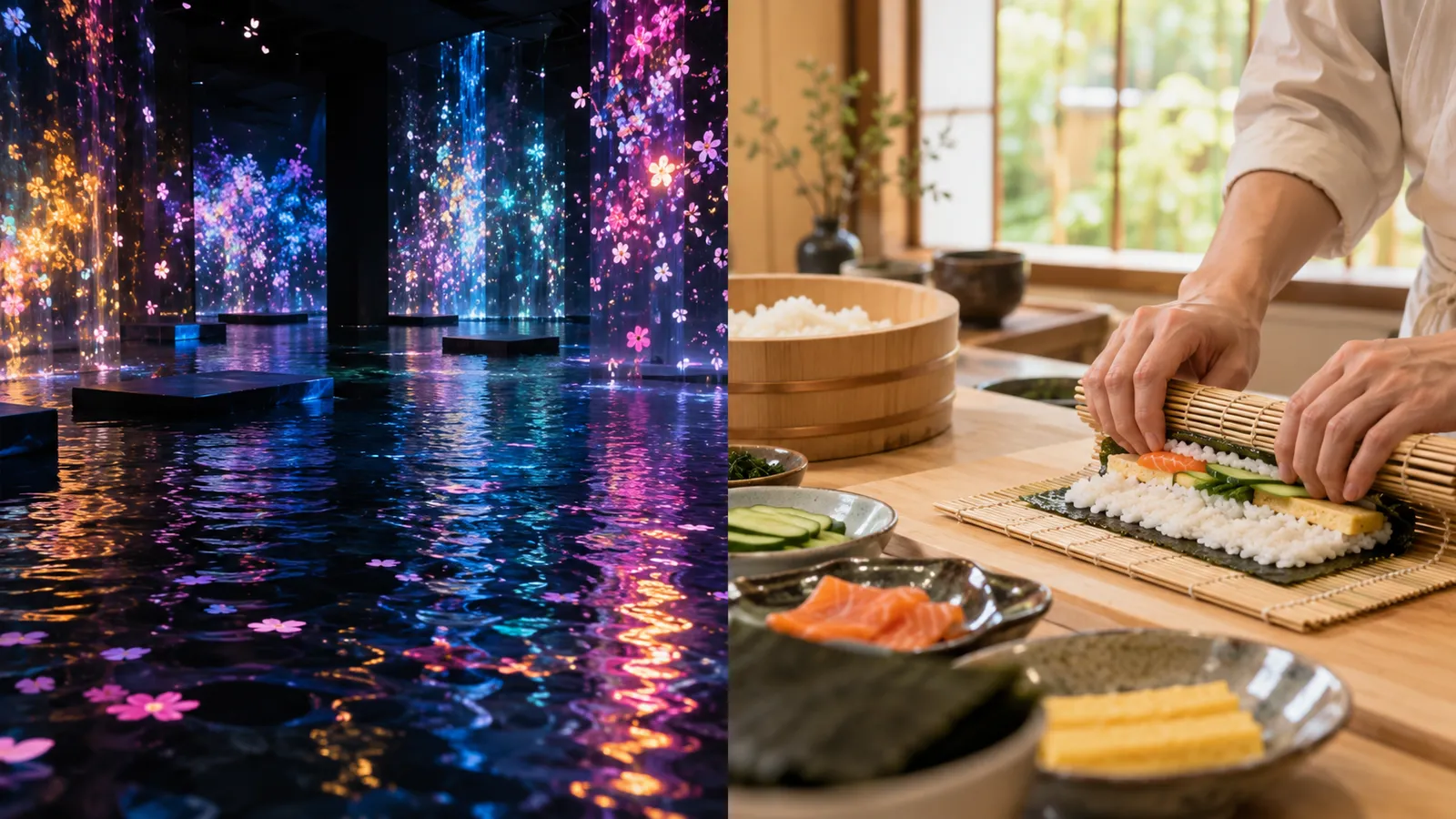
teamLab Planets and a Sushi Class in One Day
Pair teamLab Planets in Toyosu with a sushi class in Asakusa. Train routes, what to wear for the water rooms, timing and two simple plans for one Tokyo day.
Do You Tip at a Sushi Class in Japan?
Tipping is not customary in Japan, and a sushi class is no exception. What the price covers, why there is no tip line, and good ways to say thank you.