Okonomiyaki or a Sushi Class in Tokyo?
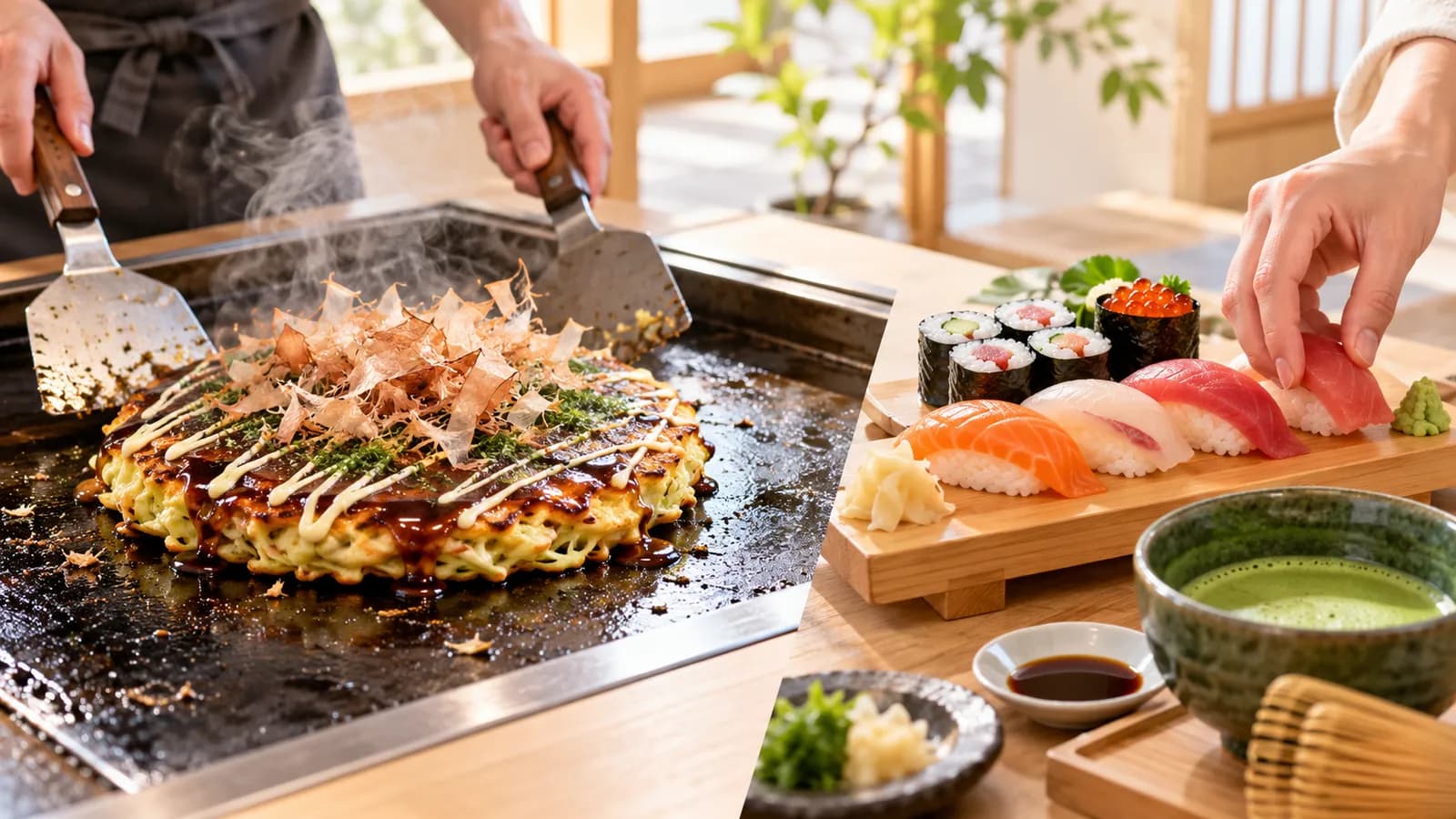
Okonomiyaki is the savoury pancake many visitors try once and then talk about for the rest of the trip: cabbage and batter on a hot iron plate, finished with sauce, mayonnaise and seaweed powder. In Tokyo, it often comes with a hands-on twist, because many okonomiyaki and monjayaki restaurants put the griddle in the middle of your table and let you cook. That makes it a natural rival to a sushi class when you are choosing one food activity for your trip.
The two are not the same kind of experience. One is usually a meal where you do the cooking; the other is a guided lesson that ends in a meal. This guide sets out the differences that matter when you decide. We run a sushi class, so we describe our own class from the inside and okonomiyaki in general terms. Restaurants and classes vary, so check the details with the place you choose.
Popular in Tokyo right now — our most recommended experience
Tokyo Sushi Making Class : Sake Ceremony & Matcha Experience in Asakusa
A restaurant you cook in, or a class that teaches you
In Japan, okonomiyaki is mostly restaurant food, not something people take lessons in. At many restaurants, you order a bowl of raw ingredients, tip it onto the griddle and cook it yourself. Staff may show you how, cook the first one for you, or do all of it if you ask. Some places always cook for you. Okonomiyaki classes and workshops also exist, but they are less common than sushi classes.
So the first question is what you want from the experience. If you want a lively, inexpensive dinner where everyone flips something, an okonomiyaki restaurant may be all you need, and you do not have to book a class for it. If you want someone to teach you a technique step by step, explain why it works and correct your hands as you go, a class is the better fit.
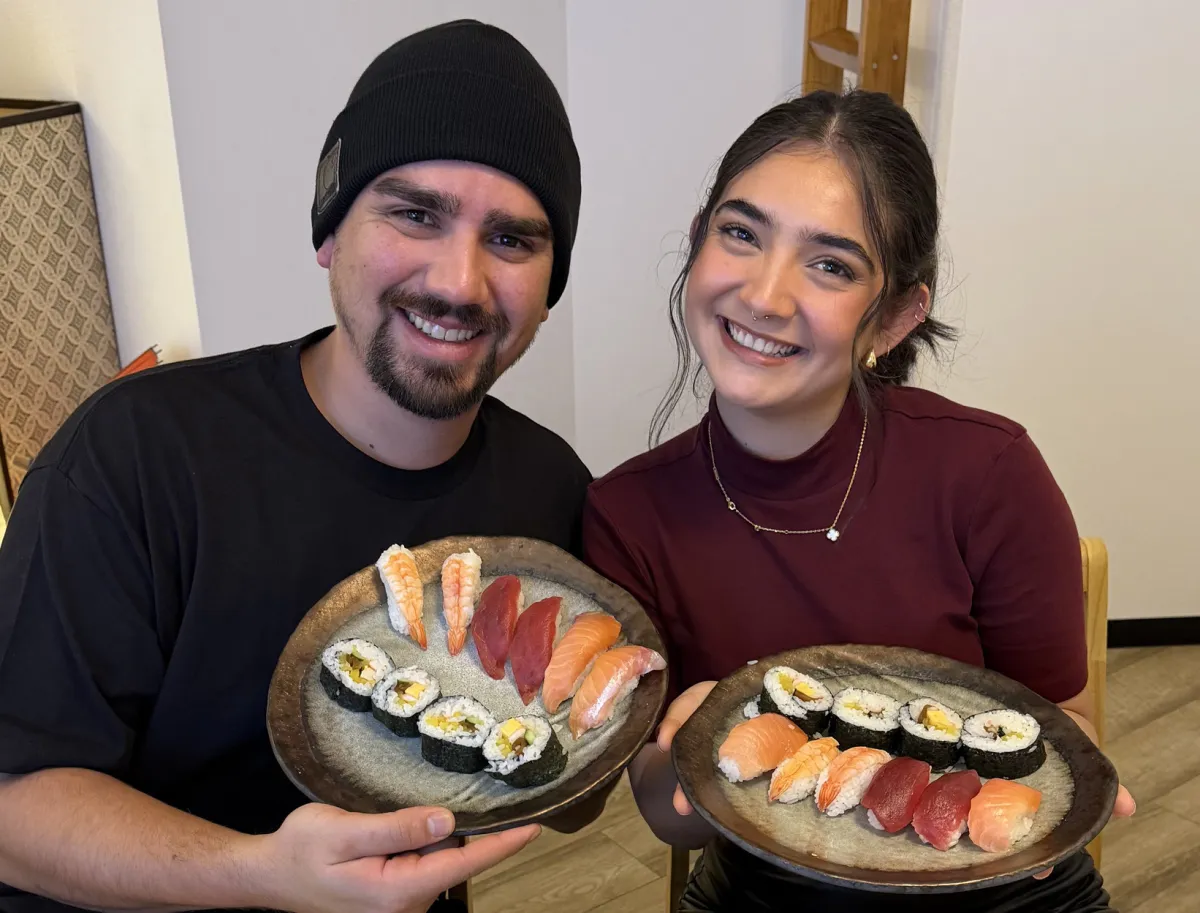
At our signature sushi and matcha class in Asakusa, an instructor guides you through preparing sushi rice, shaping nigiri and rolling maki in English, then you sit down to eat what you made. Each guest typically makes 8 to 10 pieces. The session also includes a sake toast and ends with whisking your own matcha, and the whole experience takes about 90 minutes.
Osaka, Hiroshima or Tokyo style
Okonomiyaki is closely linked with Osaka and Hiroshima, not Tokyo. According to Japan's national tourism organisation, the Kansai (Osaka) style mixes chopped cabbage with flour, egg and a little dashi before cooking it on an iron griddle, while the Hiroshima style is layered and includes noodles. Tokyo has its own griddle dish, monjayaki: the ingredients are cooked first and shaped into a ring, the runny batter is poured into the middle, and you eat it straight off the griddle with a small spatula. The Tsukishima area is famous for it.
Sushi, by contrast, is Tokyo's own food. The style of hand-pressed nigiri most people picture today grew up in Edo, the old name for Tokyo. Our guide to the history of Edomae sushi explains how it developed. If eating "where the dish comes from" matters to you, okonomiyaki fits best in Osaka or Hiroshima, monjayaki in Tokyo, and sushi in Tokyo too.
Hot iron plate or cold counter
Okonomiyaki is cooked on a very hot griddle in front of you. You flip a heavy pancake with metal spatulas, and oil spits when sauce hits the plate. That is part of the fun, but it matters if you are travelling with young children, or with anyone uneasy around heat. Ask the restaurant whether staff can cook for your table, and keep small hands well away from the edge of the plate.
Our sushi class involves no frying or griddle. The work happens at the counter with rice, fish and vegetables in front of you, and you eat at your seat. Children aged 4 and above can join the regular class, and families who want more room can book the family private sushi class.
Ingredients and dietary needs
For mixed groups, this question often decides it.
- Wheat and egg: okonomiyaki batter is based on wheat flour and egg, so both are part of the dish itself.
- Pork and seafood: sliced pork belly is a classic topping, and squid or shrimp are common. Ask for a version without them if needed.
- Fish flakes: bonito flakes are a common finishing topping, and dashi made from fish is often in the batter, so a "vegetable" okonomiyaki may not be vegetarian.
- Sauce: the thick sauce and mayonnaise vary by brand; ask if you avoid particular ingredients.
Our sushi class uses rice, fish and vegetables, and we can prepare alternatives when you tell us in advance, including gluten-free soy sauce and shellfish-free or egg-free options. Guests who do not eat raw fish can join with cooked or vegetable toppings, and a fully plant-based vegan sushi class runs in the same 90-minute format. Please list all allergies when booking; for severe allergies, contact us before you book. Our guide to sushi classes and food allergies explains what to tell us.
Group mood and cost
An okonomiyaki dinner is loud, social and relaxed. Everyone shares one griddle, and the meal stretches as long as you keep ordering. It usually costs less than a class, and you pay for what you eat. It suits groups who want an easy evening rather than a lesson.
A sushi class is more structured. You have a set time, a fixed price that covers ingredients, tools, drinks and instruction, and an instructor watching your technique. Our guide to what the class price includes breaks that down. It suits people who want to learn something specific, or who are looking for a planned highlight of the trip.
What you can repeat at home
Okonomiyaki is easy to recreate: cabbage, flour, eggs and a frying pan with a lid are enough, and okonomiyaki sauce is sold in many Asian grocery stores. Sushi needs short-grain rice, rice vinegar, nori and, for nigiri, fish you trust to eat raw, but maki with cooked or vegetable fillings is easy to make anywhere. The class gives you the feel for how firmly to press rice and how to keep a roll even, which is hard to learn from videos alone.
You do not have to choose
Because okonomiyaki in Tokyo is mostly a restaurant meal, many travellers do both: a sushi class during the day and an okonomiyaki or monjayaki dinner in the evening. Asakusa has griddle restaurants of its own, so you do not need to cross the city. If you are weighing other hands-on options, our comparisons of gyoza and sushi classes and tempura and sushi classes look at two more dishes cooked with heat.
A quick way to decide
Choose okonomiyaki if:
- you want a casual, sociable meal where everyone cooks at the table;
- everyone in your group eats wheat and egg, or the restaurant can adjust;
- you would rather not book a fixed time.
Choose a sushi class if:
- you want a guided lesson in the dish most closely tied to Tokyo;
- you prefer counter work to a hot griddle, or are bringing children aged 4 and above;
- you want sake and matcha in the same booking;
- you plan to spend part of the day in Asakusa.
If the sushi class suits you, check live sessions and the current price on the signature class page, and mention any dietary needs when you book. Free cancellation is available up to 24 hours before the class.
Related Articles
Gyoza Class or Sushi Class in Tokyo?
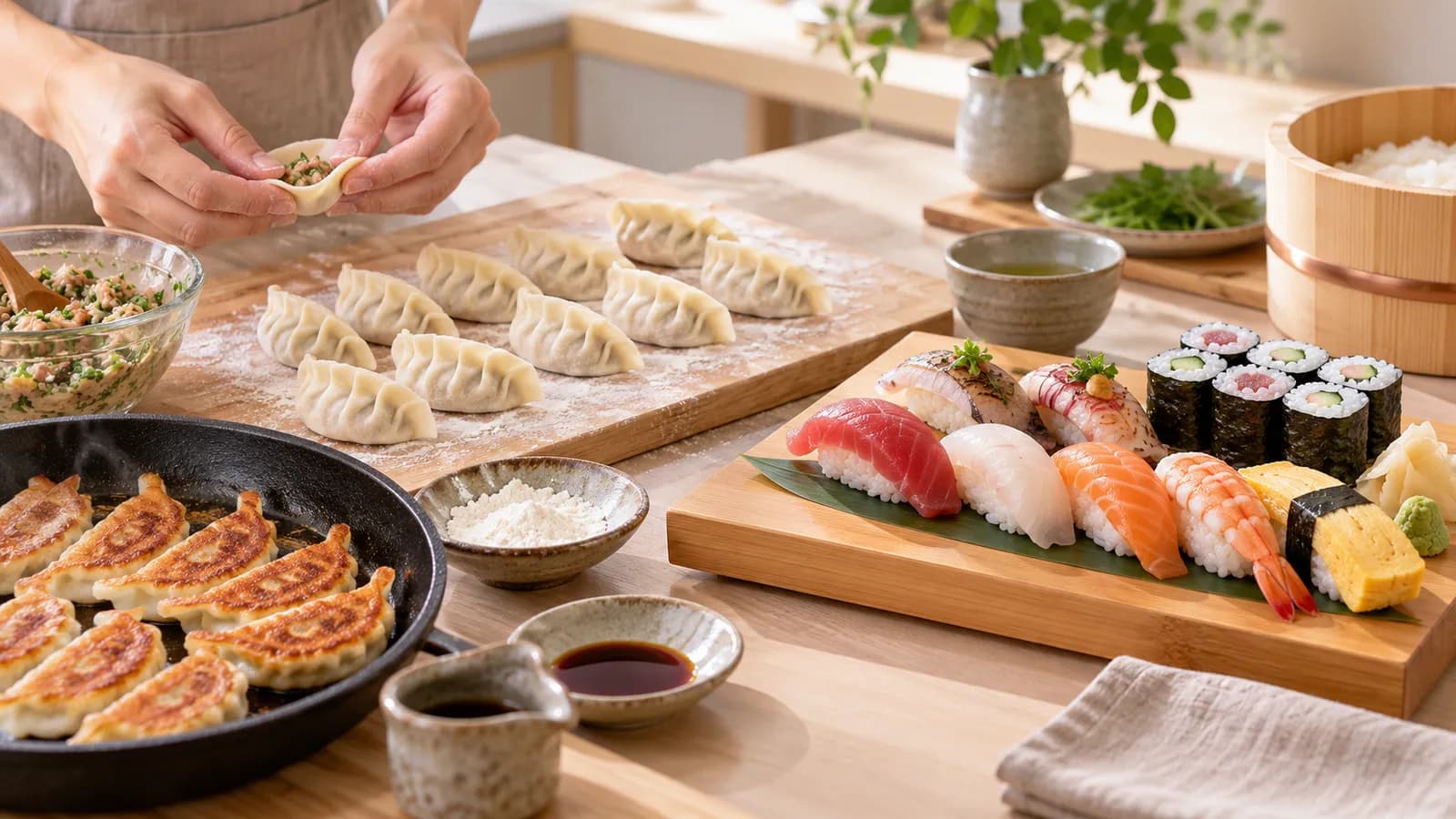
Choosing between a gyoza class and a sushi class in Tokyo? Compare the hands-on work, the hot pan, pork and wheat in the filling and wrappers, and the meal.
Tempura Class or Sushi Class in Tokyo?
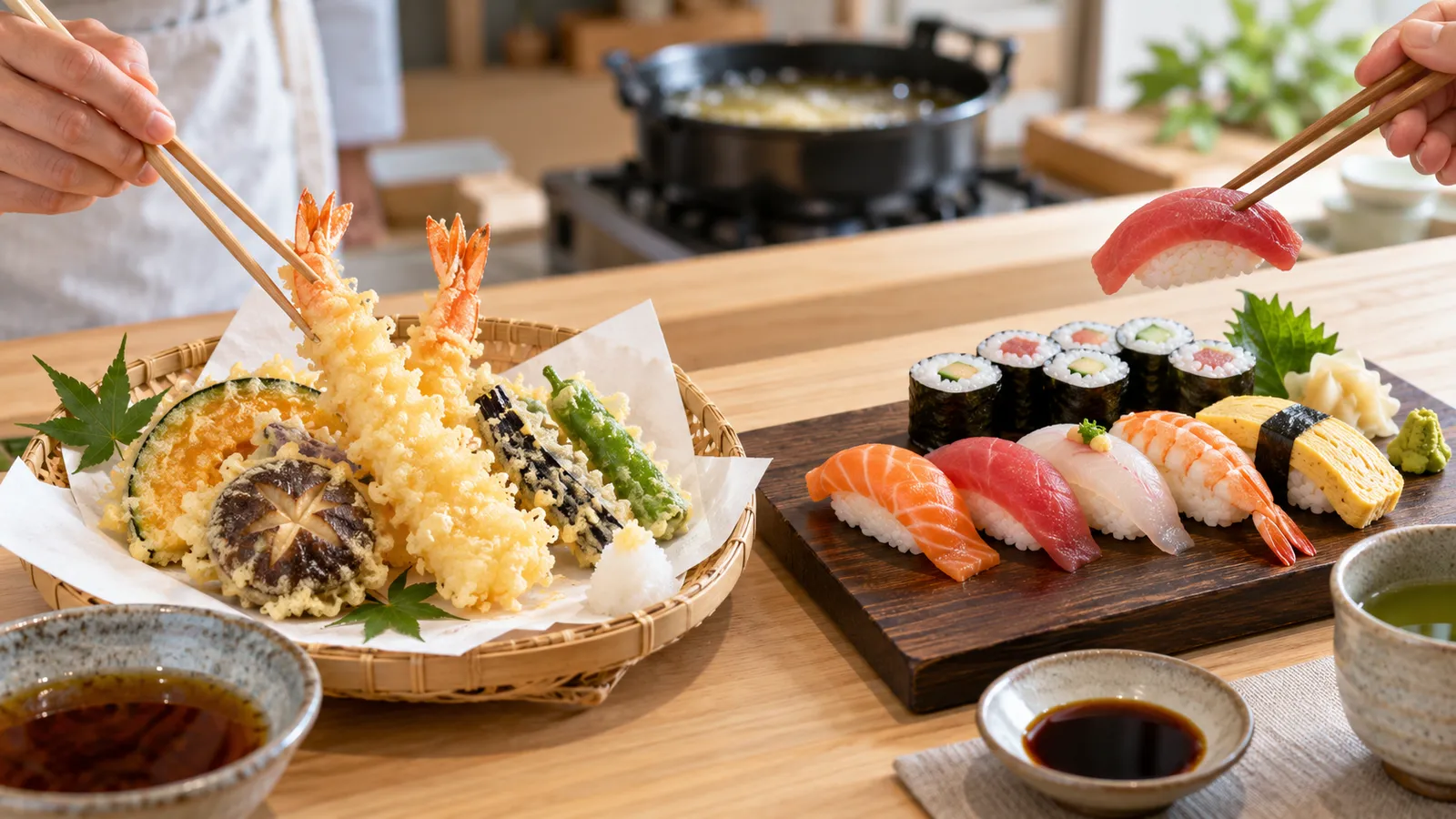
Tempura or sushi for your one Tokyo cooking class? Compare hot oil and age limits, batter and gluten, shellfish, timing and what you eat at the end.
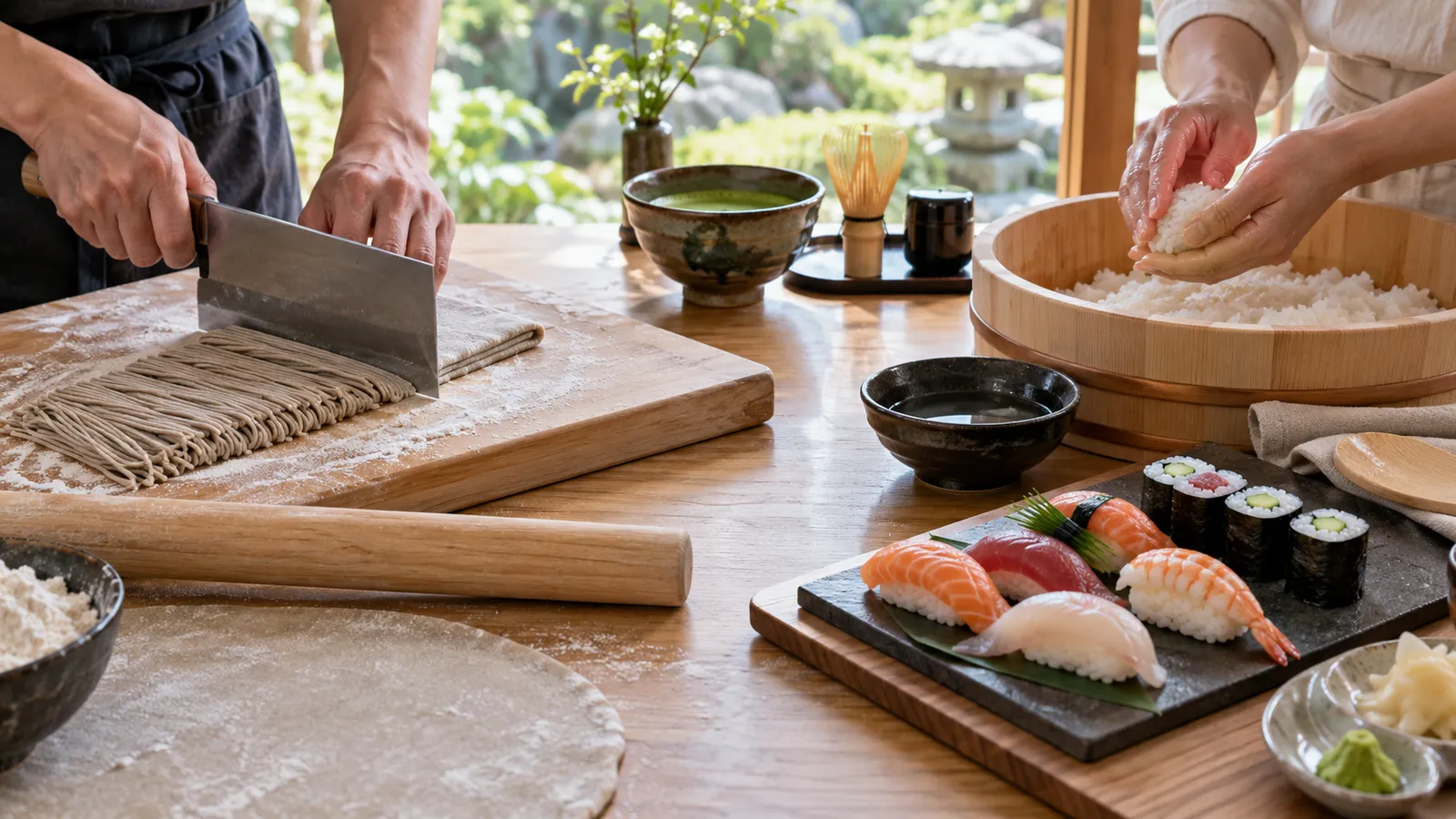
Sushi Class or Soba-Making Class in Tokyo?
Choosing between a sushi class and a soba noodle-making class in Tokyo? Compare the techniques, timing, what you eat and the buckwheat allergy question.