Sushi Class or Soba-Making Class in Tokyo?
Sushi and soba are both closely tied to Tokyo's food history. In the Edo period, the city's street stalls and small shops sold quick bowls of buckwheat noodles alongside hand-pressed sushi, and both are still everyday food here. If you only have room for one hands-on class on your trip, it can be hard to choose between them.
This guide compares the two formats in practical terms: what your hands do, how long it takes, what you eat at the end and who in your group each one suits. Soba classes in Tokyo are run by many different hosts, so treat the soba side as a general description and check the details of any class you are considering.
Popular in Tokyo right now — our most recommended experience
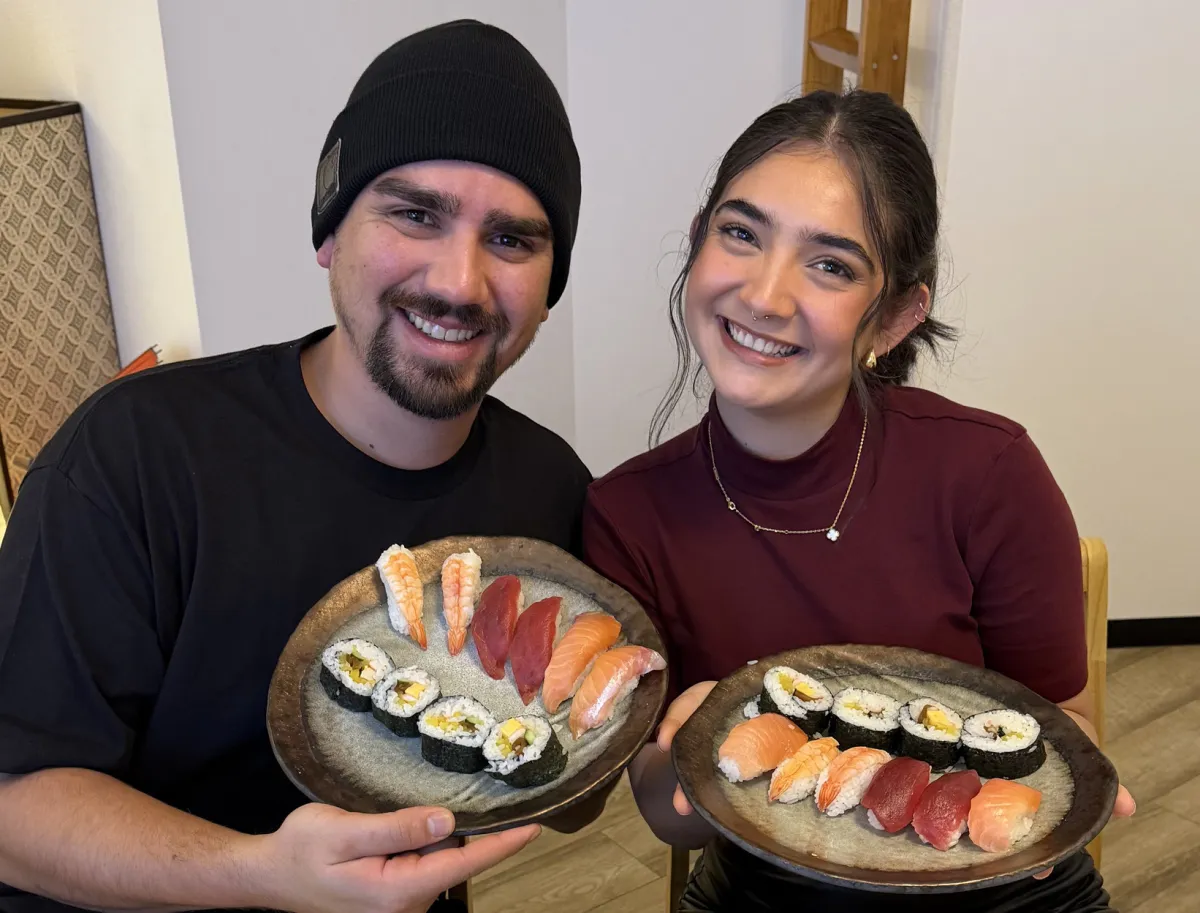
Tokyo Sushi Making Class : Sake Ceremony & Matcha Experience in Asakusa
What your hands actually do
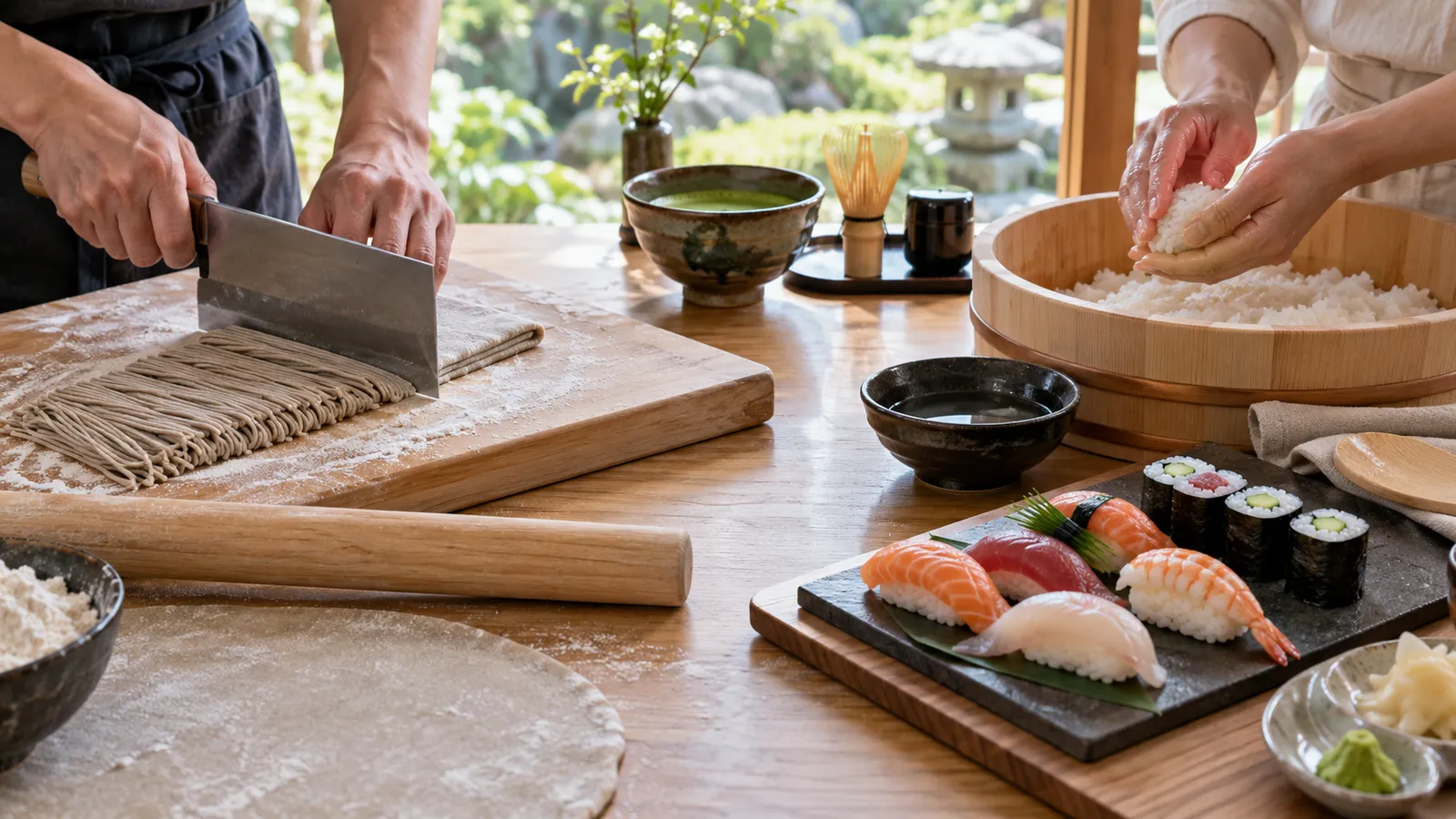
In a soba class, you usually start from flour. Buckwheat flour, often mixed with some wheat flour as a binder, is moistened with water little by little and worked by hand until it comes together. You then knead the dough, roll it out into a thin, even sheet with a long rolling pin, fold it and cut it into fine noodles with a heavy, square-bladed soba knife guided by a board. The noodles are boiled briefly and served, usually cold with a dipping sauce or hot in broth.
The skill is about patience and evenness. Adding water too fast, rolling unevenly or cutting at different widths all show in the final noodles. Many first-timers find the cutting the most satisfying and the most difficult part.
In a sushi class, the base is already cooked. You work with seasoned sushi rice, learn how much to pick up and how to shape it with light pressure, then place a topping on top for nigiri. You also roll maki with a bamboo mat. Our 90-minute sushi and matcha experience in Asakusa covers nigiri and maki, a sake toast, and finishes with you whisking your own bowl of matcha.
The skill here is lightness and repetition. You make many small pieces, so you get several attempts to improve within one session. If you want to know exactly which techniques beginners pick up, our guide to sushi skills beginners learn in a Tokyo class breaks them down.
How long it takes and when you eat
Soba-making is a single continuous process: mix, knead, roll, cut, boil, eat. You generally eat at the end, once your batch is cooked. Session lengths vary by host, so check the listed time and whether the meal is included in it.
Our signature sushi class runs for about 90 minutes, including eating everything you make, the sake toast and the matcha. We ask guests to arrive 10 minutes early to store bags and wash hands. If you are fitting the class between sightseeing stops, the guide on how long a sushi class takes in your day shows how to plan the full time block, not just the class itself.
Temperature, texture and appetite
Soba is a noodle meal. A batch made in class can be quite filling, and the flavour is subtle: nutty buckwheat with a soy-based sauce. Cold soba with dipping sauce is refreshing in warm weather; hot soba is comforting on a cool day.
Sushi is a series of bite-sized pieces. In our class you eat what you make as a real meal, not just a tasting, and finish with matcha. If someone in your group is unsure about raw fish, read our guide to sushi class options without raw fish before deciding; there are routes that do not rely on raw toppings, but they need to be arranged with the right product.
The buckwheat allergy question
This is the most important practical difference. Buckwheat is a well-known allergen in Japan, and it is one of the ingredients that must be declared on packaged food labels here. Reactions can be severe, and in a soba class the flour is handled openly and can become airborne during mixing and rolling.
If anyone in your group has a buckwheat allergy, a soba-making class is not a sensible choice, even as a spectator, unless the host can give a clear and specific answer about the setting. Raise it before you book, not on arrival.
A sushi class has its own allergy questions, mainly fish, shellfish, egg, sesame, soy and gluten in sauces. We take these seriously and can prepare alternatives for many requirements, but an allergy must be confirmed in advance. Our guide on sushi class food allergies explains what to send and how to wait for confirmation.
Culture beyond the dish
A soba class tends to focus on one craft in depth. You learn why the ratio of buckwheat to wheat matters, why the dough is rolled the way it is and how the noodles are traditionally eaten. It suits people who enjoy slow, methodical work and want to understand one technique well.
Our sushi class combines three elements of Japanese food culture in one session: sushi, a sake toast and matcha. It suits travellers who want a varied, social experience, and it works well for mixed groups where not everyone is a keen cook. The class is taught in English and welcomes complete beginners.
A quick way to decide
Choose a soba-making class if:
- You love noodles and want to learn one craft in depth.
- Nobody in your group has a buckwheat allergy.
- You enjoy kneading, rolling and precise cutting.
Choose a sushi class if:
- You want to make and eat a variety of pieces, then whisk matcha.
- Your group has mixed cooking experience or includes children aged 4 and above.
- You want a fixed, roughly 90-minute session close to Senso-ji.
If you are also weighing other dishes, our comparisons of sushi and ramen classes and Japanese home cooking classes and sushi classes use the same practical approach.
Doing both on one trip
You do not have to choose only one. Asakusa has a long tradition of soba restaurants, so one easy combination is to take the sushi class and eat soba at a local shop on another day, or for a light dinner. If you want to see the tools, the kitchenware shops of Kappabashi, a short walk away, sell rolling pins, soba knives and bamboo mats; our Kappabashi and sushi class day plan shows how to combine the two.
Questions to ask any class before you book
- What exactly will I make, and is the meal included in the listed time?
- How many people are in a session?
- In which language is the class taught?
- How are allergies handled, and which allergens are present in the room?
- What is the cancellation and rescheduling policy?
For our class, cancellation and rescheduling are free up to 24 hours before the start. You can check current availability and book the sushi and matcha class online, or contact us first if you have a dietary question.
Related Articles
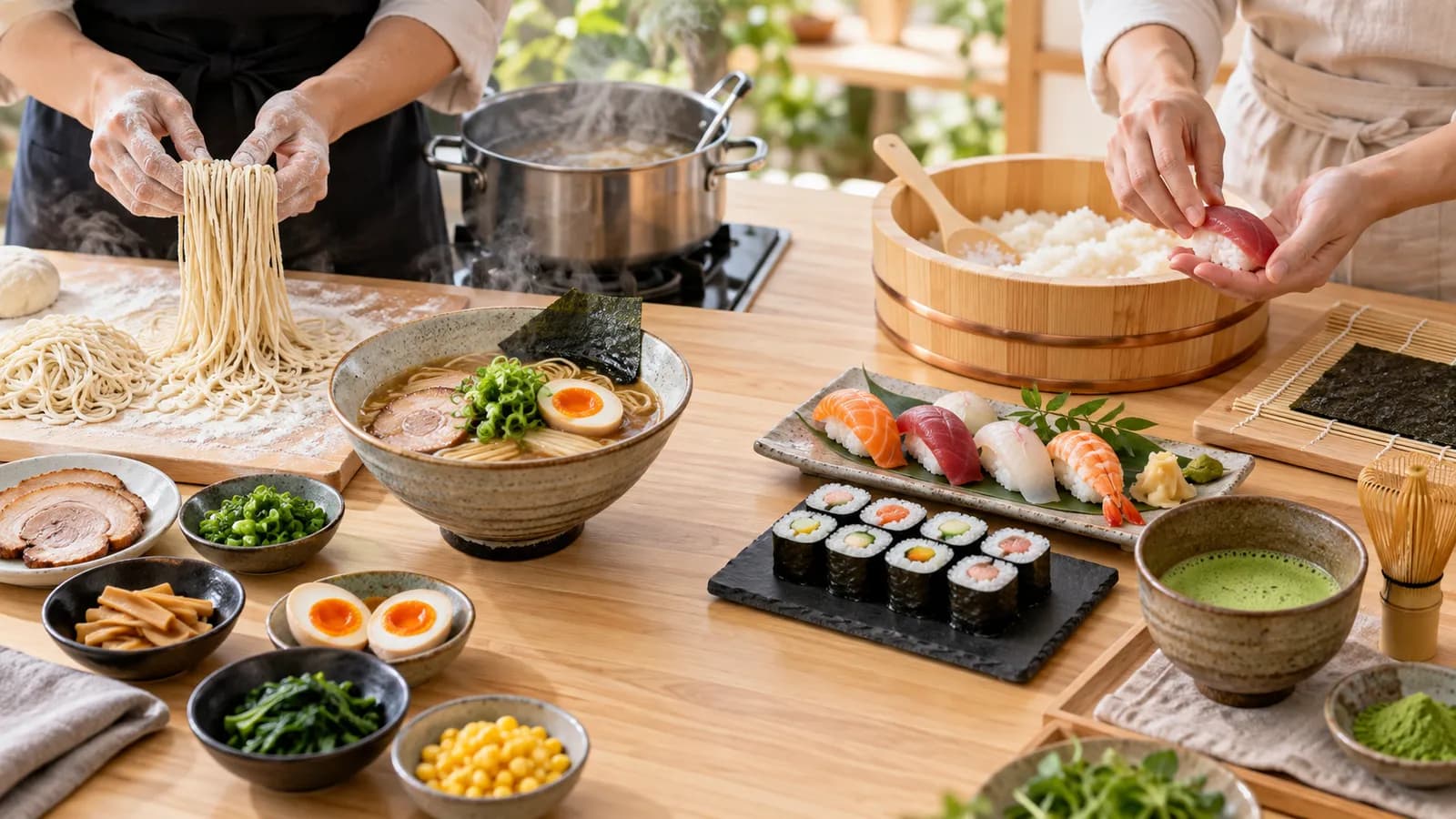
Sushi Class or Ramen Class in Tokyo?
Torn between a sushi class and a ramen class in Tokyo? Compare what you make, how long it takes, what you eat and which one suits your group and trip.
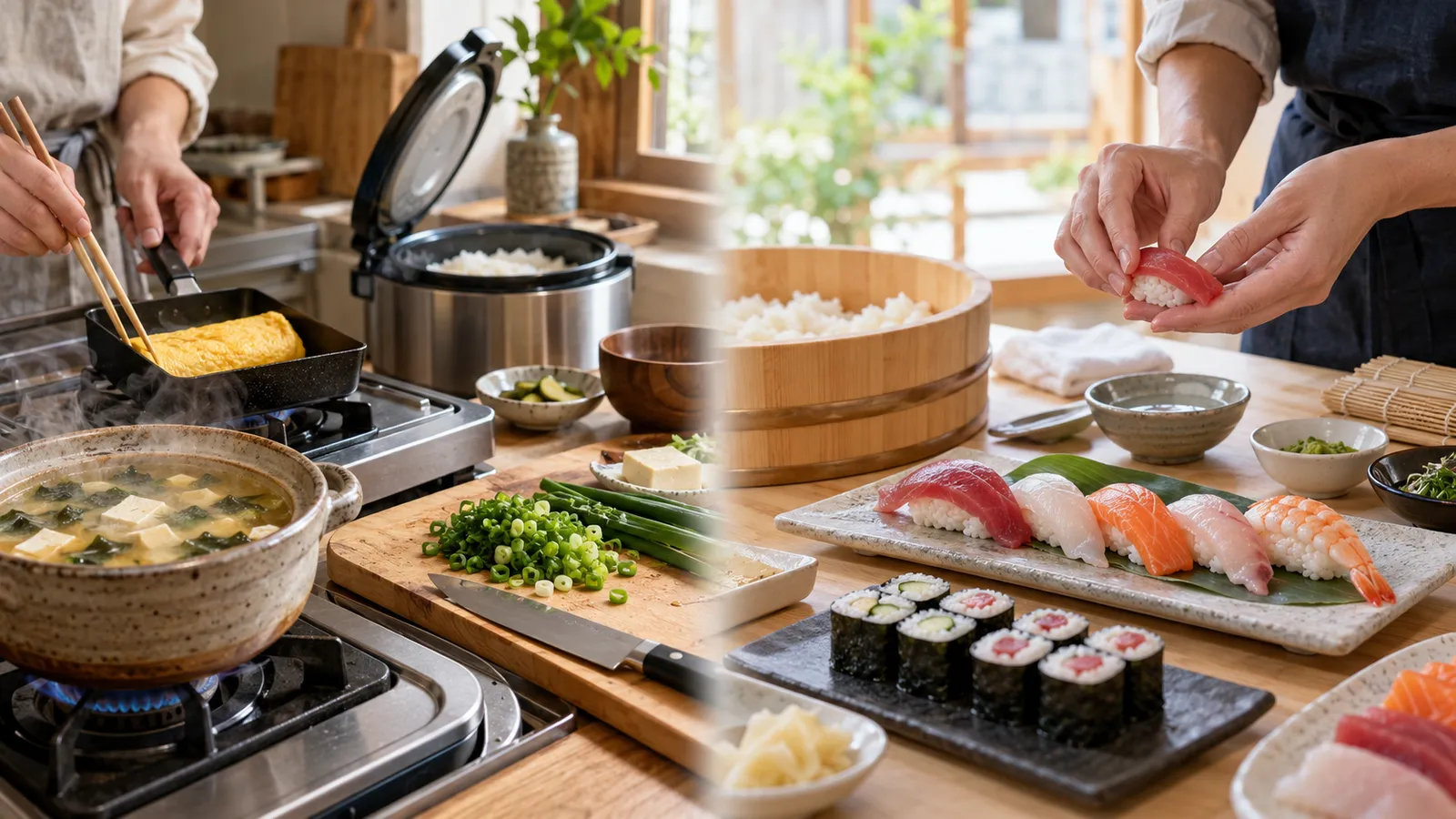
Home Cooking Class or Sushi Class in Tokyo?
A local's kitchen or a dedicated sushi studio? Compare menus, group size, timing, language and booking so you can choose the Tokyo cooking class that fits you.
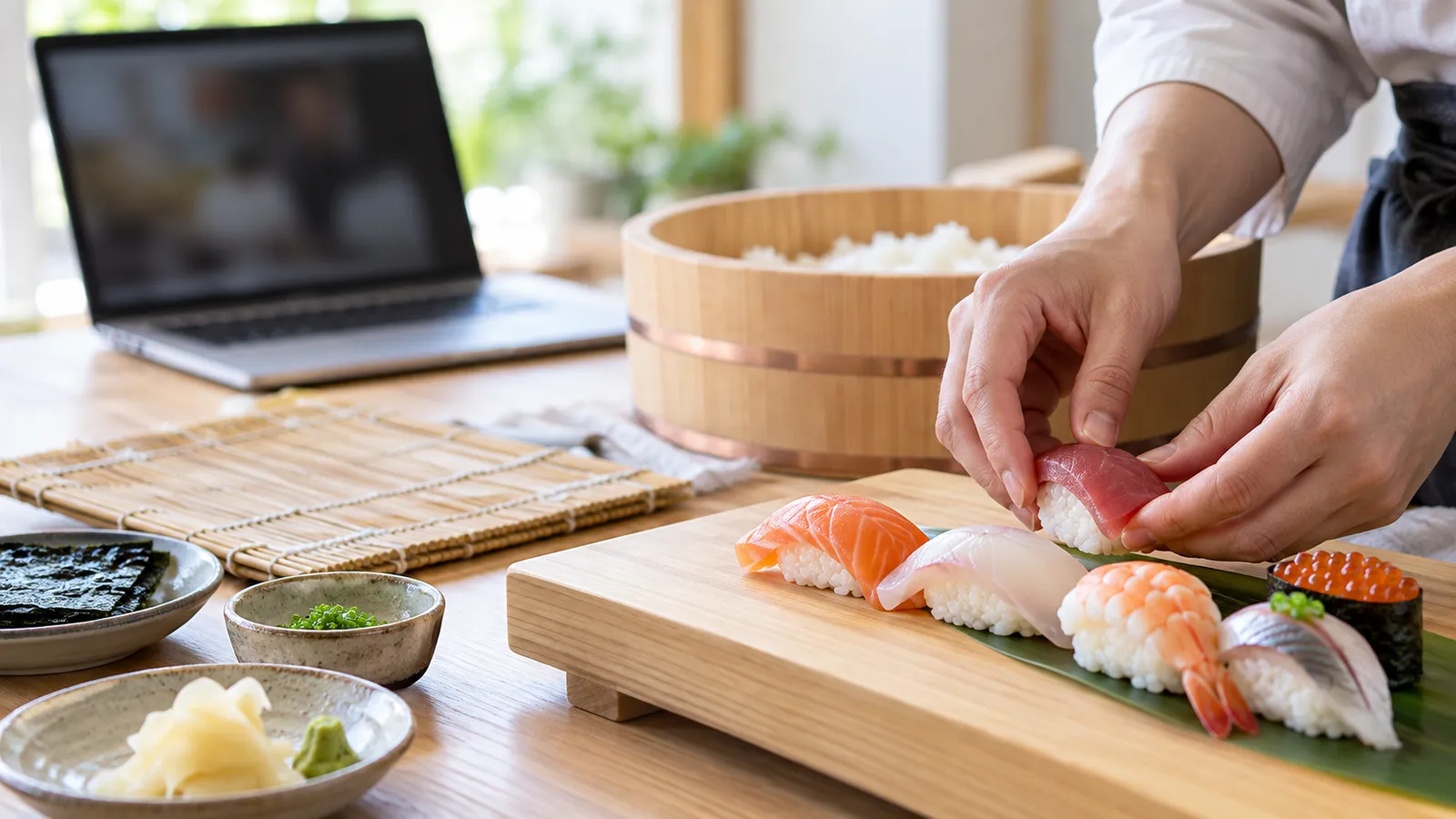
Online Sushi Course or Sushi Class in Tokyo?
Learning sushi from videos at home or in person in Tokyo? Compare feedback, ingredients, time and cost, and see how the two can work together.