Gyoza Class or Sushi Class in Tokyo?
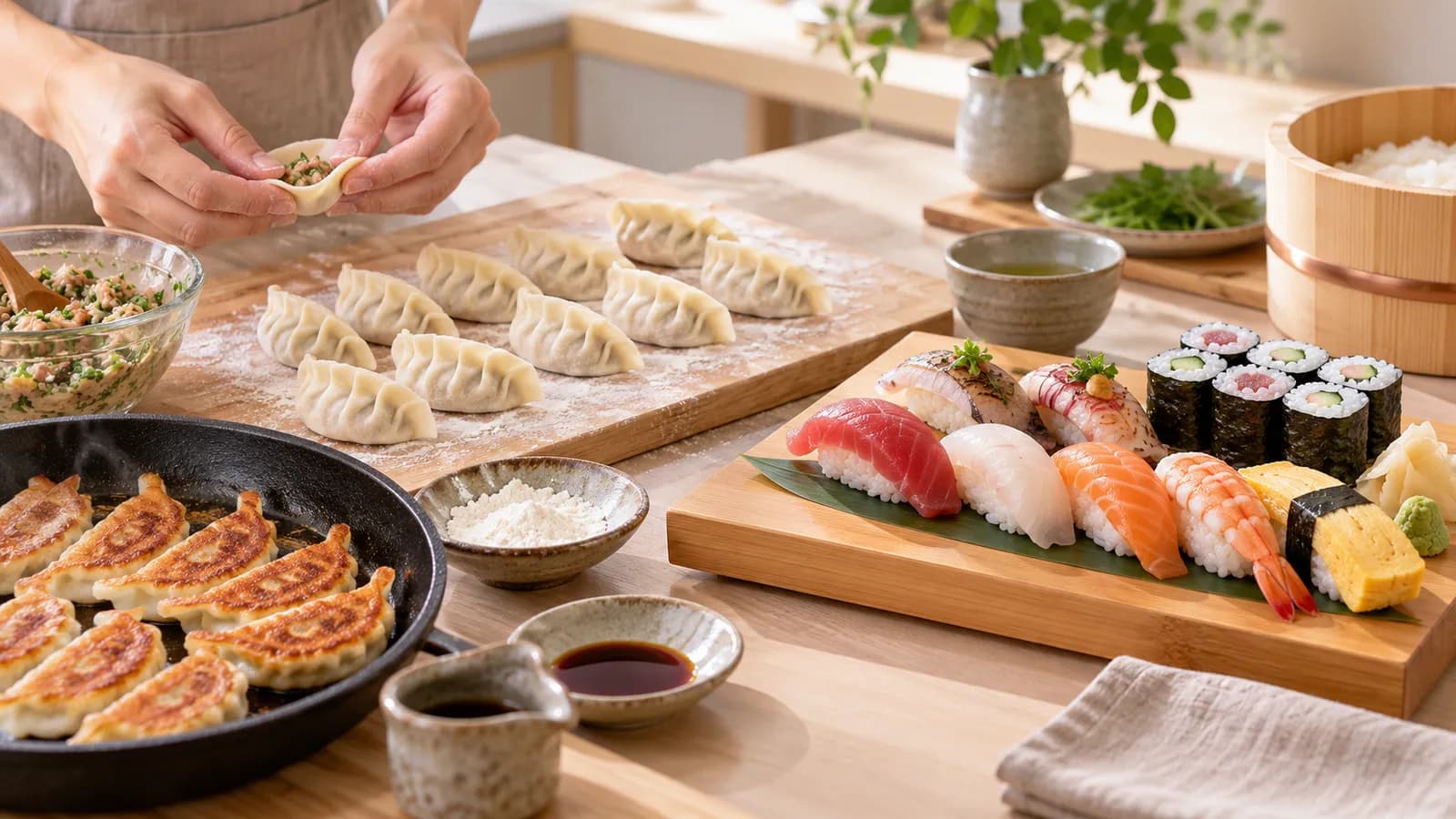
Gyoza are one of the foods visitors remember most from eating in Japan: crisp on the bottom, soft on top and eaten straight from the pan. It is no surprise that gyoza classes appear alongside sushi classes when people search for a cooking activity in Tokyo. Both are hands-on, both are beginner-friendly, and both end with a meal. The differences lie in what your hands do, how the food is cooked, and what goes into it.
We run a sushi class, so we cannot describe any particular gyoza class from the inside. Gyoza classes differ by provider, and some combine gyoza with ramen or other home-style dishes. What we can do is set out the questions that separate the two, describe our own class accurately and suggest what to ask a gyoza provider.
Popular in Tokyo right now — our most recommended experience
Tokyo Sushi Making Class : Sake Ceremony & Matcha Experience in Asakusa
What your hands actually do
Gyoza is a folding skill. You place a spoonful of filling in the centre of a round wrapper, wet the edge and pinch a row of small pleats along one side to seal it. The first few usually look uneven; by the tenth, most people have found a rhythm. Some classes also have you mix the filling or roll wrappers from dough, which adds time and flour to the table.
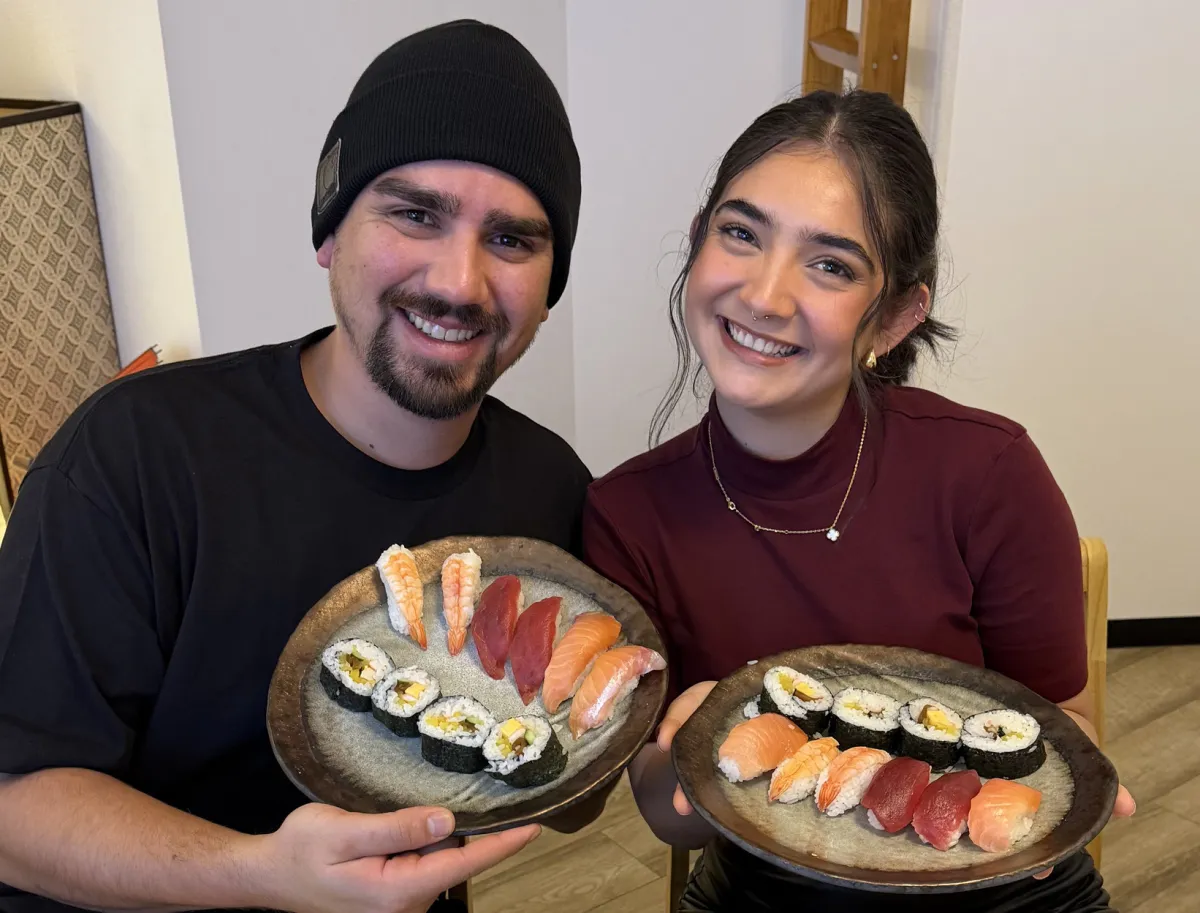
Sushi is a shaping skill. At our signature sushi and matcha class in Asakusa, you learn to form nigiri by hand and roll maki with a bamboo mat. Each person typically makes 8 to 10 pieces. The skills are small and repeatable: how much rice to take, how firmly to press, how to keep a roll even. Our guide to the sushi skills beginners learn in class breaks them down.
Both suit people who have never cooked Japanese food. Gyoza rewards patience with repetitive folding; sushi rewards a light touch with rice.
Hot pan or cold counter
This is the clearest practical difference. Classic Japanese gyoza are pan-fried: browned in oil, then steamed with a splash of water under a lid until the water evaporates and the bottoms crisp again. That means a hot pan, some spitting oil and steam. In many classes the instructor handles the cooking, or guests take turns under supervision. If you are coming with young children, ask who uses the pan and how close guests stand to the heat. Some gyoza are also boiled or steamed instead.
Sushi in our class involves no frying. You learn to prepare sushi rice and then shape it with fish and vegetables at the counter, so the work stays at the table in front of you. Children aged 4 and above can join our regular class, which makes it easier for families with younger children. Our guide to shared or private sushi classes for kids compares the two options for families.
What is in the filling and the wrapper
For mixed groups and dietary needs, this question often decides it.
- Pork: the standard Japanese gyoza filling is minced pork with cabbage or napa cabbage, garlic chives, garlic and ginger. Vegetable or seafood fillings exist, but if someone in your group avoids pork for religious or other reasons, confirm the filling before booking, not on the day.
- Wheat: gyoza wrappers are made from wheat flour, so gluten is part of the dish itself, not just the sauce.
- Seasonings: soy sauce and sesame oil are common in both filling and dipping sauce.
Our sushi class uses fish, vegetables and rice, and we can prepare alternatives when you tell us in advance, including gluten-free soy sauce and shellfish-free or egg-free options. Guests who do not eat raw fish can join with cooked or vegetable toppings; our guide to sushi classes without raw fish explains how those requests differ. A fully plant-based vegan sushi class runs in the same 90-minute format. Please list all allergies when booking; for severe allergies, contact us before you book.
What the meal looks like
Gyoza are usually eaten as soon as they come off the pan, often with rice, soup or another dish if the class makes more than one thing. Ask whether the class is a full meal or a tasting, and whether everyone eats together at the end.
In our class, you sit down to eat all the sushi you made, so it works as a real meal. The session also includes a sake toast, with water or Japanese green tea for anyone not drinking, and ends with whisking your own bowl of matcha. The whole experience takes about 90 minutes. For timing around the rest of your day, see how long a sushi class takes.
What you can repeat at home
Gyoza travel well as a home skill. Wrappers are sold frozen or chilled in many countries, the filling is flexible, and a frying pan with a lid is all you need. Sushi needs short-grain rice, rice vinegar, nori and, for nigiri, fish you trust to eat raw, although maki with cooked or vegetable fillings is easy to make anywhere. Think about which one you would actually make again.
If you are also weighing other options, our comparisons of sushi and ramen classes and home cooking and sushi classes cover two formats that often include gyoza on the menu.
A quick way to decide
Choose a gyoza class if:
- you want a hot, crisp dish and enjoy repetitive, satisfying folding;
- everyone in the group eats pork and wheat, or the provider confirms a suitable alternative;
- you like the idea of cooking something easy to repeat in any kitchen.
Choose a sushi class if:
- you want to learn the dish most closely tied to Tokyo's food culture;
- you prefer counter work to frying, or are bringing children aged 4 and above;
- you would like sake and matcha in the same booking;
- you are spending time in or near Asakusa that day.
Questions to ask before you book
- Who cooks the gyoza, and how close do guests get to the hot pan?
- Is the filling pork, and is a vegetable or other filling available?
- Do you make wrappers from dough or use ready-made ones?
- Is the class a full meal, and how long does it take?
- What are the cancellation terms? Ours allow free cancellation up to 24 hours before the class.
If sushi fits your group better, check live sessions and the current price on the signature class page, then mention any dietary needs when you book.
Related Articles
Tempura Class or Sushi Class in Tokyo?
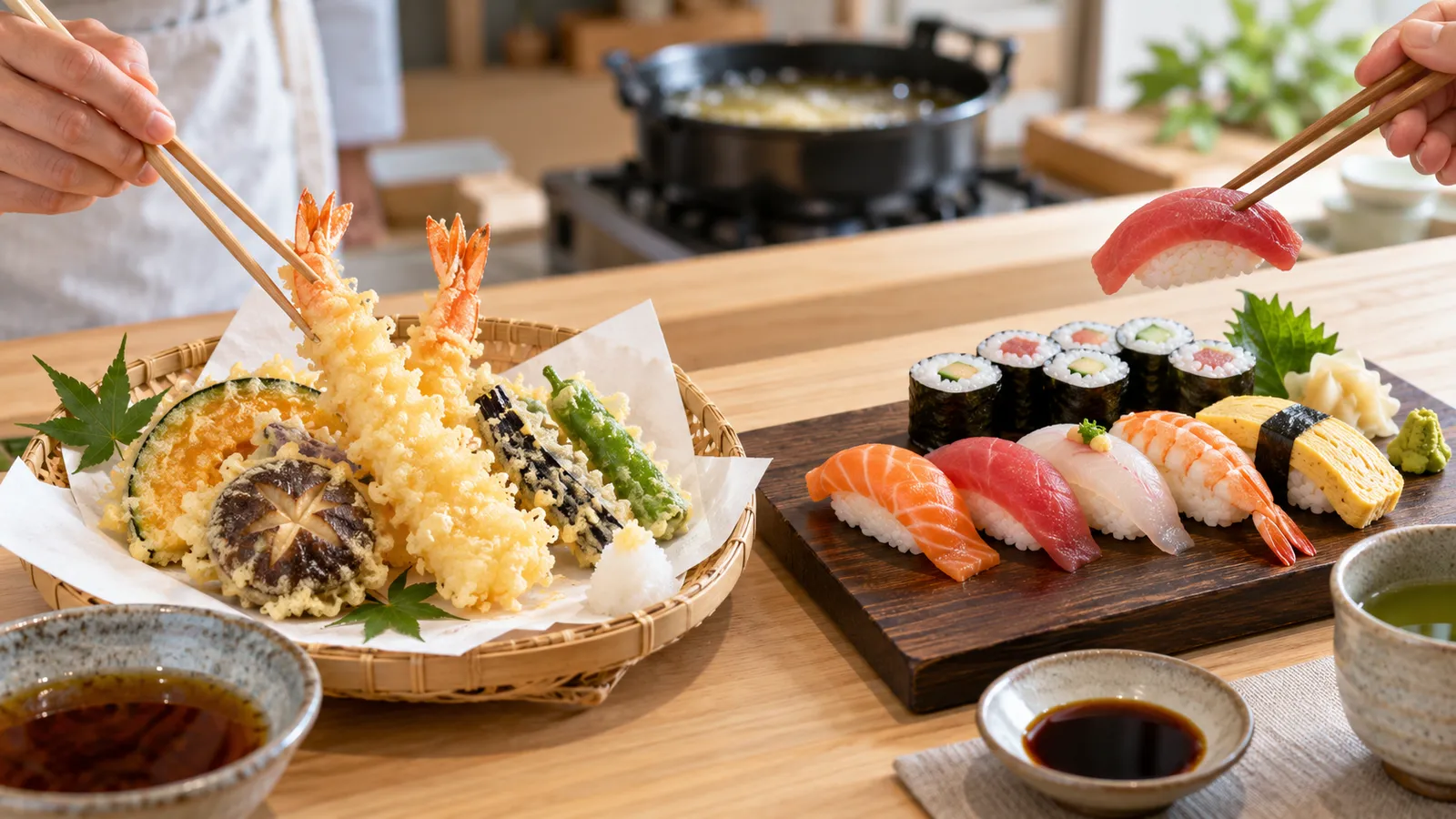
Tempura or sushi for your one Tokyo cooking class? Compare hot oil and age limits, batter and gluten, shellfish, timing and what you eat at the end.
Sushi Class or Soba-Making Class in Tokyo?
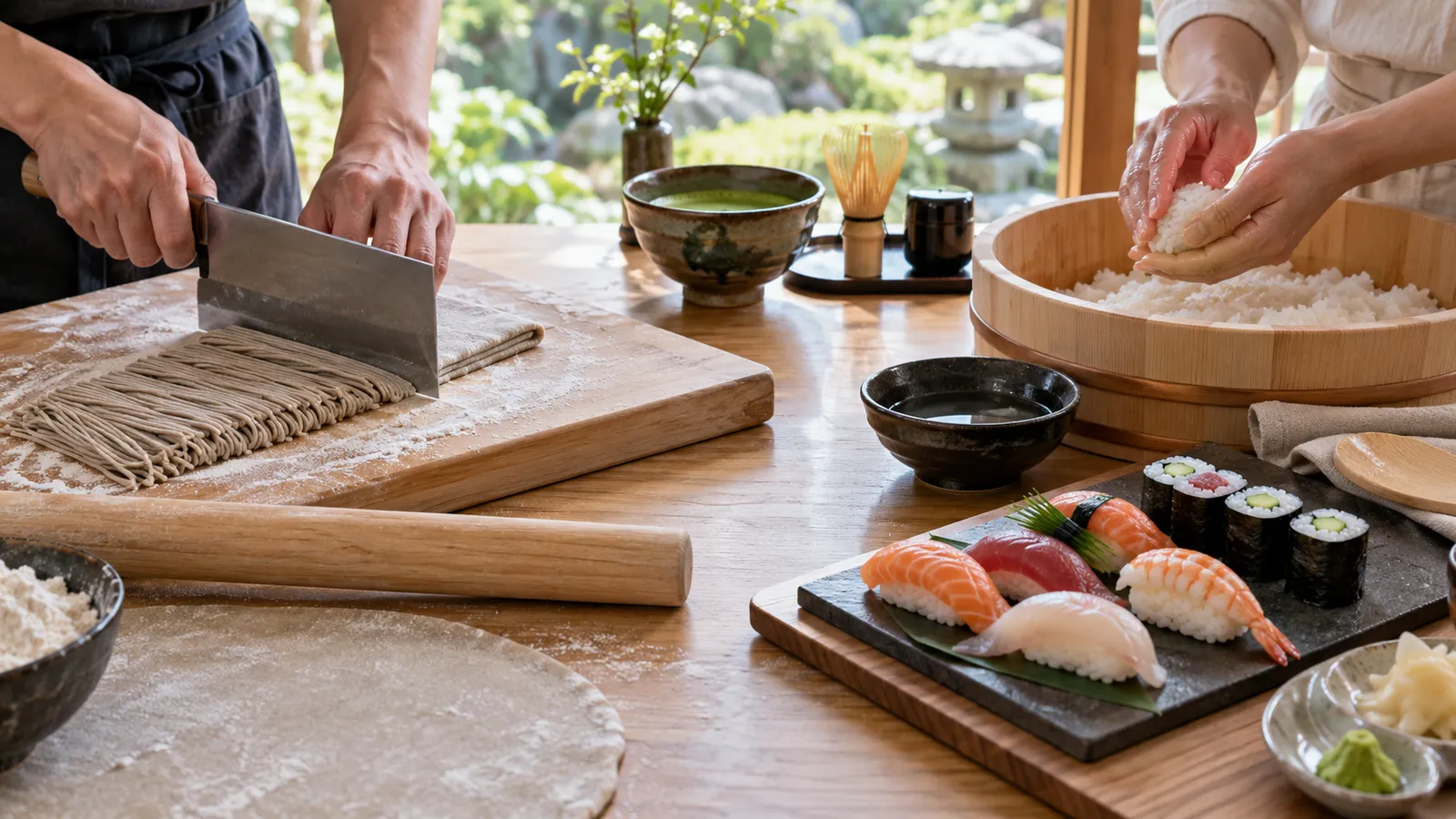
Choosing between a sushi class and a soba noodle-making class in Tokyo? Compare the techniques, timing, what you eat and the buckwheat allergy question.
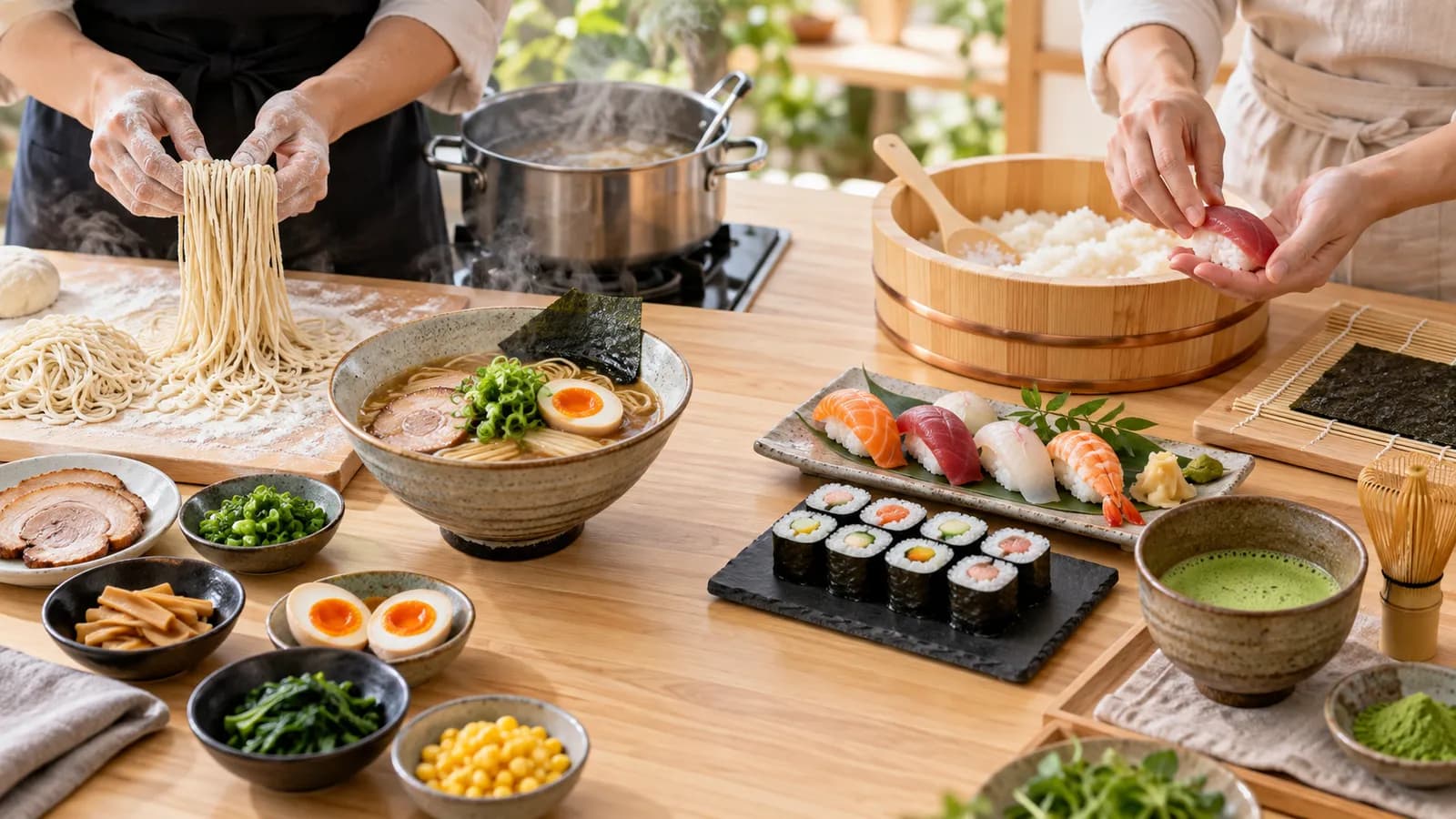
Sushi Class or Ramen Class in Tokyo?
Torn between a sushi class and a ramen class in Tokyo? Compare what you make, how long it takes, what you eat and which one suits your group and trip.