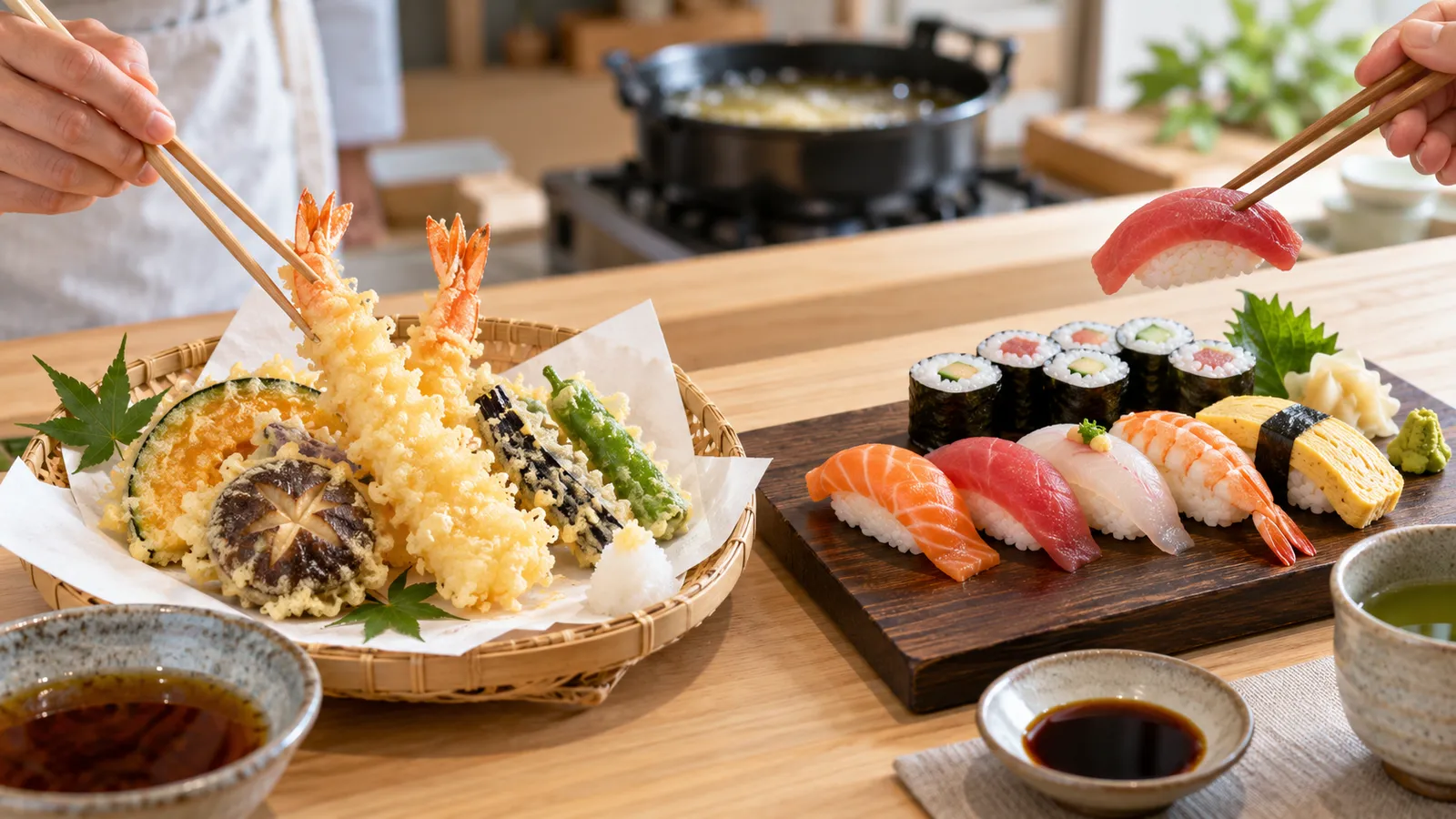
Tempura Class or Sushi Class in Tokyo?
Tempura and sushi grew up side by side. In Edo-period Tokyo, both were sold from street stalls as fast food for busy townspeople, and both are now among the dishes visitors most want to learn. If you have room for only one hands-on cooking class on your trip, the choice usually comes down to practical details rather than which food you like more.
This guide compares the two in the terms that matter when booking: what you actually do, how safe it is for your group, what is in the food and how the meal works. Tempura classes in Tokyo are run by many different hosts, so read the tempura side as a general description and check the details of any class you are considering.
Popular in Tokyo right now — our most recommended experience
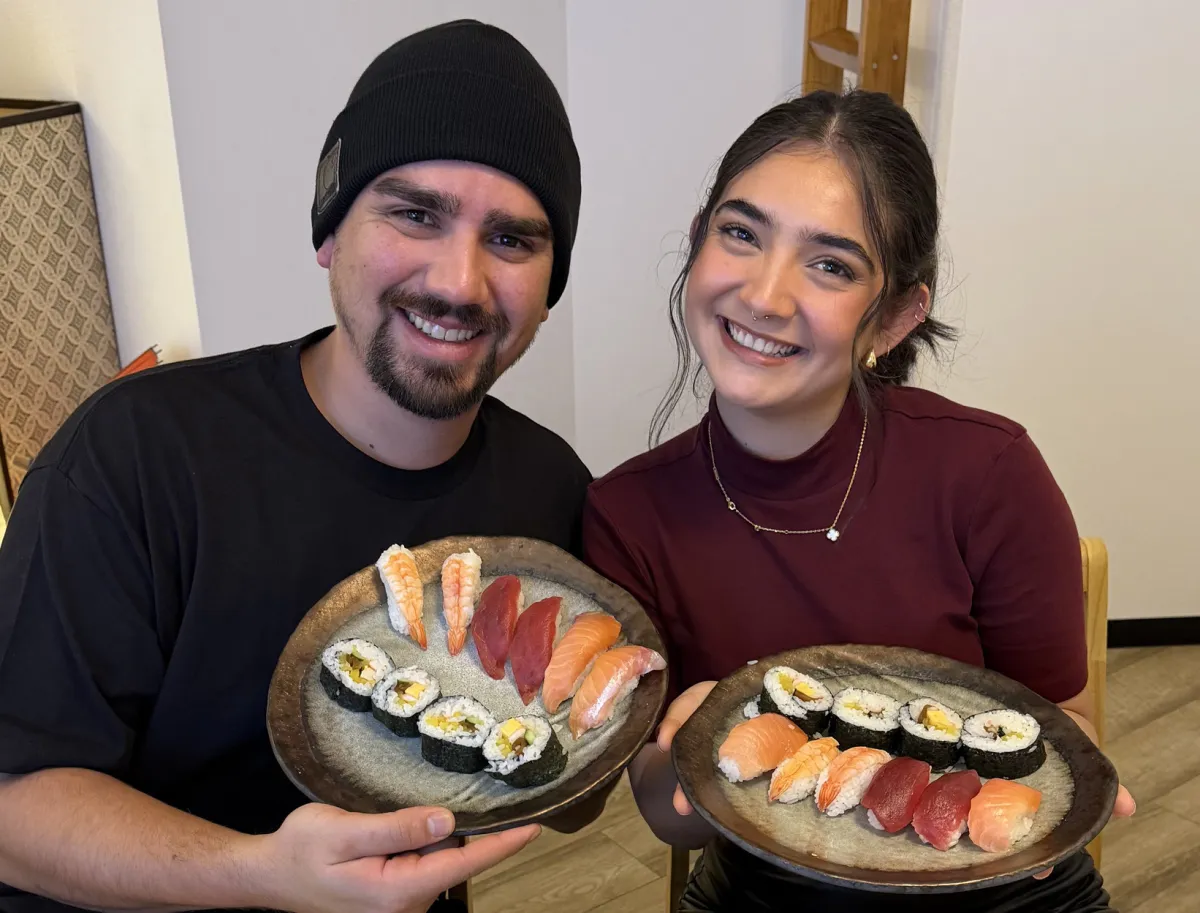
Tokyo Sushi Making Class : Sake Ceremony & Matcha Experience in Asakusa
What your hands actually do
In a tempura class, the core skill is frying. You prepare ingredients such as prawns, white fish and vegetables like sweet potato, aubergine or shiso leaves, then make a light batter from wheat flour, egg and very cold water. The batter is mixed only briefly, so it stays lumpy and crisp. Each piece is dipped and lowered into hot oil, usually somewhere around 170 to 180°C, and lifted out when the coating is pale and dry. Some classes also teach kakiage, a fritter of thin vegetable strips.
The skill is about temperature and timing. Oil that is too cool makes heavy, greasy tempura; oil that is too hot browns the batter before the inside is cooked. Instructors usually handle or closely supervise the fryer.
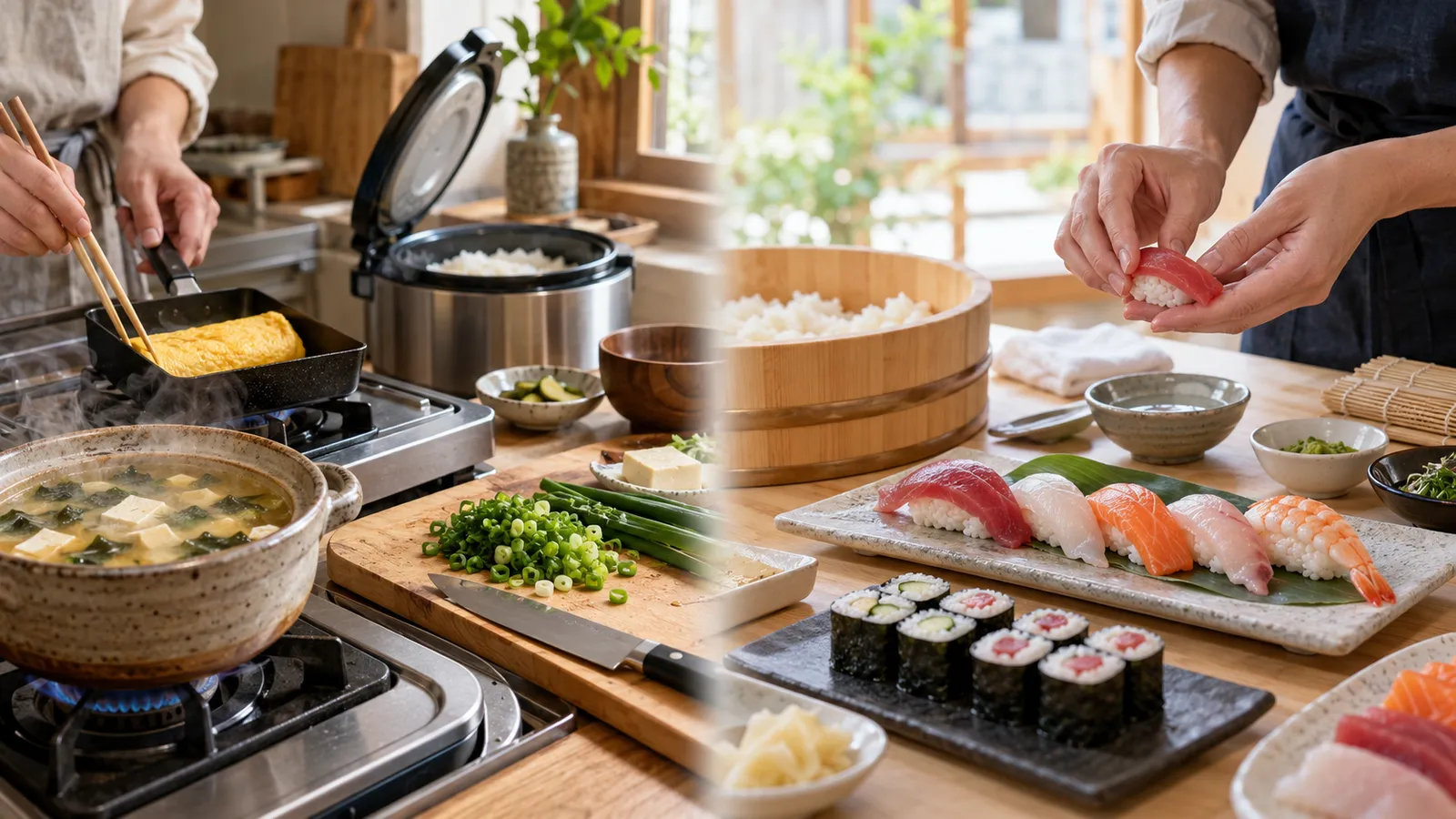
In a sushi class, nothing is cooked in front of you at high heat. You work with seasoned sushi rice, learn how much to pick up and how to shape it with gentle pressure, then add a topping for nigiri. You also roll maki with a bamboo mat. Our 90-minute sushi and matcha experience in Asakusa covers nigiri and maki, a sake toast, and finishes with you whisking your own bowl of matcha.
Because you make many small pieces, you get several attempts to improve within one session. Our guide to sushi skills beginners learn in a Tokyo class breaks the techniques down.
Hot oil, children and safety
This is the biggest practical difference. A deep pan of oil at frying temperature is a real hazard, and hosts handle it in different ways. Some keep guests at a distance from the fryer, some let adults fry under close supervision, and some set a higher minimum age or ask children to watch rather than cook. If you are travelling with children, ask exactly what they will be allowed to do before you book.
A sushi class involves no frying and no open flame at your station. In our classes, children aged 4 and above can join the regular class, and families who want their own space can book a private session. Our guide to sushi classes with kids, shared or family private compares the two formats.
Gluten, egg and shellfish
Tempura batter is normally made with wheat flour and egg, and the most famous tempura ingredient is prawn. That means a standard tempura class touches three common dietary concerns at once: gluten, egg and shellfish. Some hosts offer rice-flour batter or vegetable-only menus, but shared oil can carry traces from one ingredient to the next, so a substitution is not always enough for a serious allergy.
Sushi has its own questions. Soy sauce usually contains wheat, and toppings may include fish, shellfish and egg. We can prepare alternatives for many requirements, including gluten-free soy sauce and shellfish-free ingredients, but they need to be arranged before the class. Our guides to a gluten-free sushi class and to sushi classes with food allergies explain what to send and how to wait for confirmation.
If someone in your group is vegan, we also run a separate vegan sushi class with a plant-based menu in the same 90-minute format.
Timing and how you eat
Tempura is best eaten seconds after it leaves the oil, so classes tend to fry in batches and eat as they go, or eat everything together at the end. Ask whether the meal is included in the listed time and whether rice, soup or other dishes are served alongside.
In our signature sushi class, you eat everything you make as a real meal, not just a tasting, and finish with matcha. The session lasts about 90 minutes, and we ask guests to arrive 10 minutes early to store bags and wash hands. If you are fitting the class between sightseeing stops, our guide to how long a sushi class takes in your day shows how to plan the whole time block.
Taste, texture and what you take home
Tempura is warm, crisp and quite rich. A full plate is satisfying, and you may not want a large dinner afterwards. It is also a dish many people would like to cook at home, though deep-frying in a holiday rental or small kitchen is less practical.
Sushi is cool, light and made of many bite-sized pieces, so it is easy to share around a table and photograph before you eat. The skills of shaping rice and rolling maki need only a bowl, a mat and a sharp knife, which makes them easier to repeat at home.
A quick way to decide
Choose a tempura class if:
- You love fried food and want to understand how a light, crisp batter works.
- Everyone in your group is comfortable around hot oil, or the host has a clear plan for children.
- Nobody in your group needs to avoid wheat, egg or shellfish.
Choose a sushi class if:
- You want a varied meal of nigiri and maki, plus a sake toast and matcha.
- Your group includes children aged 4 and above, or people who prefer not to cook with hot oil.
- You need dietary adjustments, such as gluten-free soy sauce or a vegan menu, arranged in advance.
- You want a fixed, roughly 90-minute session a short walk from Senso-ji.
If you are weighing other dishes, our comparisons of sushi and soba classes and sushi and ramen classes use the same practical approach.
Doing both on one trip
You do not have to give up tempura to take a sushi class. Asakusa is known for its tempura restaurants, many of them close to Senso-ji, so an easy combination is to make sushi in the class and eat tempura at a local restaurant on another day. Because the class is a full meal, plan the tempura for a different mealtime rather than straight afterwards.
Questions to ask any class before you book
- What will I make, and will I fry or only watch?
- Is there a minimum age, and what can children do?
- Which allergens are in the batter, the oil and the toppings?
- Is the meal included in the listed time?
- In which language is the class taught?
- What is the cancellation and rescheduling policy?
For our class, cancellation and rescheduling are free up to 24 hours before the start, and the class is taught in English. You can check current availability and book the sushi and matcha class online, or contact us first if you have a dietary question.
Related Articles
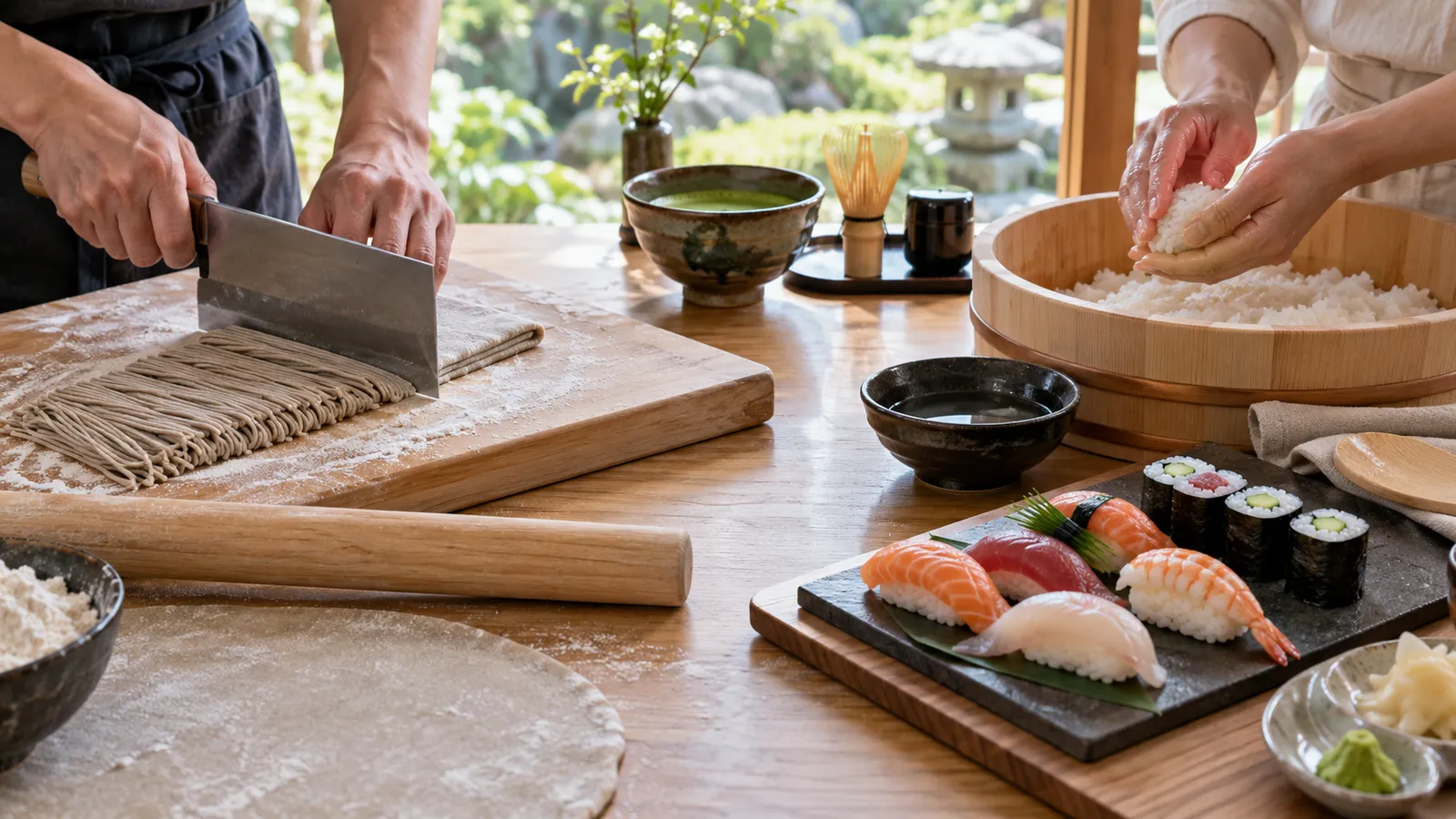
Sushi Class or Soba-Making Class in Tokyo?
Choosing between a sushi class and a soba noodle-making class in Tokyo? Compare the techniques, timing, what you eat and the buckwheat allergy question.
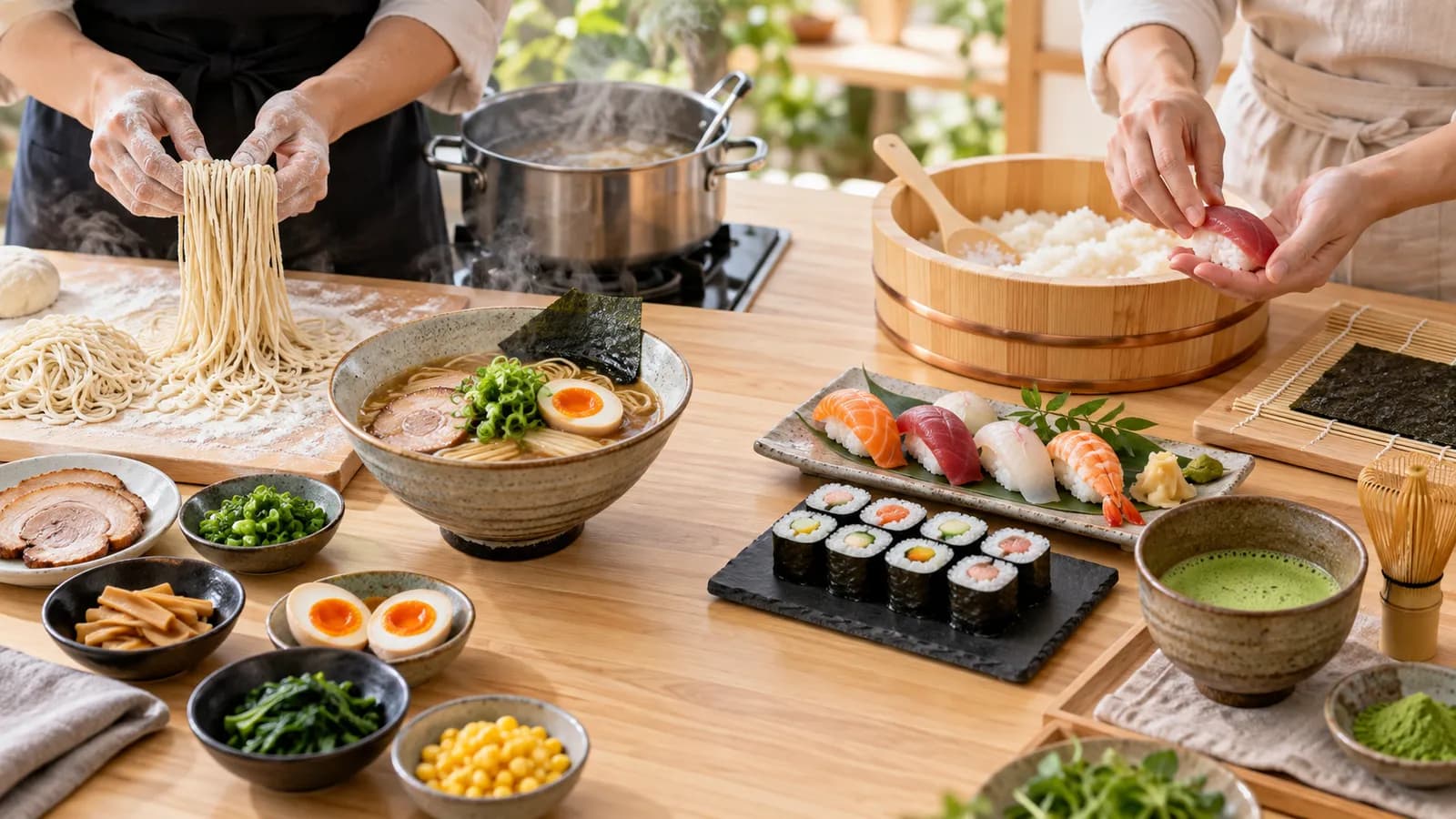
Sushi Class or Ramen Class in Tokyo?
Torn between a sushi class and a ramen class in Tokyo? Compare what you make, how long it takes, what you eat and which one suits your group and trip.
Home Cooking Class or Sushi Class in Tokyo?
A local's kitchen or a dedicated sushi studio? Compare menus, group size, timing, language and booking so you can choose the Tokyo cooking class that fits you.