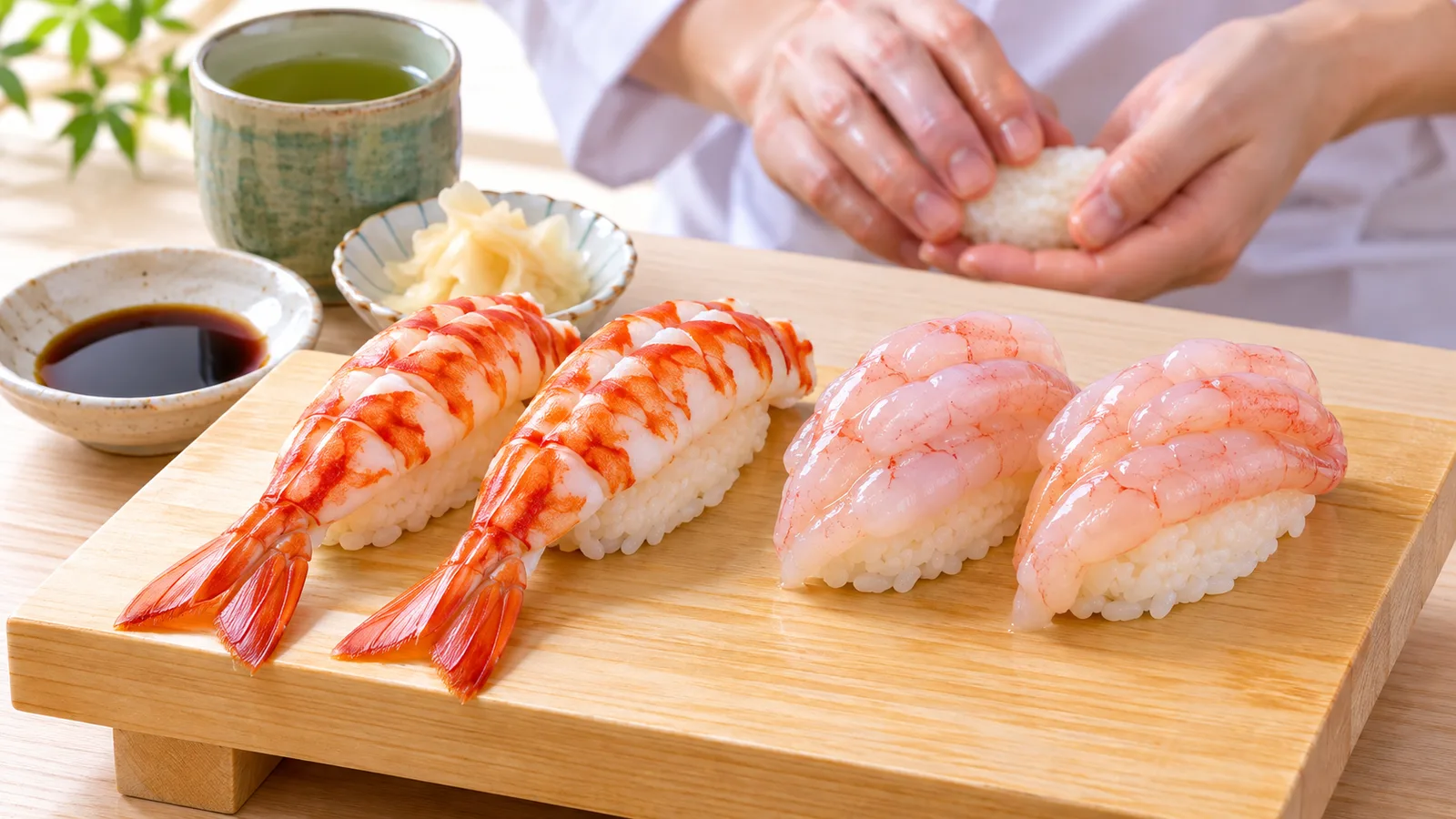
Ebi vs Amaebi: Cooked and Raw Shrimp Sushi
Shrimp appears on almost every sushi menu in Japan, but not always in the same form. You may see ebi and amaebi listed side by side, sometimes at different prices, and wonder whether they are simply two names for the same thing. They are not. In most sushi bars, ebi nigiri is cooked shrimp, while amaebi is a different, smaller shrimp served raw.
This guide explains the difference, how each is prepared, how they taste, and what to keep in mind if someone in your group avoids raw seafood or has a shellfish allergy.
Popular in Tokyo right now — our most recommended experience
Tokyo Sushi Making Class : Sake Ceremony & Matcha Experience in Asakusa
The short answer
- Ebi (海老) is the general Japanese word for shrimp or prawn. On a sushi menu, "ebi" nigiri usually means a shrimp that has been boiled, peeled and opened flat before it is placed on the rice. It is cooked all the way through.
- Amaebi (甘海老) literally means "sweet shrimp". It is a specific type of small, deep-water shrimp. For sushi it is peeled and served raw, often with two or three tails on one piece of rice.
So the simplest rule is: ebi is usually cooked, amaebi is raw. If you are unsure at a particular restaurant, ask, because menus and preparations vary.
How ebi nigiri is prepared
The classic cooked shrimp for nigiri in Tokyo-style (Edomae) sushi is kuruma-ebi, the Japanese tiger prawn, although many restaurants use other prawns. The preparation is one of the traditional skills of a sushi kitchen:
- A thin skewer is pushed along the underside of the shrimp so it stays straight while it cooks.
- The shrimp is boiled briefly, then cooled.
- The shell is removed, usually leaving the tail fan on.
- The shrimp is cut along the belly and opened flat into a butterfly shape, so it drapes neatly over the rice.
The result is the familiar red-and-white striped topping. The flavour is mild and gently sweet, and the texture is firm with a little spring. Because it is cooked, ebi is often one of the first pieces people choose when they are new to sushi or not ready for raw fish.
What makes amaebi different
Amaebi is a small, cold-water shrimp. Its flesh is translucent and pale pink, and when eaten raw it is soft, slightly sticky and noticeably sweet, which is where the name comes from. Since each shrimp is small, a single amaebi nigiri often carries two or three of them.
Some restaurants serve the heads separately, deep-fried or in miso soup, so nothing is wasted. If that appears on your table, it is part of the same order rather than a mistake.
You may also see botan ebi, a larger shrimp that is also commonly served raw and is usually priced higher. It belongs with amaebi on the raw side of the menu.
Ebi and amaebi side by side
| Ebi | Amaebi | |
|---|---|---|
| Usually served | Cooked (boiled) | Raw |
| Look | Red and white stripes, opened flat | Translucent pale pink, often 2–3 per piece |
| Texture | Firm, springy | Soft, slightly sticky |
| Flavour | Mild, gently sweet | Rich, distinctly sweet |
| Good for | First-timers, guests avoiding raw seafood | Guests who already enjoy raw sushi |
Neither is "better". They are different experiences, and many people order one of each to compare.
Which one should you order?
If you are trying sushi for the first time in Japan, cooked ebi is an easy starting point. It shows you what good shari, the seasoned sushi rice, tastes like without the added question of raw texture. Our guide to how sushi rice is seasoned and shaped explains why the rice matters as much as the topping.
If you already enjoy raw fish, amaebi is worth trying for its sweetness, and it is a good contrast to lean fish such as tuna. For a wider overview of toppings, see our guide to the best fish for sushi.
Squid and octopus are another pair that visitors often mix up: one is usually served raw and the other boiled. Our guide to ika and tako explains how they differ.
Scallops and clams are the other big group of shellfish on a sushi menu. They are molluscs rather than crustaceans like shrimp, and our guide to hotate, akagai and hokkigai explains how to tell them apart.
Remember that cooked ebi is still seafood. A guest who avoids raw fish for personal reasons may be happy with it, but anyone who avoids seafood entirely, or is pregnant and following medical advice, should check what applies to them. Our guides to sushi without raw fish and joining a sushi class while pregnant go into more detail.
Shellfish allergies: ebi and amaebi are the same risk
Both ebi and amaebi are crustaceans. Cooking does not make shrimp safe for someone with a shellfish allergy, so switching from raw amaebi to cooked ebi is not a solution. In Japan, shrimp and crab are among the ingredients that must be declared on packaged food labels, which shows how seriously the allergy is treated.
At a restaurant, say clearly that you are allergic to shrimp and crab, not just that you "don't eat raw fish". Shared boards, knives and frying oil can also matter if the allergy is severe.
Where ebi fits into our sushi class
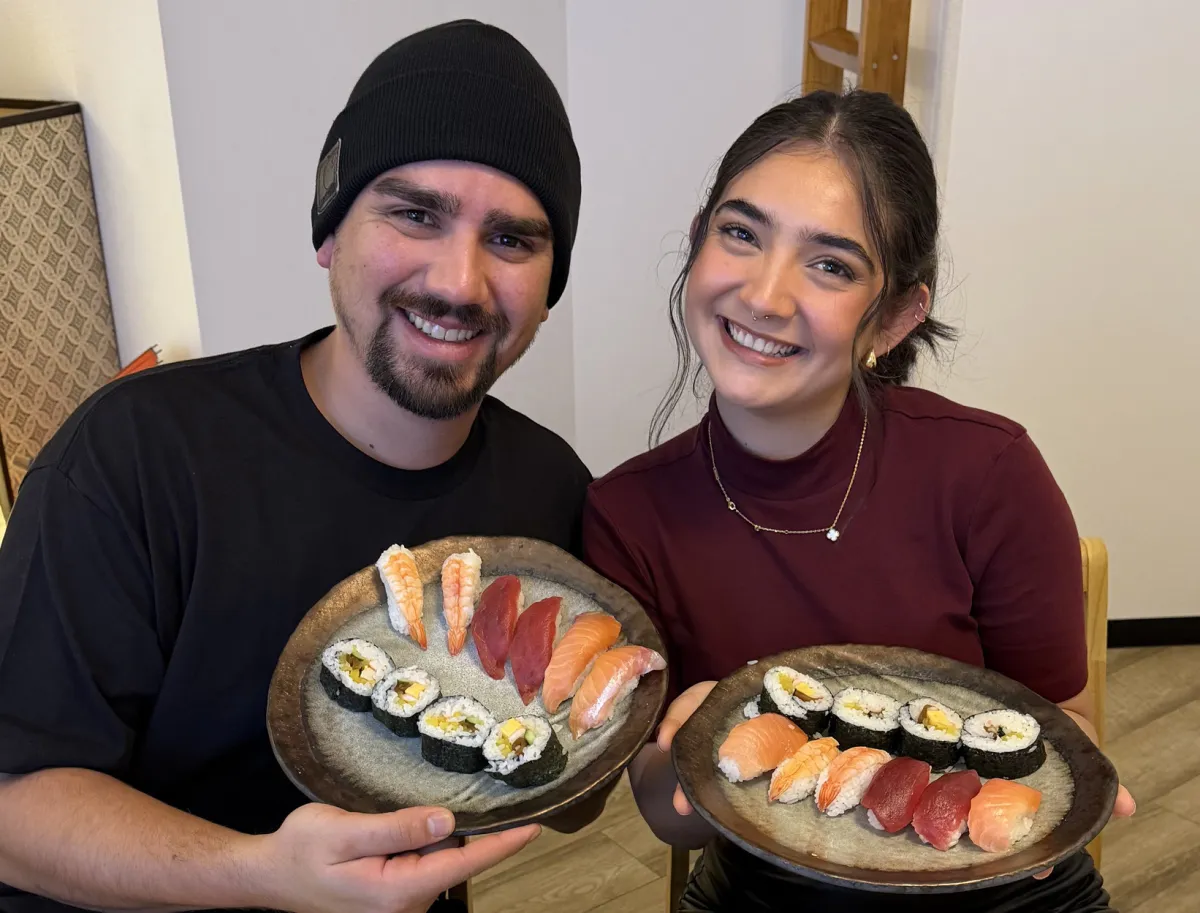
On the sushi making class page, the nigiri toppings listed for our class include lean tuna, medium-fatty tuna, salmon and ebi (prepared shrimp), alongside a thick futomaki roll. That gives you a chance to shape a shrimp nigiri yourself and see how the topping sits on the rice. If it matters to you whether the shrimp is raw or cooked, ask the team when you book.
If you have a shellfish allergy, our FAQ lists shellfish-free options among the common accommodations. List every allergy when you book and wait for an individual reply before relying on it; we cannot guarantee a completely allergen-free kitchen. If the allergy is severe, contact us directly before booking. Our guide to food allergies at a sushi class explains what to include in that message.
If you would like to shape shrimp and other toppings with your own hands, you can check dates for the signature sushi and matcha class in Asakusa. It lasts about 90 minutes and includes making nigiri and maki, a sake toast, eating what you make and whisking matcha. Free cancellation is available up to 24 hours before the start.
Related Articles
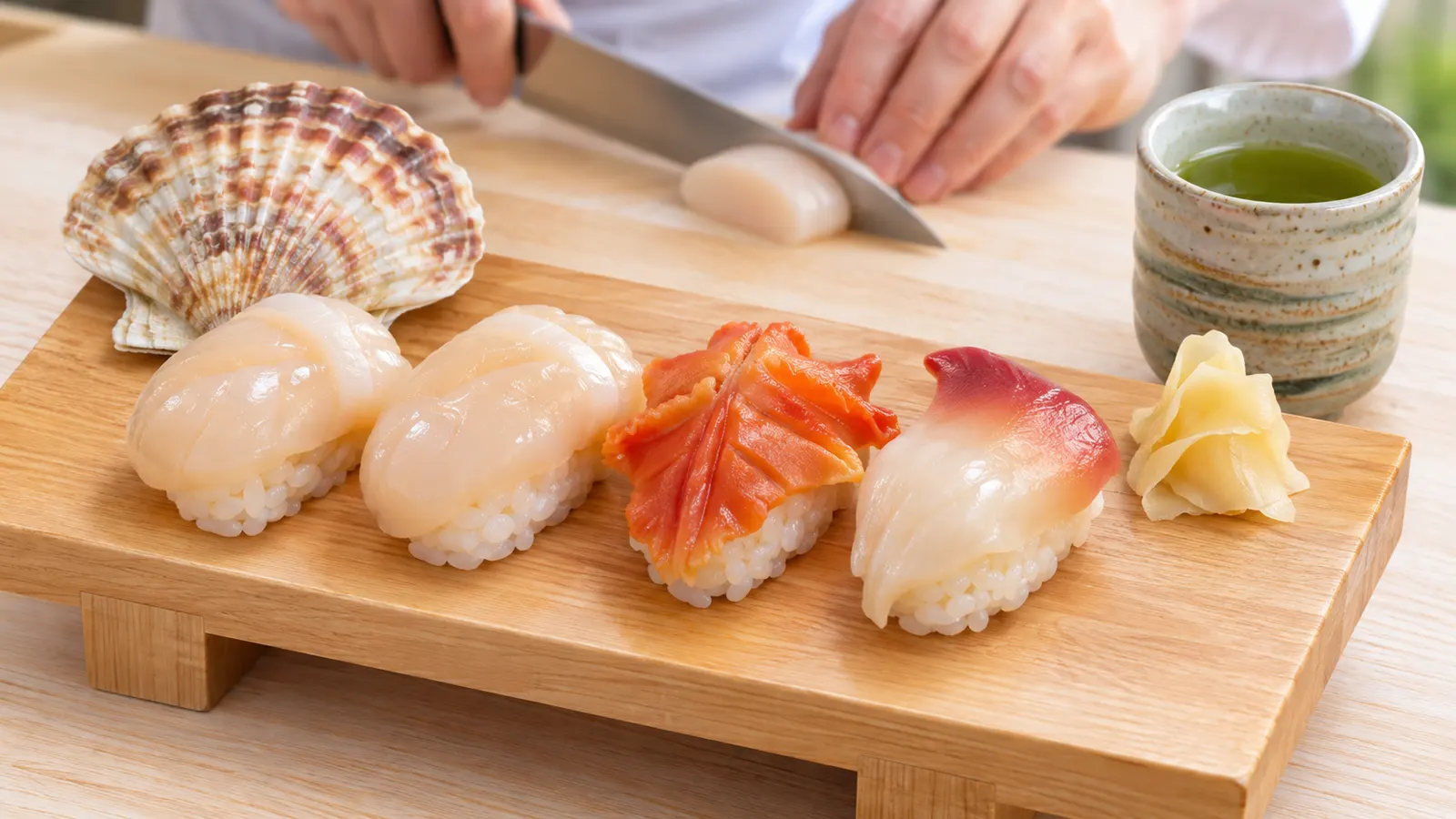
Hotate, Akagai, Hokkigai: Shellfish Sushi
Scallop, ark shell and surf clam are the shellfish you meet most at sushi counters in Japan. How they differ, when they are best and what to say on allergies.
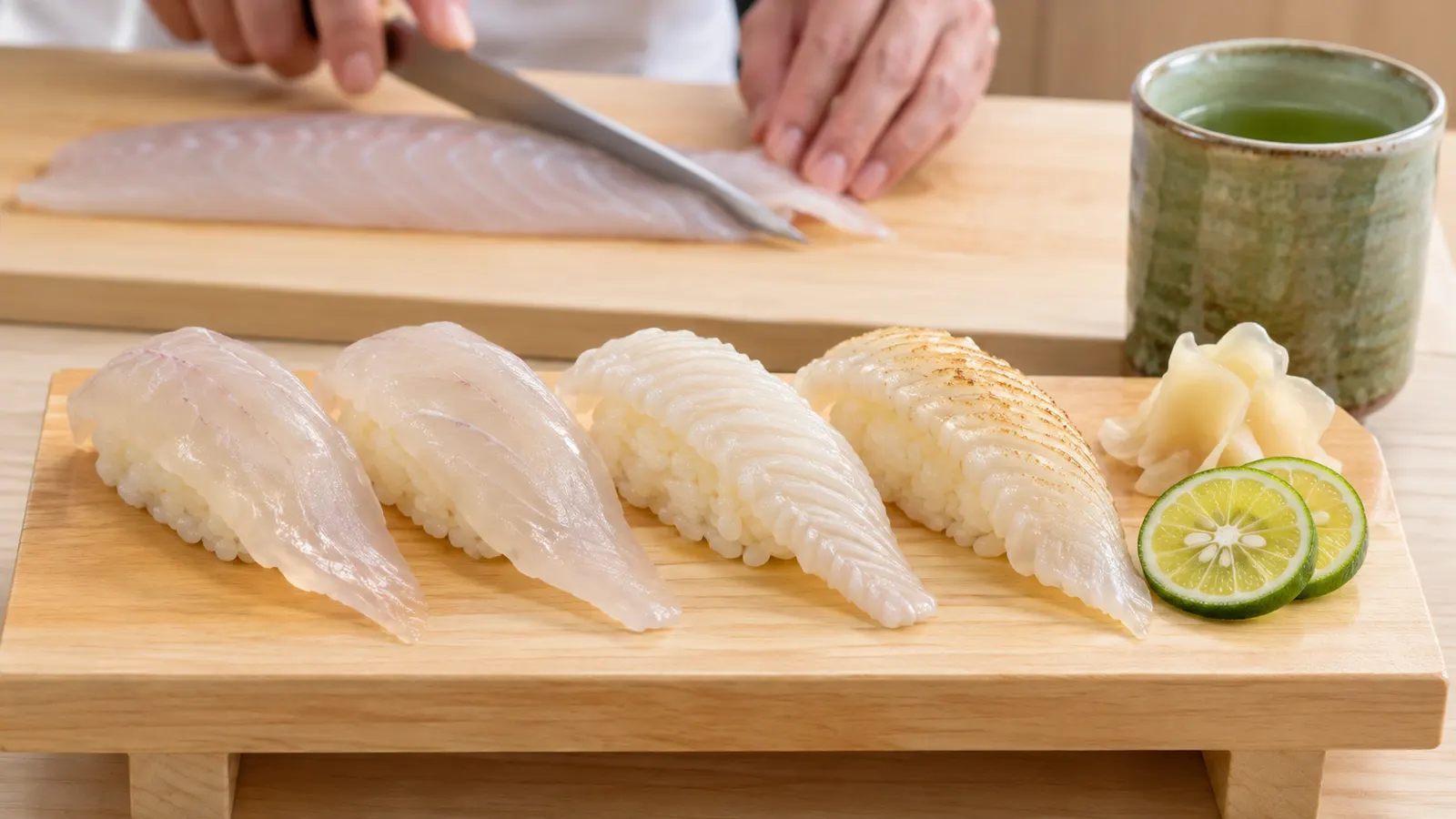
Hirame vs Karei: Flounder Sushi and Engawa
Hirame and karei are both flounder, but they differ in season, taste and price. How to tell them apart, what engawa is and how to order.
Nikiri, Tsume and Soy Sauce on Sushi
Why sushi chefs brush sauce on nigiri: nikiri, the sweet tsume on anago, the main types of Japanese soy sauce and when to skip the dipping dish.