Nikiri, Tsume and Soy Sauce on Sushi
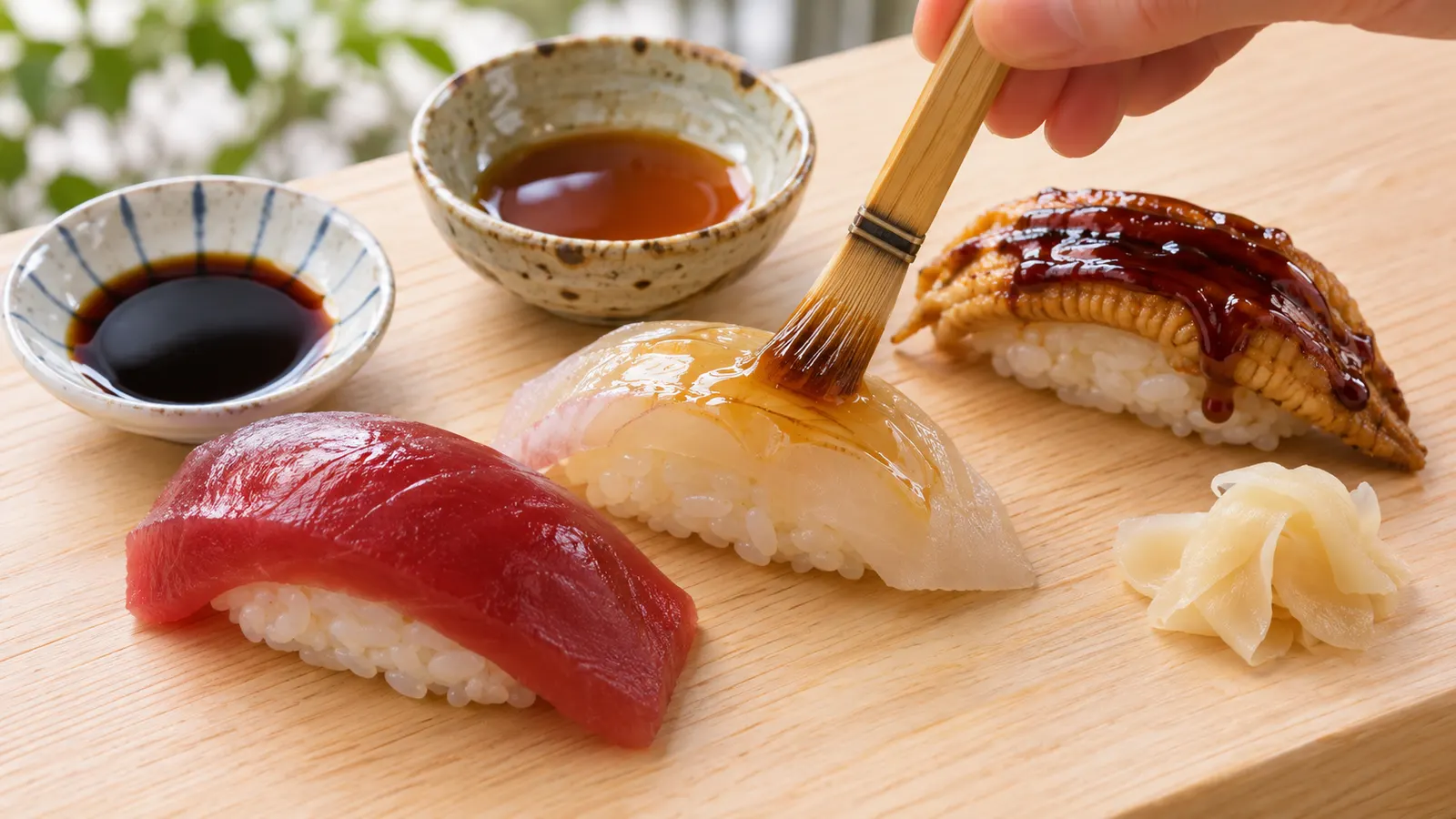
At a sushi counter in Japan, you may notice the chef brushing something glossy onto a piece of nigiri just before placing it in front of you. On other pieces, such as simmered eel, the glaze is thick, dark and sweet. And on the counter there is still a small dish for soy sauce. Three different sauces, three different jobs.
This guide explains what nikiri and tsume are, how the main types of Japanese soy sauce differ and how to tell when a piece needs no extra sauce at all.
Popular in Tokyo right now — our most recommended experience
Tokyo Sushi Making Class : Sake Ceremony & Matcha Experience in Asakusa
The short answer
- Nikiri: a thin, glossy soy-based sauce the chef brushes on nigiri. It replaces dipping.
- Tsume: a thick, sweet sauce reduced from the liquid used to simmer anago (conger eel). It goes on anago and a few other cooked toppings.
- Soy sauce in a dish: for pieces that arrive unseasoned. Touch it lightly to the topping, not the rice.
If the chef has already brushed a piece, eat it as it is.
What nikiri is
The Japanese word nikiri originally means heating sake or mirin to drive off the alcohol. In sushi, it is short for nikiri shoyu: soy sauce combined with sake and mirin that have been heated to remove the alcohol, sometimes with dashi. The Sushi University dictionary, a Japanese sushi education site, describes it in these terms. Each restaurant has its own recipe.
Why not simply use soy sauce? Straight soy sauce can be too strong for delicate fish. Nikiri is milder, adds umami and leaves an attractive glossy finish. Brushing it on also lets the chef control exactly how much seasoning each piece gets.
Tokyo's official tourism site, GO TOKYO, says that at a counter many pieces are already seasoned before they are served, so you do not need to dip them yourself. When you sit away from the counter and dip your own sushi, the advice is to touch the fish side to the soy sauce.
What tsume is
Tsume (also called nitsume, "boiled down") is the sweet, dark glaze you see on anago nigiri. Japan's agriculture ministry describes Tokyo's anago sushi as simmered anago on rice, brushed with a reduced sauce called tsume. The sauce is made from the anago cooking liquid, which is boiled down with its seasonings until it is thick. The fish encyclopedia Zukan Bouz notes that whether to have a stroke of tsume on your anago is a matter of taste.
Tsume is also brushed on other cooked toppings, such as shako (mantis shrimp) and simmered clams. Like nikiri, it means the piece is ready to eat. Dipping a tsume-glazed piece into soy sauce adds salt and hides the flavour the chef has built.
Tsume is not the same as the "eel sauce" served with rolls in many sushi restaurants abroad. Sushi University points out that eel sauce is a kabayaki-style sauce and does not contain eel, while tsume is made from the anago cooking liquid. Our guide to anago, Tokyo Bay's sea eel, explains how anago differs from unagi.
The soy sauce in the dish
Japan's standards recognise five main types of soy sauce. According to the Japan Soy Sauce Association:
- Koikuchi (dark): the everyday soy sauce, about 84% of shipments. This is what is usually on the table at a sushi restaurant.
- Usukuchi (light-coloured): about 13% of shipments, used in Kansai cooking to keep dishes pale. Despite its name, it uses about 10% more salt than koikuchi.
- Tamari: made mainly from soybeans, mostly in the Chubu region around Nagoya. Thick and rich.
- Saishikomi: "re-brewed" using raw soy sauce in place of salt water, so it is very rich. Associated with Yanai in Yamaguchi Prefecture.
- Shiro (white): even paler than usukuchi, amber-coloured and sweet, associated with Hekinan in Aichi Prefecture.
The salt difference is real. Japan's official food composition tables list about 14.5 g of salt equivalent per 100 g for koikuchi and about 16 g for usukuchi.
You may also hear soy sauce called murasaki, "purple", at sushi shops. It is staff jargon, like agari for tea. A Tokyo sushi restaurant explains on its site that guests can simply say "oshoyu" (soy sauce) and "ocha" (tea).
Soy sauce, wheat and gluten
Standard Japanese soy sauce is brewed from soybeans and wheat, and wheat is one of the allergens that must be labelled in Japan. Tamari uses much less wheat, but it is not automatically wheat-free: Kikkoman's own tamari products list wheat in their ingredients, and its gluten-free tamari is a separate, certified line. Nikiri and tsume are both made with soy sauce.
If you avoid gluten, ask before you eat rather than assuming any sauce is safe. Our guide to a gluten-free sushi class in Tokyo lists the questions to send before you book.
How to use each one
- Brushed with nikiri: eat it as it is. No dipping.
- Glazed with tsume: eat it as it is.
- Plain nigiri: tip it over and touch the topping lightly to the soy sauce. The rice soaks up too much if it goes in first.
- Gunkan (battleship rolls): these are hard to turn over. One restaurant suggests dipping a slice of pickled ginger in soy sauce and using it like a brush on the topping.
- Rolls: a light touch on one edge is enough.
Pour only a little soy sauce into the dish. You can always add more. Our sushi etiquette guide covers wasabi and the order of eating, and our guide to gari, the pickled ginger, explains why ginger is a palate cleanser, not a topping.
Seasoning your own sushi
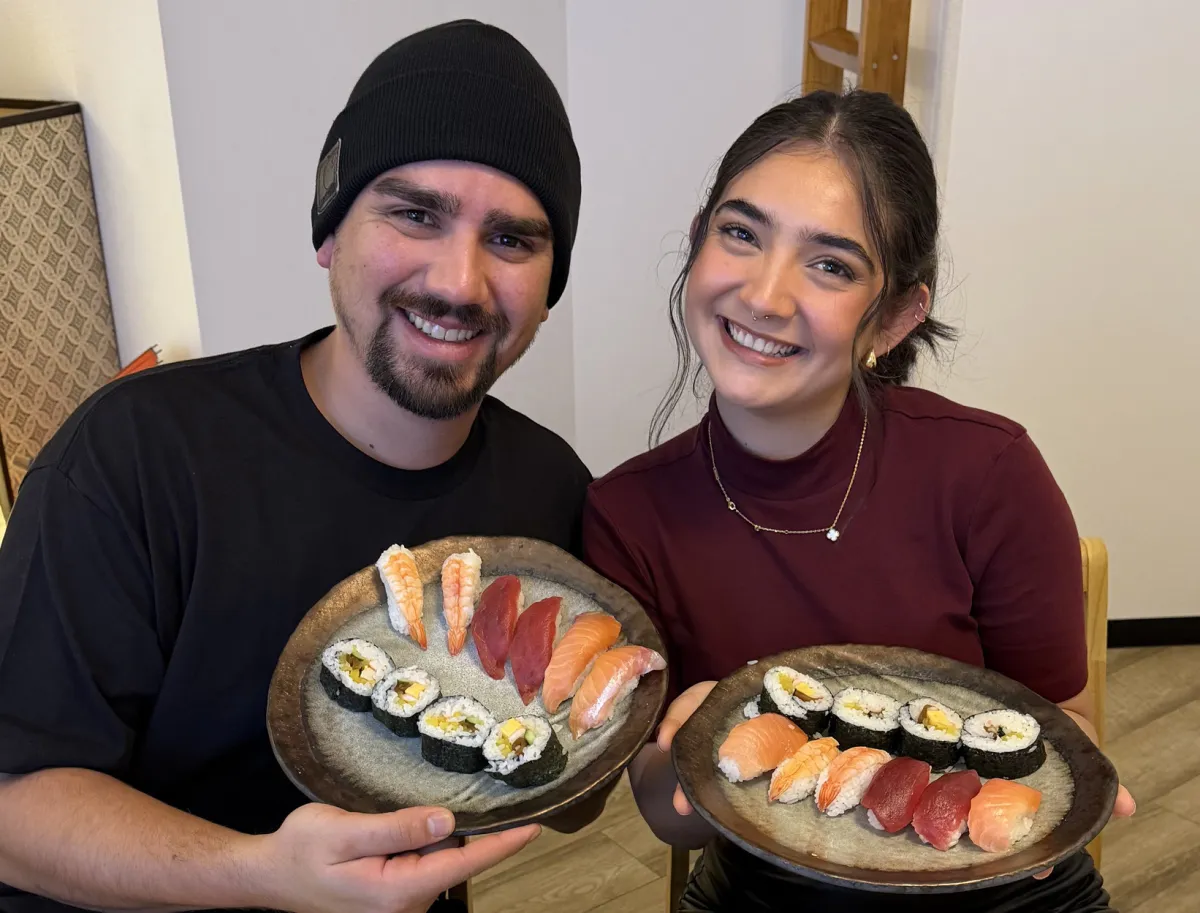
Knowing why chefs brush sauce on nigiri changes how you think about seasoning: the topping, the rice and the sauce are meant to be balanced in one bite. In our signature sushi and matcha class in Asakusa, an English-speaking instructor shows you how to shape nigiri and roll maki in 90 minutes, and you eat everything you make as a full meal. Toppings depend on season and availability. If you need to avoid wheat or any other ingredient, list it when you book and wait for a reply before relying on it.
For more background on the rice side of the balance, see our guide to shari, the vinegared rice. When you are ready to try it with your own hands, book a class.
Related Articles
Hotate, Akagai, Hokkigai: Shellfish Sushi
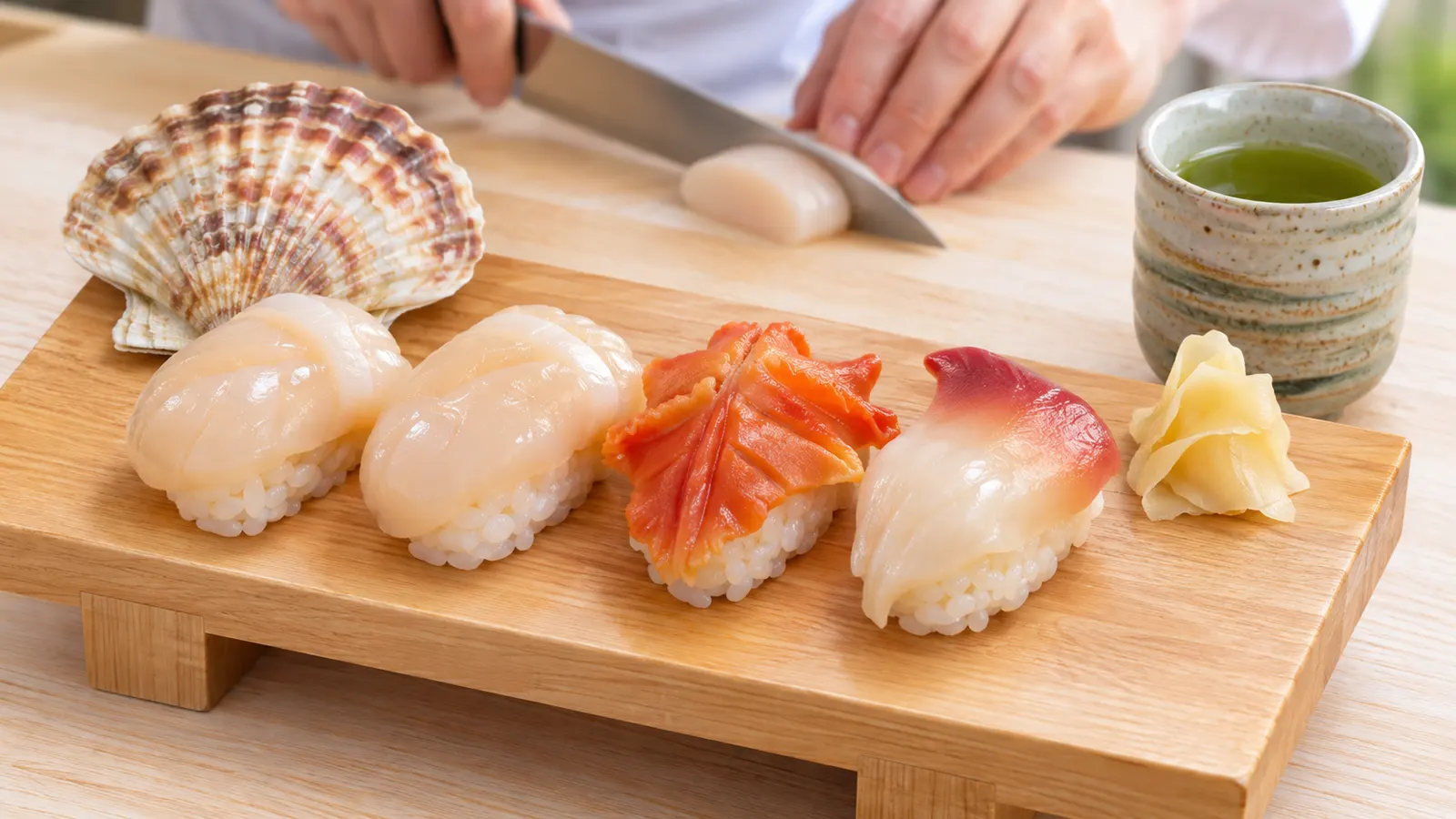
Scallop, ark shell and surf clam are the shellfish you meet most at sushi counters in Japan. How they differ, when they are best and what to say on allergies.
Hirame vs Karei: Flounder Sushi and Engawa
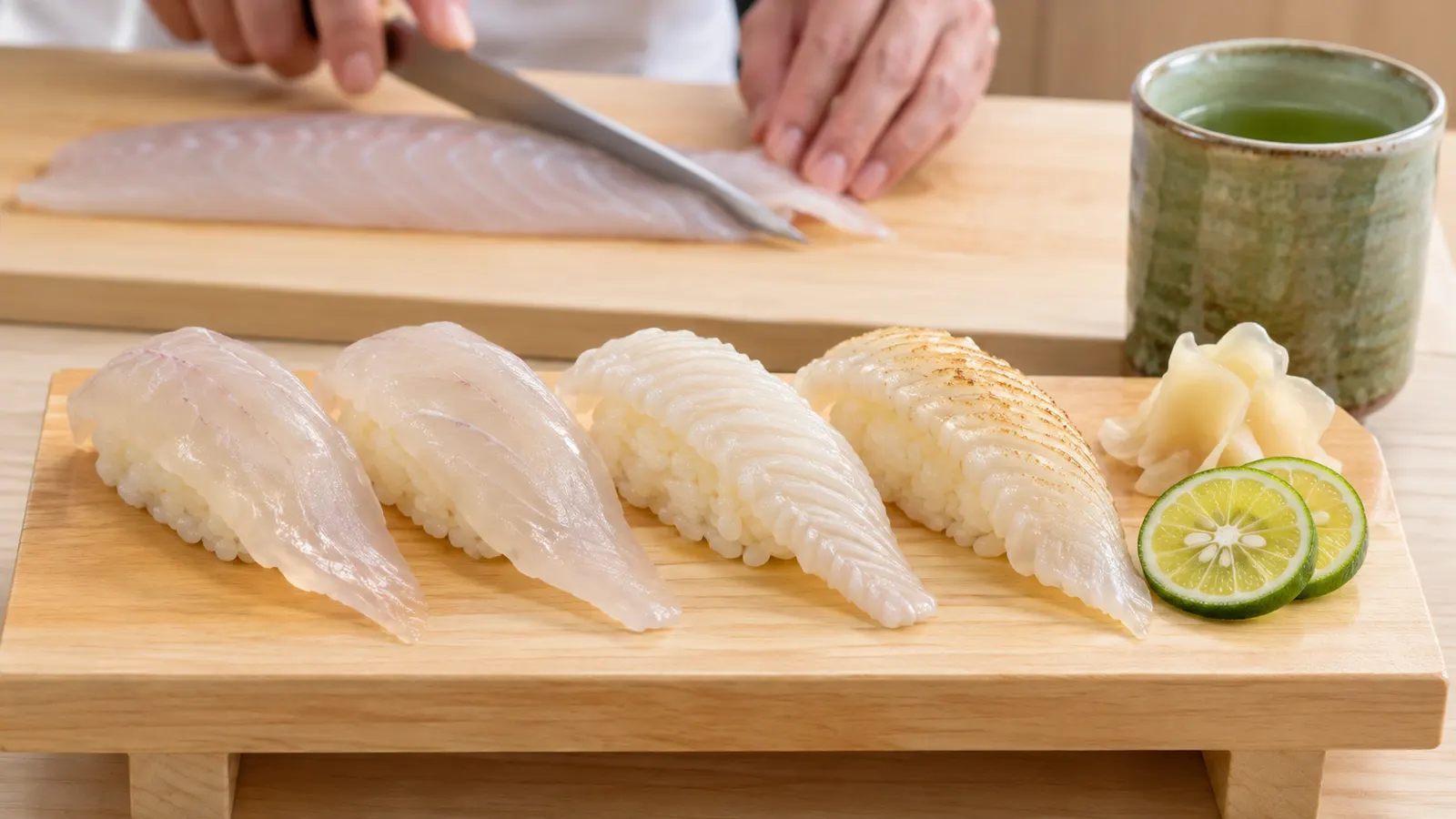
Hirame and karei are both flounder, but they differ in season, taste and price. How to tell them apart, what engawa is and how to order.
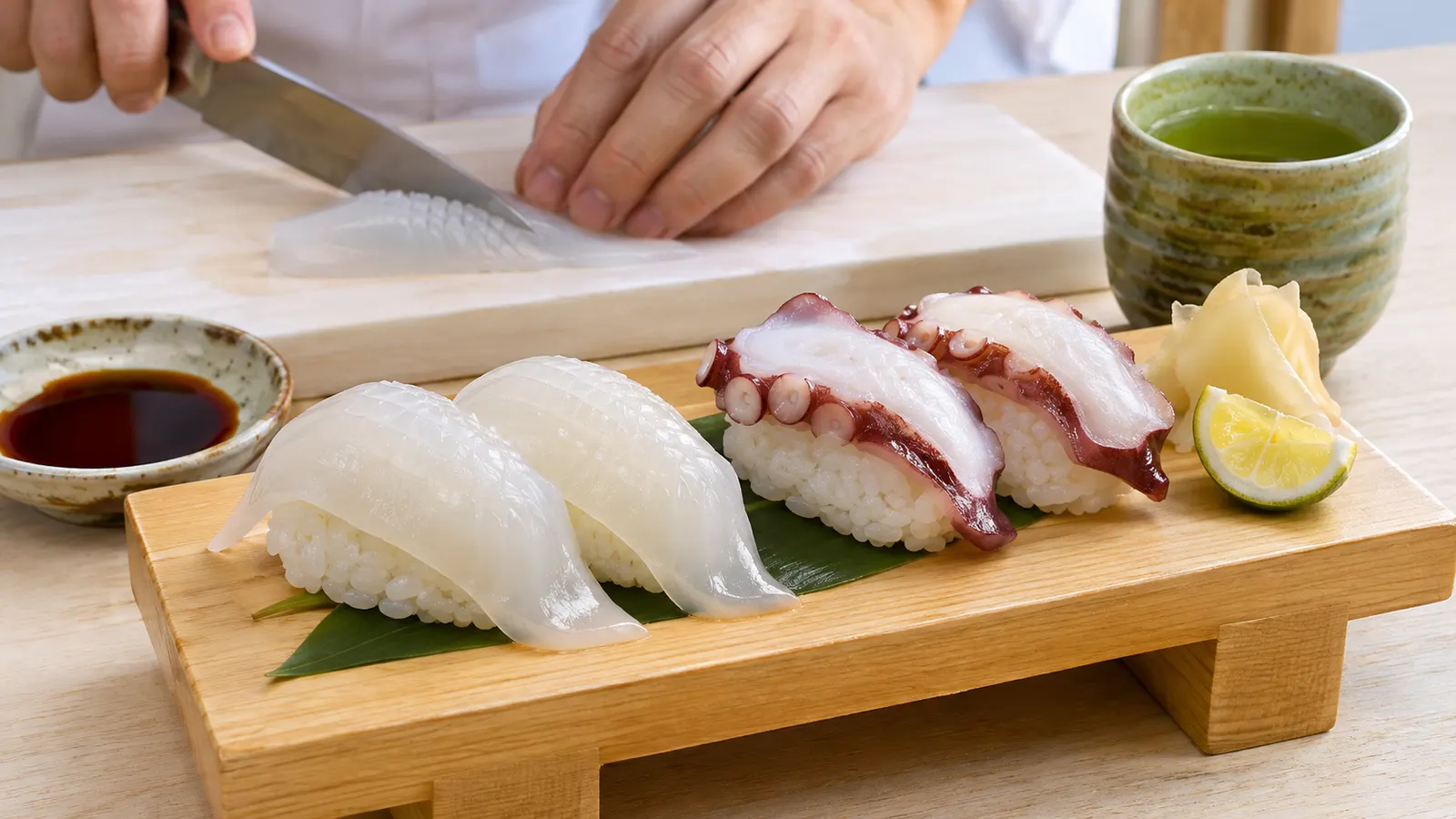
Ika vs Tako: Squid and Octopus Sushi
Ika is squid, usually served raw; tako is octopus, usually boiled. How the two nigiri differ, the main types and seasons, and how to order.