Ika vs Tako: Squid and Octopus Sushi
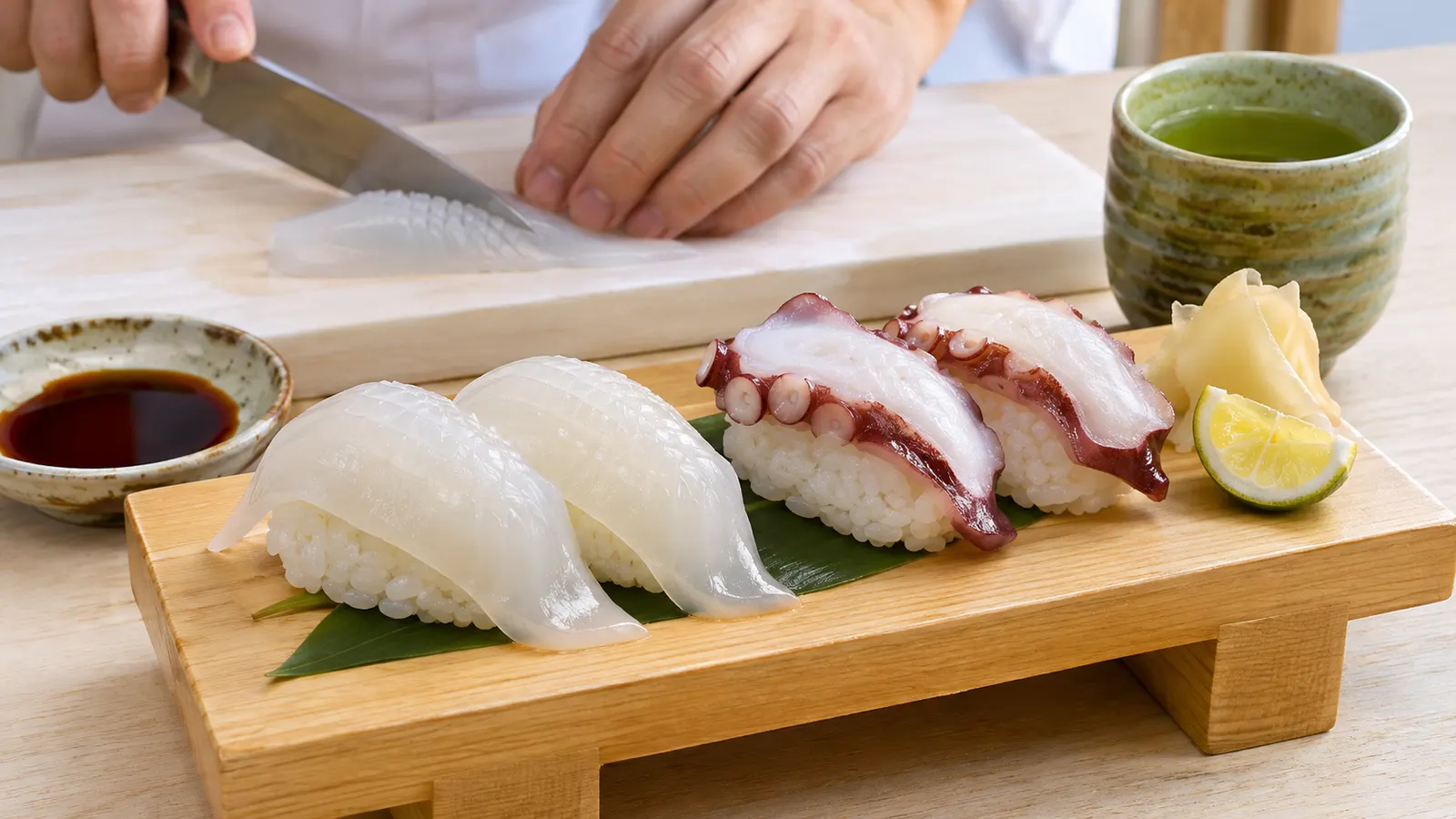
Ika and tako sit next to each other on many sushi menus, and visitors often lump them together as "the chewy ones". They are quite different. Ika (イカ) is squid, usually served raw, pale and almost translucent. Tako (タコ) is octopus, usually boiled first, with a deep reddish skin and a firm, springy bite. Knowing which is which makes ordering easier, and both are worth trying at least once in Japan.
This guide explains how each is prepared, the main types you may see, and how to choose between them at the counter.
Popular in Tokyo right now — our most recommended experience
Tokyo Sushi Making Class : Sake Ceremony & Matcha Experience in Asakusa
The short answer
- Ika (squid): usually served raw. Soft, slightly sticky and sweet, with a clean taste. Often scored with fine cuts on the surface.
- Tako (octopus): usually boiled before it reaches the sushi counter. Firmer and springier, with a mild, savoury flavour and a purple-red edge from the skin.
Both are seafood but not fish: squid and octopus are molluscs, the same broad group as clams and other shellfish. If you have a seafood or shellfish allergy, ask about both specifically rather than assuming either way.
How ika is prepared
Squid for nigiri is usually cleaned, skinned and sliced raw. Sushi chefs often make fine criss-cross cuts on the surface. A recipe guide from the food company Ajinomoto notes that scoring squid makes it easier to eat and helps flavour cling to it, which matters because raw squid can be quite elastic.
Squid is one of the seafoods that can carry anisakis, a parasite. Japan's health ministry explains that the larvae are killed by freezing at −20°C for at least 24 hours or by cooking, and that vinegar, salt, soy sauce and wasabi do not kill them. If you want to know more about how raw seafood is handled in Japan, our guide to whether raw fish is safe in Japan covers it in more detail.
The squid you might see
"Ika" covers several species, and good sushi restaurants often name the type on the board:
- Aori-ika (bigfin reef squid): The fish encyclopedia Zukan Bouz calls it the most expensive squid in Japan, used mainly by sushi restaurants and high-end restaurants. It is very sweet and rich in umami.
- Yari-ika (spear squid): A winter-to-early-spring squid. The Tokyo central wholesale market describes its flesh as thin but firm and chewy, with more depth of flavour than surume-ika.
- Kensaki-ika (swordtip squid): Another premium squid, with a sticky texture and strong sweetness.
- Surume-ika (Japanese flying squid): The most familiar everyday squid in Japan, good all year, crunchy and sweet when very fresh.
- Sumi-ika / kou-ika (golden cuttlefish): Strictly speaking a cuttlefish, with thick, white flesh. In Edomae sushi, the tiny young ones that appear in late summer are called shin-ika, "new squid", and are a prized seasonal treat.
Surume-ika has become much scarcer in recent years. Japan's Fisheries Agency reports that the catch of the main winter-spawning stock has fallen sharply since the 2016 season. One Fisheries Agency review notes that the national catch fell from about 300,000 tonnes in 2001 to the 30,000-tonne range, while the unit price rose about fourfold.
How tako is prepared
Most octopus for sushi is madako, the common octopus, and it is usually boiled. According to Zukan Bouz, madako is mostly sold boiled, and Japanese octopus has a dark reddish-brown colour. Some restaurants also simmer octopus gently in a soy-based liquid until tender. This is called sakura-ni, "cherry simmering", because the soy gives it a colour like cherry bark.
Not all octopus is cooked. Live madako sashimi is eaten in some areas, such as Hyogo and Osaka. Mizudako, the North Pacific giant octopus, can be eaten completely raw and is softer than madako. At a typical sushi counter in Tokyo, though, tako nigiri usually means boiled madako.
Two other names you may hear:
- Akashi-dako: Madako caught around the Akashi Strait in Hyogo Prefecture. The national fisheries cooperative federation describes its short, thick arms and springy texture. Hyogo has the largest madako catch in Japan.
- Imported octopus: A large share of octopus eaten in Japan is imported, much of it from West Africa. In 2024, for example, octopus made up about 80% of Mauritania's exports to Japan by value.
Ika and tako side by side
| Ika (squid) | Tako (octopus) | |
|---|---|---|
| Usually served | Raw | Boiled or simmered |
| Texture | Soft, slightly sticky, sometimes crunchy | Firm, springy |
| Flavour | Sweet, clean | Mild, savoury |
| Look | White, translucent, often finely scored | White flesh with a purple-red edge |
| Seasonal note | Varies by species; shin-ika in late summer | Madako tastes best in winter but is caught most in summer |
Which one should you order?
If raw seafood still feels new, tako is the easier first step. It is cooked, firm and familiar in flavour, and it lets you focus on how the rice and topping work together. If you already enjoy raw fish, ika shows a different side of sushi: sweetness and texture rather than fat.
Ordering both is the easiest way to taste the difference. In Japanese, "Ika to tako, hitotsu zutsu" means "One each of squid and octopus". Pointing at the board works too. For other pairs that confuse visitors, our guides to ebi and amaebi and hamachi, buri and kanpachi use the same approach.
Making nigiri yourself
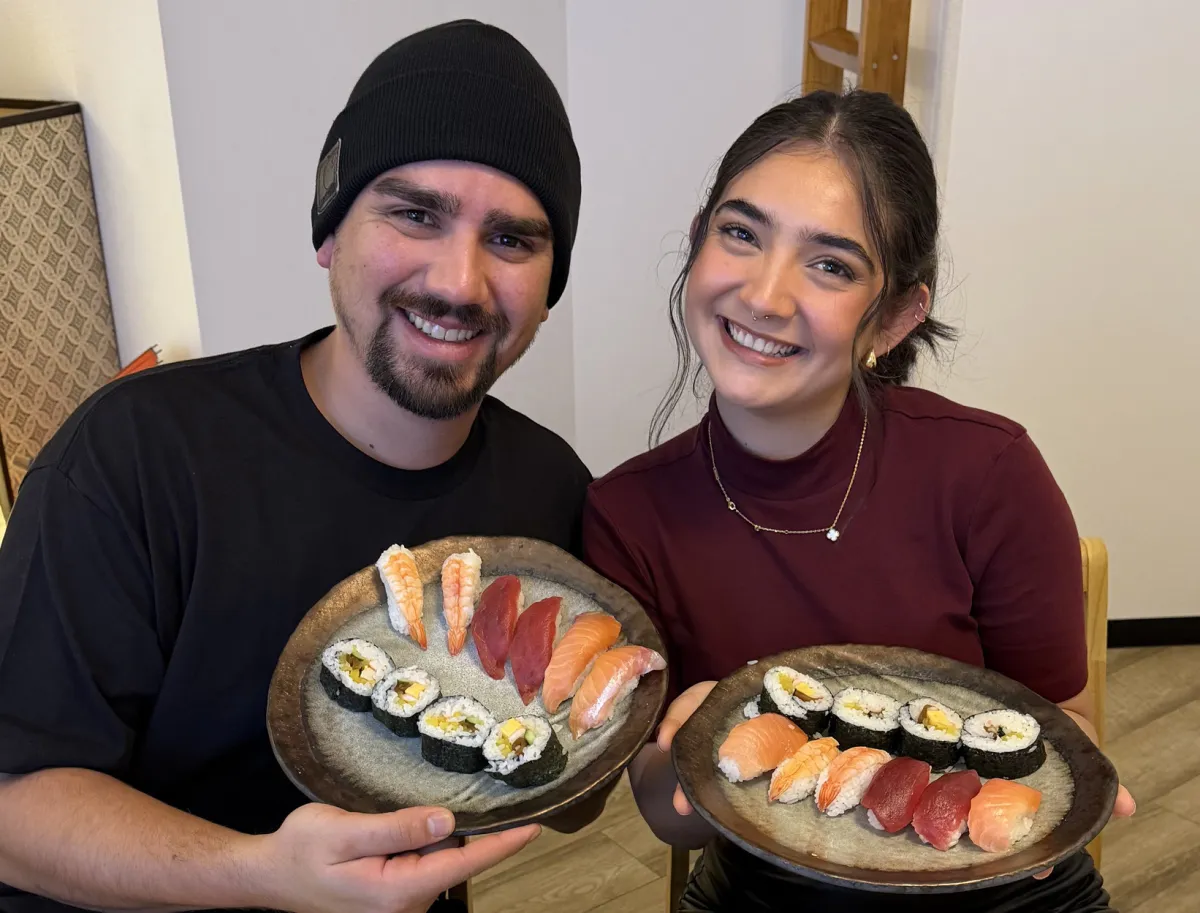
Squid and octopus are a good reminder that nigiri is about balance: the slice must be thin enough to sit on the rice and shaped so that it holds together when you pick it up. That is the kind of technique you practise in our signature sushi and matcha class in Asakusa, where an English-speaking instructor shows you how to shape nigiri and roll maki in 90 minutes. The toppings used in class depend on the season and availability, so we cannot promise squid or octopus on a particular date. If you have a seafood allergy, list it when you book and wait for a reply before relying on it; our guide to food allergies at a sushi class explains what to include.
For a wider overview of toppings, see our guide to the best fish for sushi. Once you can tell ika from tako, you can order with confidence, and if you want to try shaping nigiri yourself, book a class.
Related Articles
Hotate, Akagai, Hokkigai: Shellfish Sushi
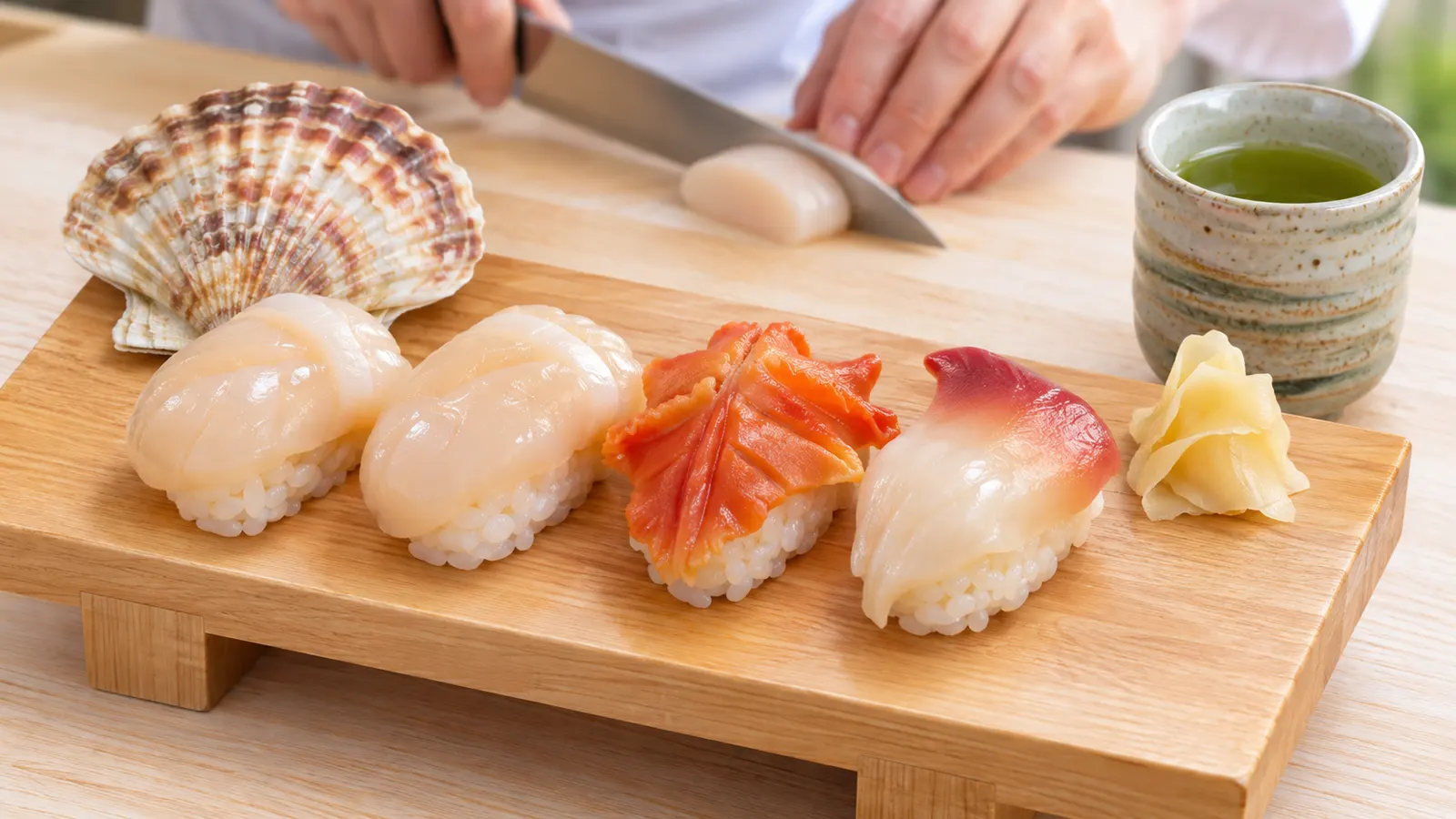
Scallop, ark shell and surf clam are the shellfish you meet most at sushi counters in Japan. How they differ, when they are best and what to say on allergies.
Hirame vs Karei: Flounder Sushi and Engawa
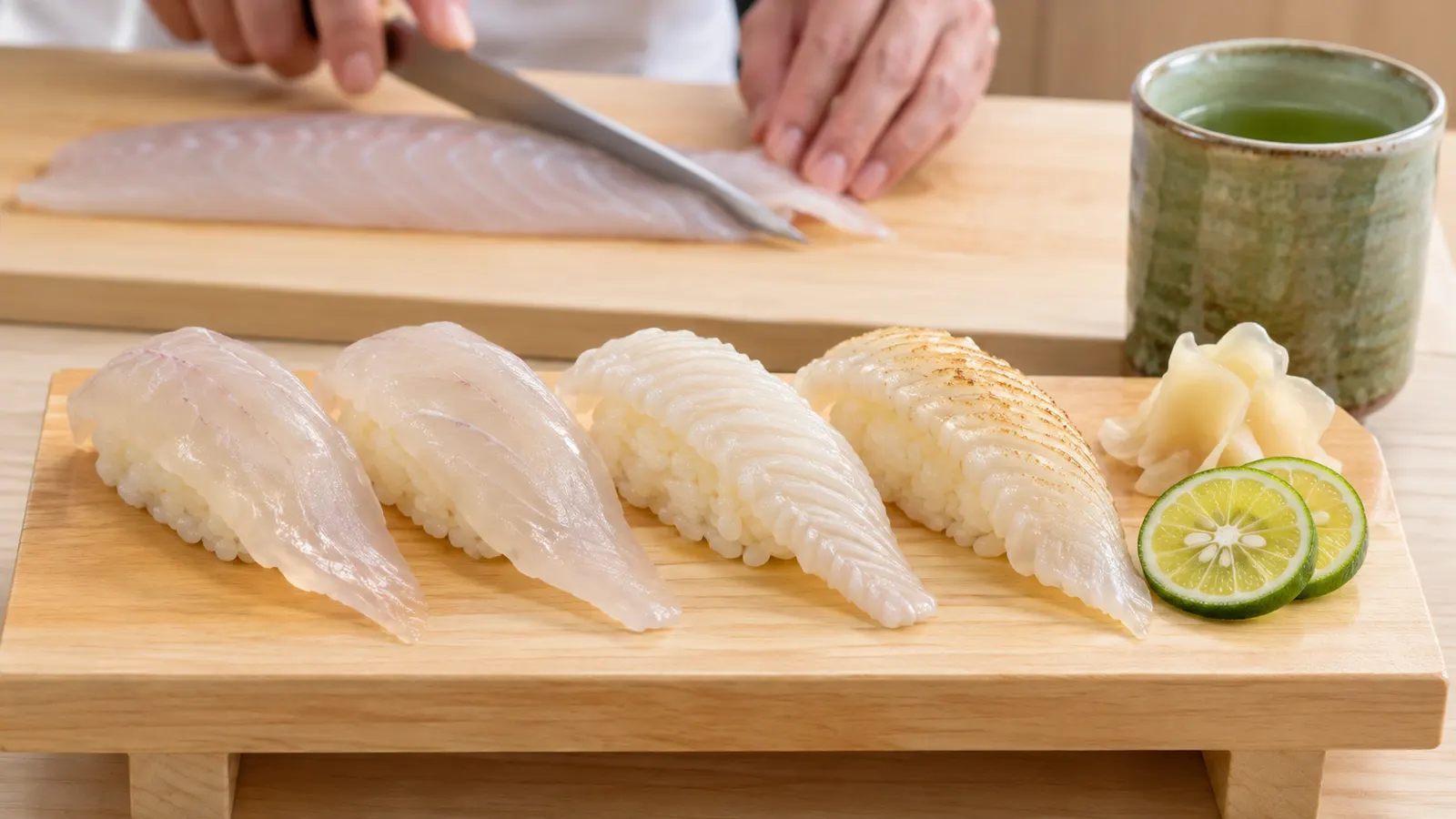
Hirame and karei are both flounder, but they differ in season, taste and price. How to tell them apart, what engawa is and how to order.
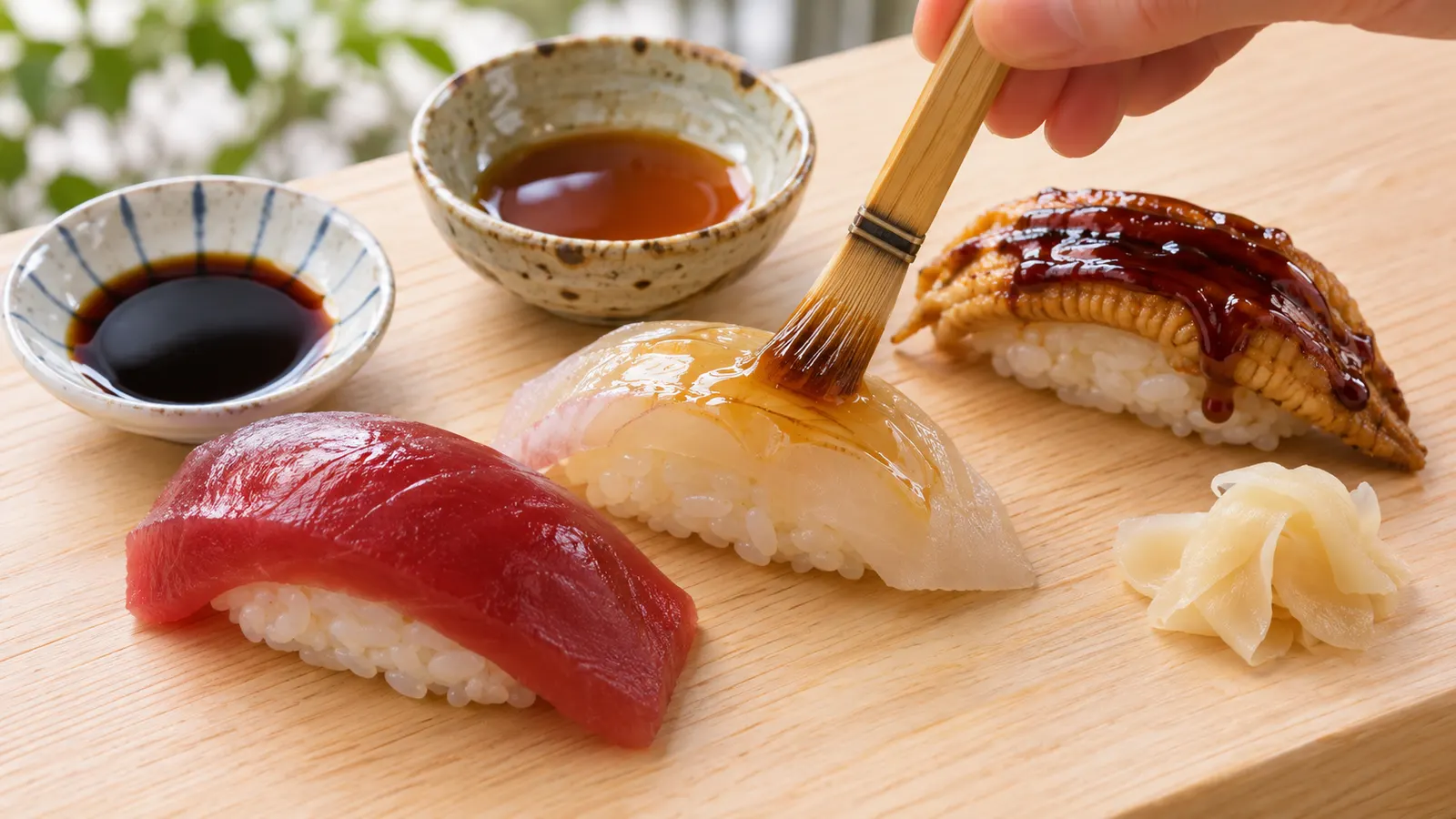
Nikiri, Tsume and Soy Sauce on Sushi
Why sushi chefs brush sauce on nigiri: nikiri, the sweet tsume on anago, the main types of Japanese soy sauce and when to skip the dipping dish.