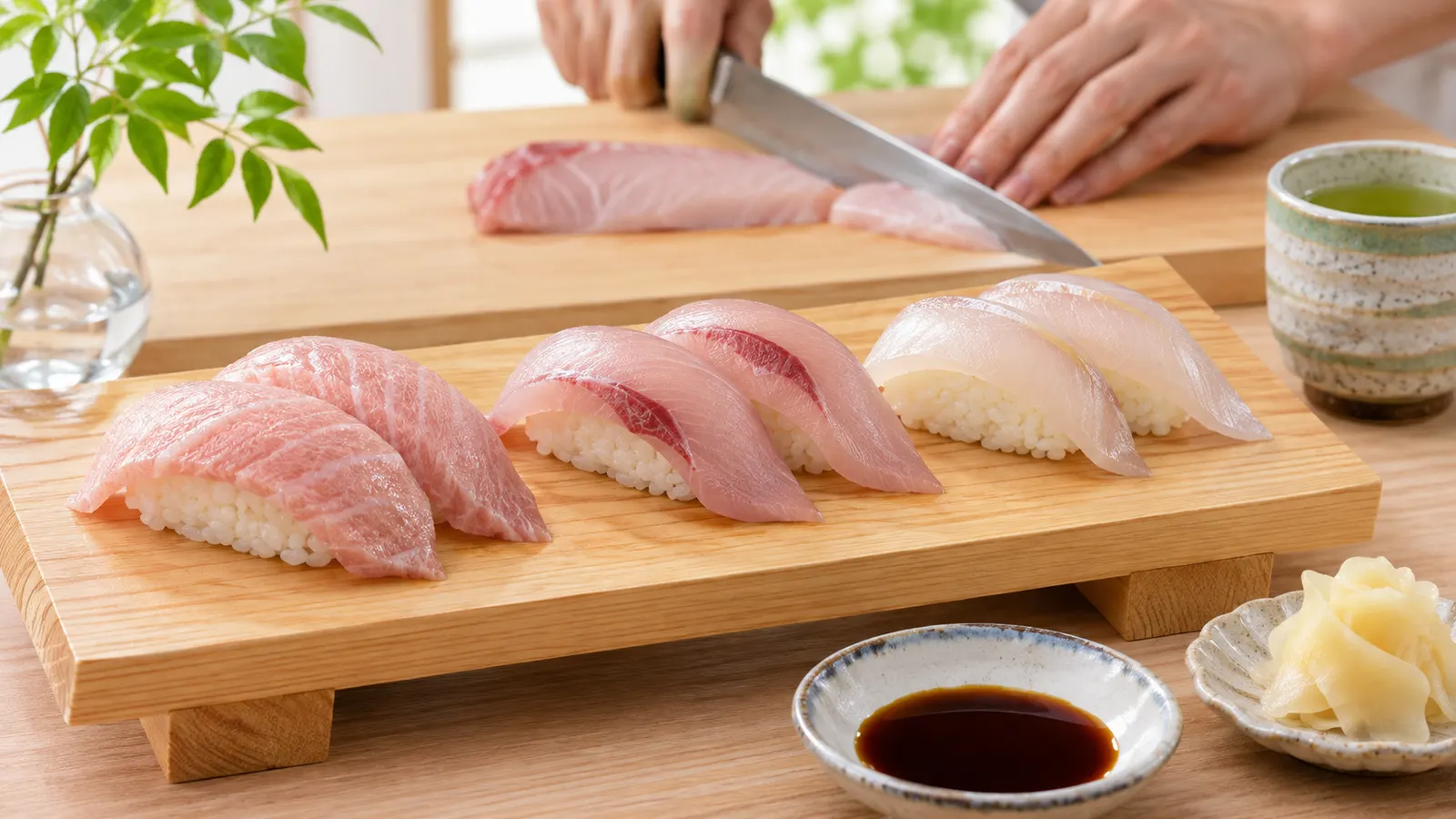
Hamachi, Buri or Kanpachi? Yellowtail Sushi
Outside Japan, "yellowtail" on a sushi menu is often labelled hamachi. In Japan the same pale, rich fish can be called hamachi, buri, inada or warasa, and the counter may also offer kanpachi and hiramasa, which look similar but are different fish. It is one of the more confusing corners of a sushi menu, and also one of the most rewarding once you know what you are choosing.
This guide explains what each name means, how the fish differ on the plate, and how to order them.
Popular in Tokyo right now — our most recommended experience
Tokyo Sushi Making Class : Sake Ceremony & Matcha Experience in Asakusa
One fish, several names
Buri, the Japanese amberjack (Seriola quinqueradiata), is what most people outside Japan know as yellowtail. In Japan it is called a shusse-uo, a "promotion fish", because its name changes as it grows, a little like a career moving up through job titles. Fish with this pattern have long been considered lucky, which is one reason buri appears at New Year and at celebrations.
The names differ by region. According to the Tokyo Metropolitan Government's fisheries research centre, the usual sequences are:
- Kanto (Tokyo area): wakashi → inada → warasa → buri
- Kansai (Osaka area): mojako → tsubasu → hamachi → mejiro → buri
As a rough guide, the Tokyo market describes an inada as around 40 centimetres, a warasa as around 60 centimetres and a full buri as about a metre. Other sources draw the lines by weight instead, and the Kanto and Kansai stages do not match one for one, so treat the sizes as approximate. The point is that hamachi and buri can be the same species at different sizes.
Why hamachi often means farmed
There is a second layer. Farming young buri in sea pens began in the Seto Inland Sea, in the Kansai region, and the Kansai word hamachi spread with the farmed fish. Today the Japanese fish farmers' association notes that farmed fish of roughly 4 kilograms and up are generally called buri and smaller ones hamachi, so on many menus "hamachi" simply signals farmed yellowtail.
Farmed and wild fish are both good sushi; they are simply different. Farmed fish are fed for a steady, generous fat content all year. Wild buri changes with the seasons and is at its best in midwinter. One Tokyo seafood wholesaler's figures put wild winter buri at around 10% fat, against 5 to 7% for wild young fish in summer, with farmed fish higher still.
Kanburi: winter buri
Kanburi means "cold-season buri". From late autumn into winter, wild buri put on fat, and the flesh becomes rich, pale and almost creamy at the belly. Japanese diners look forward to it the way others look forward to a seasonal wine. If you are in Tokyo between December and February and see buri or kanburi on the board, it is worth ordering. Our guide to winter sushi fish in season covers kanburi alongside other winter toppings.
Kanpachi: the firmer cousin
Kanpachi, the greater amberjack (Seriola dumerili), is a different species in the same genus. It is not a size stage of buri. The name is written 間八 in Japanese, from the dark band that runs diagonally across its head and, seen from the front, forms a shape like the character 八 (eight).
On the plate, kanpachi is usually paler and more translucent than buri, with a firm, clean bite. Kanagawa's fisheries federation describes it as the least fatty fish in the buri family. It is often said to be best in summer, the opposite of kanburi, though it is good all year. Kanpachi is also widely farmed: according to Japan's agriculture ministry, Kagoshima Prefecture alone produced about 60% of the country's farmed kanpachi in 2023. If you find fatty yellowtail too rich, kanpachi is the one to try.
Hiramasa: the lean one
Hiramasa is the third member of the family you may see in Japan. It looks very like buri, but has a clearer yellow stripe along its side and a rounded corner to the upper jaw. It is in season from summer into autumn, is generally leaner than winter buri with a firm texture, and is less common than buri or kanpachi, so treat it as a find rather than a standard.
How they compare at the counter
- Hamachi: soft, fatty and mild. Easy to like and the most familiar to visitors.
- Buri / kanburi: richer and deeper in flavour, with a melting belly in winter. Sometimes lightly seared to bring out the fat; see our guide to aburi, or seared sushi.
- Kanpachi: firmer and cleaner, with a gentle sweetness.
- Hiramasa: lean, crisp and refreshing.
Some restaurants serve yellowtail with a little grated ginger, spring onion or a touch of citrus as well as wasabi, because sharper flavours cut through the fat. If you want to compare fat levels across the menu more broadly, our guide to akami, chutoro and otoro tuna explains the same idea for tuna.
How to order yellowtail in Japan
You do not need the Japanese names to order, but they help:
- If you speak a little Japanese, "Buri wa arimasu ka?" means "Do you have buri?". In English, "Which yellowtail do you have today?" works just as well, and pointing at the board is fine too.
- If the board shows both buri and kanpachi, ordering one piece of each is the easiest way to taste the difference.
- At conveyor-belt restaurants, "hamachi" on the menu is usually farmed fish. That is fine, and often very good value.
- Follow the season: kanpachi from summer into autumn, buri in winter.
Making yellowtail nigiri yourself
Pale, fatty fish are a good test of nigiri technique. The slice has to be cut cleanly against the grain so it drapes over the rice, and the rice must be shaped gently so it holds together without being pressed hard. That is exactly the kind of skill you practise in our signature sushi and matcha class, where an English-speaking instructor shows you how to shape nigiri and roll maki in 90 minutes. The fish used in class depends on the season and what is available, so we cannot promise yellowtail on a particular date, but the techniques are the same ones you will see at a sushi counter.
If you are still learning the basics, our guide to the best fish for sushi gives a wider overview. Once you know your hamachi from your kanpachi, the next yellowtail on a Tokyo menu becomes a choice rather than a guess, and you can book a class to try shaping it yourself.
Related Articles
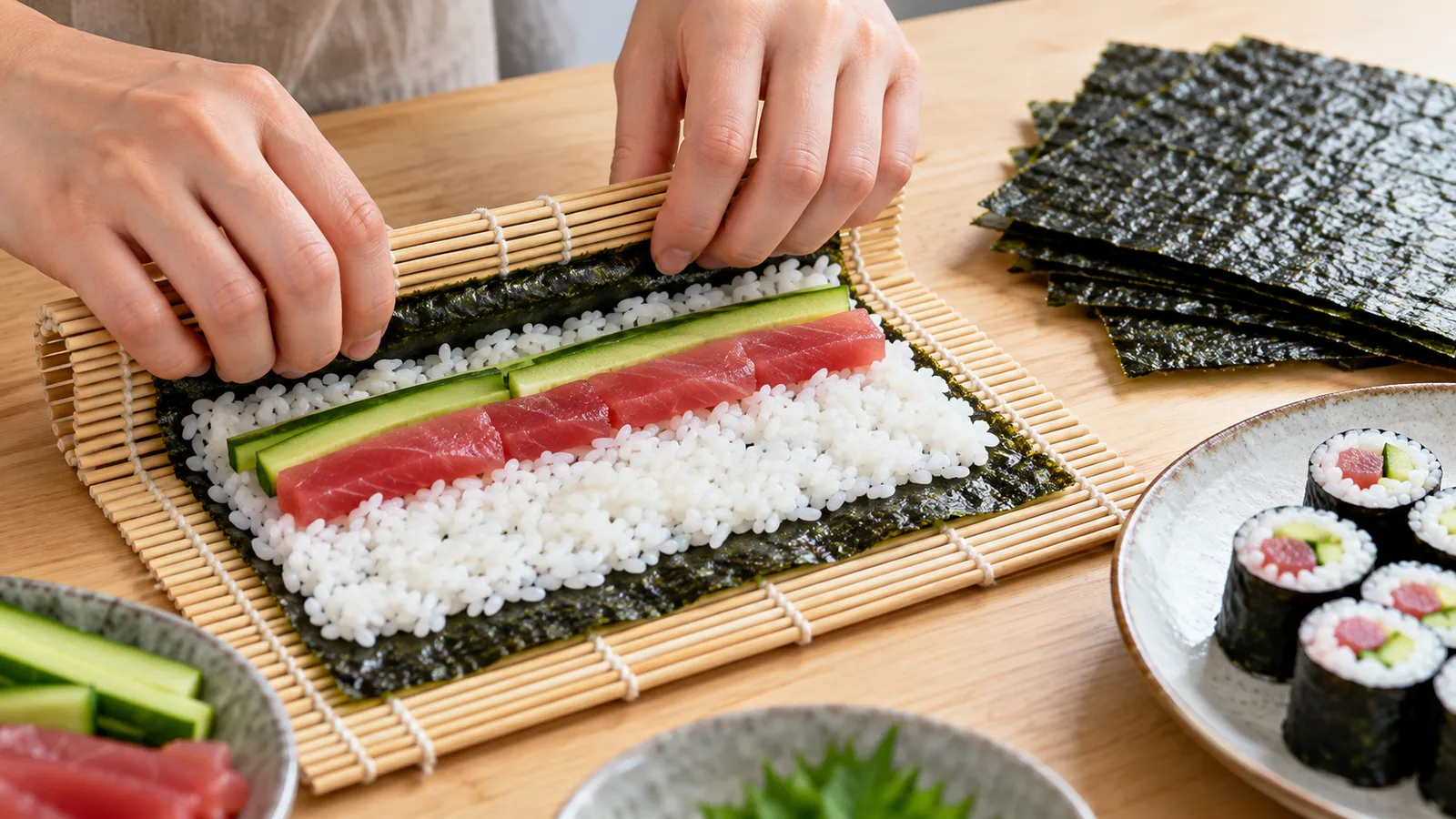
Nori for Sushi Rolls: A Beginner's Guide
What nori is, where it comes from, which side faces out, why it turns chewy and how to keep it crisp, plus where you roll maki in our Asakusa class.
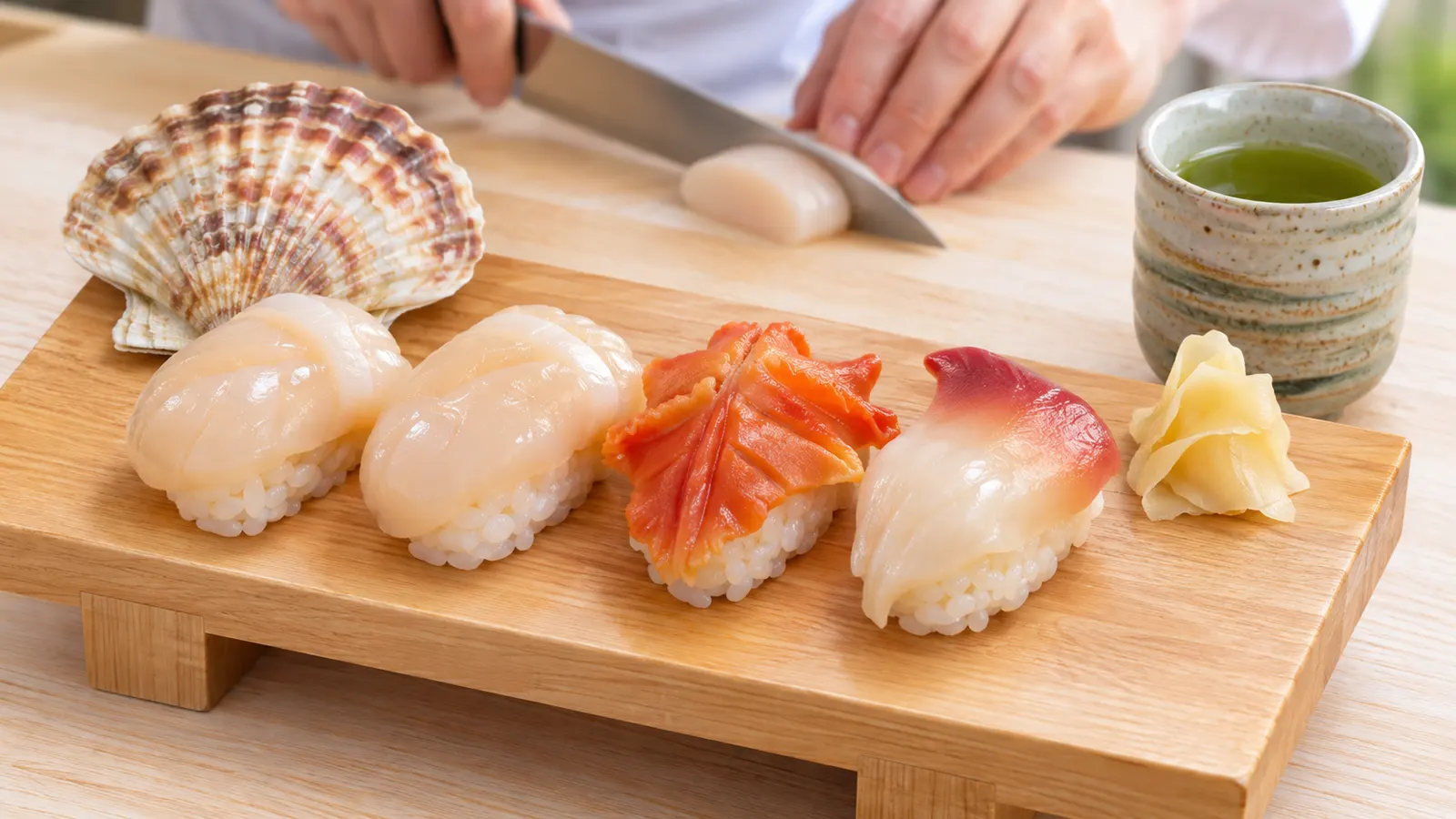
Hotate, Akagai, Hokkigai: Shellfish Sushi
Scallop, ark shell and surf clam are the shellfish you meet most at sushi counters in Japan. How they differ, when they are best and what to say on allergies.
Hirame vs Karei: Flounder Sushi and Engawa
Hirame and karei are both flounder, but they differ in season, taste and price. How to tell them apart, what engawa is and how to order.