What Is Aburi Sushi? Seared vs Raw Nigiri
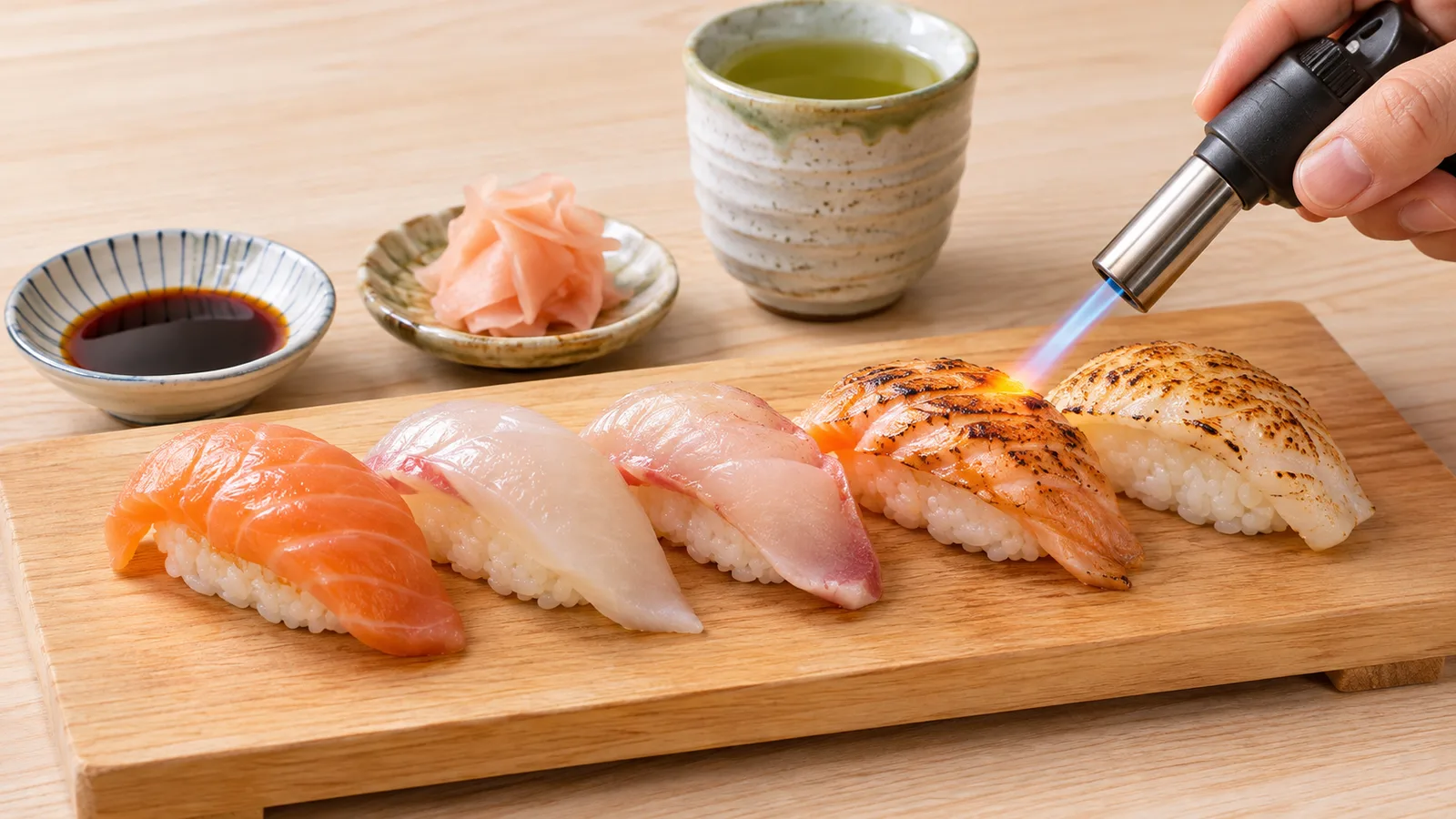
On many sushi menus in Tokyo you will see a few pieces marked aburi. They arrive with a golden, slightly blistered surface and a smell closer to grilled fish than to the clean, cool aroma of raw nigiri. For many visitors, aburi is the piece that makes sushi "click": familiar warmth on the outside, the soft texture of fresh fish underneath.
This guide explains what aburi means, how it differs from ordinary raw nigiri, which toppings are usually seared, and the one point that matters most if someone in your group avoids raw fish.
Popular in Tokyo right now — our most recommended experience
Tokyo Sushi Making Class : Sake Ceremony & Matcha Experience in Asakusa
What "aburi" means
Aburi (炙り) comes from the Japanese verb aburu, to roast or sear something lightly over a flame. On a sushi menu it means that the surface of the topping has been briefly exposed to strong heat just before the piece is served.
Today that heat usually comes from a small kitchen torch held a short distance above the nigiri. Some restaurants sear over charcoal or use a hot iron instead. The method changes the flavour slightly, but the idea is the same: heat the outside quickly and stop before the inside cooks through.
Aburi vs raw nigiri
An aburi piece is still nigiri. It starts with the same hand-shaped ball of vinegared rice and the same slice of fish. The only difference is the last few seconds before it reaches you.
| Raw nigiri | Aburi nigiri | |
|---|---|---|
| Surface | Cool, glossy | Warm, lightly browned |
| Inside | Raw | Mostly raw |
| Aroma | Clean, subtle | Smoky, roasted |
| Fat | Firm when cold | Softened, melting |
| Typical seasoning | A light touch of soy sauce | Often salt, citrus or a sauce instead |
The searing does two things. It melts some of the fat on the surface, which is why fatty toppings taste richer and softer when seared. It also browns proteins and any sauce on top, adding a toasted note that raw fish does not have.
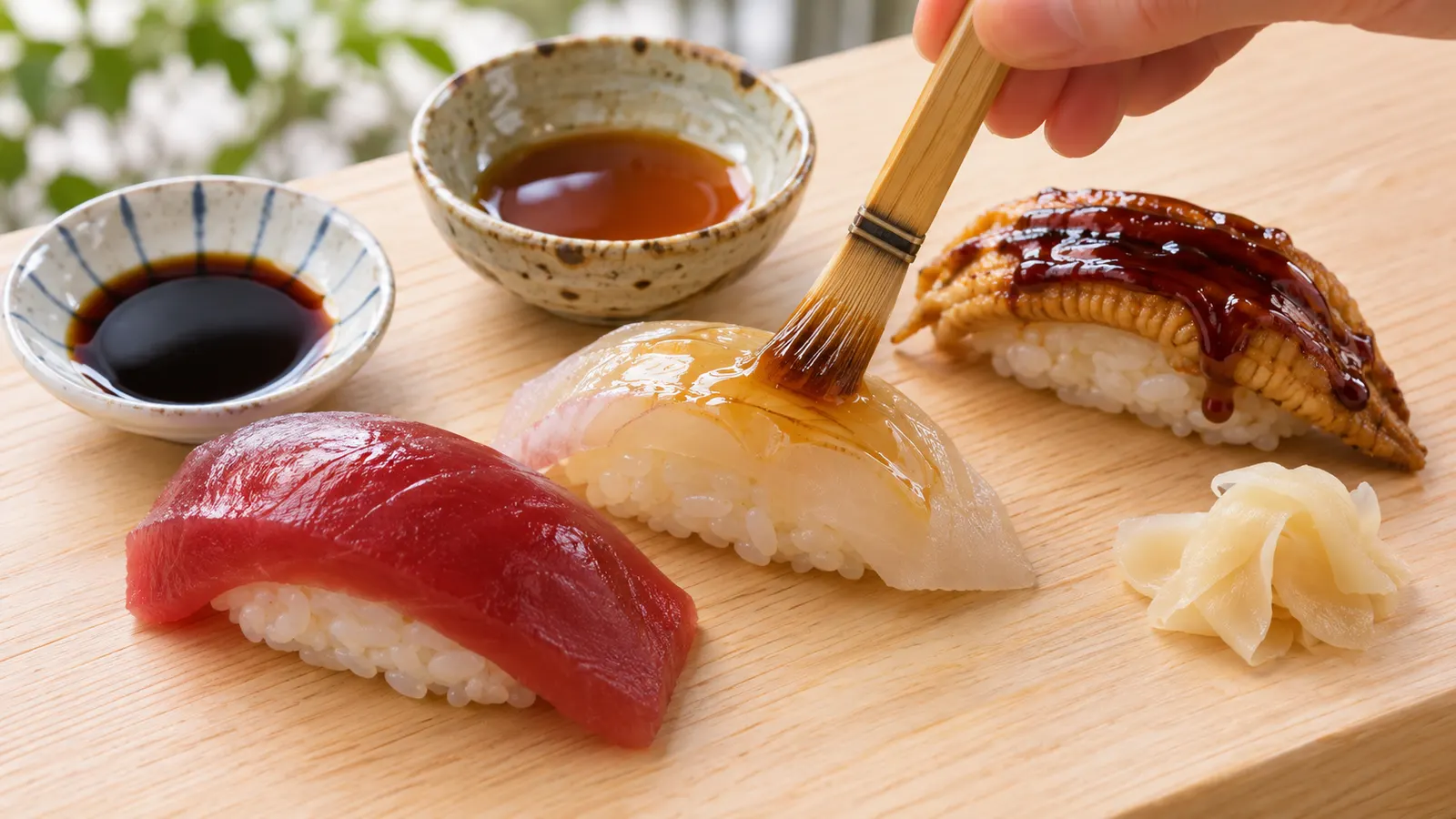
Because the topping has already been seasoned, many shops serve aburi with salt, a squeeze of citrus or a brushed-on sauce. In that case you do not need to add soy sauce at all. If you are unsure, it is fine to ask whether the piece is ready to eat as served.
Toppings that are often seared
Searing suits toppings with a lot of fat or a firm texture. You will commonly see:
- Salmon, perhaps the most familiar aburi piece for visitors.
- Fatty tuna (toro), where the heat softens the fat further. Our guide to the best fish for sushi explains how different fish suit different preparations.
- Engawa, the chewy fin muscle of flounder, which turns tender and fragrant.
- Scallop and other shellfish, sometimes seared with a little sauce.
- Mackerel and other oily fish, where the skin side is sometimes seared for aroma.
- Wagyu beef, at some modern shops, served as nigiri and seared rather than raw.
The idea is not new. Bonito, for example, has long been served as tataki: seared on the outside and raw inside. Our article on hatsu-gatsuo, the first bonito of spring describes that traditional preparation.
Aburi is not fully cooked
This is the point to remember if anyone in your group needs cooked food. Searing only heats the outer surface for a few seconds. The centre of an aburi piece is usually still raw, and the shop has not cooked it to a safe internal temperature.
So aburi is a good choice for someone who finds raw fish slippery or unfamiliar, but it is not a substitute for cooked food for anyone who has been advised to avoid raw fish, such as during pregnancy or for certain health conditions. If that applies to you, ask for toppings that are cooked through, such as boiled shrimp, grilled eel or tamago (sweet omelette), or choose a vegetable option. Our guide to sushi classes without raw fish and our article on joining a sushi class while pregnant explain what to ask.
Ordering aburi in Tokyo
You will find aburi in very different places. Conveyor-belt and casual sushi chains often have several seared pieces on the menu, sometimes with mayonnaise or a sweet sauce. Traditional counters tend to use searing more sparingly, as one step within the chef's sequence rather than a separate category.
A few practical tips:
- Eat it straight away. The contrast between the warm surface and the cool rice fades within a minute or two.
- Do not reach for soy sauce by reflex. Many aburi pieces are already seasoned.
- Ask what is on top. Sauces may contain egg, dairy or wheat. If you have an allergy, check before you order.
- Compare side by side. Ordering the same fish raw and seared is the quickest way to understand what the flame changes.
Where aburi fits in our class
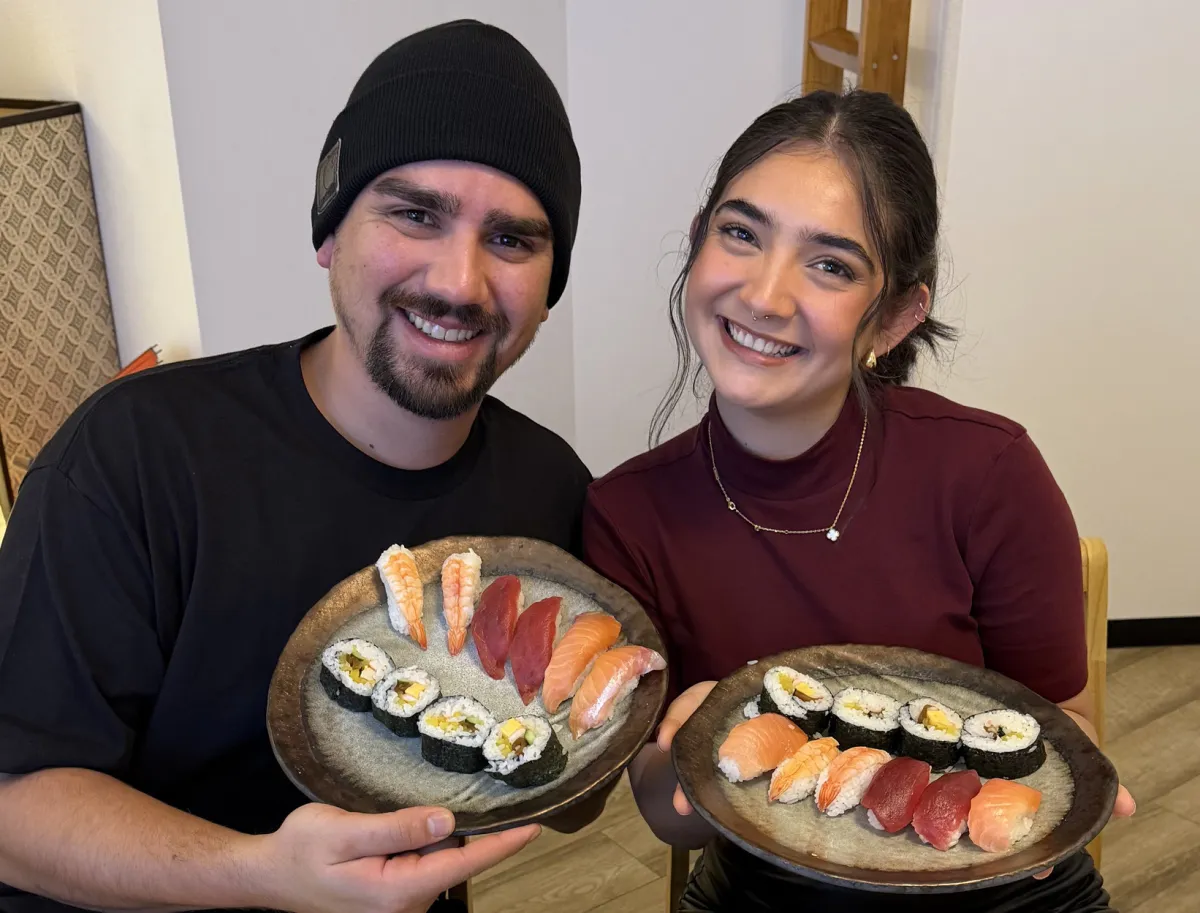
In our Asakusa sushi making class with matcha, you learn the foundation that every aburi piece is built on: preparing sushi rice, shaping nigiri by hand and rolling maki. The class lasts about 90 minutes and includes a sake toast and a bowl of matcha that you whisk yourself. Searing is not a set step of the class, so do not book it expecting to use a torch.
What you will gain is the eye to recognise a well-made piece wherever you eat in Japan. Once you have pressed rice into shape yourself, you notice how a good chef keeps it light enough to stay together without being packed tight. That makes the next aburi salmon at a counter far more interesting.
If someone in your group would rather not eat raw fish, ask about the available alternatives when you book and confirm the exact menu for your date. Remember the point above: seared is not the same as cooked through, so say clearly if the person needs fully cooked food. If someone does not eat fish at all, the vegan sushi making class runs in the same session with a fully plant-based menu, so you can still take part together.
Quick answers
Is aburi sushi cooked? Only on the surface. The inside is usually raw.
Is aburi the same as tataki? They use the same idea of searing the outside. Tataki usually refers to a seared block of fish, such as bonito, that is sliced and served like sashimi. Aburi usually refers to a seared nigiri piece.
Do you dip aburi in soy sauce? Often not. Many pieces are seasoned with salt, citrus or sauce. Ask if you are not sure.
Is aburi sushi traditional? Searing fish over fire is old. Using a kitchen torch on nigiri is a more recent restaurant technique and is now widespread.
Learn the base before the flame
Aburi is a small twist on a classic piece, and the classic is easiest to appreciate when you have made it yourself. Check the live calendar for the signature sushi and matcha class, then try a seared piece somewhere in Tokyo the same week and compare.
Related Articles
Hotate, Akagai, Hokkigai: Shellfish Sushi
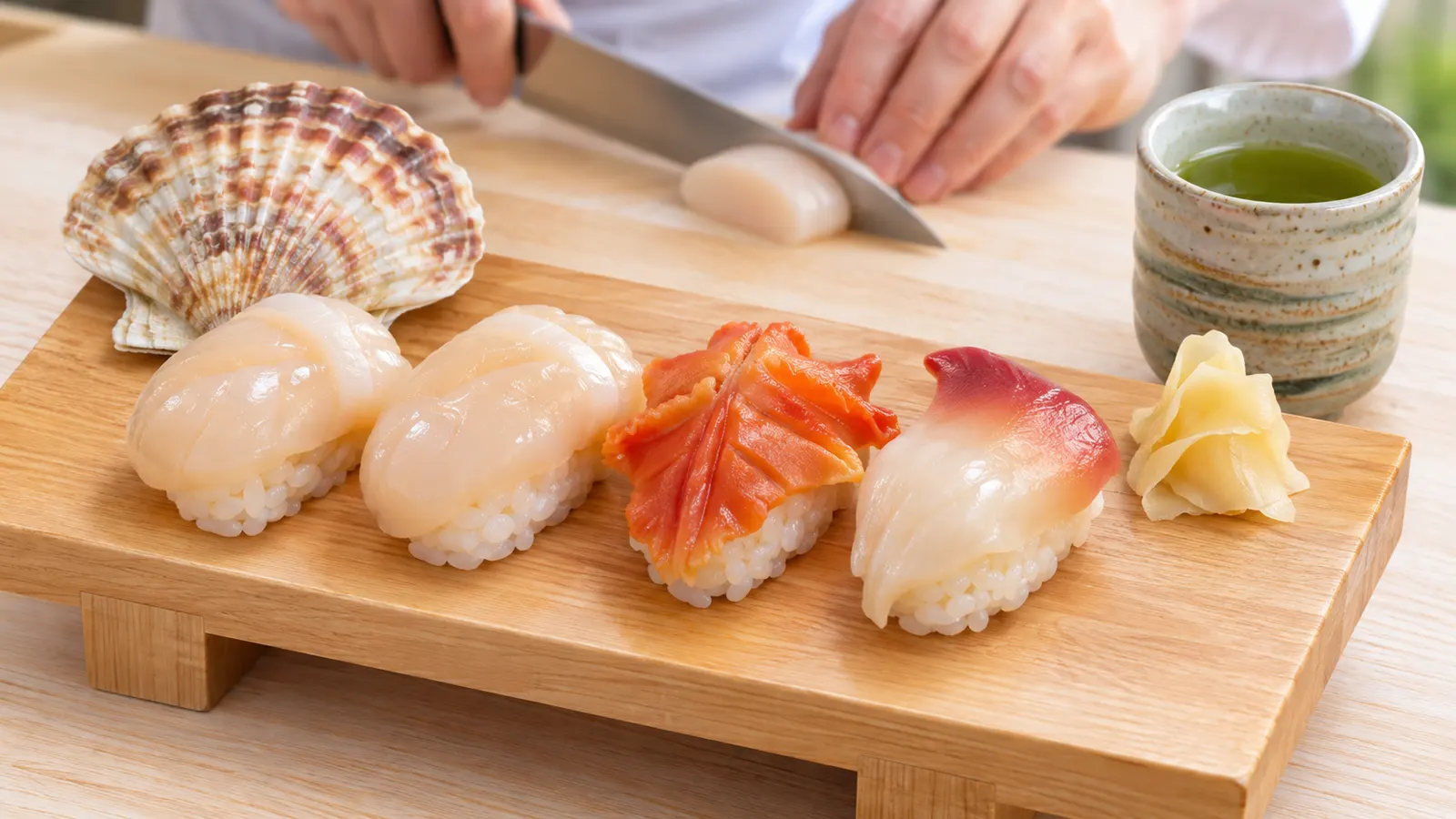
Scallop, ark shell and surf clam are the shellfish you meet most at sushi counters in Japan. How they differ, when they are best and what to say on allergies.
Hirame vs Karei: Flounder Sushi and Engawa
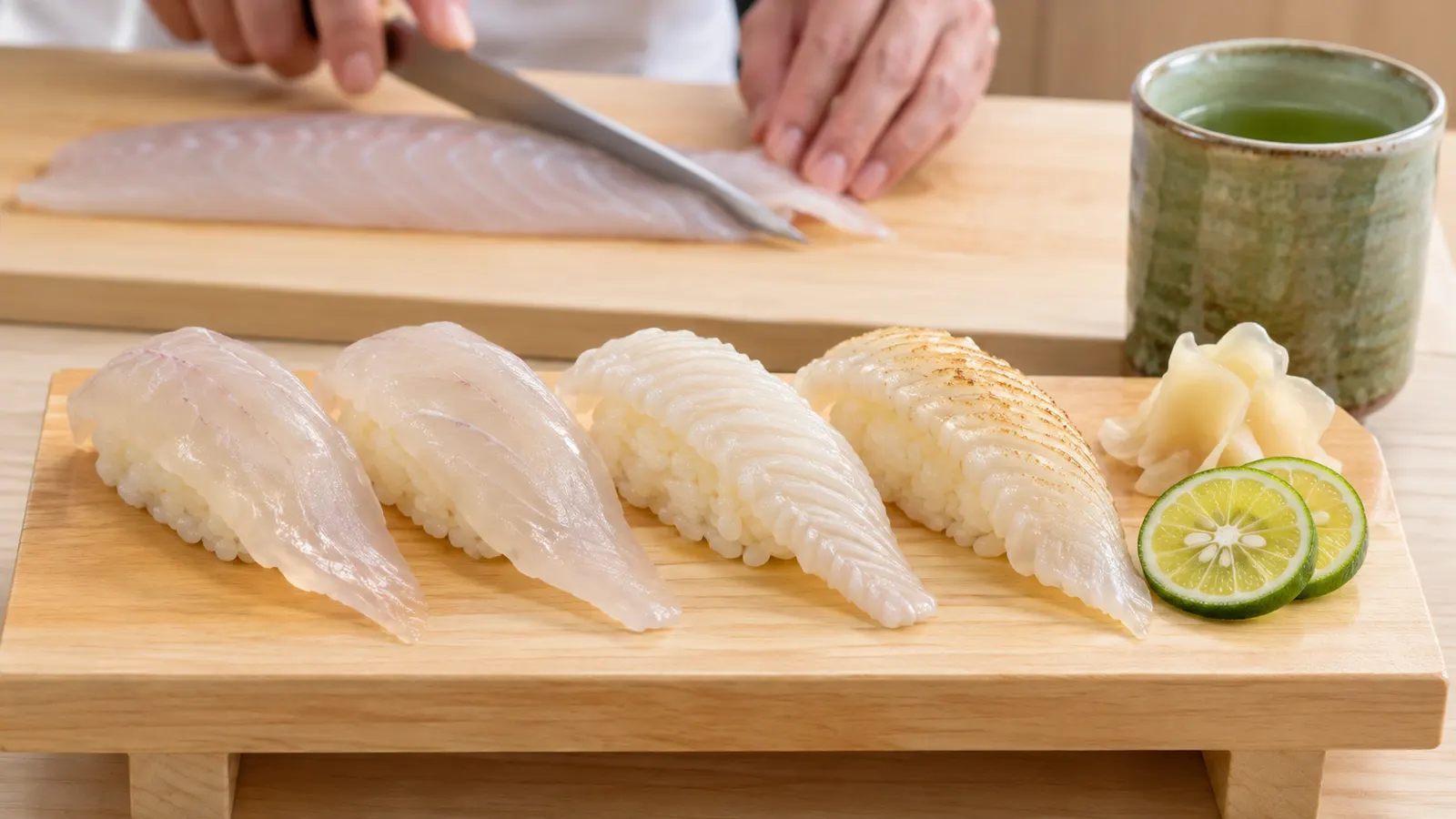
Hirame and karei are both flounder, but they differ in season, taste and price. How to tell them apart, what engawa is and how to order.
Nikiri, Tsume and Soy Sauce on Sushi
Why sushi chefs brush sauce on nigiri: nikiri, the sweet tsume on anago, the main types of Japanese soy sauce and when to skip the dipping dish.