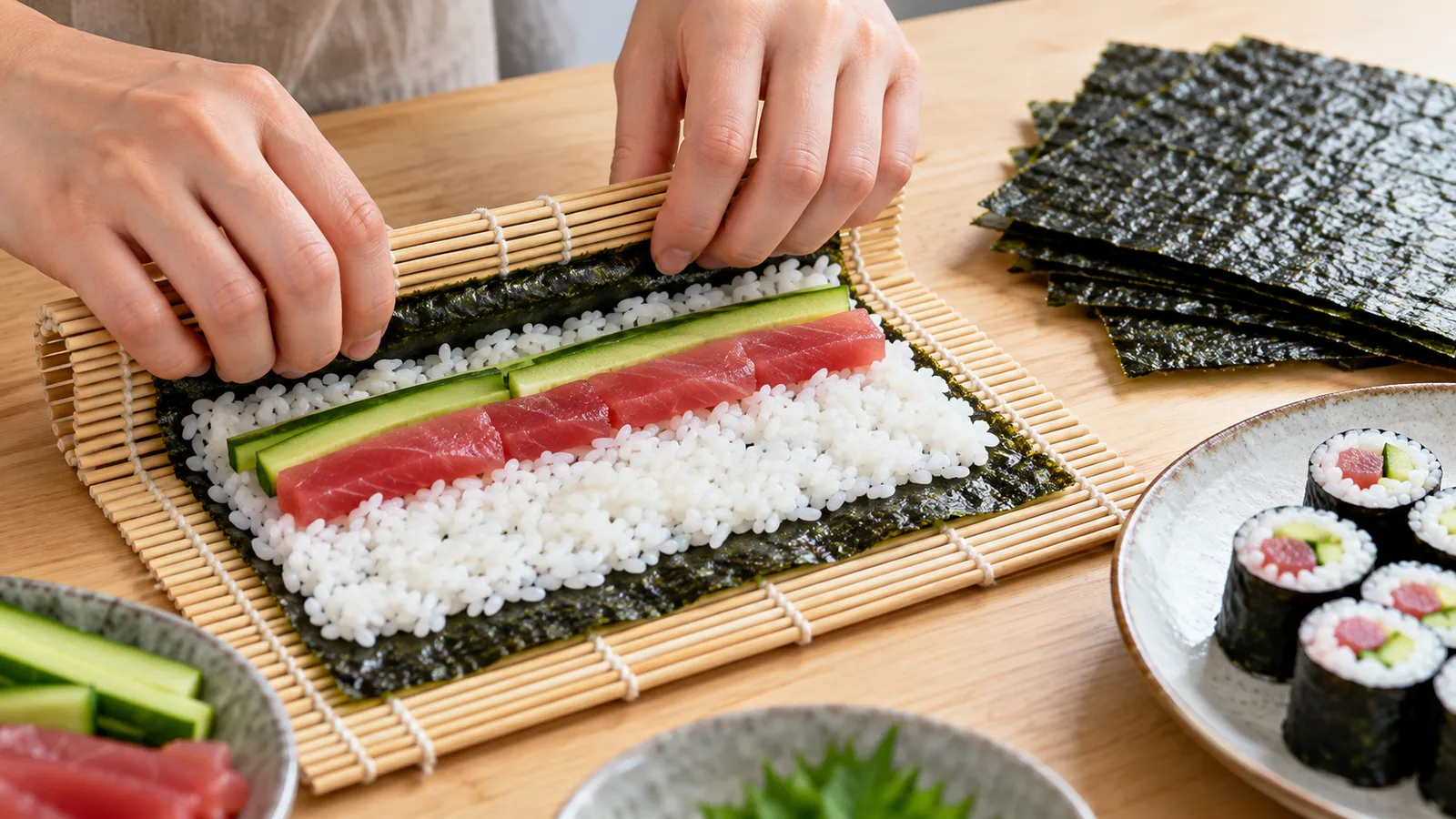
Nori for Sushi Rolls: A Beginner's Guide
Most people meet nori as the dark green wrapper around a sushi roll. It looks like a simple sheet of paper, but it does a lot of work: it holds the rice and fillings together, adds a toasted, ocean flavour and gives the first bite a light crunch. It is also the ingredient that most often goes wrong when people make rolls at home. The sheet tears, the roll turns soggy or the seaweed becomes chewy before it reaches the table.
This guide explains what nori actually is, how it is made and sold in Japan, and the handful of habits that make it easier to work with. It finishes with where nori fits in a hands-on sushi class, so you know what to expect before you book.
Popular in Tokyo right now — our most recommended experience

Tokyo Sushi Making Class : Sake Ceremony & Matcha Experience in Asakusa
What nori is
Nori is a red seaweed, even though the finished sheet looks almost black. In Japan it is farmed rather than gathered from the wild. Farmers grow it on nets set out in shallow coastal water during the cold months, mainly using species of the genus Pyropia (formerly classified as Porphyra).
After harvest, the seaweed is washed, chopped, spread thinly on frames and dried into sheets, much like handmade paper. Those dried sheets are then toasted to become yaki-nori, the crisp, green-black sheet used for sushi.
The nori promotion council of Japan's national fisheries cooperatives identifies the Ariake Sea in Kyushu as one of Japan's main nori-producing areas. Its broad tidal flats support cultivation on nets, and Ariake nori is known for its delicate texture and sweetness.
A winter crop: what "shin-nori" means
Because nori is farmed through the colder months, Japanese shops often promote shin-nori (new nori) from late autumn into winter. These are sheets from the early harvests of the season, valued for their aroma and soft texture. You may see the word on packaging in supermarkets and tea and seaweed shops.
For a first sushi roll you do not need a special grade. Ordinary toasted nori made for sushi works well. What matters more is how you store it and how you handle it on the mat.
Sizes: full sheets and half sheets
Toasted nori for sushi is sold in a standard size called zenkei, or "full sheet". The Nori Health Promotion Committee's guide gives it as 21 by 19 centimetres. Many recipes cut it in half or into smaller pieces:
- Full sheet: used for thick rolls (futomaki) with several fillings.
- Half sheet: used for thin rolls (hosomaki) with one filling, such as cucumber or tuna, and for hand rolls (temaki).
- Small strips: used to wrap some types of nigiri or to hold a topping in place.
If a recipe says "half a sheet", fold the nori along the longer side, crease it and break or cut along the fold.
Toasted, seasoned or plain?
You will see three main kinds of nori in Japanese shops, and only one is the usual choice for sushi rolls:
- Yaki-nori (toasted): the standard sheet for maki and hand rolls. Plain, crisp and lightly savoury.
- Ajitsuke-nori (seasoned): small strips flavoured with soy sauce, sugar and other seasonings, often eaten with rice at breakfast or as a snack. It is too sweet and salty, and usually too small, for most rolls.
- Untoasted dried nori: sold in some shops for people who toast it themselves just before use.
If you follow a plant-based diet, plain nori is seaweed and naturally plant-based, but seasoned nori can include ingredients such as fish extract. Read the label, or ask, before buying it as a snack.
Which side faces out?
A sheet of toasted nori has two different faces: one is smooth and shiny, the other is rougher and matte. The Nori Health Promotion Committee recommends spreading the rice on the rough side. The shiny side then ends up on the outside of the roll, where it looks neater, and the rice grips the rough surface better.
Why nori turns chewy, and how to keep it crisp
Nori is very good at absorbing moisture. That is useful when it holds a roll together, but it also means the sheet softens quickly once it touches damp rice or humid air. A few habits help:
- Keep it sealed. Close the bag tightly, or move sheets to an airtight container, as soon as you open the pack. The same guide recommends sealed storage away from direct sunlight and humidity.
- Take out one sheet at a time. Leaving a stack on the counter while you work lets every sheet soften.
- Keep the nori dry. Lightly dampen your hands when spreading rice so it does not stick to your fingers. Shake off excess water, and dry your hands before handling a fresh nori sheet.
- Do not overload it. A thin, even layer of rice with a margin left bare at the far edge rolls more cleanly than a thick layer packed to every side.
- Eat soon after rolling. A roll is at its best within a short time. Hand rolls in particular are made to be eaten straight away, while the nori still crackles.
If your nori has gone a little soft at home, passing it briefly over a low flame or a hot dry pan can restore some crispness. Keep it moving and watch closely, because it scorches quickly.
Nori and allergies
Nori itself is a seaweed, not a shellfish. However, it grows in the sea alongside small crustaceans, and some Japanese packs carry a voluntary note that the seaweed was harvested in waters where shrimp or crab live. If you have a severe shellfish allergy, mention it when you book a class or order in a restaurant. Our guide to joining a sushi class with food allergies explains what to share in advance.
Where you roll maki in our class
In our signature sushi and matcha class in Asakusa, rolling maki is one of the two sushi styles you practise, alongside hand-shaped nigiri. All ingredients and tools, including the bamboo rolling mat, are provided. An English-speaking instructor shows you how much rice to spread, where to place the fillings and how to use the mat so the roll holds its shape. The exact fillings depend on the ingredients prepared for your session.
Rolling and shaping both depend on the rice as much as the seaweed, so our guide to shari, the vinegared rice at the heart of sushi is a useful companion read. For the full order of the 90-minute session, from the sake toast to whisking matcha, see what you make in our sushi and matcha class.
Travelling with someone who does not eat fish? The vegan sushi class follows the same flow with a fully plant-based menu, and you still roll maki with nori.
Ready to roll your own?
Nori rewards a little know-how: rough side up, a thin layer of rice, lightly damp hands and no waiting around. The easiest way to feel the difference is to roll one yourself with someone guiding your hands. Check dates and book the sushi and matcha class, and add any dietary needs to your booking so the team can prepare.
Related Articles
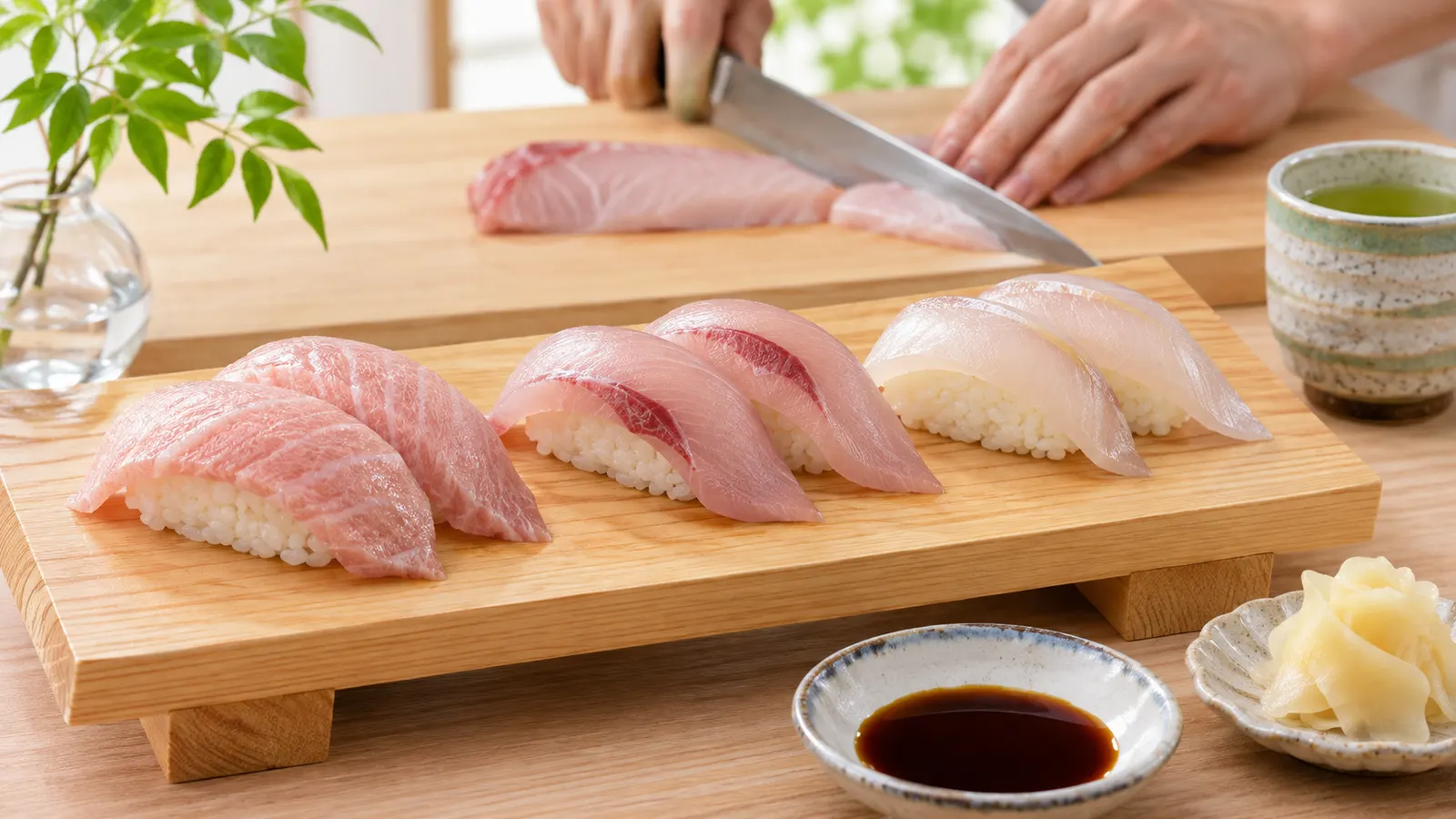
Hamachi, Buri or Kanpachi? Yellowtail Sushi
Hamachi, buri, kanpachi and hiramasa all appear as yellowtail on sushi menus. What each name means, how they taste and when to order them in Japan.
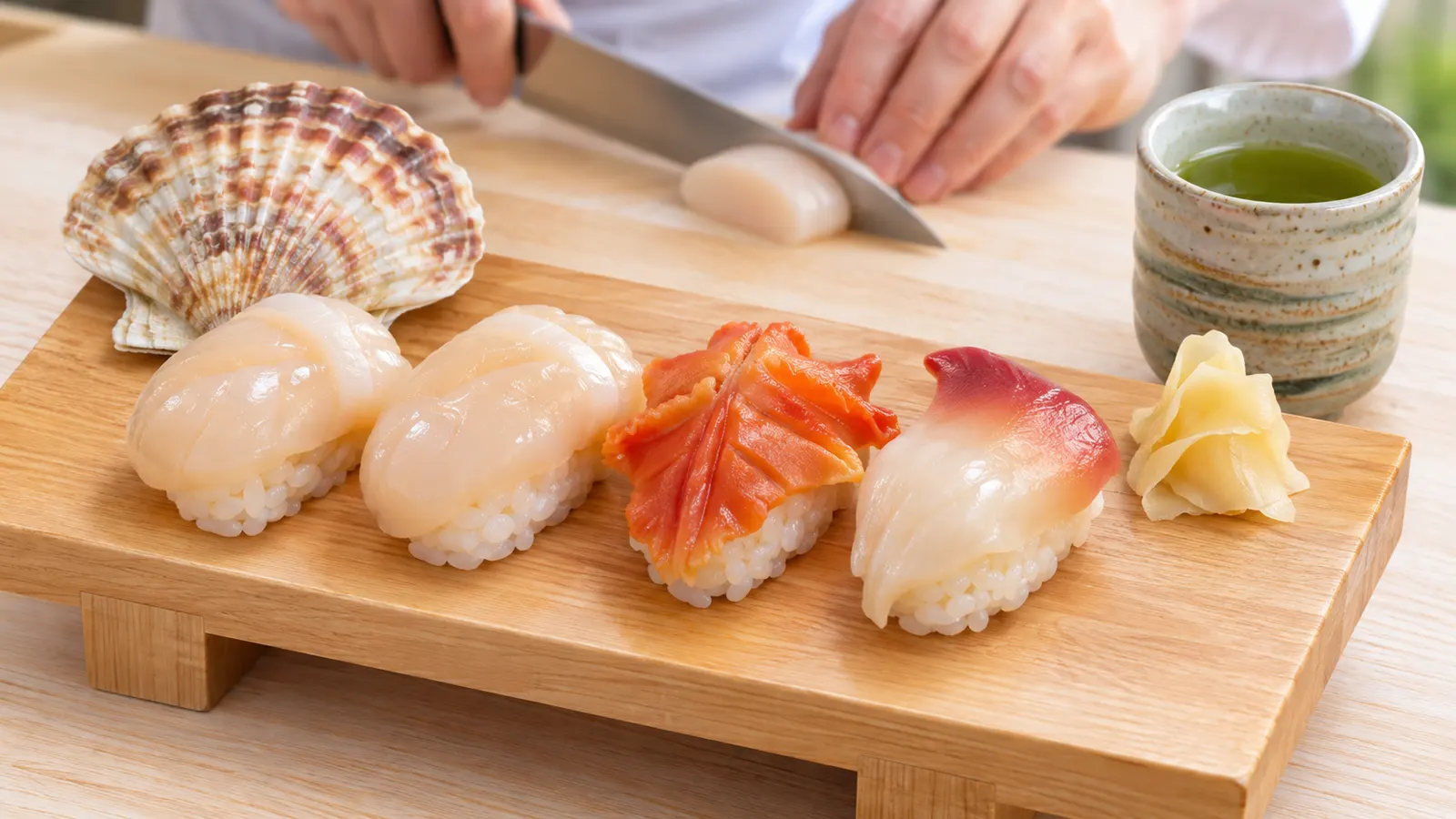
Hotate, Akagai, Hokkigai: Shellfish Sushi
Scallop, ark shell and surf clam are the shellfish you meet most at sushi counters in Japan. How they differ, when they are best and what to say on allergies.
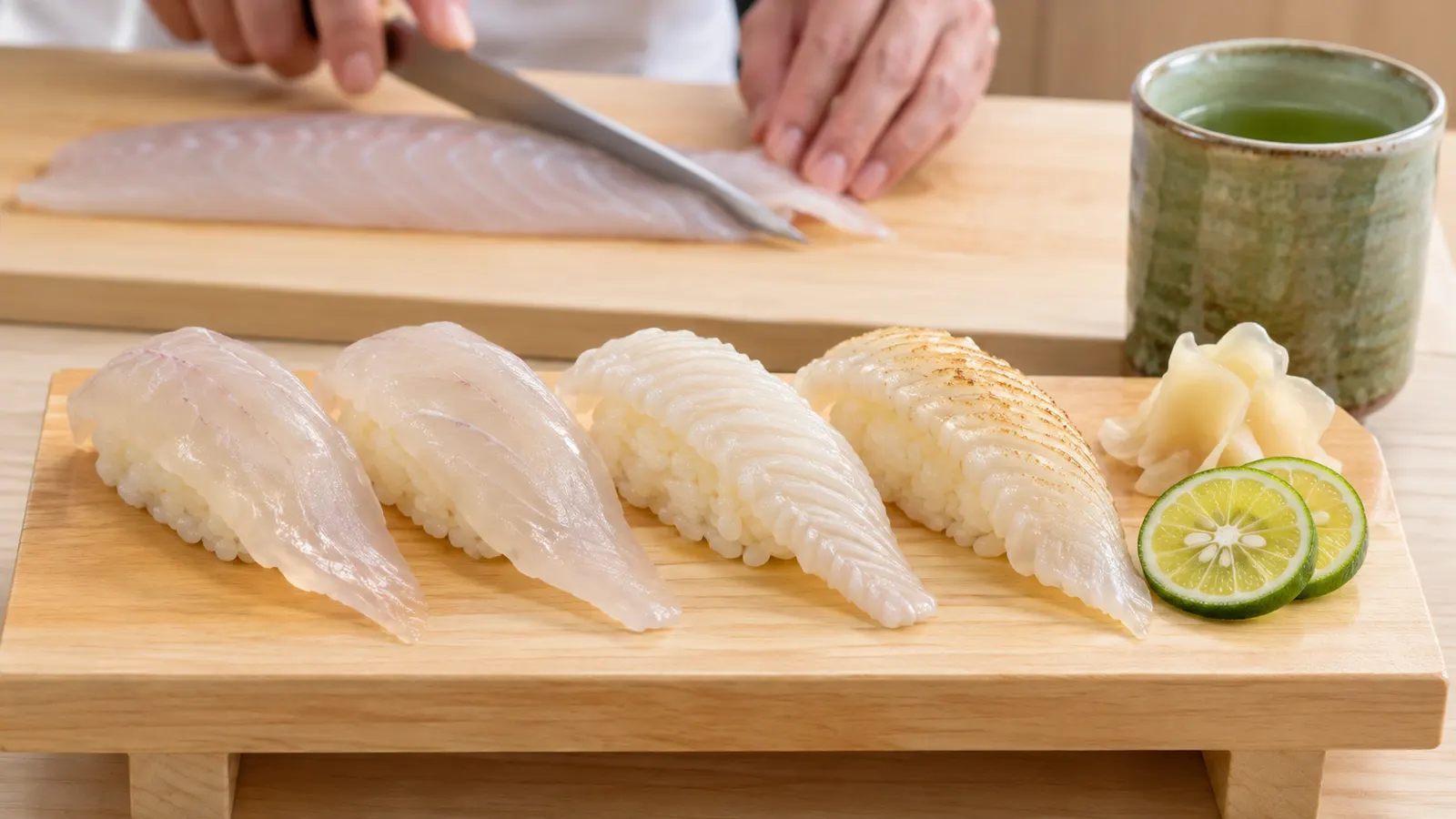
Hirame vs Karei: Flounder Sushi and Engawa
Hirame and karei are both flounder, but they differ in season, taste and price. How to tell them apart, what engawa is and how to order.