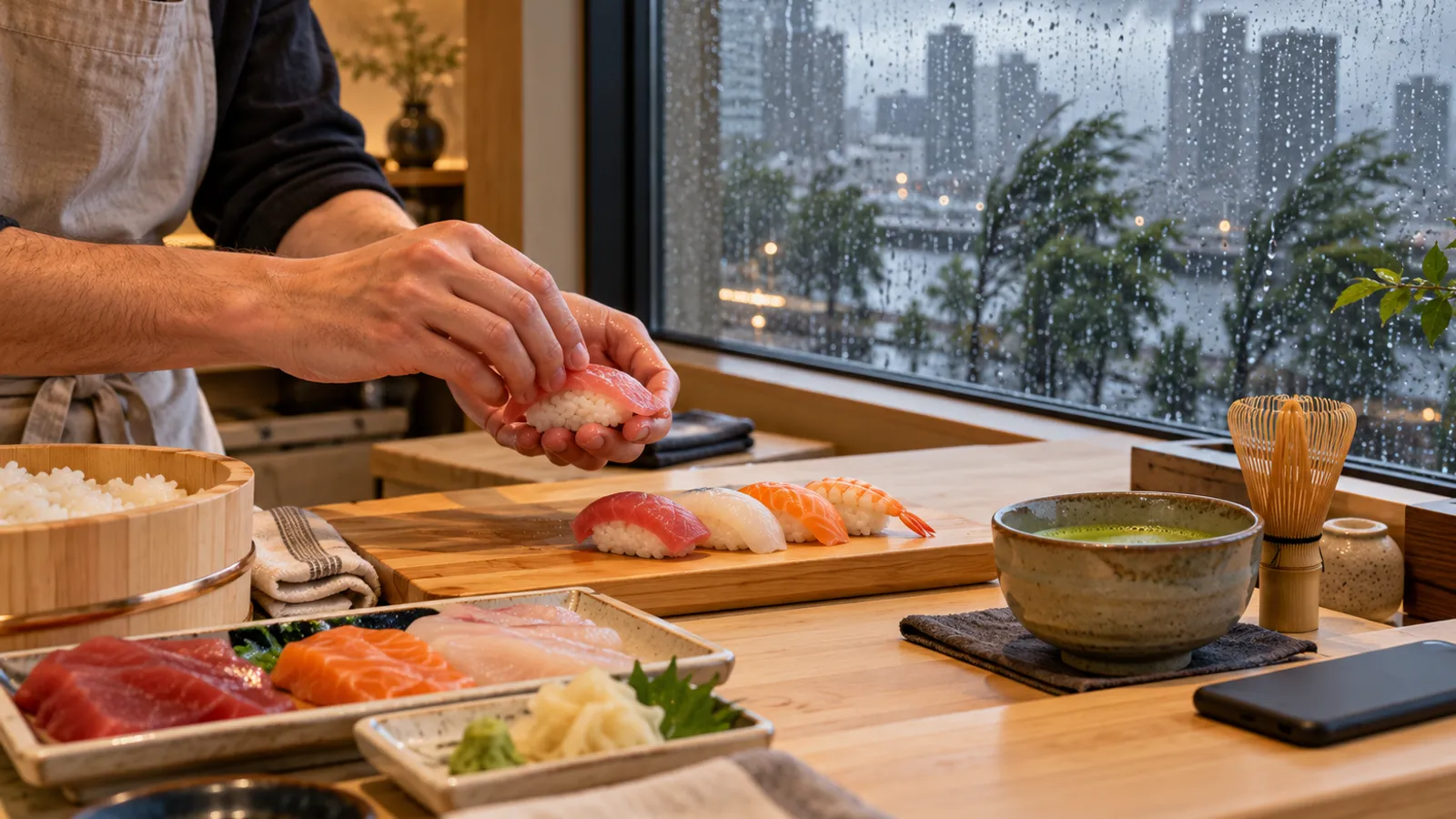
Typhoon Season and Your Tokyo Sushi Class
Typhoons are a normal part of late summer and autumn in Japan. Most of them approach between July and October, and August and September are usually the busiest months, but October storms still happen. In October 2019, for example, Typhoon Hagibis led railway companies around Tokyo to suspend many services in advance. If you have booked a class during this season, it helps to know what a forecast means for your reservation before the day arrives.
This guide explains how our signature sushi and matcha class in Asakusa handles bookings when a typhoon is forecast, which decisions sit with you and which sit with us, and what to check as the storm gets closer. It is not a live weather service. Always follow official information for the actual conditions.
Popular in Tokyo right now — our most recommended experience
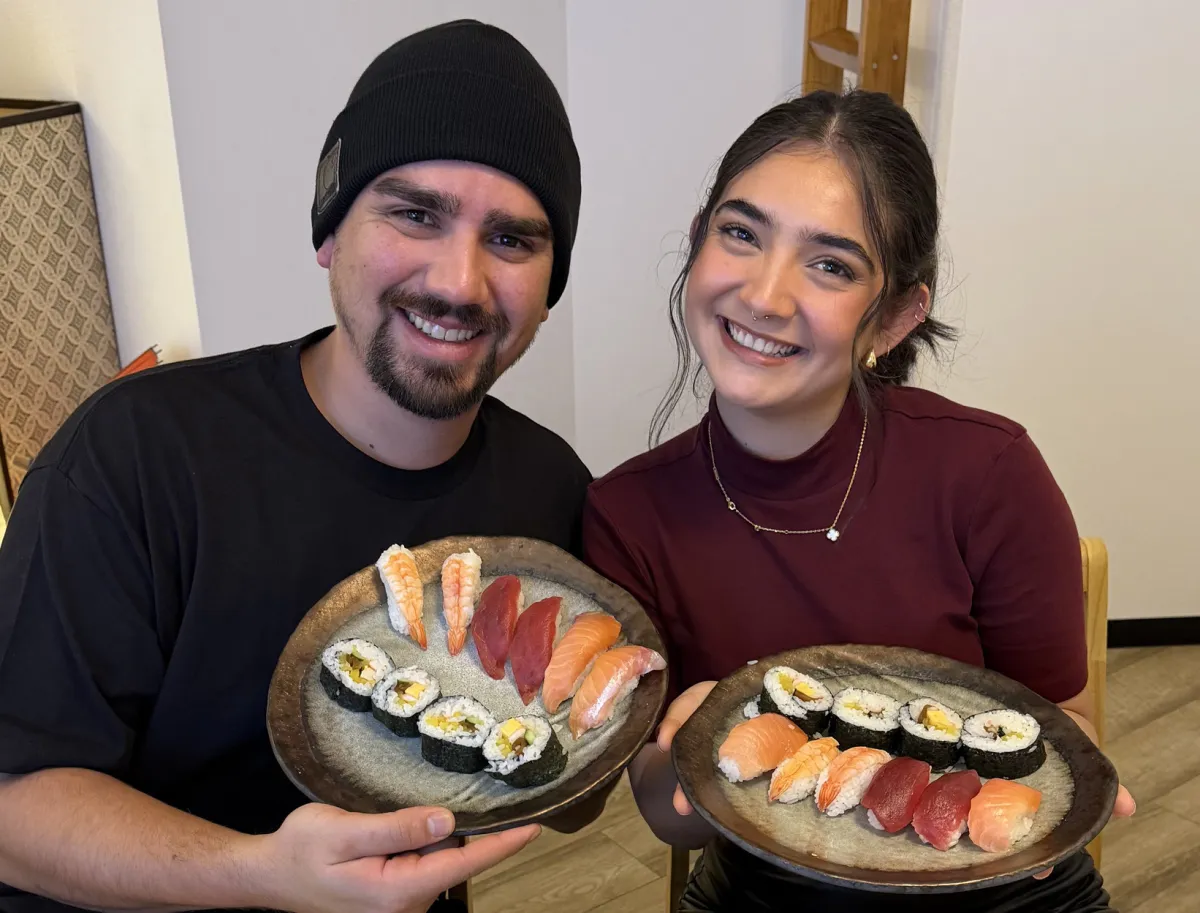
Tokyo Sushi Making Class : Sake Ceremony & Matcha Experience in Asakusa
Typhoons usually give you warning
Unlike a sudden shower, a typhoon is tracked for days. The Japan Meteorological Agency publishes forecast tracks up to five days ahead, and the expected timing becomes clearer as the storm approaches. Railway operators in the Tokyo area often announce planned suspensions in advance, sometimes the day before, so that people do not get stranded.
That warning time matters, because our booking rules are built around a 24-hour boundary. If you start watching the forecast a few days before your class, you will usually be able to make a calm decision while free changes are still possible, rather than on the morning itself.
The rules that apply to your booking
For bookings made on our website, the published terms are:
- 24 hours or more before the class: free cancellation with a full refund.
- 24 hours or more before the class: free rescheduling to another session, subject to availability.
- Within 24 hours: cancellations are charged in full, and no-shows are not refunded.
There is also a separate rule for disasters. Our terms state that if we cannot provide the programme because of a natural disaster, an epidemic or other force majeure, we will notify you, cancel the booking and refund the full fee. This is a decision made on our side about whether the class can run. It is different from a guest choosing not to travel while the class goes ahead.
If you booked through another platform, that platform's cancellation policy applies, so check your confirmation there. Our guide to cancelling or rescheduling a sushi class explains the 24-hour boundary and what to include in a change request in more detail.
Three days out: look at your options
When a typhoon appears in the forecast for the days around your class, start with your own trip rather than the storm.
- Check how flexible your days are. If you have another free morning or afternoon in Tokyo, moving the class to a date before or after the expected storm is often the simplest answer.
- Look at live availability. Open the class page and see which sessions are actually open on the dates you could use. Do not assume a particular slot will be free.
- Decide before the 24-hour deadline. Calculate it from the class start time in Tokyo time, not from your home time zone.
If you want to move, contact us with your booking details and the dates that would work for your whole group. A change is confirmed only when you receive our reply, so keep that message.
The day before: watch official sources
Within the final day, the useful information comes from official sources:
- the Japan Meteorological Agency for typhoon forecasts, warnings and advisories;
- the website or app of each railway company you will use, for planned suspensions and service changes;
- the Japan National Tourism Organization's Safety tips for travelers, which collects weather warnings and disaster information in English and other languages.
The Japan Visitor Hotline (050-3816-2787) also answers travellers' questions 24 hours a day in English, Chinese and Korean.
If we decide that the class cannot run because of the storm, we will contact you using the details on your booking. That is one reason to book with an email address you check while travelling.
If the class runs but you cannot travel safely
Sometimes the storm passes at night and trains recover by mid-morning; sometimes conditions remain difficult. If the class is going ahead but you do not think it is safe to travel, do not take the risk. Contact us as soon as you can with your booking details.
Please understand what that message can and cannot do. The late-cancellation rule still applies inside the 24-hour window, and contacting us is not the same as a refund. This is why the earlier decision point is so useful. Travel insurance may cover some weather disruption, depending on your own policy, so keep your confirmation and any written replies if you plan to claim.
On the day itself
If the class is running and conditions are safe:
- Allow extra travel time. Trains may run with delays or reduced frequency after a storm. We ask guests to arrive 10 minutes early in any case.
- Choose the shortest walk. Our studio is about 30 seconds from the North Exit of Tobu Asakusa Station and about two minutes from Exit 7 of the Ginza Line. Our directions from Asakusa Station show each approach.
- Bring a small bag for wet things. The class is indoors, under the railway tracks, so once you arrive the weather does not affect the cooking.
For ordinary rain rather than a typhoon, our rainy-day Asakusa plan suggests how to arrange sightseeing around an indoor class.
A short checklist for typhoon season
- Note the class start time and the 24-hour deadline in Tokyo time.
- Check the forecast from about five days before.
- If a storm is likely, look for another session in your trip and ask to move before the deadline.
- Keep the written confirmation of any change.
- On the day, follow official warnings and railway notices.
- If you cannot travel safely, tell us straight away.
Book with the season in mind
Typhoon season is also a pleasant time to visit Tokyo between storms, and an indoor class is easy to fit into a changeable week. If you are planning a visit in late summer or autumn, choose a date with a little slack around it, then check live sessions on the signature class page. Free cancellation and rescheduling up to 24 hours before the class give you room to adjust if the forecast changes.
Related Articles
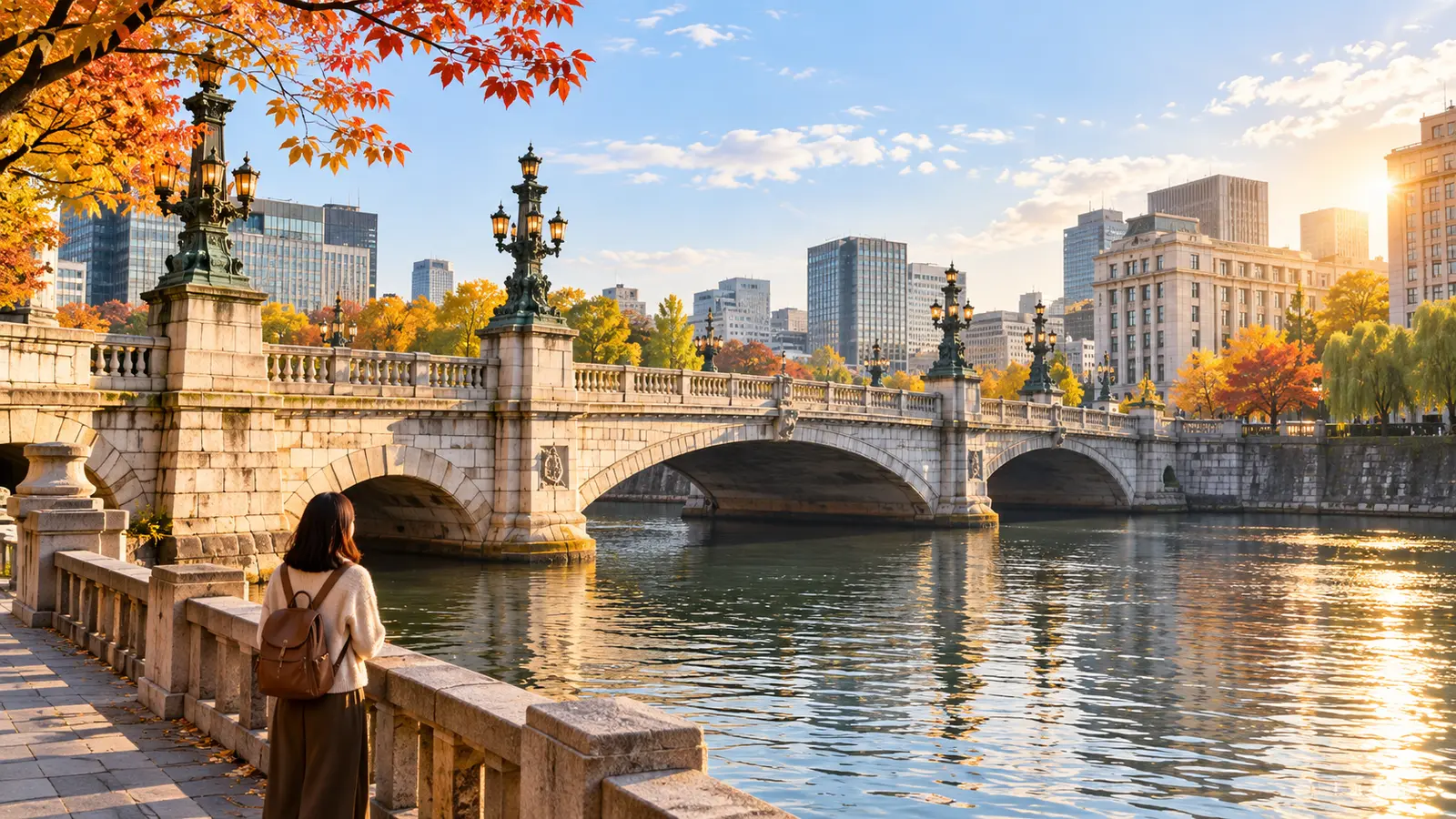
Nihonbashi and a Sushi Class in One Day
Pair Nihonbashi, where Edo's fish market stood, with a sushi class in Asakusa. Direct subway routes, what to see and two easy plans for one day.
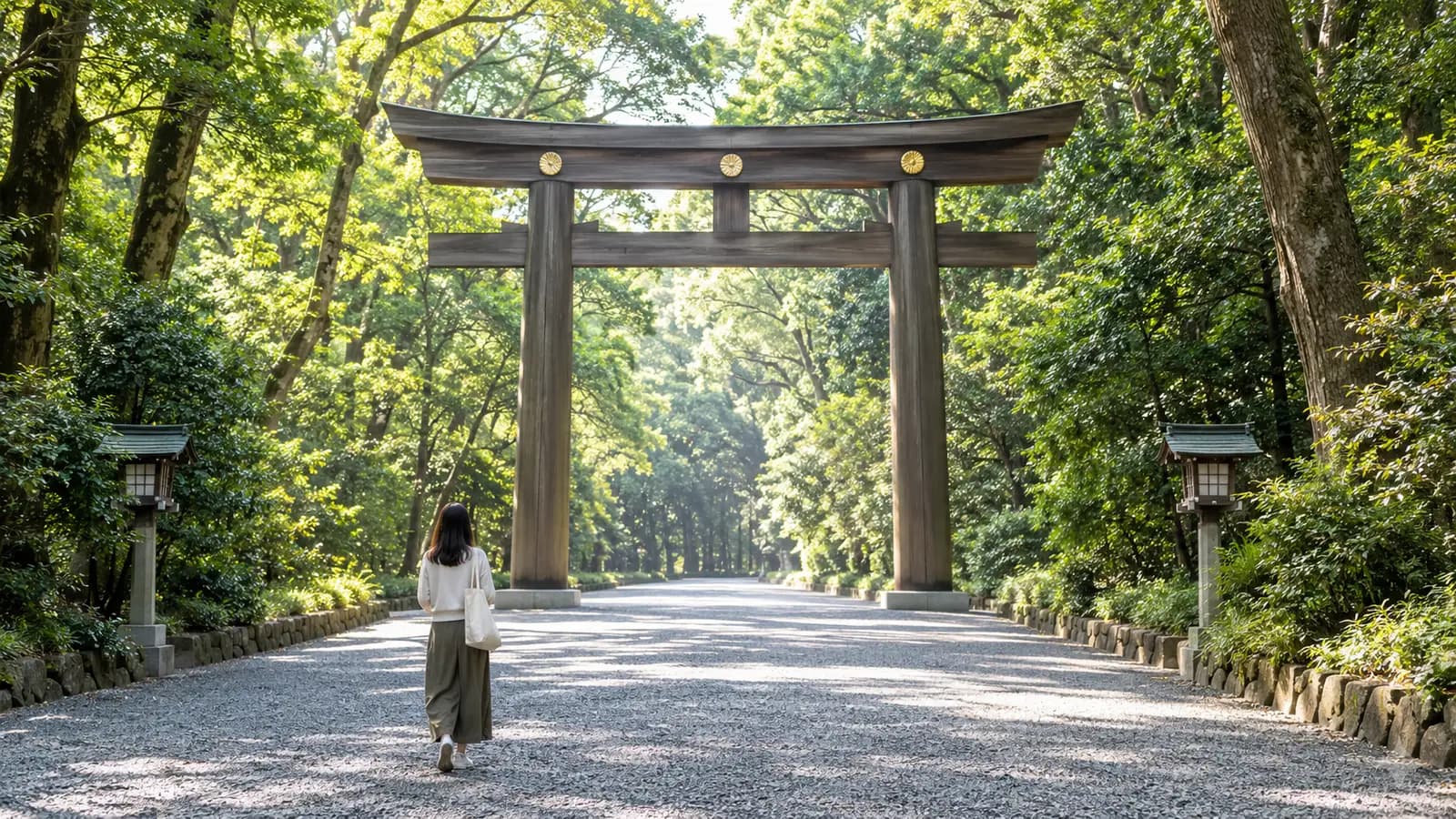
Harajuku and a Sushi Class in One Day
Pair Meiji Jingu, Takeshita Street and Omotesando with a sushi class in Asakusa. The direct Ginza Line route, shrine hours and two easy plans for one day.
Yanaka and a Sushi Class in One Day
Pair Yanaka's old streets, Yanaka Ginza and Nezu Shrine with a sushi class in Asakusa. Routes, museum closing days and two easy plans for one Tokyo day.