Ikura, Tobiko & Masago: Fish Roe Sushi Guide
Fish roe is everywhere in sushi, but the menu rarely tells you much. One piece arrives with large glossy orange pearls, another with tiny crunchy beads, and a roll outside Japan might be coated in bright orange, green or black eggs. They are not the same thing, and they do not taste the same.
This guide explains the roe you are most likely to meet in Japan: where each one comes from, what it tastes like, how to tell them apart on the plate, and how to eat roe sushi without the toppings ending up in your soy sauce dish.
Popular in Tokyo right now — our most recommended experience
Tokyo Sushi Making Class : Sake Ceremony & Matcha Experience in Asakusa
Why roe is usually served as gunkan
Loose roe cannot sit on a ball of rice the way a slice of fish does. That is why most roe sushi is served as gunkan maki, or "battleship roll": a band of nori wrapped around the rice so that it stands taller than the rice and holds the topping in place. You will also see roe in rice bowls, scattered over rolls and used as a garnish.
If you want the wider picture of the main sushi shapes, our guide to what to order and how to eat sushi for the first time is a good starting point.
Ikura: salmon roe
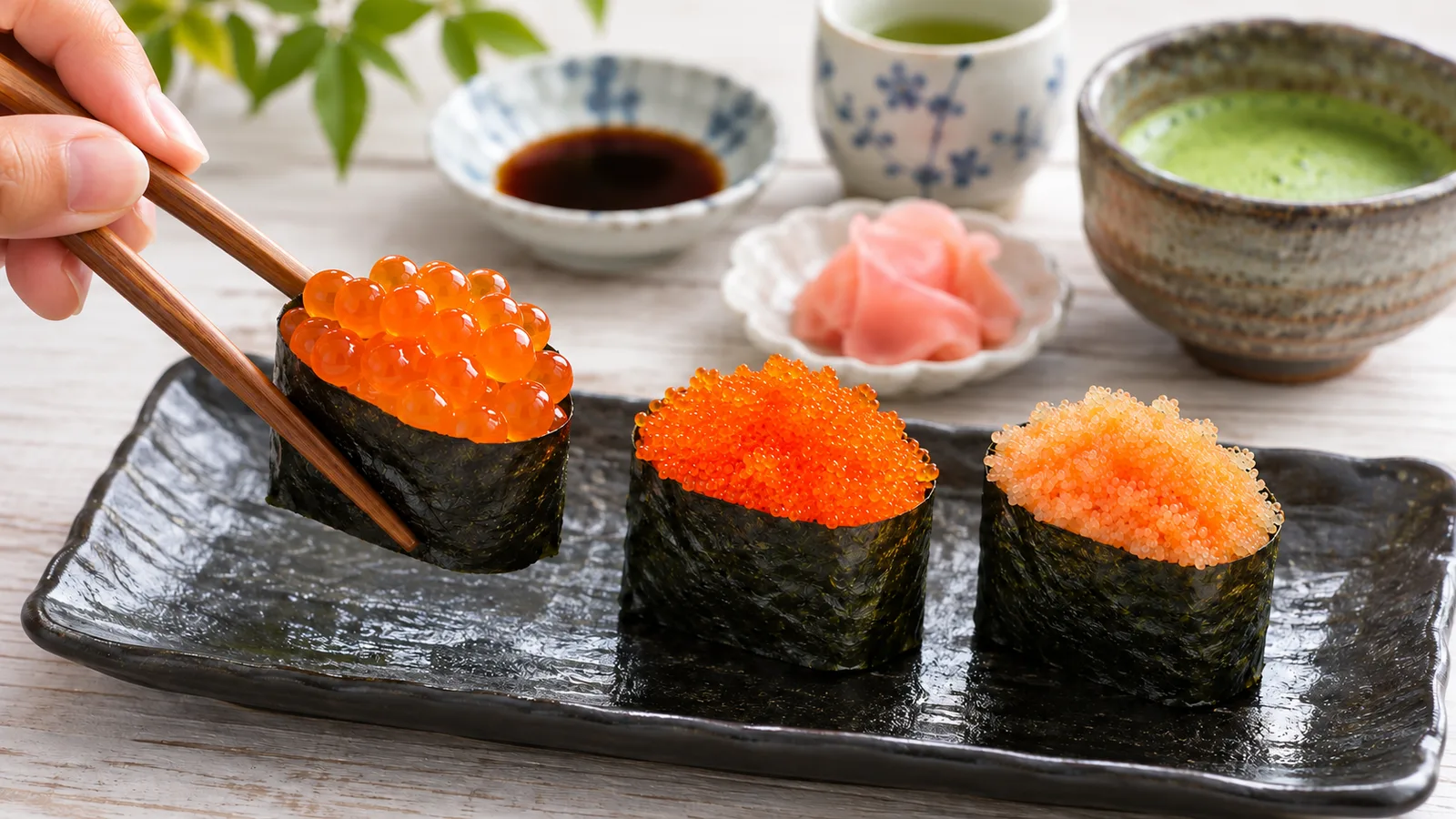
Ikura is salmon roe separated into individual eggs. Each egg is large, about the size of a small pearl, translucent and deep orange. When you bite, it bursts and releases a salty, rich liquid. Many people describe it as tasting of the sea, with a clean finish rather than a fishy one.
Before the eggs are separated, the roe sits in a membrane. In that form it is called sujiko, and it is sometimes served as it is, salted. Ikura is made by gently removing the membrane and loosening the eggs.
The most common style in Japan is ikura shoyu-zuke, ikura marinated in a soy-based seasoning. Japan's agriculture ministry lists it as a traditional dish of Hokkaido, where families make it from fresh roe in autumn and keep some for the New Year. Fresh salmon roe is mainly an autumn product, roughly September to November, while marinated or frozen ikura is available all year.
The word ikura is said to come from the Russian ikra, a general word for fish roe. In Japanese, though, ikura means salmon roe specifically.
How to spot it: the largest, shiniest eggs on the counter, usually piled high on a gunkan or a rice bowl called ikura-don.
Tobiko: flying fish roe
Tobiko is flying fish roe. The eggs are much smaller than ikura, firm and noticeably crunchy, with a mild, slightly sweet and salty taste. The appeal is mainly the texture: a gentle pop with each bite.
Its natural colour is a pale orange-gold, but tobiko is often coloured or flavoured, so you may see it bright orange, green with wasabi, black with squid ink or yellow with yuzu. Outside Japan, it is often used as a colourful coating or garnish on rolls, including many California rolls. In Japan you will usually find it on gunkan, on rolls, or as a garnish.
How to spot it: small, uniform beads with a clear crunch, often in vivid colours.
Masago: capelin roe
Masago is the roe of capelin, a small fish in the smelt family. The eggs are smaller and softer than tobiko, with less crunch and a slightly milder taste. Because capelin is plentiful, masago costs less, and it is often used on rolls and in sauces, especially outside Japan.
Masago is also usually coloured, so at first glance it can look almost the same as tobiko. The difference shows when you eat it: masago is finer and softer, while tobiko clearly crunches. If the texture matters to you, ask which one is used. Menus outside Japan do not always make the distinction.
How to spot it: very fine, soft eggs, often mixed into a sauce or spread thinly over a roll.
Mentaiko and tarako: pollock roe
Tarako is salted pollock roe, usually kept whole in its membrane. Mentaiko, or karashi mentaiko, is tarako marinated with chilli. It has Korean roots and became a well-known speciality of Hakata in Fukuoka after the Second World War.
You are more likely to meet these in onigiri, pasta and rice dishes than on a classic sushi counter, but some shops serve mentaiko on gunkan or in rolls, sometimes lightly seared.
Kazunoko: herring roe for the New Year
Kazunoko is herring roe. Unlike the others, the eggs are pressed together into a firm, golden piece with a distinctive crunchy, slightly squeaky texture. It is a standard dish in osechi, the New Year meal, because its name can be read as "many children", a wish for a large and prosperous family.
Kazunoko does appear on some sushi menus, especially around the end of the year, but most visitors meet it in New Year food.
A note on uni
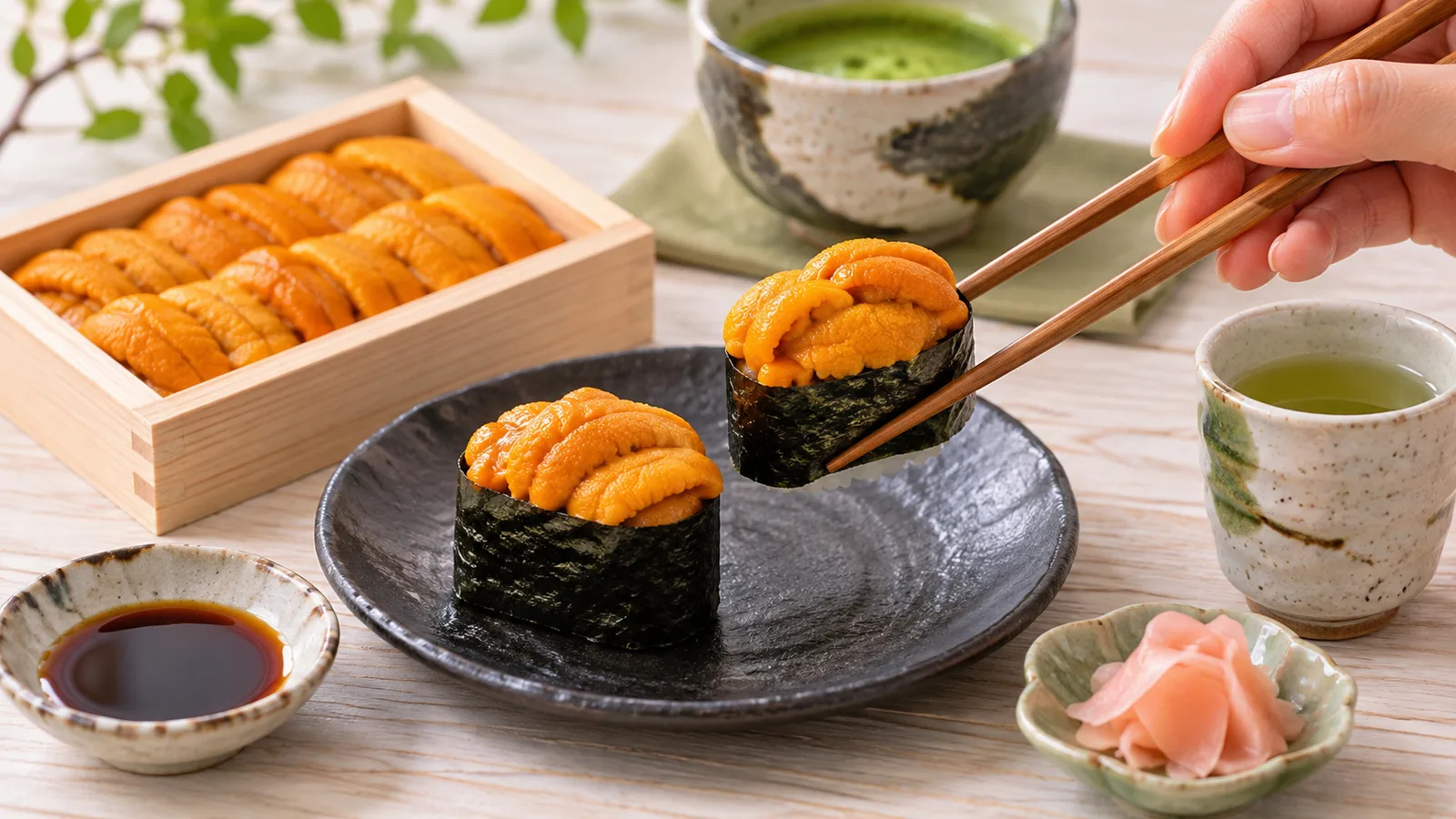
Uni, or sea urchin, is often called "roe" on English menus, but it is the sea urchin's gonads, not eggs. It tastes and feels completely different from fish roe: soft, creamy and sweet rather than bead-like.
How to eat roe sushi
Eat a gunkan in one bite if you can. The roe tends to spill if you bite it in half.
Do not turn a gunkan upside down to dip the rice in soy sauce. The roe will fall off and the rice will soak up too much. Instead, add a few drops of soy sauce on top, or dip a slice of pickled ginger into the soy sauce and use it to brush a little over the roe. If the chef has already seasoned the piece, as is common with marinated ikura, eat it as it is.
Wasabi is optional. Roe already tastes salty, so it needs very little seasoning.
Allergies and other cautions
Fish roe can cause allergic reactions, and an allergy to roe does not always go together with an allergy to fish. Some people react to roe but not to fish, and the reverse also happens. In Japan, ikura and salmon are both on the official list of ingredients that food makers are encouraged to label. If you have any seafood or roe allergy, ask your doctor and tell the restaurant before you order. Our guide to planning a sushi class with food allergies explains how to describe an allergy clearly.
Roe on sushi is usually served raw, and coloured roe may contain added flavourings. If you are pregnant or avoid raw seafood for medical reasons, follow the advice of your doctor and your own country's guidance. Our article on joining a sushi class while pregnant covers questions to ask.
Making sushi with us in Asakusa
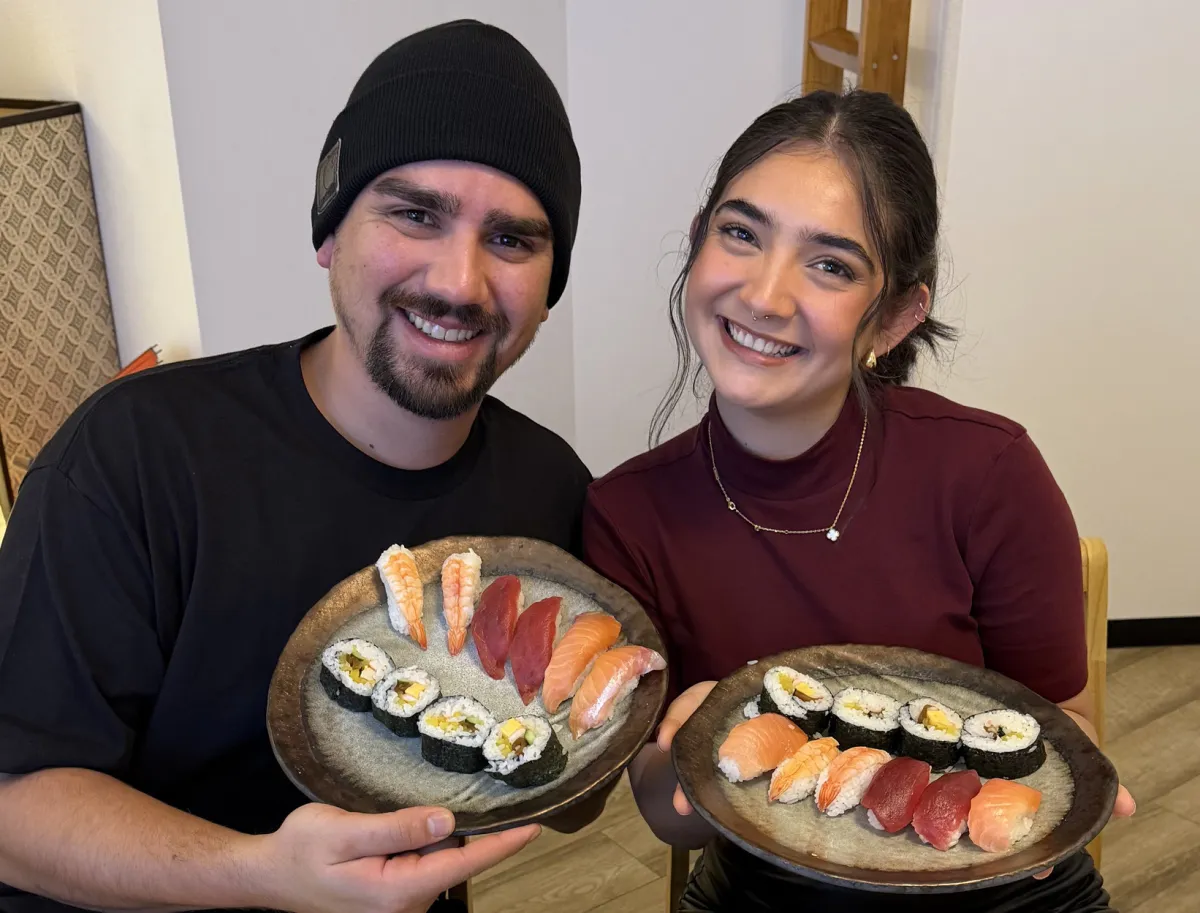
Our signature sushi and matcha class is a 90-minute shared class in Asakusa. With an English-speaking instructor, you make nigiri and maki rolls from fresh ingredients, toast with sake, eat what you make and finish by whisking your own matcha. The class focuses on those basics and does not promise any particular roe as a topping, but learning how rice, nori and toppings fit together makes it much easier to understand gunkan and roe sushi when you order them later.
If you have a roe or seafood allergy, list it when you book so the team can tell you what is possible on your date.
Quick answers
Is ikura the same as caviar? No. Caviar traditionally means sturgeon roe. Ikura is salmon roe.
Which is crunchier, tobiko or masago? Tobiko. Masago is finer and softer.
Why is tobiko sometimes green or black? It is coloured and flavoured, for example with wasabi or squid ink.
Is uni fish roe? No. It is the sea urchin's gonads.
Ready to try the basics yourself? Choose a date on the class page.
Related Articles
What Is Uni? A Guide to Sea Urchin Sushi
What uni is, how it tastes, the main types you see in Japan, why some tastes bitter, and how to order and eat sea urchin sushi with confidence.
Hamachi, Buri or Kanpachi? Yellowtail Sushi
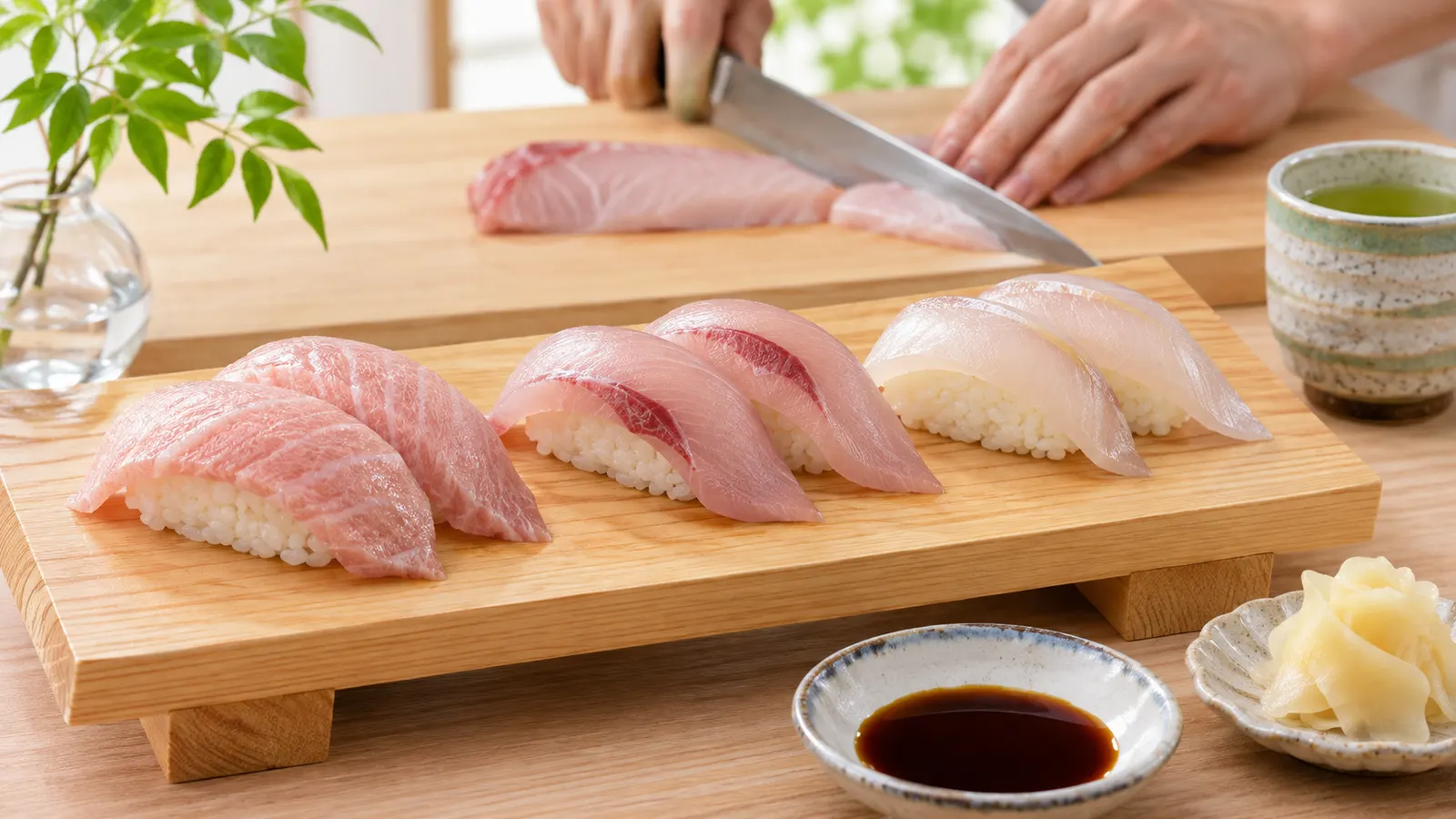
Hamachi, buri, kanpachi and hiramasa all appear as yellowtail on sushi menus. What each name means, how they taste and when to order them in Japan.
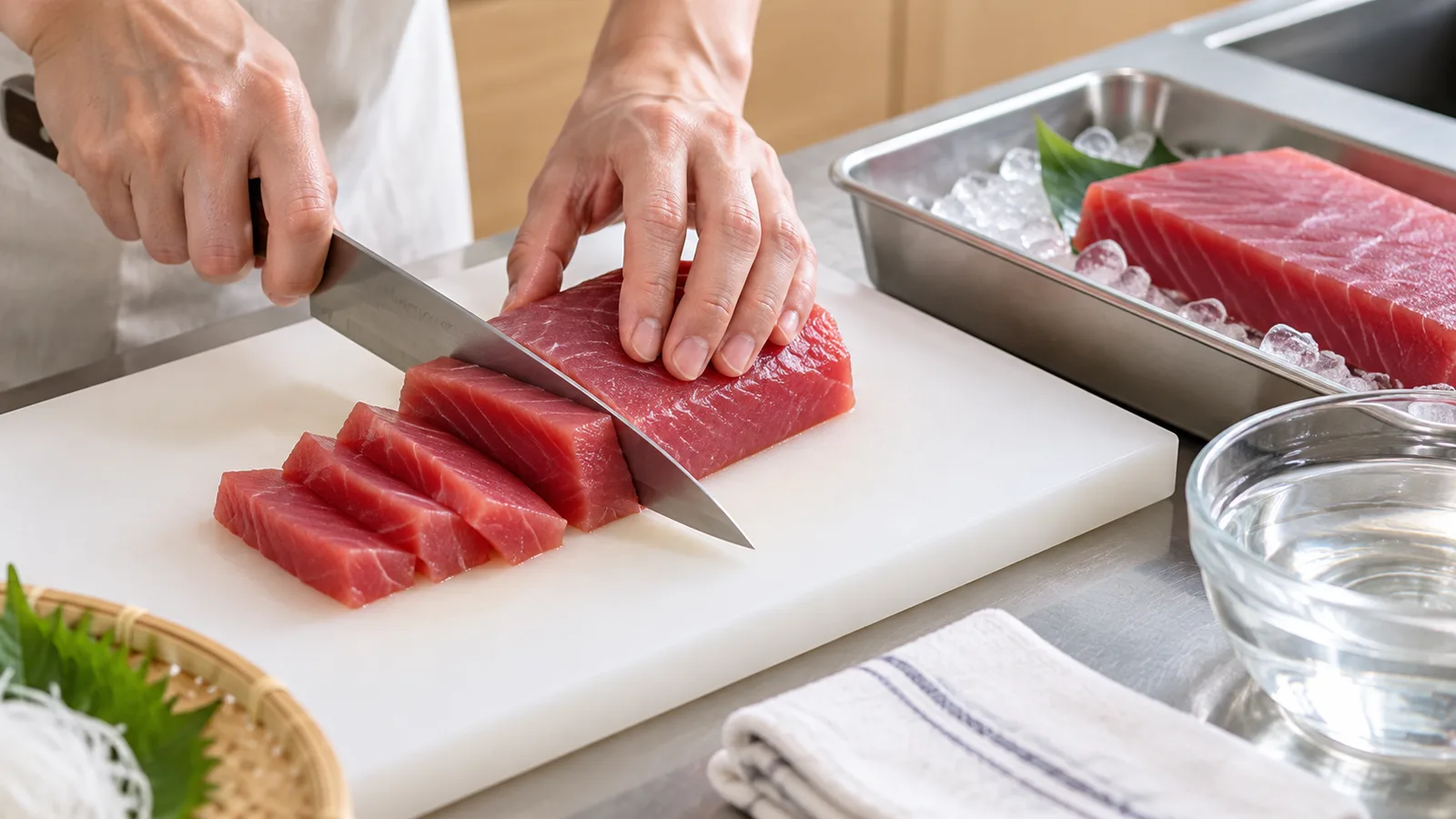
Is Raw Fish Safe to Eat in Japan?
Worried about raw fish before a sushi meal or class in Japan? What the real risks are, what Japan's health ministry advises, and the questions to ask first.