Kinmedai vs Nodoguro: Red Fish on Sushi
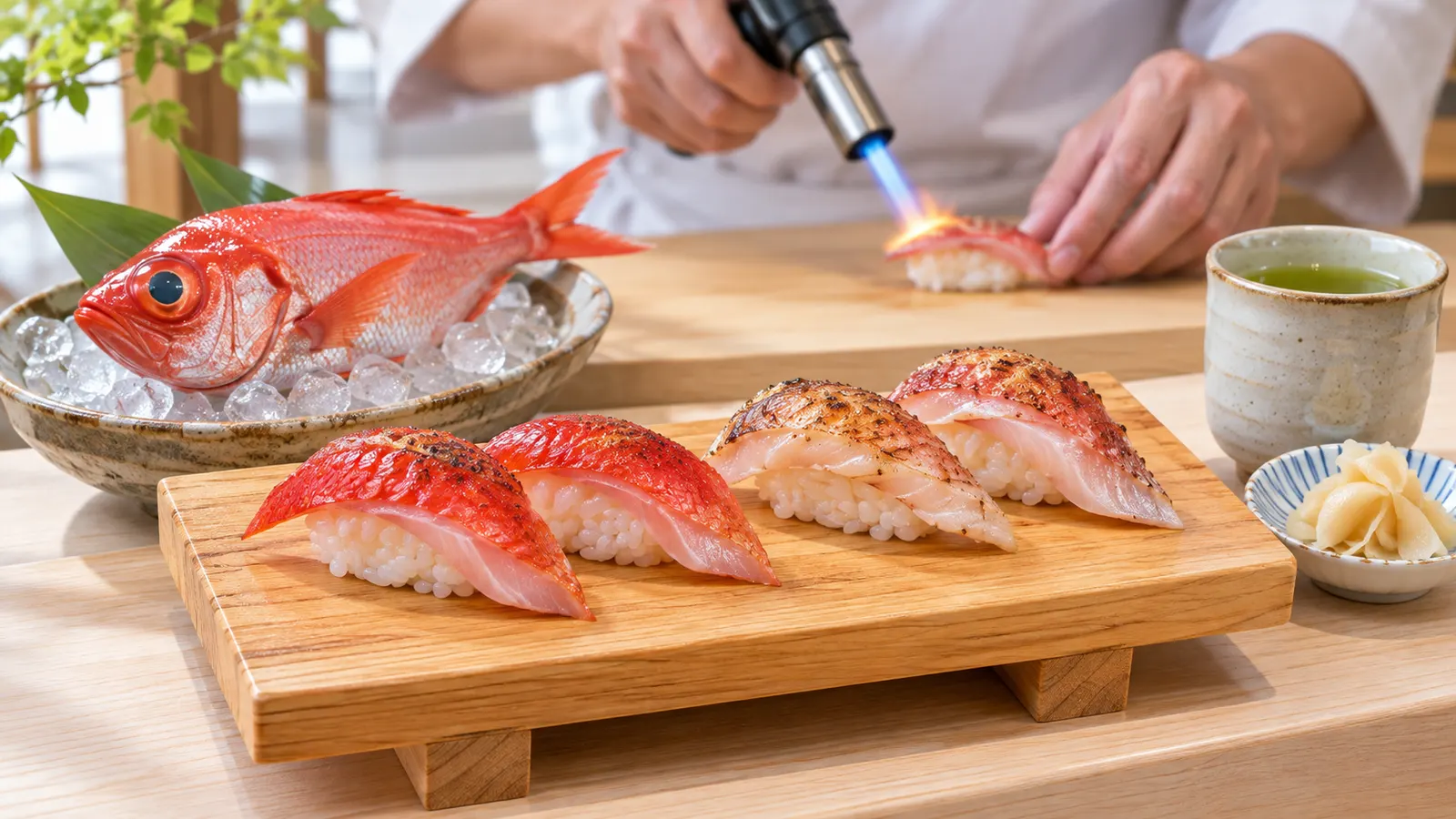
At a good sushi counter in Japan, you may see two bright red fish on the chef's board or on the handwritten list of the day: kinmedai and nodoguro. Both have red skin, rich white flesh and a reputation as luxury fish, and both are often served with the skin lightly seared. They are easy to confuse, but they are different fish with different stories.
This guide explains what each one is, where the best-known catches come from and how you are likely to meet them on sushi rice.
Popular in Tokyo right now — our most recommended experience
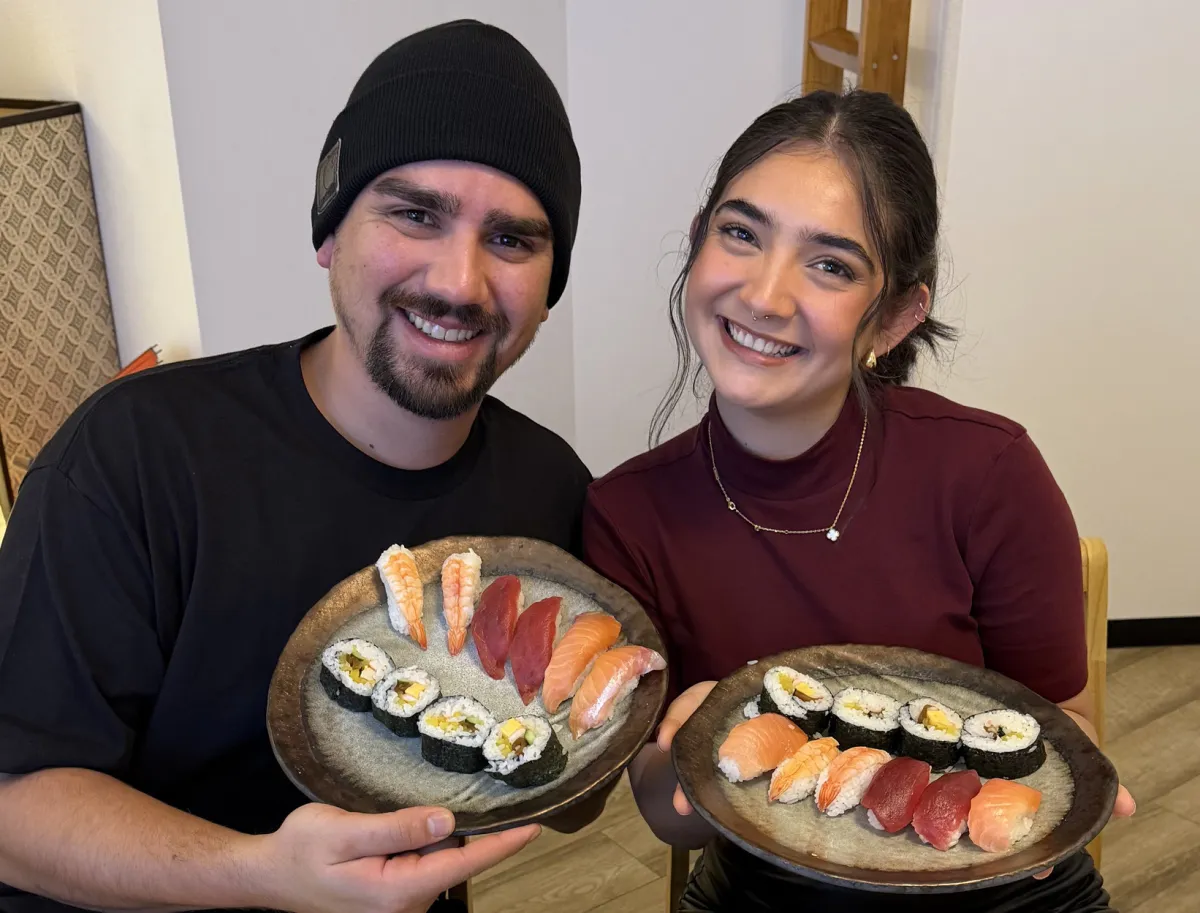
Tokyo Sushi Making Class : Sake Ceremony & Matcha Experience in Asakusa
Two red fish, neither a sea bream
Kinmedai (Beryx splendens) is often translated as "splendid alfonsino" or "golden-eye snapper". Despite the tai (sea bream) in its name, it belongs to a different family from the true red sea bream, madai. The fish guide Zukan-bouz notes that many fish borrow tai in their name simply because sea bream is so highly regarded in Japan.
Nodoguro is the popular name for akamutsu (Doederleinia berycoides), known in English as the blackthroat seaperch. According to Zukan-bouz, it belongs to yet another family, and is related to neither madai nor kinmedai.
| Kinmedai | Nodoguro (akamutsu) | |
|---|---|---|
| Name means | "Golden-eye sea bream" | "Black throat" |
| Typical depth | Adults roughly 200 to 800 m | Roughly 100 to 200 m |
| Size | Can exceed 50 cm | Around 40 cm |
| Look | Bright red, very large golden eyes | Red-pink, black lining inside the mouth |
| On sushi | Often seared skin; also a classic simmered fish | Often seared skin; also simmered or grilled |
Kinmedai: the golden-eyed deep-sea fish
Kinmedai lives deep, and its colour is a deep-sea adaptation. The Kasai Rinkai Aquarium explains that red light does not reach far into the sea, so a red body looks dark in deep water and blends into the background. Its huge eyes have a reflective layer behind them that helps it see in low light, which gives them their golden shine and the fish its name.
The best-known catches come from the Izu Peninsula and the Boso Peninsula, near Tokyo:
- Shimoda, in Shizuoka, describes itself as having the largest kinmedai landings in Japan.
- Inatori kinme, also from Shizuoka, is a brand of line-caught kinmedai landed and shipped on the same day, according to the prefecture.
- Choshi tsuri-kinme, from Chiba, is line-caught at what the prefecture calls the northern limit of kinmedai fishing, with a standard of at least 500 g per fish.
Zukan-bouz describes kinmedai as good all year round, and domestic fish as expensive. Locally, the most famous way to eat it is not sushi at all but nitsuke, simmered in a sweet soy broth; its fat keeps the flesh moist even in a strong sauce.
Nodoguro: the "black throat" of the Sea of Japan
Open a nodoguro's mouth and you will see why it has its nickname: the lining is black. The city of Hamada in Shimane explains that the name comes from this, and that it is called nodoguro in Shimane.
Nodoguro is famous for its fat. Ishikawa Prefecture's fish guide says its body fat is said to exceed 20%, comparable to tuna toro, and gives its best season as September to December. Zukan-bouz suggests autumn to spring, but adds that the flavour stays good through the year.
Two regions are especially proud of it:
- Hamada's "Donchicchi nodoguro" brand covers high-freshness fish of 80 g or more caught by the town's offshore trawlers between August and May.
- Ishikawa, on the Sea of Japan coast, lands nodoguro at ports including Kanazawa and Wajima.
Prices for nodoguro are high. Zukan-bouz notes that large line-caught fish commonly sell for more than ¥10,000 per kilogram at market.
How chefs serve them as sushi
Both fish have white flesh, tasty skin and plenty of fat, and the sushi pages of Zukan-bouz show both prepared in similar ways:
- Aburi (seared skin). The skin side is quickly seared with a torch or over charcoal, then the fish is cut and placed on rice. Zukan-bouz notes that kinmedai skin has strong umami and gains a toasted aroma when seared. Our guide to aburi sushi explains the technique in more detail.
- Kawashimo. Hot water is poured over the skin to soften it, and the fish is cooled before slicing. Zukan-bouz's sushi guide shows kinmedai served this way.
- Plain nigiri. Zukan-bouz's sushi guide also shows kinmedai served as ordinary nigiri, without searing.
Zukan-bouz describes kinmedai's fat as melting and sweet, and Ishikawa compares nodoguro's richness to tuna toro. Whether either is on the menu depends on the day's catch, so ask the chef. If you want to know which other fish are at their best in the cold months, see our guide to winter sushi fish in Tokyo.
A note for pregnant travellers
Japan's Ministry of Health, Labour and Welfare advises pregnant women to limit certain fish because of mercury. Kinmedai is on the list of fish to eat no more than about 80 g per week, along with swordfish and bluefin tuna. Nodoguro is not on that list. If you are pregnant and planning a sushi day, our guide to a sushi class while pregnant covers what to tell us when you book.
How to order them
You do not need much Japanese:
- Ask "Kinme arimasu ka?" or "Nodoguro arimasu ka?" ("Do you have…?").
- Look for 金目鯛 (kinmedai) or のどぐろ / 赤むつ on the day's board.
- If a piece is listed at "market price" (jika), ask the price first. Nodoguro in particular can be expensive.
Learn the technique behind the luxury pieces
Our signature sushi and matcha class in Asakusa does not use kinmedai or nodoguro. The nigiri toppings are lean tuna, medium-fatty tuna, salmon and shrimp, and you also roll a futomaki. In about 90 minutes you join a sake toast, learn to shape rice for nigiri with an English-speaking instructor, eat what you made and whisk your own matcha.
What you take away is the skill behind every piece on a sushi counter: shaping rice so that a slice of fish sits neatly on top. After that, watching a chef sear a piece of nodoguro and press it onto rice feels very different. Check the booking calendar for dates and times, then save the luxury red fish for a sushi dinner later in your trip.
Related Articles
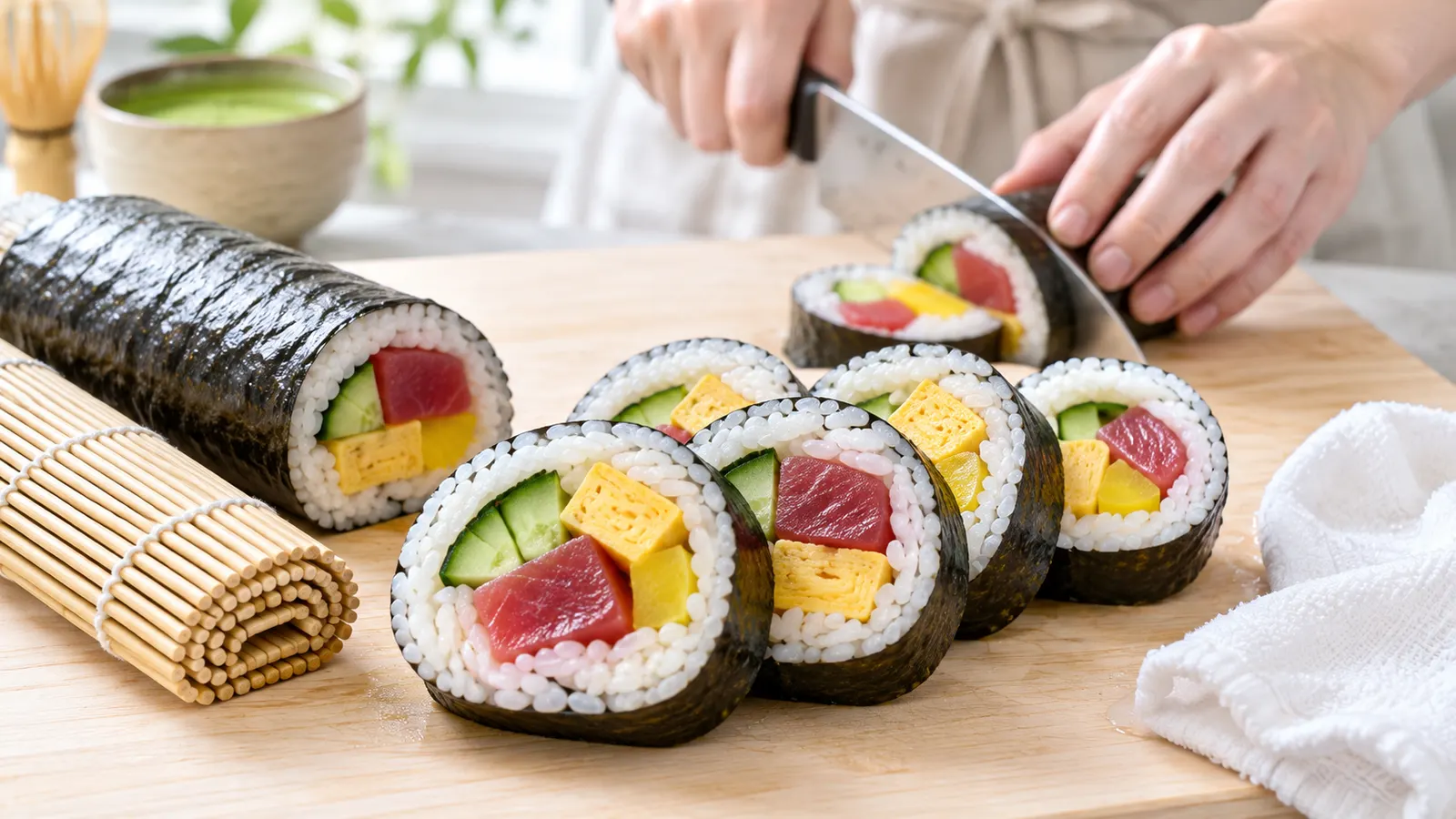
Futomaki: Japan's Thick Sushi Roll Explained
What goes into a Japanese futomaki, how it differs from thin rolls and California rolls, where you meet it in Japan and how to roll one tight.
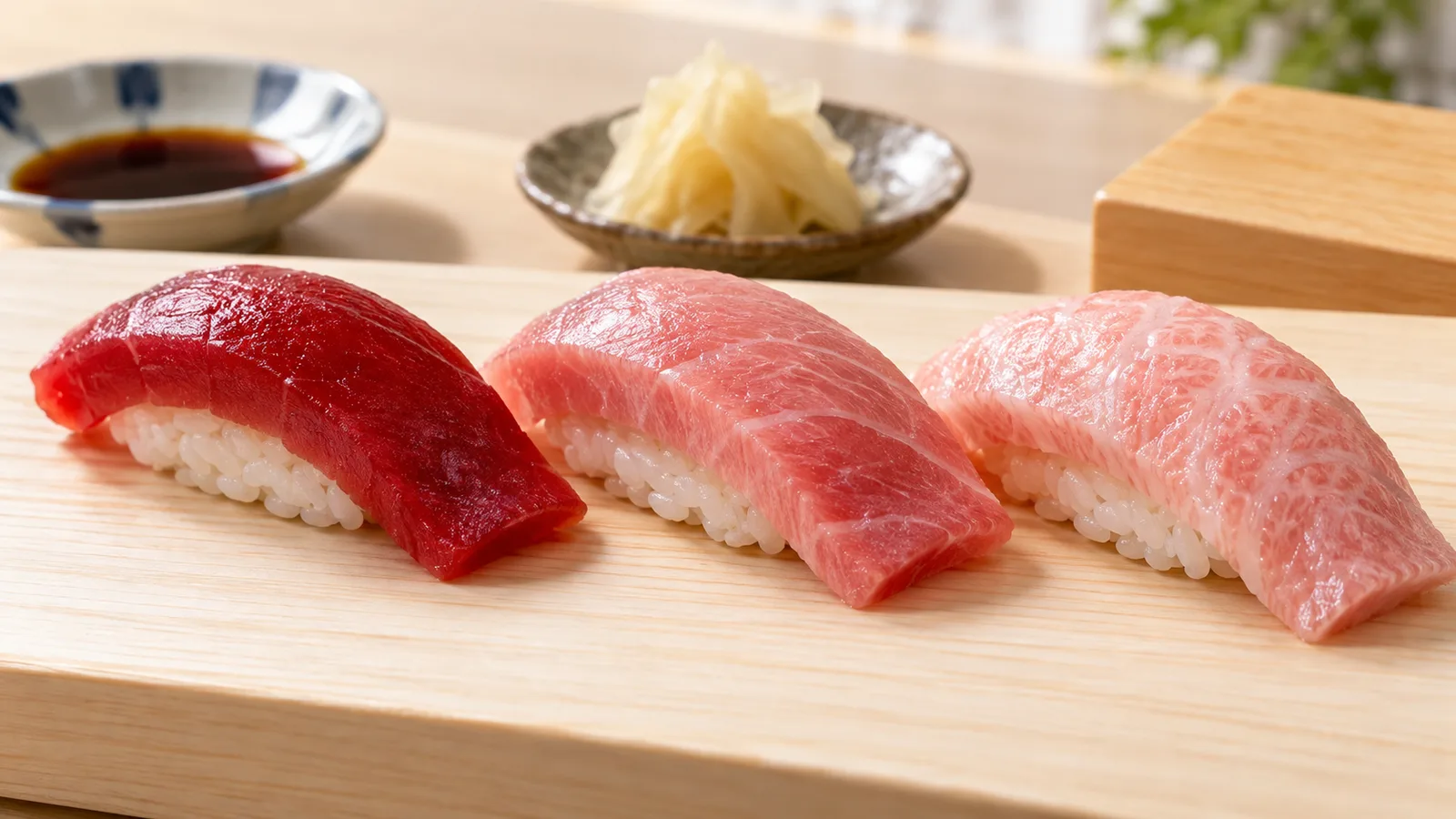
Akami, Chutoro or Otoro? Choosing Tuna Sushi
Akami, chutoro and otoro come from different parts of the same tuna. How they differ in fat, flavour and price, and how to choose and order them in Japan.
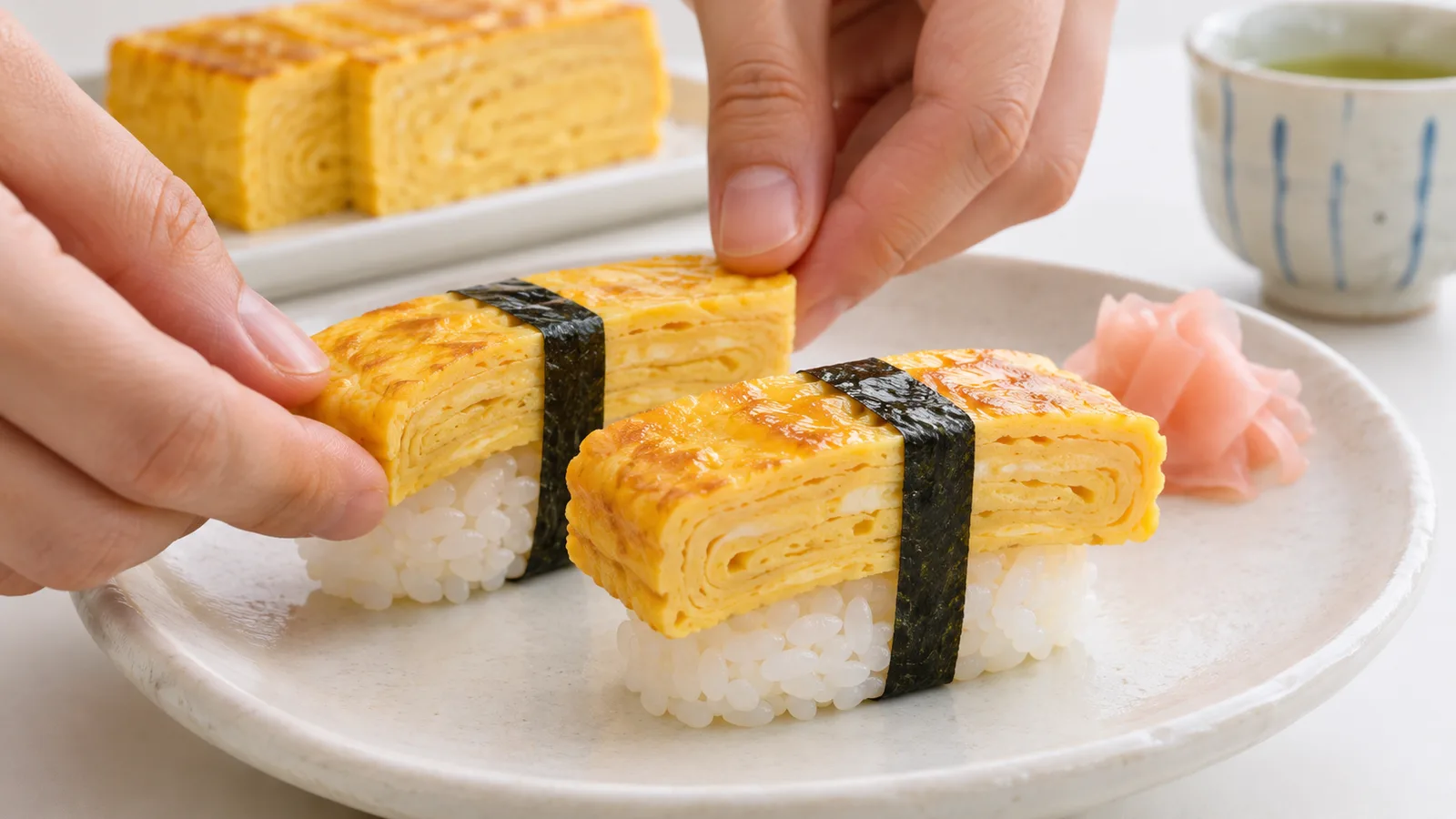
What Is Tamago Sushi? Sweet Egg Explained
Tamago is the sweet, layered omelette on sushi rice. What it is made of, how it is cooked, how to eat it, and what to know if you avoid raw fish or eggs.