What Is Tamago Sushi? Sweet Egg Explained
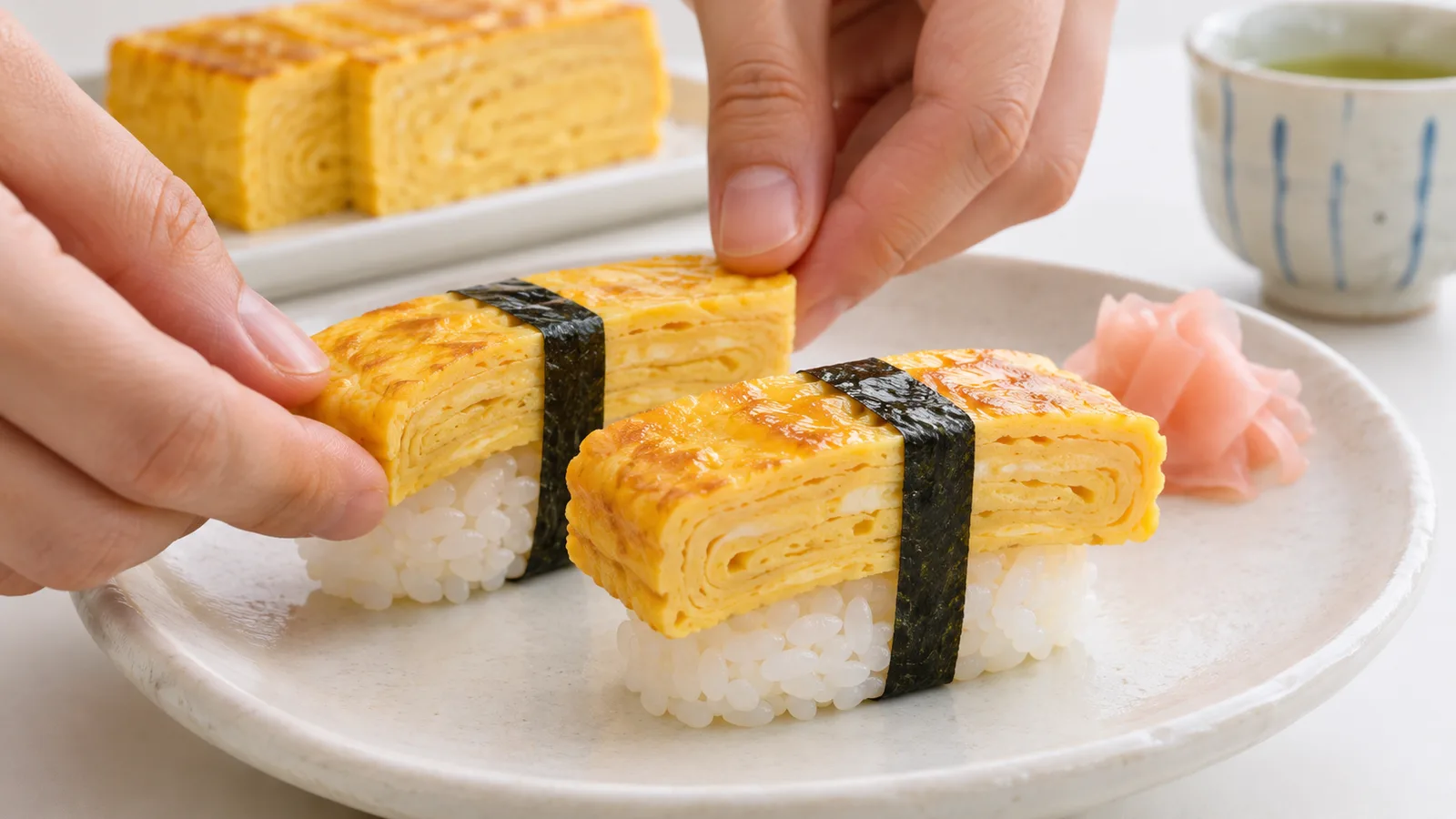
On many sushi platters in Japan, one piece looks different from the rest: a yellow block of omelette on a mound of rice. That is tamago sushi, and it often surprises first-time visitors because it can be sweet. Some restaurants add a thin band of nori to hold it in place, but the presentation varies.
This guide explains what tamago is, how it is made, how it differs across Japan, and why it is a useful piece to know about if someone in your group does not eat raw fish.
Popular in Tokyo right now — our most recommended experience
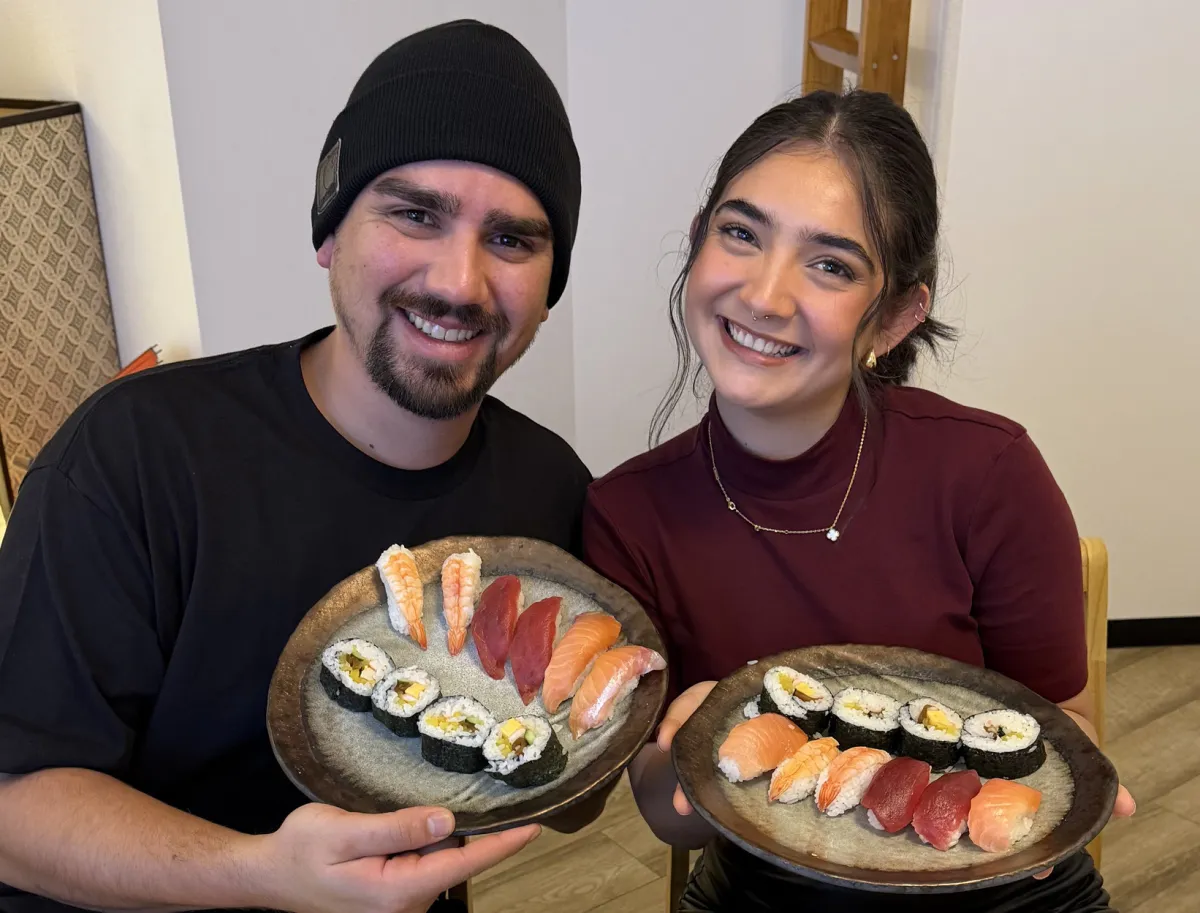
Tokyo Sushi Making Class : Sake Ceremony & Matcha Experience in Asakusa
What tamago means
Tamago simply means "egg" in Japanese. On a sushi menu it refers to tamagoyaki, a rolled omelette. Beaten, seasoned egg is cooked in a thin layer, rolled up, then another layer is poured in and rolled around the first, again and again, until the omelette is thick. Cut across, it shows fine layers like the pages of a closed book.
For sushi, the omelette is sliced into a rectangle and placed on hand-shaped rice as nigiri, often with a strip of nori wrapped around the middle to hold it on. Strips of tamagoyaki are also a common filling in rolls.
Why it tastes sweet
The seasoning varies by cook, but it usually includes some combination of sugar, mirin, soy sauce, salt and dashi stock. The food company Kikkoman describes two broad regional styles:
- Kanto style (eastern Japan, including Tokyo): sugar is added and the omelette is cooked until lightly browned. This is often called atsuyaki tamago, "thick-cooked egg", and it is the sweet style most visitors meet at sushi counters in Tokyo.
- Kansai style (western Japan, including Osaka and Kyoto): the egg is seasoned mainly with dashi and cooked without browning. This is dashimaki tamago, softer and more savoury, and it is often served on its own with grated daikon radish.
Some traditional sushi restaurants go further and make a dense, almost cake-like tamago by blending ground shrimp or white fish into the egg. If you see a very smooth, deeply golden slice with almost no visible layers, that is likely the style you are looking at. It is worth asking, because it means the "egg" piece contains seafood.
The pan and the technique
Tamagoyaki is cooked in a special rectangular pan. Kikkoman notes that the classic eastern pan is square, while the western one is a longer rectangle. The straight sides give the omelette its neat block shape.
The technique is mostly about heat and patience. The pan has to be hot enough to set each thin layer quickly but not so hot that it burns the sugar. The cook pushes the rolled part to one side, oils the pan, pours in more egg, lifts the roll so the new egg runs underneath, then rolls again. At home, a small square or rectangular pan and a pair of chopsticks are enough to practise. Kitchenware shops on Kappabashi Street near Asakusa sell these pans if you want to take one home.
You can also find freshly cooked tamagoyaki sold as a snack at some market stalls. Our comparison of Tsukiji Outer Market and a sushi class covers grazing there.
How to eat tamago sushi
Tamago nigiri is eaten like any other nigiri: in one bite, with your fingers or chopsticks. It is already seasoned, so it needs little or no soy sauce. If you do dip, touch only the edge of the omelette, not the rice, so the piece holds together. Our sushi etiquette guide covers soy sauce, wasabi and ginger in more detail.
There is a popular saying that you can judge a sushi restaurant by its tamago, because a well-made omelette takes time and care. Treat that as a nice story rather than a rule. Many excellent restaurants buy their tamago from specialist makers, and that tells you nothing bad about the fish.
Tamago if you do not eat raw fish
Tamago is fully cooked, so it can be an option for people who avoid raw fish, including some children and cautious eaters. It is not suitable for anyone with an egg allergy, and the seasoning is still worth checking. Together with cucumber rolls, cooked shrimp and other cooked toppings, it can make a sushi meal enjoyable without any raw fish at all.
Three cautions apply:
- Egg allergy. Egg is one of the allergens that Japanese labelling rules require on relevant packaged foods, but restaurant and cooking-class dishes are not covered by the same labels, and tamago is mostly egg. If anyone has an egg allergy, tell the provider before booking and confirm the ingredients and preparation directly. Our guide to food allergies and a sushi class explains what to tell us.
- Not vegan, and not always vegetarian. Tamago contains egg, and dashi is often made with bonito flakes, which are fish. If you are vegetarian, ask how it is seasoned.
- Seafood in some styles. As above, the cake-like style can contain shrimp or fish paste.
If raw fish is the main concern for your group, our guide to a sushi class without raw fish explains how to ask for alternatives.
Make sushi yourself in Asakusa
In our signature sushi and matcha class, you shape nigiri and roll maki with English-speaking instruction, toast with sake, eat what you make and whisk your own matcha. The 90-minute class is designed for complete beginners. Toppings depend on the menu for your date, so we do not promise tamago on every plate. If you have a preference, an allergy or a no-raw-fish requirement, tell us when you book and we will tell you what we can prepare.
Once you have shaped rice with your own hands, the small yellow piece on the platter will look a little different. It is one of the simplest-looking pieces of sushi, and one of the most patient to make.
Related Articles
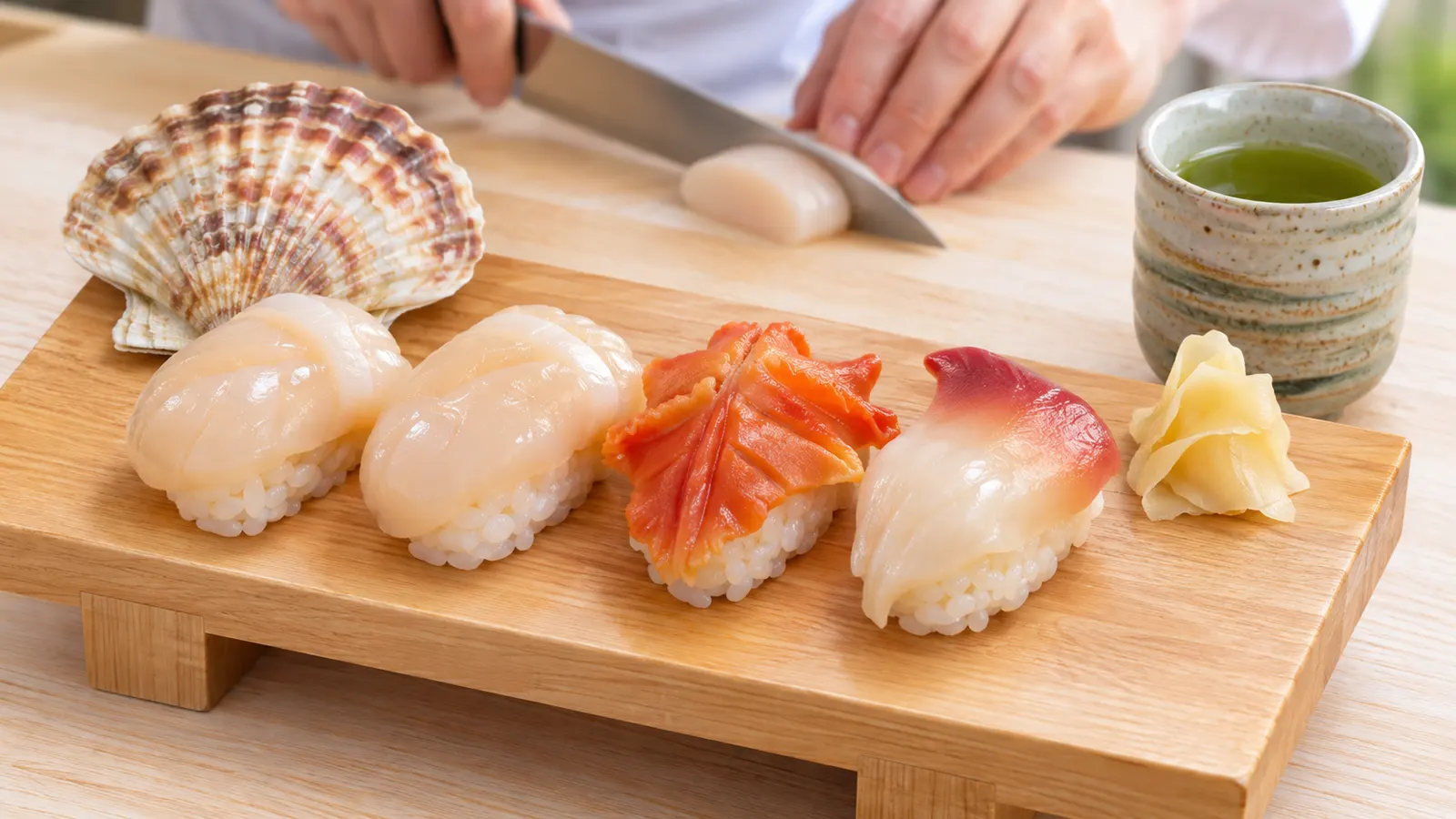
Hotate, Akagai, Hokkigai: Shellfish Sushi
Scallop, ark shell and surf clam are the shellfish you meet most at sushi counters in Japan. How they differ, when they are best and what to say on allergies.

Ikebukuro and a Sushi Class in Asakusa
Staying in Ikebukuro? How to reach a sushi class in Asakusa, how long it takes, and two ways to fit Sunshine City, Myonichikan and Zoshigaya into one day.
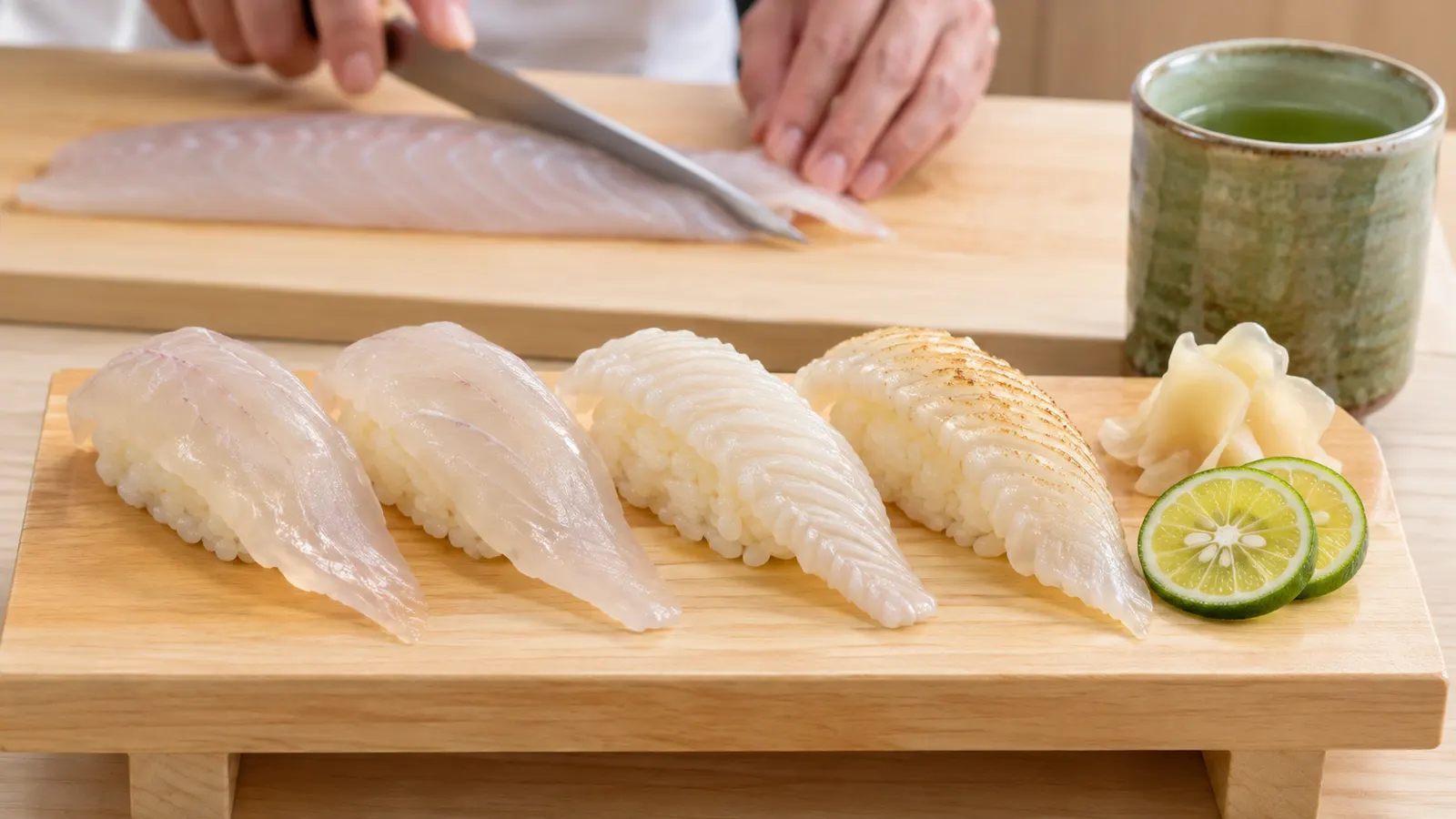
Hirame vs Karei: Flounder Sushi and Engawa
Hirame and karei are both flounder, but they differ in season, taste and price. How to tell them apart, what engawa is and how to order.