Sushi Class in Tokyo With Teenagers
Teenagers are often the hardest members of a family trip to plan for. Activities designed for small children can feel too young, and some adult experiences are built around things they cannot do yet. A hands-on sushi class sits comfortably in between: teenagers usually have the patience and fine motor control to make neat nigiri and maki, and they get to eat the result. There are still a few practical points that are different from booking for younger children or for adults, and it helps to know them before you choose a date.
This guide covers how teenagers are counted when you book, what happens at the sake toast, how to choose between a shared and a private class, and what to ask if a teenager wants to join without a parent.
Popular in Tokyo right now — our most recommended experience
Tokyo Sushi Making Class : Sake Ceremony & Matcha Experience in Asakusa
Ticket categories: 13 and over book as adults
On our booking page, children aged 4 to 12 have their own category, and guests aged 13 and over are booked as adults. For a family with a 12-year-old and a 14-year-old, that means the two siblings fall into different categories even though they will do exactly the same things in class. Enter each person in the correct category when you book, so the total you see and the number of places reserved match your party.
Younger siblings are covered by the same rules: children aged 4 and above can take part in the regular class, and children aged 3 and under can come along with a parent free of charge if you let us know when booking. Our guide to kids in a shared or family private class goes into more detail for families with small children.
The sake toast and the drinking age in Japan
Our signature sushi class includes a sake toast, and adults can have sake refilled during the class. The legal drinking age in Japan is 20, not 18, as Japan's official tourism guide points out. That applies to visitors too, including those from countries where 18-year-olds can drink.
In practice this is simple: water and Japanese green tea are included in the class, so guests under 20 take part in the toast with a non-alcoholic drink. It helps to mention the ages of everyone in your party when you book, especially for 18- and 19-year-olds who may be booked alongside adults. For more on taking part without drinking, see a sushi class without drinking alcohol.
What teenagers usually enjoy about the class
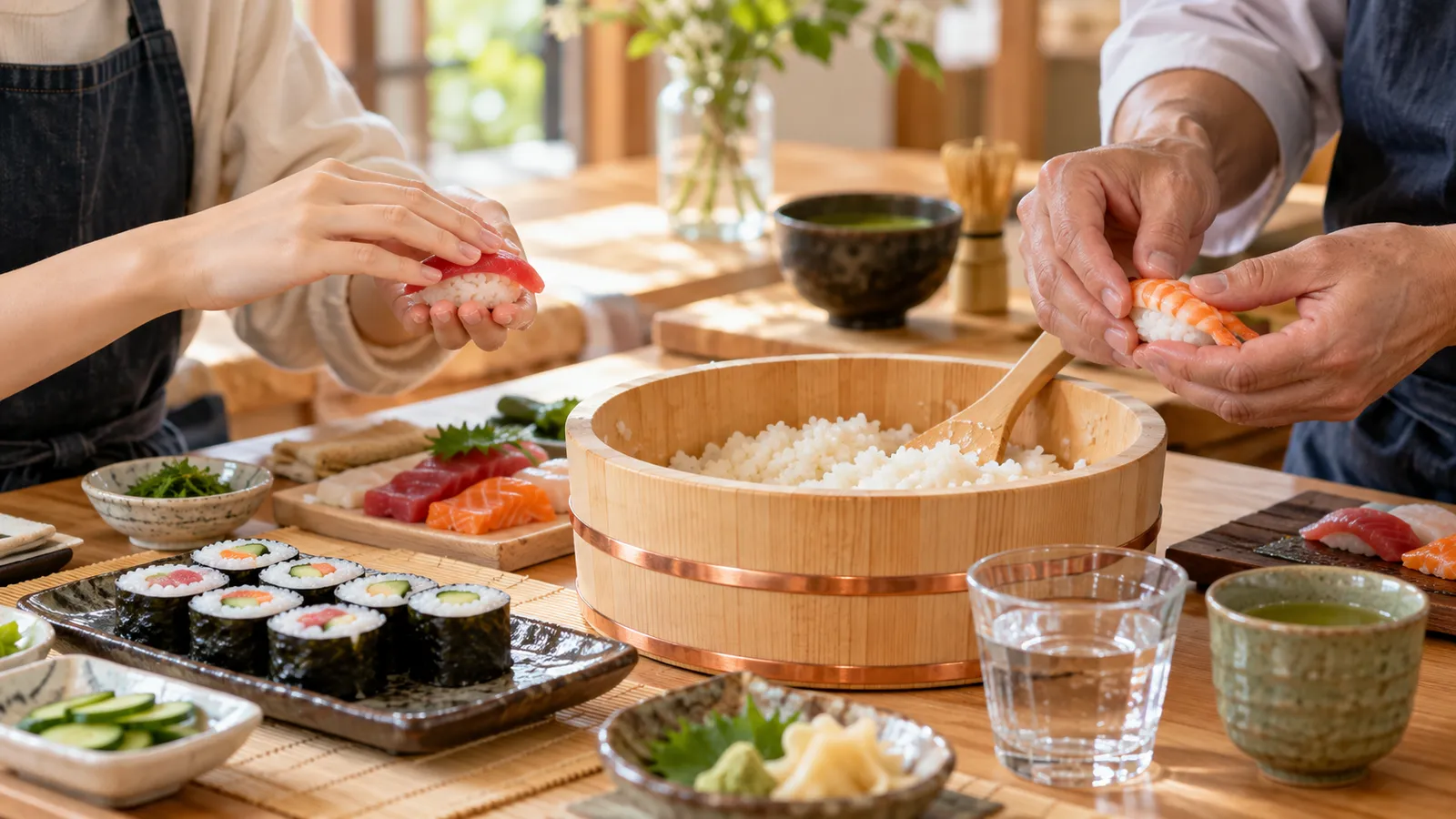
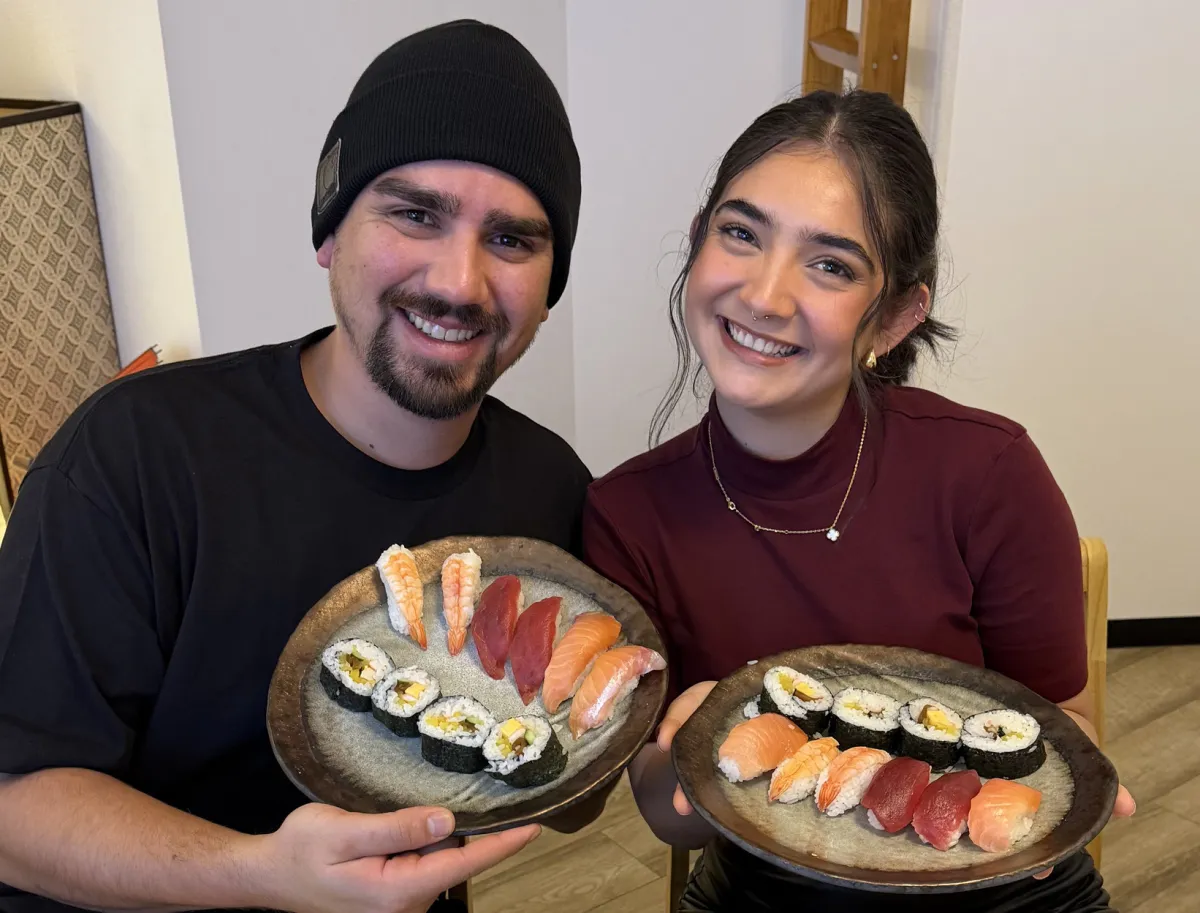
The signature class lasts about 90 minutes. Instruction is in English, and the skills are ones teenagers pick up quickly: shaping rice for nigiri, placing toppings and rolling maki with a bamboo mat. Each person typically makes 8 to 10 pieces and then sits down to eat them, finishing by whisking their own bowl of matcha.
Taking photos and videos is welcome, which many teenagers appreciate. In a shared class, please be mindful of other guests when filming. The format works well for teenagers who like a clear task and a visible result, and it does not require any previous cooking experience.
If a teenager is a picky eater or does not eat raw fish, tell us when booking. No-raw-fish options are available, and a fully plant-based menu can be served in the same session. Food allergies should be listed separately so the team can prepare suitable alternatives.
Shared class or family private class?
The shared signature class suits most families with teenagers. It has a maximum of 20 guests, so your family will usually be making sushi alongside other travellers. Many teenagers enjoy that social element, and it is often the simplest option because you can book online for a specific session.
The Family Private Sushi Class is for groups of 4 to 8 that want the studio to themselves. It runs 90 to 120 minutes, and the pace is adapted to the ages in your party, from younger children to teenagers and grandparents. It is a request booking, so send your date and party size and wait for confirmation before building the rest of the day around it.
A private class tends to make sense when your party spans a wide range of ages, when a younger sibling needs a flexible pace, or when you are celebrating something as a family. If you mainly want your teenagers to have a good time making sushi, the shared class is usually enough. Our comparison of shared and private sushi classes explains the trade-offs in more depth.
If a teenager wants to join without a parent
Some families split up for part of a day: parents go shopping while an older teenager takes a class, or a group of friends in their late teens travel together. Our published information does not set out a rule for guests under 18 attending without an adult, so please do not assume it is possible. Contact us before booking with the ages involved and who will be responsible for them, and wait for a reply. It is much easier to sort this out in advance than at the studio door.
Practical tips for the day
- Arrive 10 minutes early. This leaves time to store bags, wash hands and settle in before the class starts.
- Wear comfortable clothes. Sleeves that roll up are useful; loose jewellery and dangling sleeves are not.
- Plan food around the class. The sushi you make is a real meal, so do not book a big lunch straight before it.
- Know the cancellation line. Cancellation is free up to 24 hours before the class. After that, and for no-shows, the full price is charged.
Booking for a family with teenagers
Before booking, count who is 13 or over, note anyone under 20 who will skip the sake, and list any dietary needs. Then open the signature sushi class page, choose your date and session, and enter each person in the right category. If you are considering the private option instead, send a request through the family class page and keep your plans flexible until it is confirmed.
Related Articles
Paying for a Tokyo Sushi Class
Which currency will you be charged in, which cards and wallets work, and what happens after you pay? A clear guide before booking a sushi class in Tokyo.
Make Sushi in Your Rental or Take a Class?
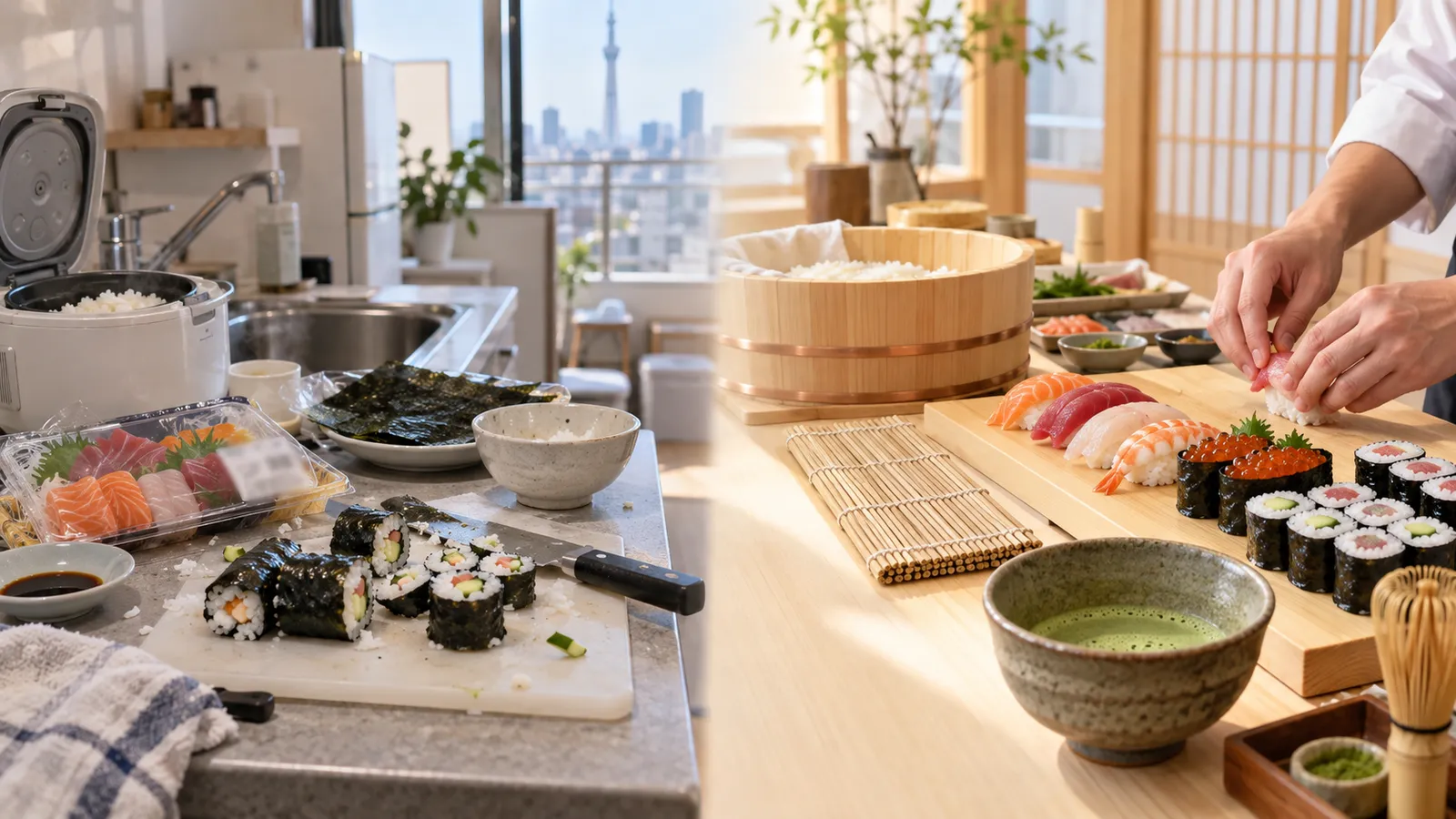
Staying in a Tokyo apartment with a kitchen? Compare making sushi yourself with supermarket fish against a guided class, and choose by skill, time and cost.
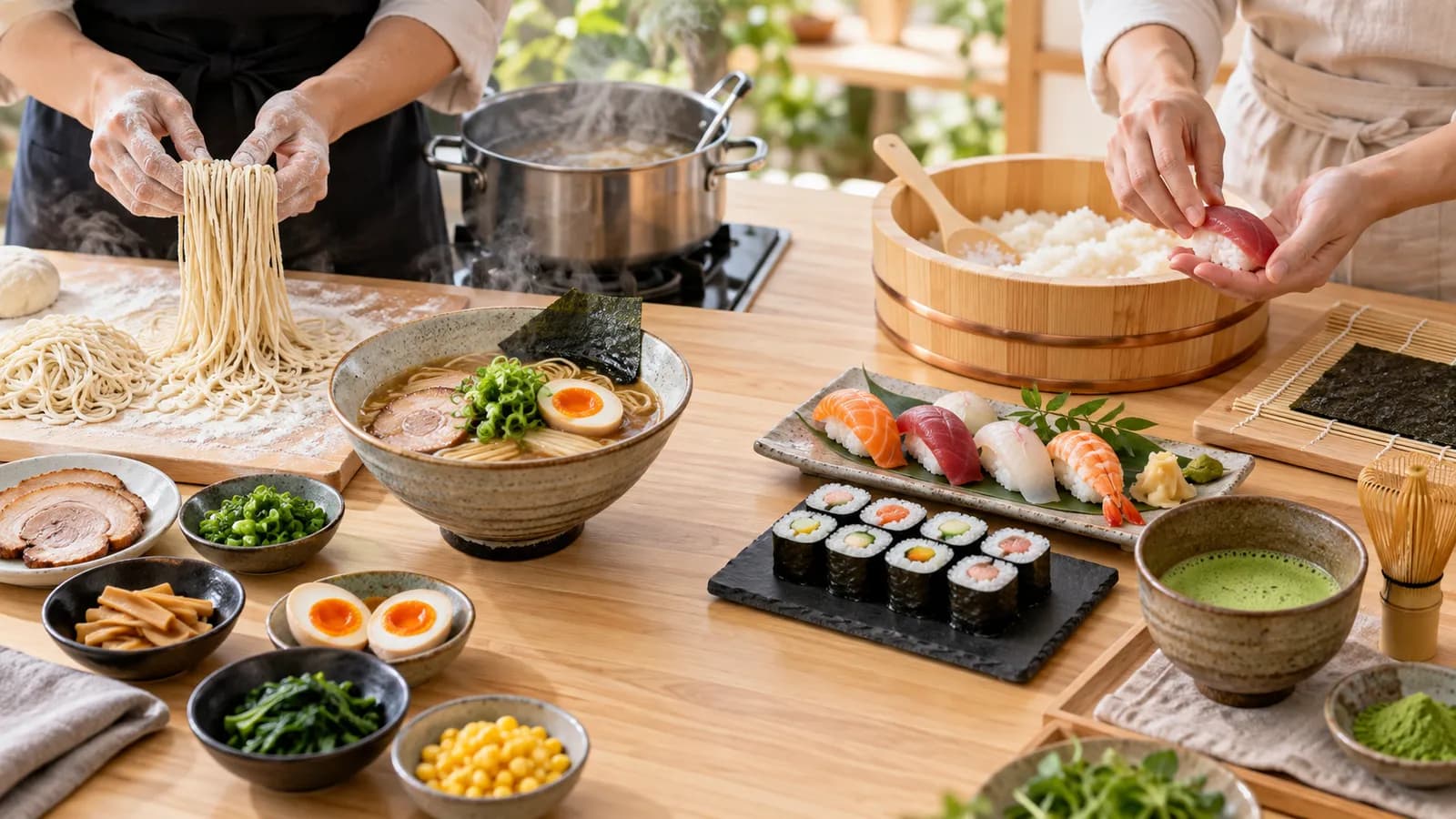
Sushi Class or Ramen Class in Tokyo?
Torn between a sushi class and a ramen class in Tokyo? Compare what you make, how long it takes, what you eat and which one suits your group and trip.