Vegetable Sushi Rolls: Kappa to Kanpyo
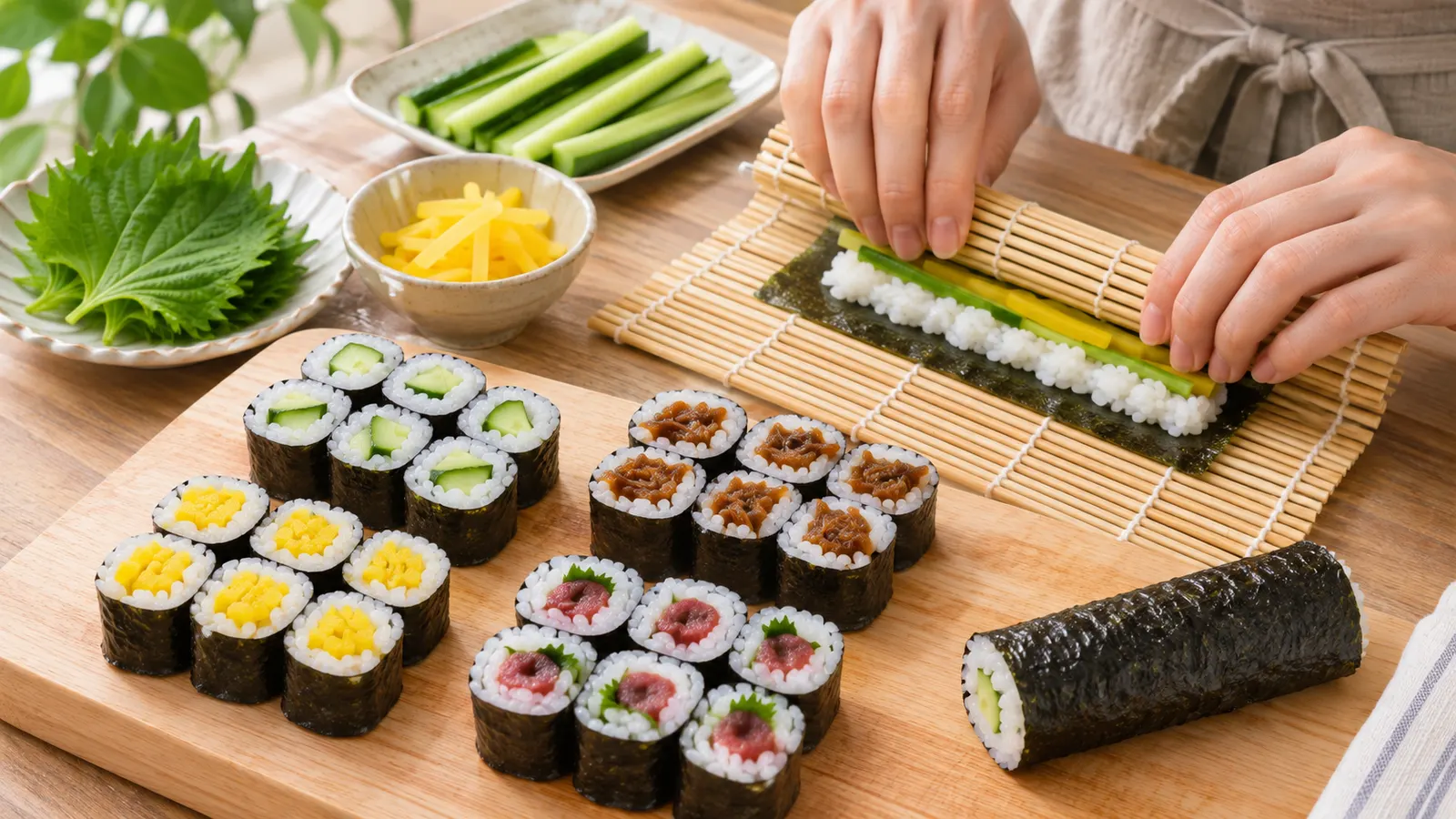
Not every sushi roll in Japan contains fish. At the end of a sushi menu, after the tuna and the shellfish, there is usually a short list of thin rolls with a vegetable or a pickle in the middle: kappa maki, kanpyo maki, oshinko maki, natto maki, ume-shiso maki. They are cheap, quick and often the first thing a nervous traveler orders.
They are also easy to misread. A roll with no fish inside is not automatically vegan, because some of the classic fillings are seasoned with fish stock. This guide explains what each one is, how it is usually made, and what to ask if you eat a plant-based diet.
Popular in Tokyo right now — our most recommended experience
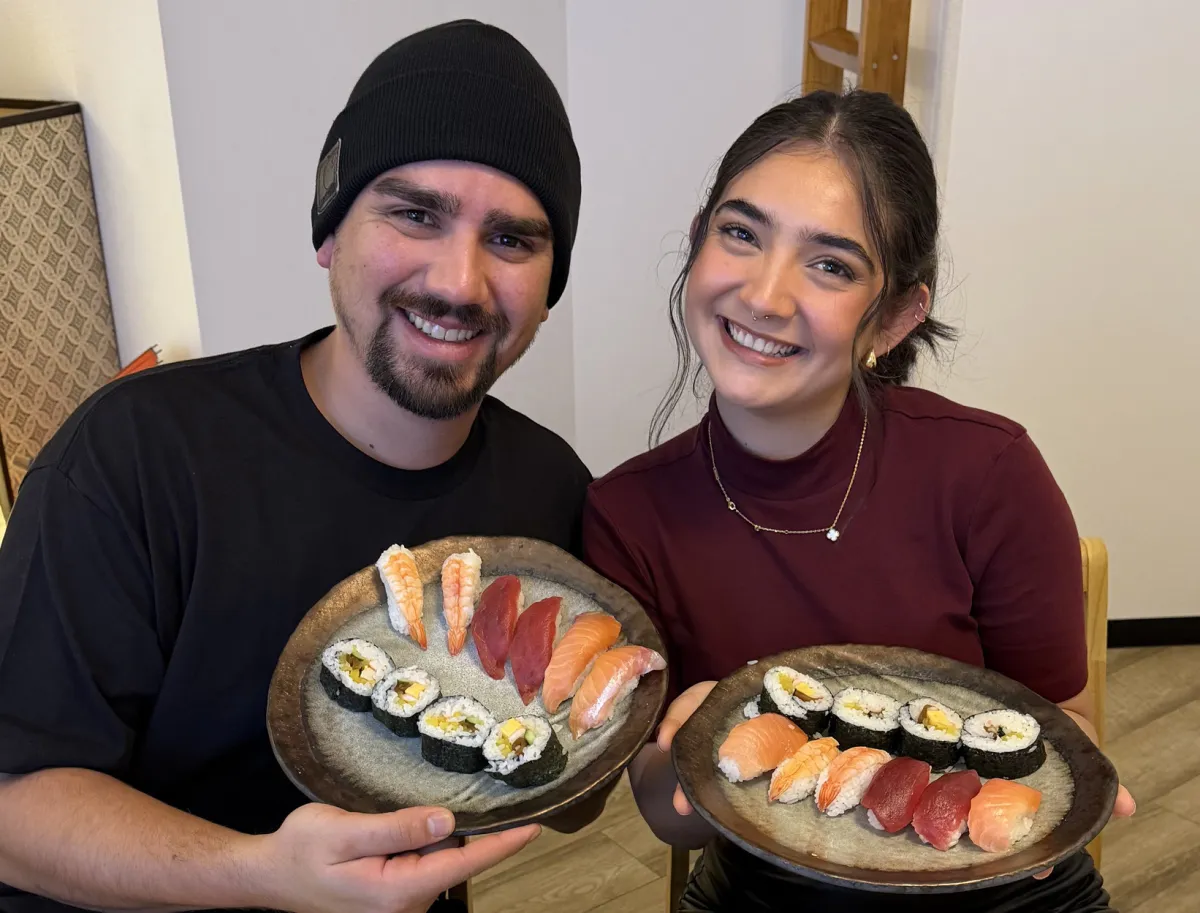
Tokyo Sushi Making Class : Sake Ceremony & Matcha Experience in Asakusa
What a thin roll is
These are hosomaki: thin rolls made with a half sheet of nori, a layer of sushi rice and a single filling, rolled with a bamboo mat and cut into six or eight pieces. If you want the wider picture of nigiri, gunkan, temaki and the different roll sizes, our guide to the types of sushi covers them.
The rice and the seaweed are the same in a vegetable roll as in a tuna roll, so the filling is what changes. Our guide to nori for sushi rolls explains the seaweed side.
Kappa maki: cucumber
Kappa maki is a thin roll with a stick of cucumber in the centre. It is crisp, light and very mild, which is why it is often eaten near the end of a meal or ordered for children.
The name has nothing to do with the ingredient's appearance. The Kodansha food dictionary on Kotobank explains it as a reference to the kappa, a water creature of Japanese folklore whose favourite food is said to be cucumber. Another theory links it to the crest of shrines associated with the kappa, which resembles a cut cucumber. Either way, if you see "kappa" on a menu, expect cucumber.
As long as the rice is seasoned with plant-based ingredients, kappa maki is usually the simplest plant-based roll on a sushi menu.
Kanpyo maki: simmered gourd strips
Kanpyo is one of the most traditional fillings in Tokyo-style rolls, and the one visitors are least likely to recognise. It looks like a soft, brown ribbon and tastes sweet and savoury.
It is made from the fruit of the yugao, a type of bottle gourd. According to Tochigi Prefecture, the flesh is peeled into long, thin strips and dried in the summer sun in July and August. Tochigi is by far the main producer: the prefecture describes its share as more than 90% of Japan's domestic kanpyo, and JA Oyama, a farmers' cooperative there, gives about 98%. Yugao cultivation in the area dates back to 1712.
Dried kanpyo is hard and chewy, so it is rehydrated and then simmered. The Ministry of Agriculture's regional recipe for Tochigi's kanpyo rolls simmers it in dashi with soy sauce, sake and mirin, and recipes from a dried-goods maker and Tochigi's kanpyo trade association also use dashi. A thin roll of kanpyo is also called teppo-maki, "gun-barrel roll", after its long, narrow shape.
For vegans: the gourd itself is plant-based, but the simmering stock is the question. Dashi in Japan is often made with bonito flakes. Ask how the kanpyo was cooked rather than assuming.
Oshinko maki: pickled radish
Oshinko means pickles, and in a roll it usually means takuan, yellow pickled daikon radish. It adds crunch, salt and a little sweetness.
Japan's agriculture ministry describes the traditional method: daikon is dried for two to three weeks until it bends without breaking, then packed in a barrel in layers of rice bran and salt and left to ferment for months. The name is associated with the 17th-century monk Takuan Sōhō.
Commercial takuan varies. Many are simple pickles, but some products are flavoured with bonito or contain seafood extract. That does not mean all takuan contains fish, only that the label or the chef is the place to check.
Takuan is also one of the fillings in the futomaki you roll in our signature sushi class, alongside tuna, cucumber and tamagoyaki.
Natto maki: fermented soybeans
Natto is fermented soybeans, with a strong smell and a sticky texture that divides opinion even in Japan. Natto maki is a common thin roll and often appears in convenience stores as well as sushi restaurants.
The beans themselves are plant-based. The small sauce packet that comes with supermarket natto is a different matter: some packaged natto sauces, including one from a major brand we checked, list bonito extract. If a roll is made with that kind of sauce, it is not vegan.
Ume-shiso maki and other pickles
Ume-shiso maki combines bainiku, a sour paste made from salted and sun-dried Japanese ume, with a leaf of green shiso. It is sharp, salty and refreshing. Umeboshi are usually coloured red with red shiso leaves.
Yamagobo is a pickled root sold as "mountain burdock". The Tokyo Metropolitan Institute of Public Health notes that pickles sold under this name are the root of moriazami, a thistle, or thin burdock root, and warns not to confuse it with pokeweed, a toxic plant with a similar Japanese name.
A quick checklist for vegans and vegetarians
| Roll | Filling | What to ask |
|---|---|---|
| Kappa maki | Cucumber | Usually the simplest choice |
| Kanpyo maki | Simmered dried gourd | Was it simmered in fish-based dashi? |
| Oshinko maki | Pickled daikon (takuan) | Does the pickle contain bonito or seafood extract? |
| Natto maki | Fermented soybeans | Was the sauce made with bonito extract? |
| Ume-shiso maki | Plum paste and shiso | Usually plant-based; ask if strict |
Also check the rice. Sushi vinegar is normally rice vinegar, sugar and salt, and many blends add kombu, a kelp. Kombu is plant-based, but some restaurants use their own recipes. Our sushi rice uses rice vinegar, salt, sugar and kombu dashi.
Vegetarian, vegan and "no raw fish" are different requests. Our guide to what to check before a vegan sushi class explains how to describe your needs clearly, and if you simply want to avoid raw fish, see sushi class options without raw fish.
Rolling your own in Asakusa
Ordering a vegetable roll is easy. Rolling a tight one is harder than it looks: the rice has to be spread evenly, the filling placed in a straight line and the mat pressed firmly without crushing the roll.
If you eat a plant-based diet, our vegan sushi class is a plant-based menu within the same 90-minute shared class, with nigiri and maki making and matcha you whisk yourself. Ingredients vary with season and availability, so do not expect a specific filling from this article. Choose the vegan menu when you book, and contact us before booking if you need detailed ingredient or preparation information.
Related Articles
Crab Sushi in Japan: Zuwaigani to Kanikama
Snow crab, horsehair crab, king crab and kanikama on Japanese sushi menus: how they differ, when the winter season opens and allergy points.

Vegan Sushi Class: What to Check
Planning a vegan sushi class in Tokyo? Check the plant-based menu, shared setting, dietary requests and the right booking option in Asakusa.
Lunar New Year in Tokyo: A Sushi Class Plan
Visiting Tokyo for Lunar New Year 2027? The dates, what is open in Japan, booking and cancellation rules, and how to fit a sushi class in Asakusa.