Crab Sushi in Japan: Zuwaigani to Kanikama
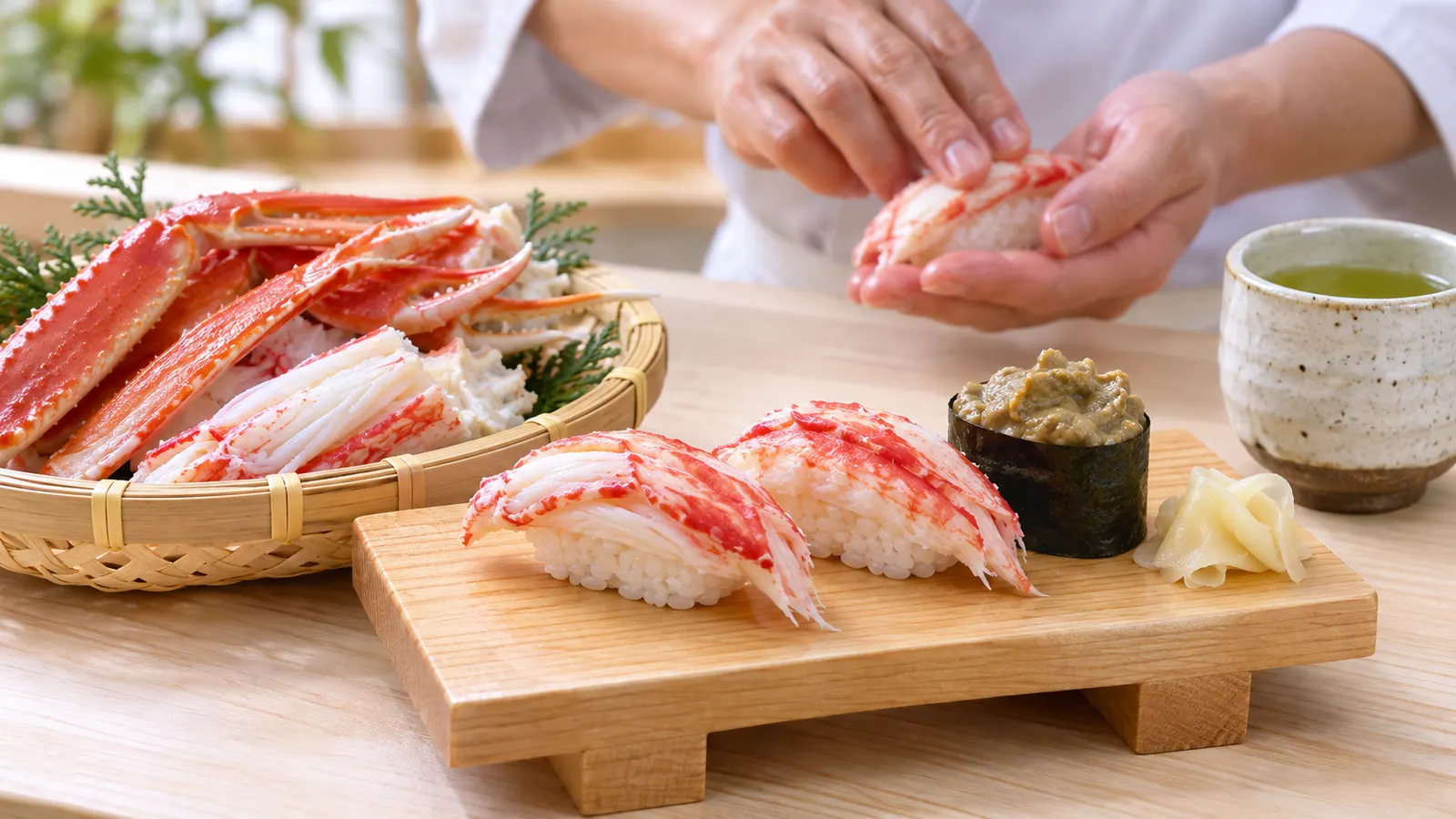
Kani means crab in Japanese, and on a sushi menu it can mean very different things. It might be the sweet leg meat of a snow crab landed on the Sea of Japan coast this week, a piece of Hokkaido horsehair crab, the thick legs of a king crab, or kanikama, a crab-flavoured stick made from fish paste.
Mid-November is the moment many travelers notice crab, because the snow crab season on the Sea of Japan opens on 6 November. This guide explains the main types, how sushi shops usually serve them and what to know if you or someone in your group has a shellfish allergy.
Popular in Tokyo right now — our most recommended experience
Tokyo Sushi Making Class : Sake Ceremony & Matcha Experience in Asakusa
The short answer
| Name on the menu | What it is | Notes |
|---|---|---|
| Zuwaigani | Snow crab | The classic winter crab; regional brand names |
| Beni-zuwaigani | Red snow crab | A deep-water relative, red even before cooking |
| Kegani | Horsehair crab | Small, hairy, prized for its rich miso; Hokkaido |
| Tarabagani | Red king crab | Large legs; not a true crab |
| Kanikama | Imitation crab | Fish paste shaped and coloured like crab leg |
Zuwaigani: the winter snow crab
Zuwaigani (Chionoecetes opilio) is the crab most Japanese people think of in winter. It lives in cold water at depths of a few hundred metres, and on the Sea of Japan coast it is sold under regional brand names. The fish encyclopedia site Zukan-bouz lists Matsuba-gani for crab landed in Shimane, Tottori and Hyogo, Echizen-gani in Fukui, Kano-gani in Ishikawa and Taiza-gani in Kyoto.
The season is strictly managed. According to a Tottori Prefecture press release of 6 October 2026, the fishing season for males in the waters from Ishikawa to Shimane runs from 6 November to 20 March, and for females from 6 November to 31 December under the industry's own rules. Female crabs are smaller and sold under their own names, such as Seiko-gani in Fukui and Kobako-gani in Ishikawa, and are prized for their roe. Some ports tag their crabs: in Echizen, a yellow tag marks genuine Echizen-gani, a practice the town says began in 1997.
Snow crab is usually boiled, often simply in salted water, and the cooked leg meat is laid over rice as nigiri. Zukan-bouz notes that raw crab, kani-sashi, is made from live crab and only lightly chilled or blanched, so it is a specialty rather than the default.
Beni-zuwaigani, red snow crab, is a relative that lives deeper, at 500 to 2,500 metres. It is red even when raw, with softer shell and moister meat, and is widely used in processed crab products.
Kegani: horsehair crab from Hokkaido
Kegani (Erimacrus isenbeckii) is a smaller crab covered in short bristles. It is closely associated with Hokkaido, where the fishing season depends on the area rather than following one national date; the Hokkaido government lists different months for each coast, and only males above a minimum size may be caught.
It is usually boiled in salted water. Kegani is known for its kani-miso, the rich, creamy organ meat inside the shell, and some sushi shops serve crab miso as a small gunkan or alongside the leg meat.
Tarabagani: king crab is not a true crab
Tarabagani (Paralithodes camtschaticus) has the thickest legs and the most dramatic appearance, but zoologically it is not a crab in the strict sense. It belongs to the same broad group as hermit crabs. Zukan-bouz points out a simple clue: you can see only eight legs, because one small pair is tucked under the shell and used to clean the gills.
For the diner, king crab gives a big, juicy piece of leg meat. For allergy purposes, it is still crab.
Kanikama: the Japanese crab stick
Kanikama is short for kani kamaboko, "crab fish cake". It is made from white fish paste (surimi), shaped into fibres and coloured red on the outside. The Japanese company Sugiyo says it developed the first crab-flavoured product of this kind in 1972, after an attempt to make artificial jellyfish failed; another maker, Osaki Suisan, introduced a stick-shaped product in 1974. These dates come from the companies' own histories. Pollock is a common surimi fish.
You will find kanikama in rolls, salads and conveyor-belt sushi. It is fine to enjoy, but it is not real crab, and it can still matter for allergies: some products list crab extract in their ingredients.
Crab allergies: what to check
Japan treats crab seriously as an allergen. The Consumer Affairs Agency lists crab and shrimp among the specified ingredients that must be declared on packaged food. Real crab, red snow crab, king crab and crab extract in kanikama all need to be considered, and broth, sauces or shared cooking water can also be a source.
If you have a shellfish allergy, say so clearly before you eat or book. The same caution applies to shrimp: our guide to ebi and amaebi explains why cooked and raw shrimp carry the same risk. For a class, our guide on what to ask before a sushi class with food allergies lists the right questions.
How to order crab at a sushi counter
- Ask where it is from. A chef who has Echizen-gani or Matsuba-gani will be happy to tell you.
- Expect cooked meat. Boiled crab is the norm; raw crab is a special item.
- Try the miso. If you like rich flavours, ask whether they have crab miso.
- Watch the price. Branded winter snow crab is one of the more expensive items on a menu, especially early in the season.
- Do not confuse it with kanikama. At inexpensive chains, "kani" may be imitation crab; the menu or staff can tell you.
Crab is one of several winter highlights. Our guide to winter sushi fish in Tokyo covers yellowtail, flounder and other seasonal choices.
Crab and our sushi class
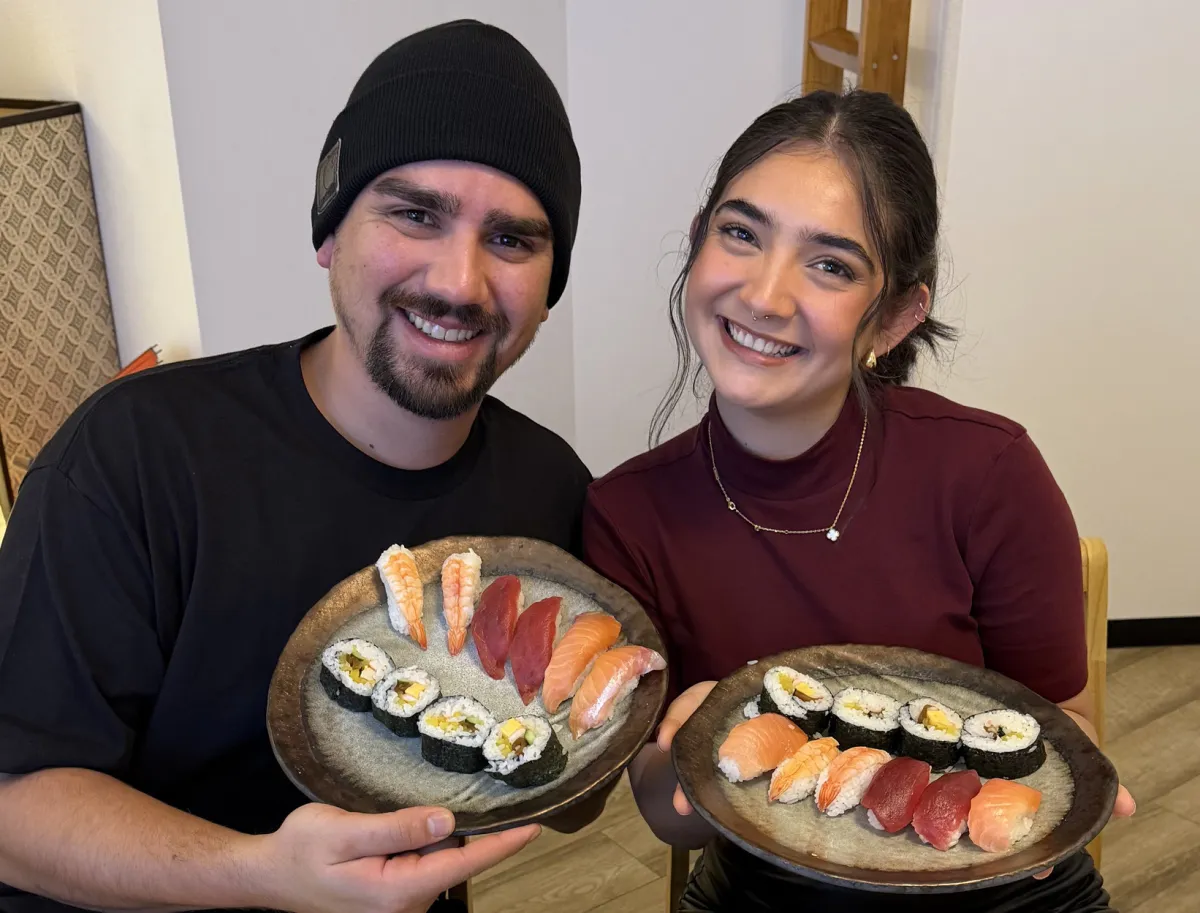
Crab is not part of the standard menu in our classes, and we do not promise seasonal toppings. In our signature sushi and matcha class, you shape nigiri with lean tuna, medium-fatty tuna, salmon and cooked shrimp, and roll a futomaki with tuna, cucumber, tamagoyaki and pickled radish. It lasts 90 minutes, includes a sake toast and ends with matcha you whisk yourself.
That is a good reason to take the class early in a trip: once you have shaped nigiri yourself, you know what to look for when you sit at a counter and order a piece of winter crab. Because the class includes shrimp, mention any shellfish allergy to us before booking.
Related Articles
Vegetable Sushi Rolls: Kappa to Kanpyo
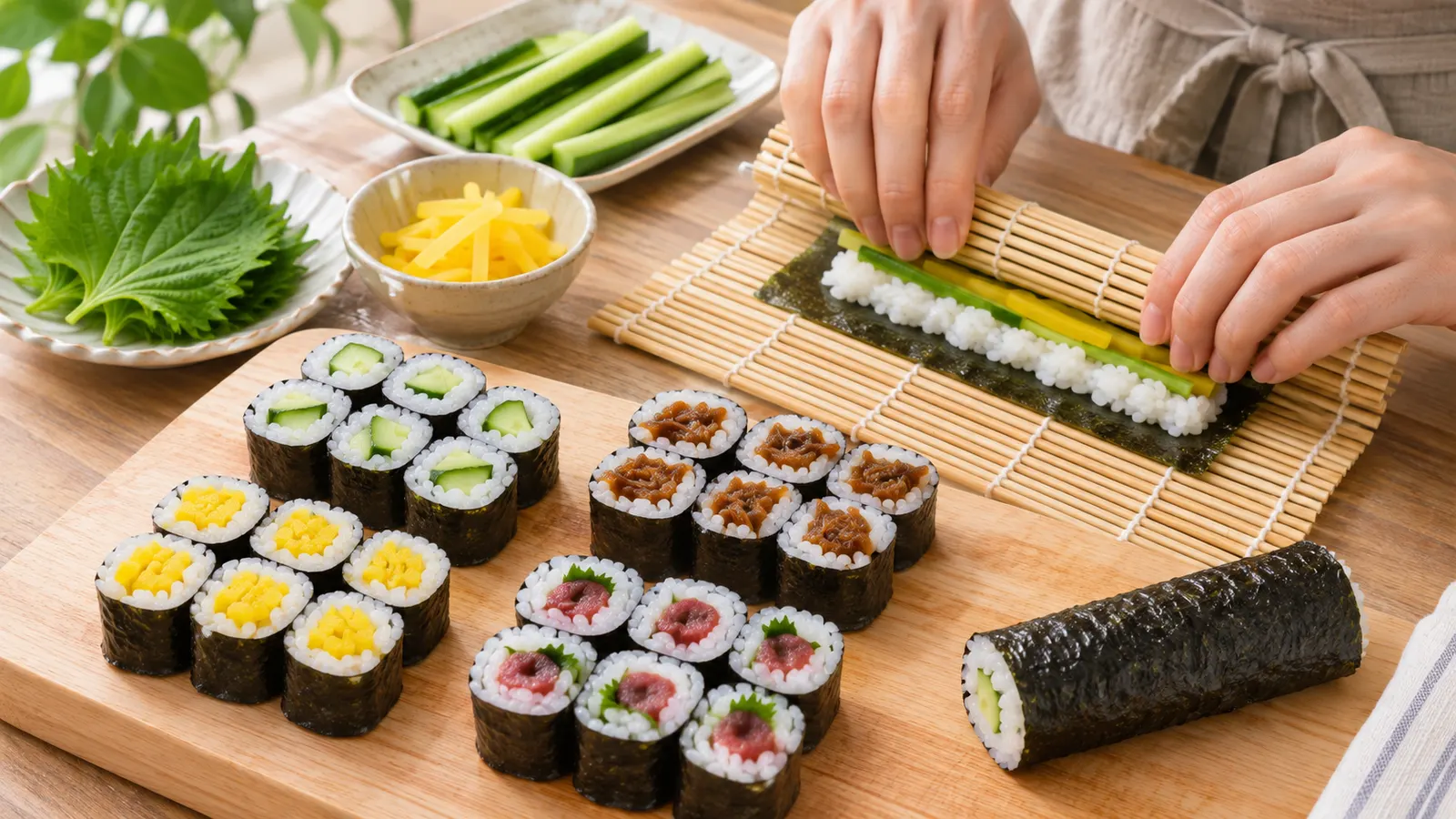
What is inside kappa maki, kanpyo maki, oshinko, natto and ume-shiso rolls, and which hidden fish ingredients vegans should ask about in Japan.
Hotate, Akagai, Hokkigai: Shellfish Sushi
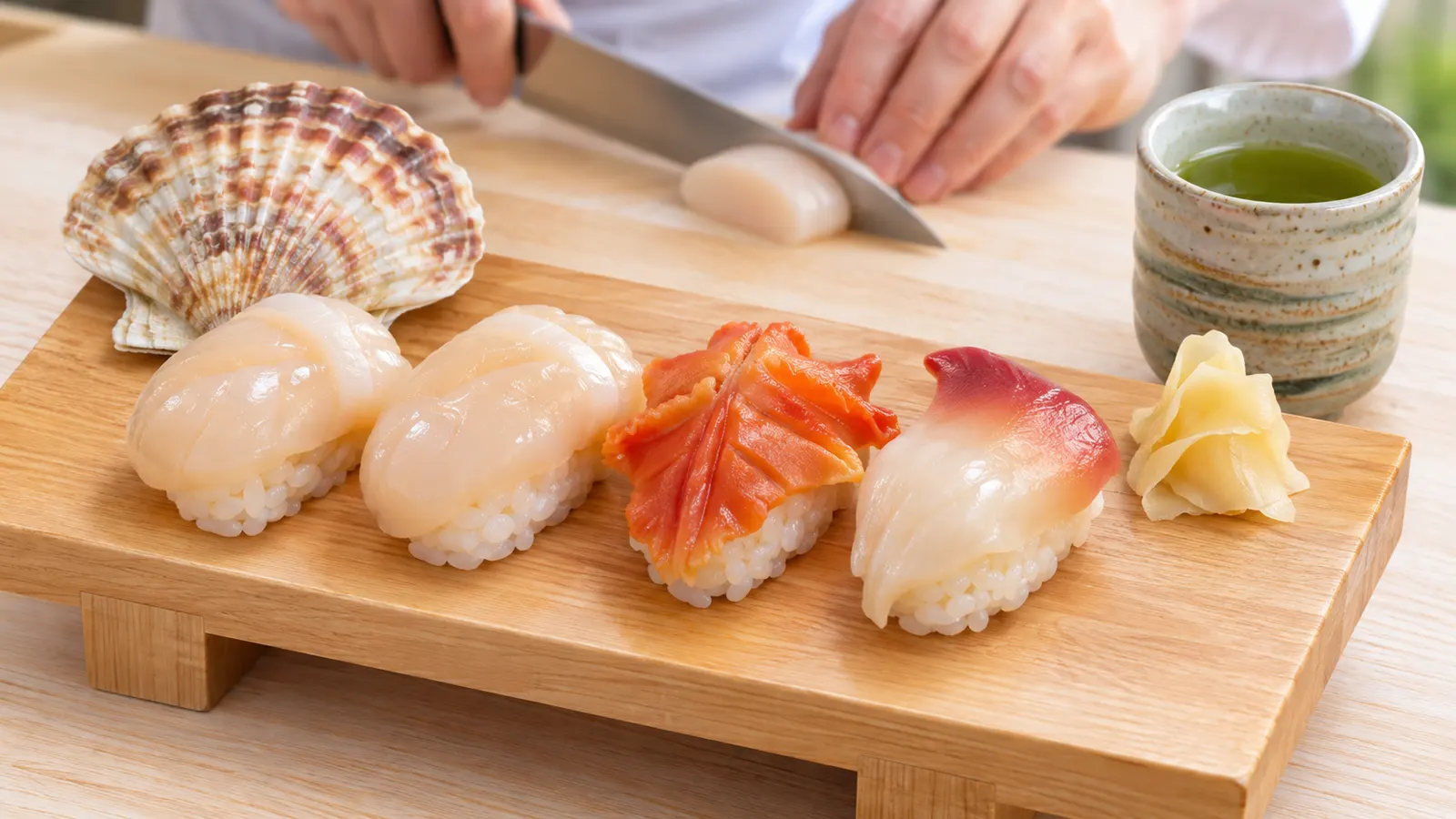
Scallop, ark shell and surf clam are the shellfish you meet most at sushi counters in Japan. How they differ, when they are best and what to say on allergies.
Hirame vs Karei: Flounder Sushi and Engawa
Hirame and karei are both flounder, but they differ in season, taste and price. How to tell them apart, what engawa is and how to order.