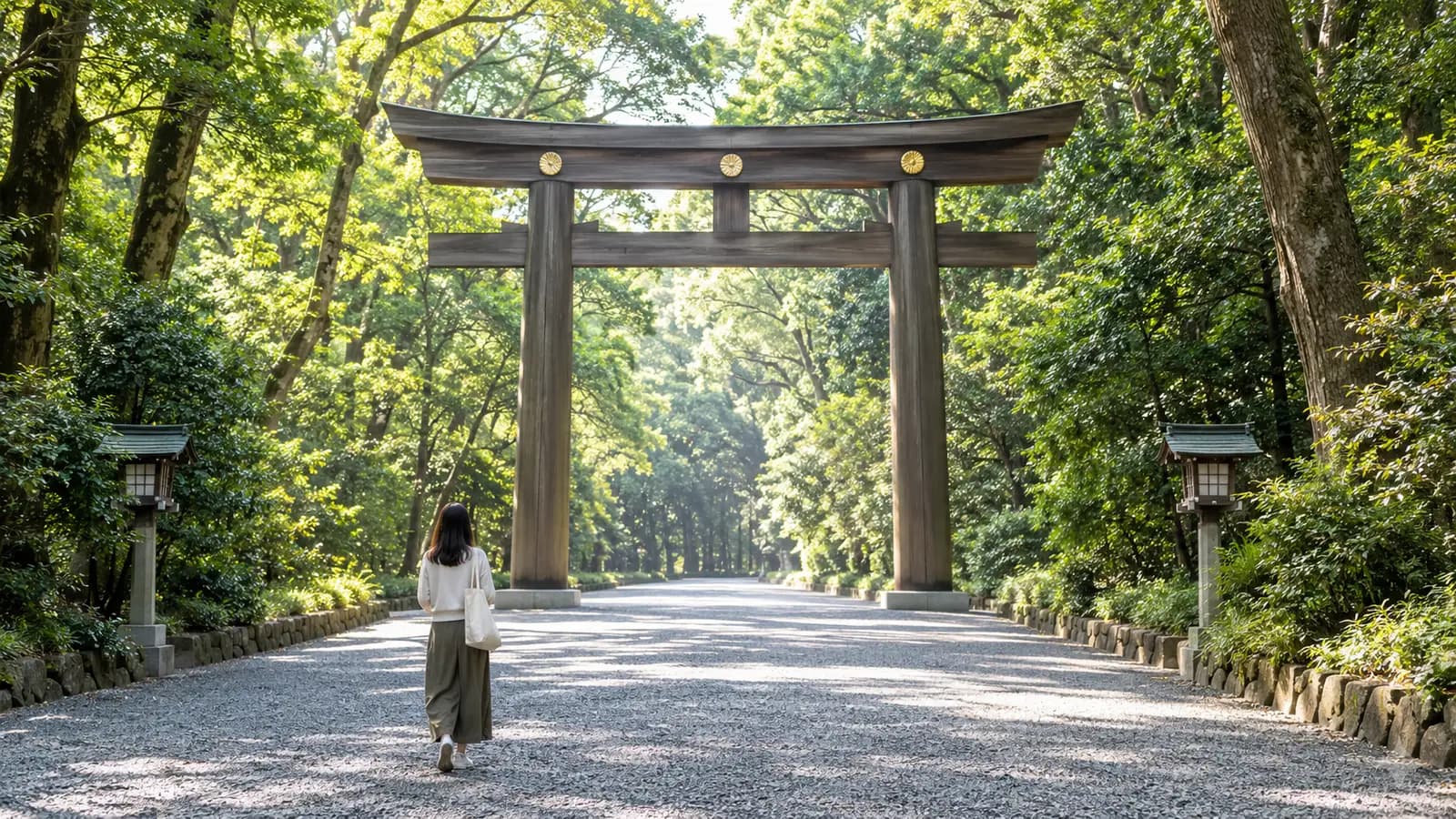
Harajuku and a Sushi Class in One Day
Harajuku and Asakusa sit on opposite sides of central Tokyo, and they feel like different cities. One has a forested shrine, youth fashion and wide, tree-lined shopping streets; the other has Senso-ji, old merchant lanes and the river. Many visitors want both on the same day, and the good news is that one subway line links them directly.
This guide covers the route, the times to check, and two simple ways to fit Harajuku around our 90-minute sushi and matcha class in Asakusa.
Popular in Tokyo right now — our most recommended experience

Tokyo Sushi Making Class : Sake Ceremony & Matcha Experience in Asakusa
What Harajuku offers in a few hours
The area around Harajuku Station has three main parts, all within walking distance of each other.
- Meiji Jingu: a large Shinto shrine dedicated to Emperor Meiji and Empress Shoken, set in a forest planted about a century ago. Admission to the grounds is free. The gates follow the sun, so opening hours change through the year; in October, for example, the shrine is open from 5:40 to 16:40. Allow at least ten minutes to walk from an entrance to the main shrine buildings, and more for the return.
- Takeshita Street: a narrow pedestrian street opposite Harajuku Station, packed with fashion and accessory shops, crepe stands and sweets. It is busiest in the afternoon and at weekends.
- Omotesando: a broad avenue lined with zelkova trees and flagship stores, running from Harajuku towards Omotesando Station. Side streets such as Cat Street offer smaller shops and cafés.
Yoyogi Park lies next to the shrine forest if you want open lawns as well. A relaxed visit covering Meiji Jingu, Takeshita Street and a walk down Omotesando takes around three hours with stops.
Getting between Harajuku and Asakusa
The easiest link is the Tokyo Metro Ginza Line, which runs directly between Asakusa and Omotesando Station without a change. The ride takes about 30 minutes. From Omotesando Station, walk up the avenue to Harajuku in around 10 to 15 minutes, which also counts as sightseeing.
Other options:
- Via Shibuya: the Ginza Line also runs directly to Shibuya. From there, the JR Yamanote Line reaches Harajuku in one stop.
- Taxi: practical for groups or tired legs, but travel time across central Tokyo depends heavily on traffic.
Our studio is about 30 seconds from the North Exit of Asakusa Station on the Tobu Skytree Line and about two minutes from Exit 7 of the Ginza Line, so the Ginza Line drops you almost at the door. Our directions from Asakusa Station show the approach from each line. If you are staying near Shibuya or Shinjuku, our guide to getting from Shibuya or Shinjuku to the class covers those starting points.
Door to door, allow around 45 minutes to an hour between Meiji Jingu and the studio, including walking and waiting.
Check the clock before you choose an order
Two fixed points shape the day:
- Meiji Jingu closes in the late afternoon, and the exact time changes by month. In autumn and winter, a late-afternoon visit can be cut short, so check the current hours on the official site.
- The class has a set start time. We ask guests to arrive 10 minutes early to store bags and wash hands. Our guide to how long a sushi class takes in your day explains how to plan the whole time block, not only the 90 minutes.
Weekends bring large crowds to Takeshita Street and to Asakusa. Weekday mornings are calmer in both places.
Plan A: Meiji Jingu in the morning, sushi for lunch
- Early morning: walk through the shrine forest while it is quiet and cool, and visit the main hall.
- Mid-morning: look in on Takeshita Street before the crowds build, then walk down Omotesando to Omotesando Station.
- Midday: take the Ginza Line to Asakusa and join the sushi class. You eat what you make, so this replaces lunch. Keep the crepes for another day; our guide to planning meals around a sushi class explains how hungry to arrive.
- Afternoon: Senso-ji and Nakamise Street are a short walk from the studio.
This order suits early risers and puts the shrine at its most peaceful time.
Plan B: sushi first, Harajuku in the afternoon
- Morning or midday: take the sushi class in Asakusa, then visit Senso-ji nearby.
- Early afternoon: take the Ginza Line to Omotesando and walk towards Harajuku.
- Mid-afternoon: reach Meiji Jingu with enough time before it closes, then finish on Takeshita Street or in Yoyogi Park.
This version lets you see Asakusa while it is still relatively calm, and it ends the day on the west side of the city, which is convenient if you are staying near Shibuya or Shinjuku. In the darker months, keep a close eye on the shrine's closing time.
Small things that make the day easier
- An IC card: Suica or PASMO covers the Ginza Line and JR.
- Comfortable shoes: the shrine paths are gravel and the distances are longer than they look.
- Shrine manners: bow at the torii gate, walk at the side of the path and follow the signs at the purification fountain.
- Bags: if you are moving hotels, our guide to luggage before or after the class explains the storage space at the studio.
Book the fixed point first
Harajuku is flexible; the class time is not. Choose your date, check availability for the sushi and matcha class, then build the shrine and the shopping around it. Cancellation and rescheduling are free up to 24 hours before the start.
Related Articles
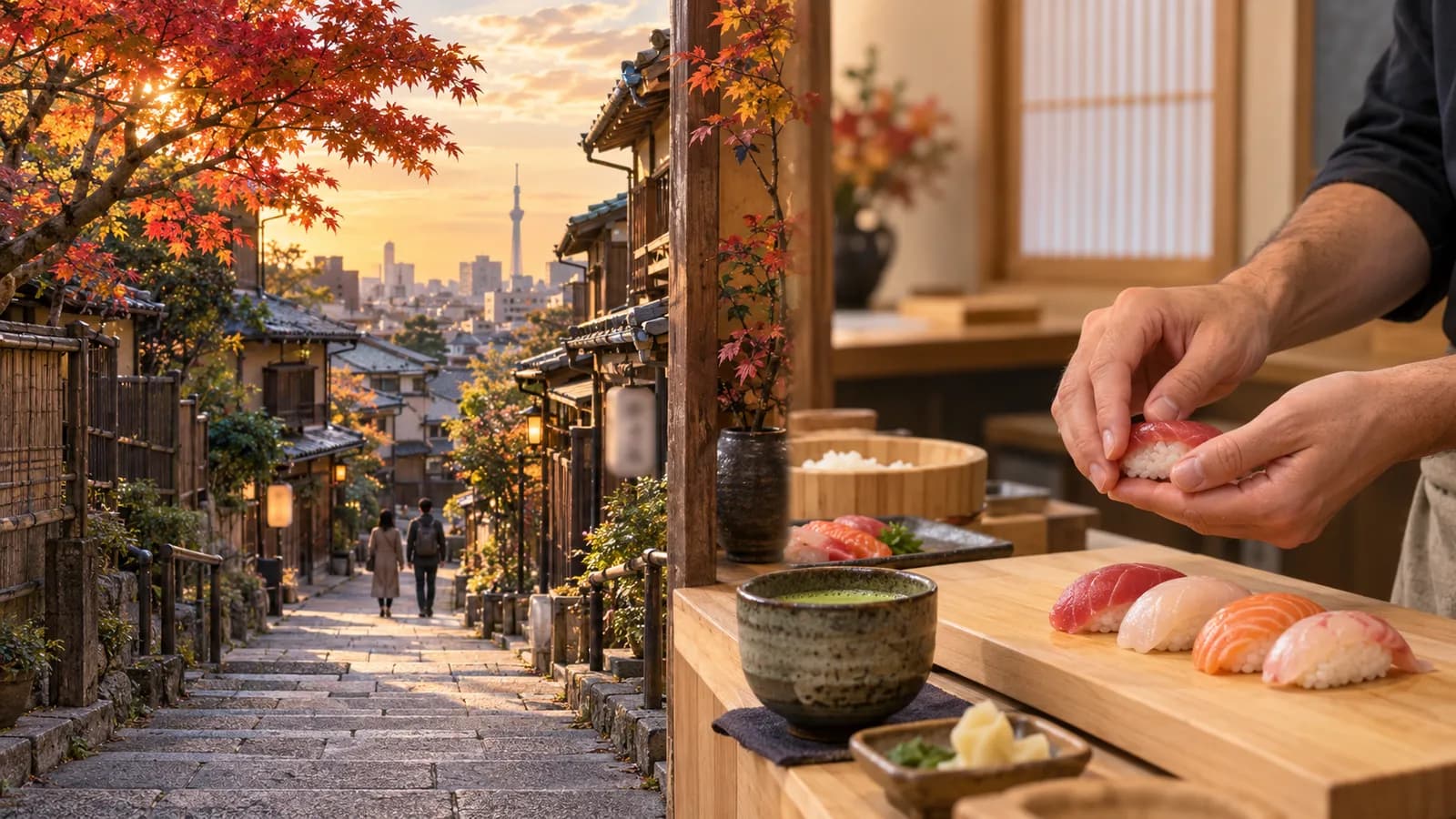
Yanaka and a Sushi Class in One Day
Pair Yanaka's old streets, Yanaka Ginza and Nezu Shrine with a sushi class in Asakusa. Routes, museum closing days and two easy plans for one Tokyo day.
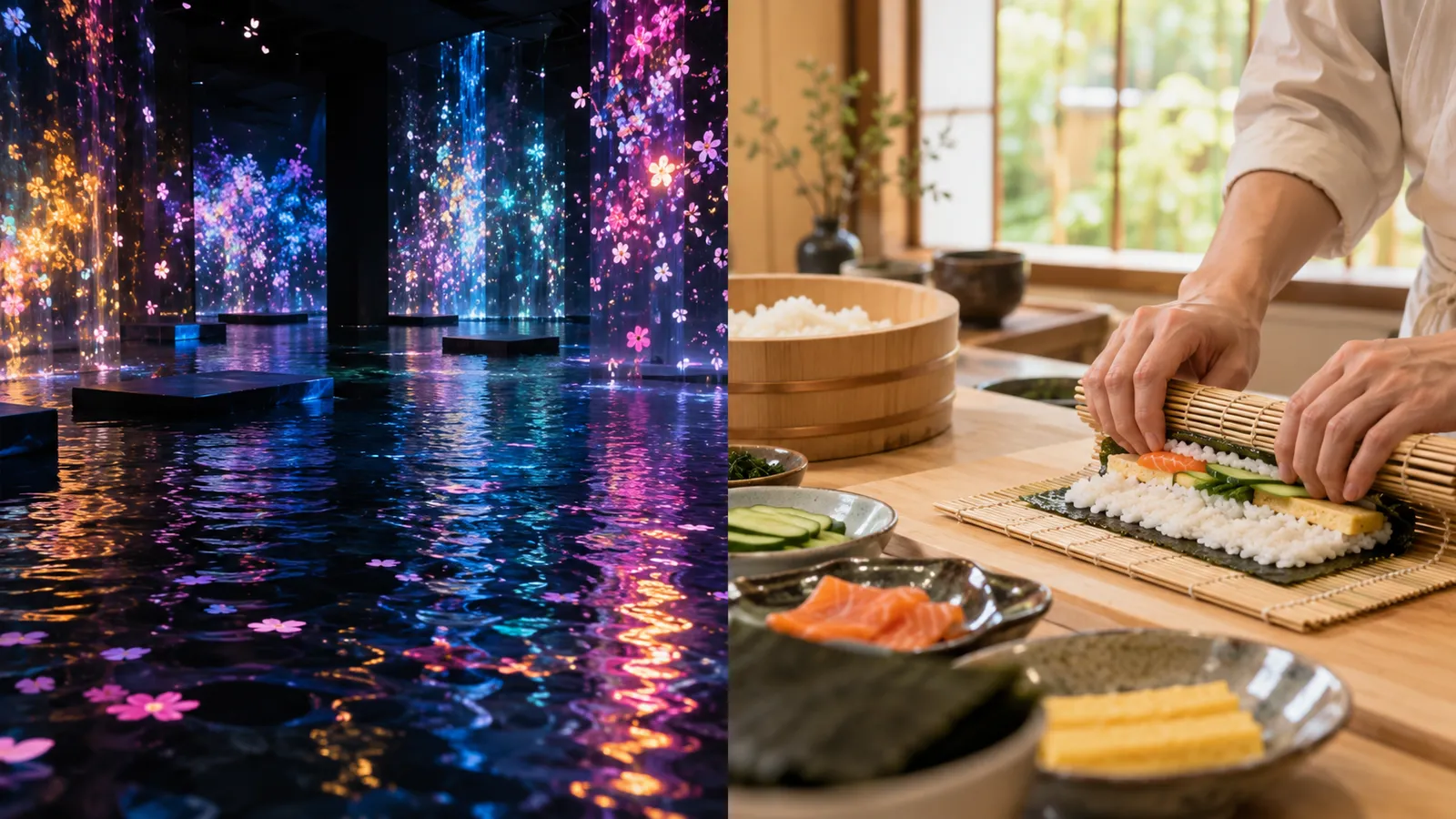
teamLab Planets and a Sushi Class in One Day
Pair teamLab Planets in Toyosu with a sushi class in Asakusa. Train routes, what to wear for the water rooms, timing and two simple plans for one Tokyo day.
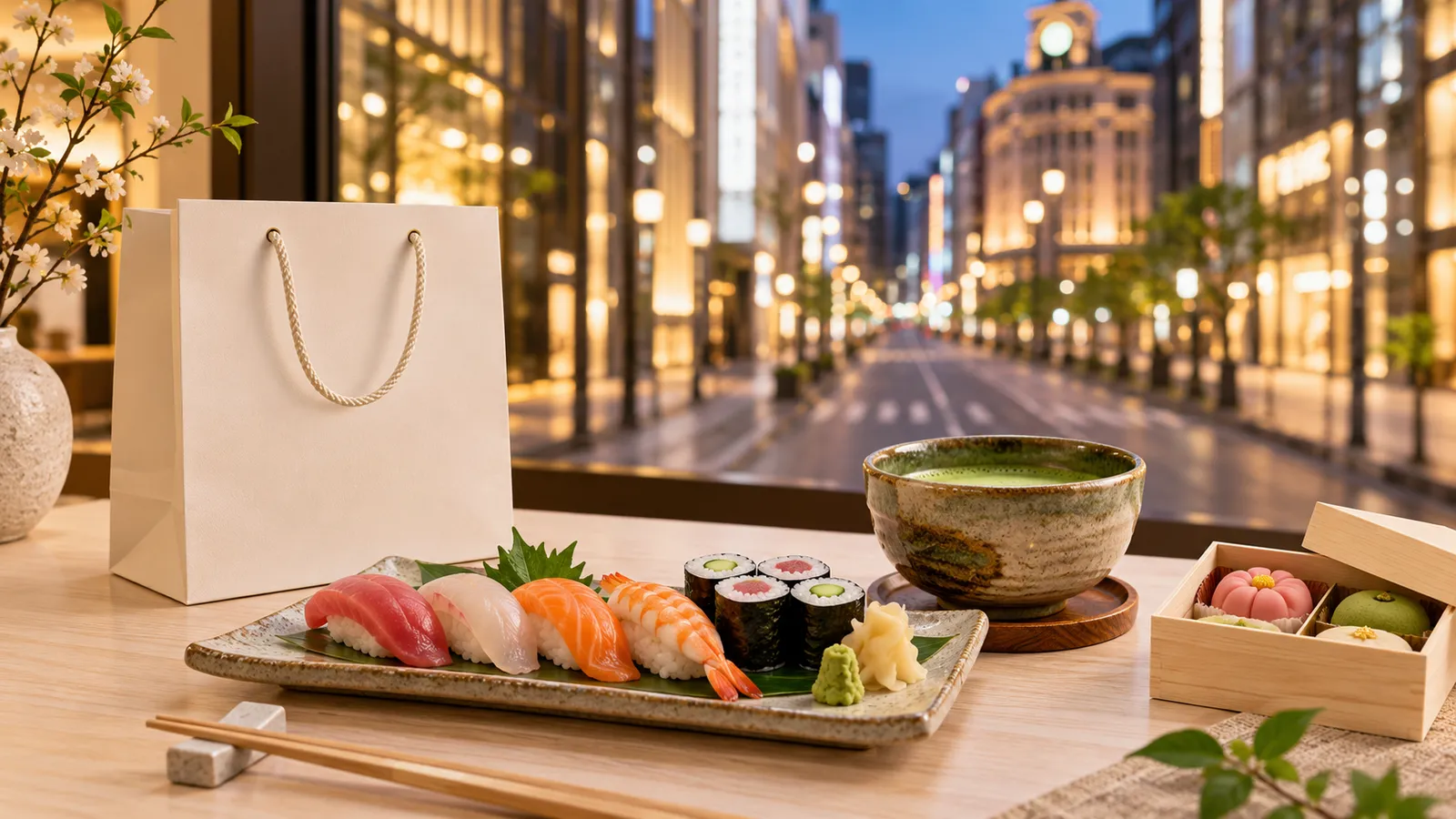
Ginza and a Sushi Class in One Day
Pair Ginza's shops, food halls or kabuki with a sushi class in Asakusa. Direct train routes, timing and three simple plans for one relaxed Tokyo day.