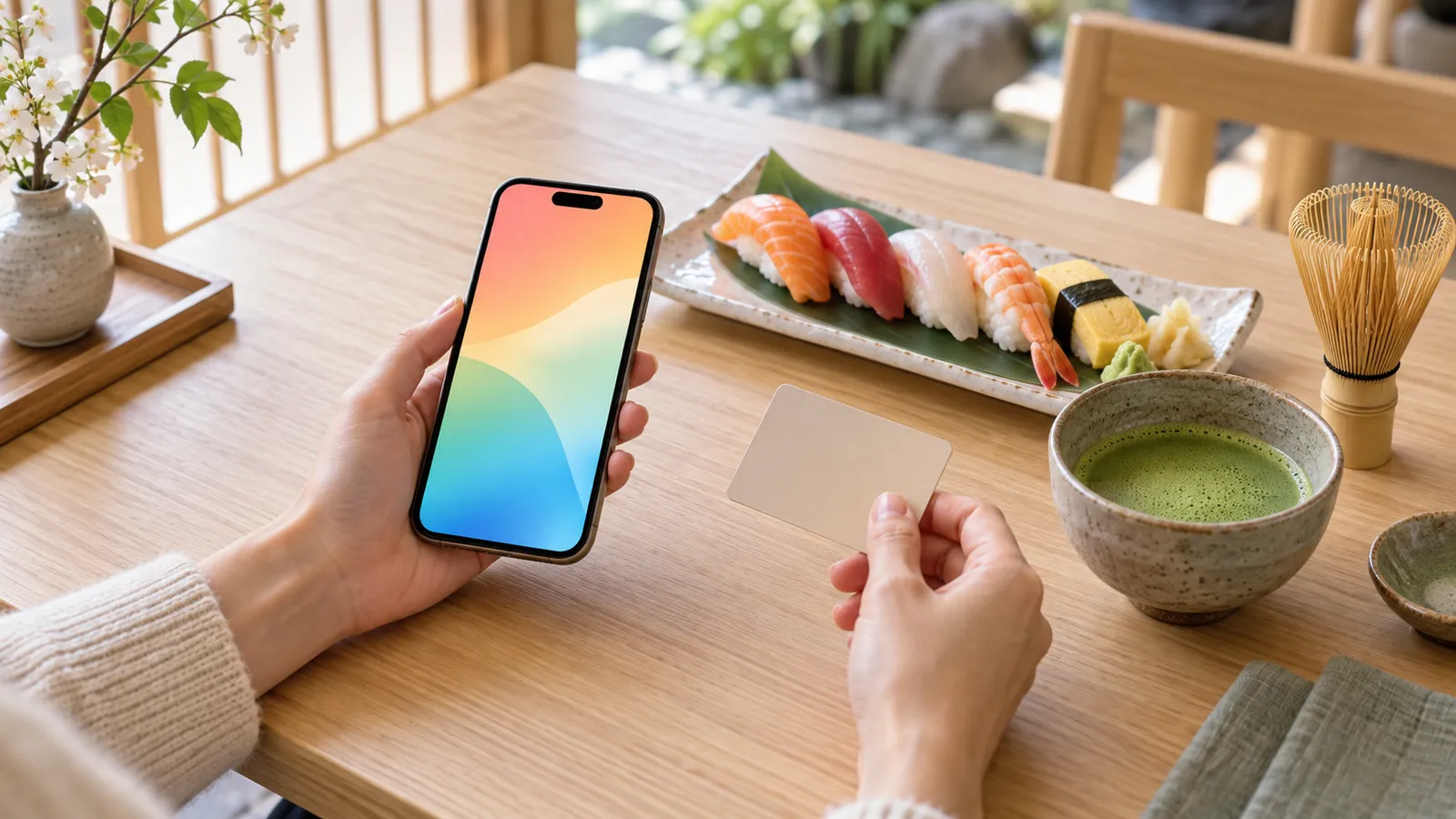
Paying for a Tokyo Sushi Class
Payment is one of the last steps of booking, but it is often where travellers hesitate. Will the price be in yen or in your own currency? Will your card work? Is the amount on the screen the amount you will see on your statement? This guide explains how payment works when you book a class directly on our website, and what to check before you press the button.
Popular in Tokyo right now — our most recommended experience

Tokyo Sushi Making Class : Sake Ceremony & Matcha Experience in Asakusa
Payment happens when you book
For an online booking, you pay at the time of booking rather than at the studio. We do not take cash for advance bookings, so there is no need to bring yen for the class itself. For private classes and special arrangements, bank transfer is also available; contact us before booking if that is what you need.
Paying in advance means your seat is secured before you travel, and on the day you can simply arrive about 10 minutes before the start. Our overview of what is included in the class price explains what that payment covers, from ingredients and tools to the sake toast and matcha.
Choosing your currency
The booking page shows prices in a currency based on the language version of the site you are using. For example, the Japanese site starts in yen and the French, German, Spanish and Italian sites start in euros. You can change the currency with the selector during checkout. At the time of writing, 26 currencies are available, including the Japanese yen, US dollar, euro, British pound, Australian and Canadian dollars, Singapore and Hong Kong dollars, Korean won, Chinese yuan, New Taiwan dollar and Thai baht.
The most important point is simple: the amount shown for the currency you select is the amount you are charged. The exchange rate is set by our booking system when your reservation is created, and the payment is made in that same currency. The button shows the exact amount before you confirm.
Yen or your home currency?
There is no single right answer, because the difference depends on your card rather than on the class.
- Paying in your home currency means you see the final figure in familiar terms before you pay. The conversion is built into the price shown.
- Paying in yen means your card issuer converts the amount. Their rate and any foreign transaction fee depend on your bank and card.
If your card has no foreign transaction fee and a good exchange rate, paying in yen can make sense. If you are unsure, or you prefer to know the exact figure in advance, choosing your home currency is the clearer option. Either way, check the total and currency on the final screen before you confirm. If you are comparing our website with an online travel agency, our guide to booking direct or through an OTA explains how to compare the same date, party and final total fairly.
Cards and digital wallets
Payment is processed securely by Stripe. Major credit cards such as Visa, Mastercard and American Express are accepted.
Digital wallets such as Apple Pay and Google Pay appear at the top of the payment step when your device, browser and chosen currency support them. If you do not see a wallet button, it does not mean something is wrong; you can still pay by card below it. Wallet availability is decided automatically for each device, so a traveller using Safari on an iPhone may see different options from someone on a laptop.
If a payment fails, the checkout tells you, and no charge is made. You can try again, use another card or contact us.
What happens while you pay
When you choose a date and continue to payment, your spot is held for 30 minutes. This gives you time to enter your details without someone else taking the last seats. If the hold expires before you pay, you simply start a new booking.
The shared signature class is confirmed instantly after payment. Some private classes are handled as a request instead, in which case the checkout says so before you pay, and we check availability and contact you to confirm. Our guide to instant confirmation or request bookings explains the difference. After a successful booking, you receive a confirmation email with your booking details.
Before you confirm
A short checklist helps avoid surprises:
- Date and time in Japan time. Check that the slot is the one you meant, especially if you are booking from another time zone.
- Participants. Adults and children are priced separately, and children aged 3 and under can join free of charge; let us know when booking.
- Currency and total. Make sure the currency is the one you intended and the total matches what you expect.
- Cancellation terms. Cancellation is free up to 24 hours before your class. Later cancellations and no-shows are charged in full. Our guide to cancelling or rescheduling covers what to do if your plans change.
- Email address. Your confirmation goes to the address you enter, so check it for typos.
Receipts and changes
Keep the confirmation email. It is your record of the booking and the easiest reference if you need to contact us. If you need to change the date or have a question about your payment, reply using the details in that email or reach us through the contact page, and include your booking reference.
Ready to book
Paying for a sushi class in Tokyo does not need to be complicated. Pick the currency that suits your card, check the final total and cancellation terms, and complete the booking while your spot is held. Choose a date for the signature Sushi & Matcha class, and the only thing to bring on the day is yourself.
Related Articles

Sushi Class in Tokyo With Teenagers
Travelling with teens? How ticket categories work for ages 13 and up, what happens at the sake toast and when a shared or private sushi class fits best.
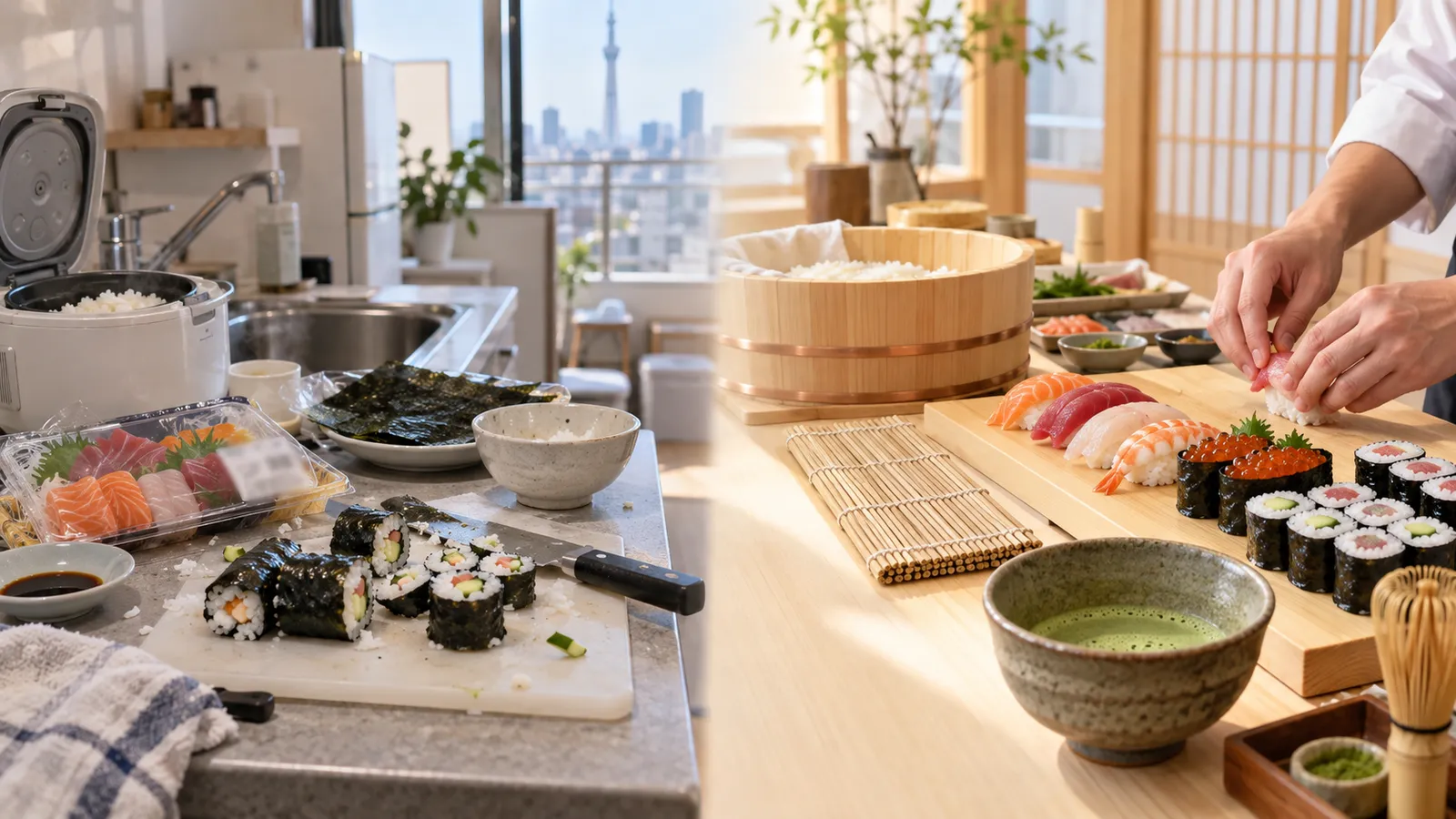
Make Sushi in Your Rental or Take a Class?
Staying in a Tokyo apartment with a kitchen? Compare making sushi yourself with supermarket fish against a guided class, and choose by skill, time and cost.

Booking a Sushi Class for Someone Else
Booking a Tokyo sushi class for parents, a partner or friends? What to enter at checkout, what to ask them first and how to share the confirmation.