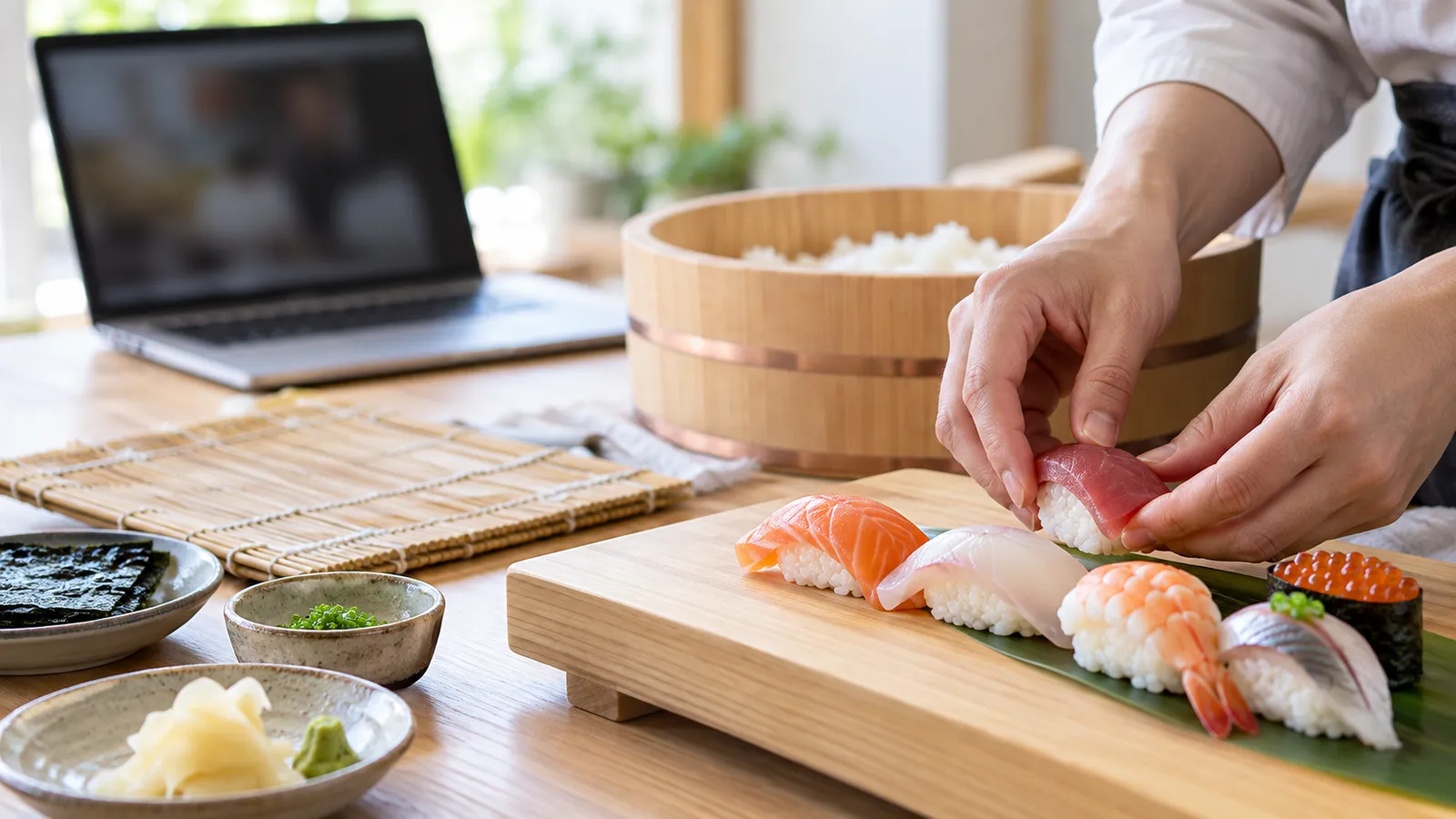
Online Sushi Course or Sushi Class in Tokyo?
If you are curious about making sushi, you have two very different ways to start. You can sign up for an online course and learn from videos or live video calls in your own kitchen, or you can learn in person, with an instructor at the same table, during a trip to Japan. Both are real options, and they are not in competition as much as it might seem.
This guide compares the two honestly: what each is good at, where each falls short and how to decide which fits your situation. If you are already planning a Tokyo trip, it also explains how an online course and an in-person class can support each other.
Popular in Tokyo right now — our most recommended experience
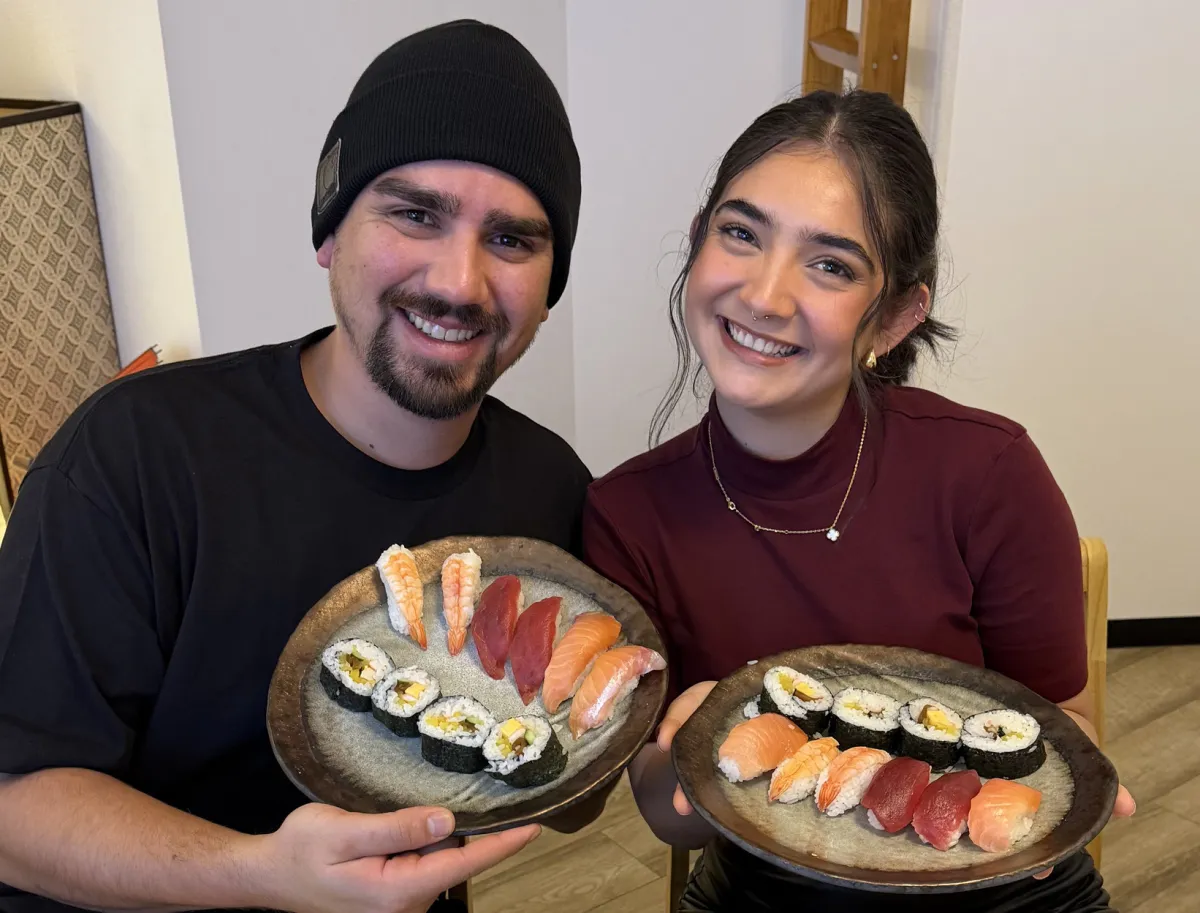
Tokyo Sushi Making Class : Sake Ceremony & Matcha Experience in Asakusa
What each format actually is
"Online sushi course" covers a wide range. Some are recorded video lessons you watch at your own pace. Others are live sessions on a video call, where an instructor demonstrates and may watch you work through your camera. Some are aimed at home cooks; a few are marketed toward people considering professional work. Read the description closely, because the format decides how much feedback you will get.
An in-person class is simpler to describe. You come to a studio, the ingredients and tools are prepared, an instructor shows each step and you do it yourself with them nearby. Our signature sushi and matcha class in Asakusa lasts about 90 minutes. You make nigiri and maki, share a sake toast (water or green tea is available instead), eat everything you make and finish by whisking your own bowl of matcha. Instruction is in English and no previous experience is needed.
Feedback: the biggest difference
Sushi is a hands-on skill. How much rice you pick up, how firmly you press it and how you roll maki so it holds together are things that are hard to judge from a screen. A recorded video can show you the right result; it cannot tell you why yours is falling apart.
Live online lessons help, because an instructor can comment on what they see. Even so, a camera angle hides a lot, and it is difficult to correct pressure or hand position at a distance.
In person, an instructor can see the rice in your hand and show you the adjustment directly. For many beginners this is the moment that makes it "click." If your main goal is to learn the basic movements correctly, face-to-face feedback is where an in-person class has a clear advantage.
Ingredients and equipment
With an online course, you source everything yourself. That usually means short-grain rice, rice vinegar, nori, a bamboo mat and, if you want raw fish, fish sold as suitable for eating raw. Depending on where you live, finding good fish can be the hardest part, and buying it for one practice session can be expensive or wasteful.
In a class, the ingredients and tools are included. You do not need to buy equipment before you know whether you enjoy the process. Dietary requirements can be handled too: the signature class can be adapted for no raw fish, shellfish-free or gluten-free needs if you tell us when booking, and our vegan sushi workshop runs in the same 90-minute session with a plant-based menu.
Time, pace and repetition
Online courses win on flexibility. You can pause, rewatch a technique ten times and practise whenever you like. If you want to make sushi regularly at home, repetition over weeks is what builds skill, and a course designed for that can be valuable.
An in-person class is a fixed appointment. Our class runs for about 90 minutes, and that time includes the sake toast, eating and matcha, not only technical practice. It is an introduction, not a long training programme. What you get in return is a complete, guided experience in a short time, with nothing to prepare beforehand.
If you are wondering how much practice a short class really gives you, our guide to the sushi skills beginners learn in a Tokyo class sets realistic expectations.
Cost: compare like with like
Prices vary so much between online courses that a general comparison is not very useful. When you compare, count everything: the course fee, the ingredients for each practice session and any equipment you need to buy. For an in-person class, check the current price on the booking page for your date and party size, and note what is included — for our signature class that covers ingredients, tools, the drinks listed and the food you eat.
The more useful question is what you are paying for. An online course pays for material you can revisit. A class pays for direct teaching and an experience in Japan. Neither is automatically better value; it depends on what you want.
The experience around the food
A class in Tokyo is not only a lesson. Our studio sits under the railway tracks in Asakusa, a short walk from Senso-ji, and you cook alongside other travellers or your own group. The sake toast, eating together and whisking matcha at the end are part of what people remember. An online course, by design, happens in your own kitchen.
That does not make online learning worse. It is simply a different product: learning material versus a travel experience that includes learning.
Which should you choose?
- Choose an online course if you want to make sushi often at home, like learning at your own pace and can source good ingredients locally.
- Choose an in-person class if you want correct technique from the start, would rather not buy equipment first or want a memorable activity during a trip to Tokyo.
- Choose both if you enjoy preparing: watch a few videos before your trip so the terms are familiar, then use the class to get hands-on corrections. After the class, participants receive the recipe, so you have a reference when you practise at home.
If your goal is professional work rather than a hobby, that is a separate decision. Our comparison of a sushi class and chef training explains what to ask a professional programme. And if you are thinking of making sushi in your Tokyo accommodation instead, see sushi at your rental or a class.
Try it with your own hands in Asakusa
If you are visiting Tokyo, a short in-person class is the quickest way to find out how sushi should feel in your hands. Check live dates on the signature class page and pick the session that fits your trip — you can always continue online once you are home.
Related Articles
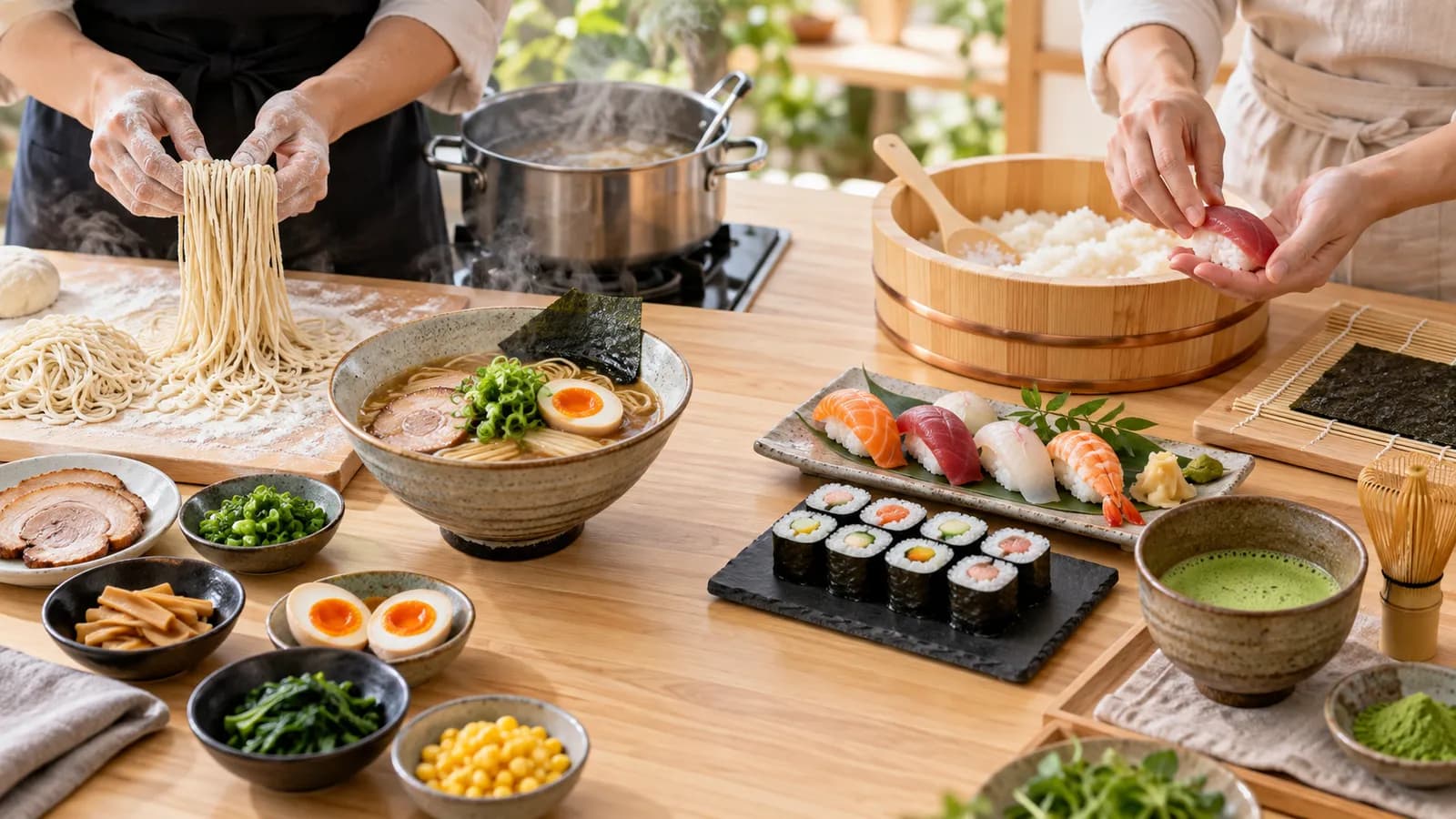
Sushi Class or Ramen Class in Tokyo?
Torn between a sushi class and a ramen class in Tokyo? Compare what you make, how long it takes, what you eat and which one suits your group and trip.
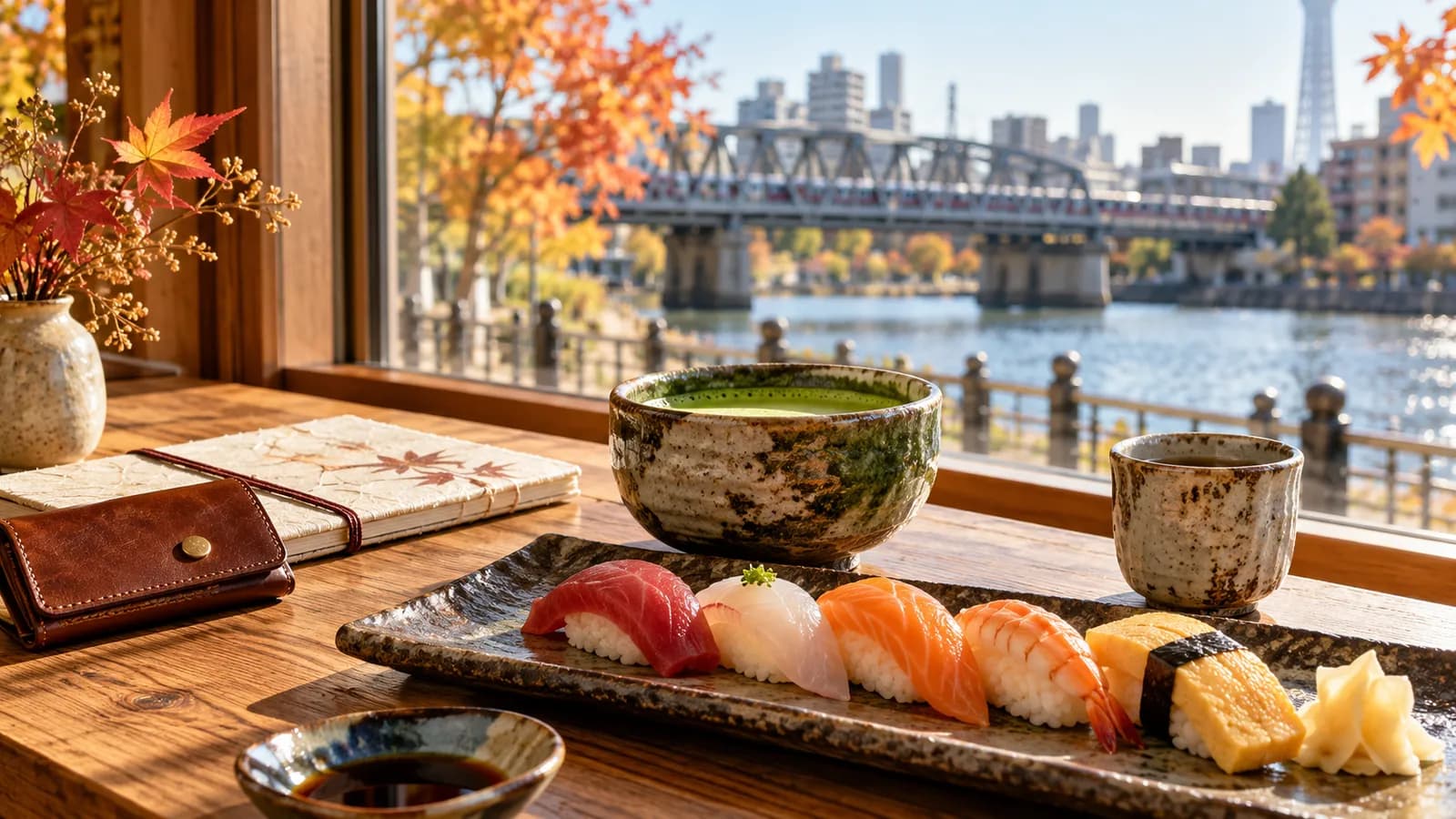
Kuramae and a Sushi Class in One Day
Pair a walk through Kuramae's small workshops, cafés and riverside with a sushi class in Asakusa. Routes, timing and two easy plans for one day.
Akihabara and a Sushi Class in One Day
Combine Akihabara's electronics, anime and game shops with a sushi class in Asakusa. Direct train routes, timing and three easy plans for one day.