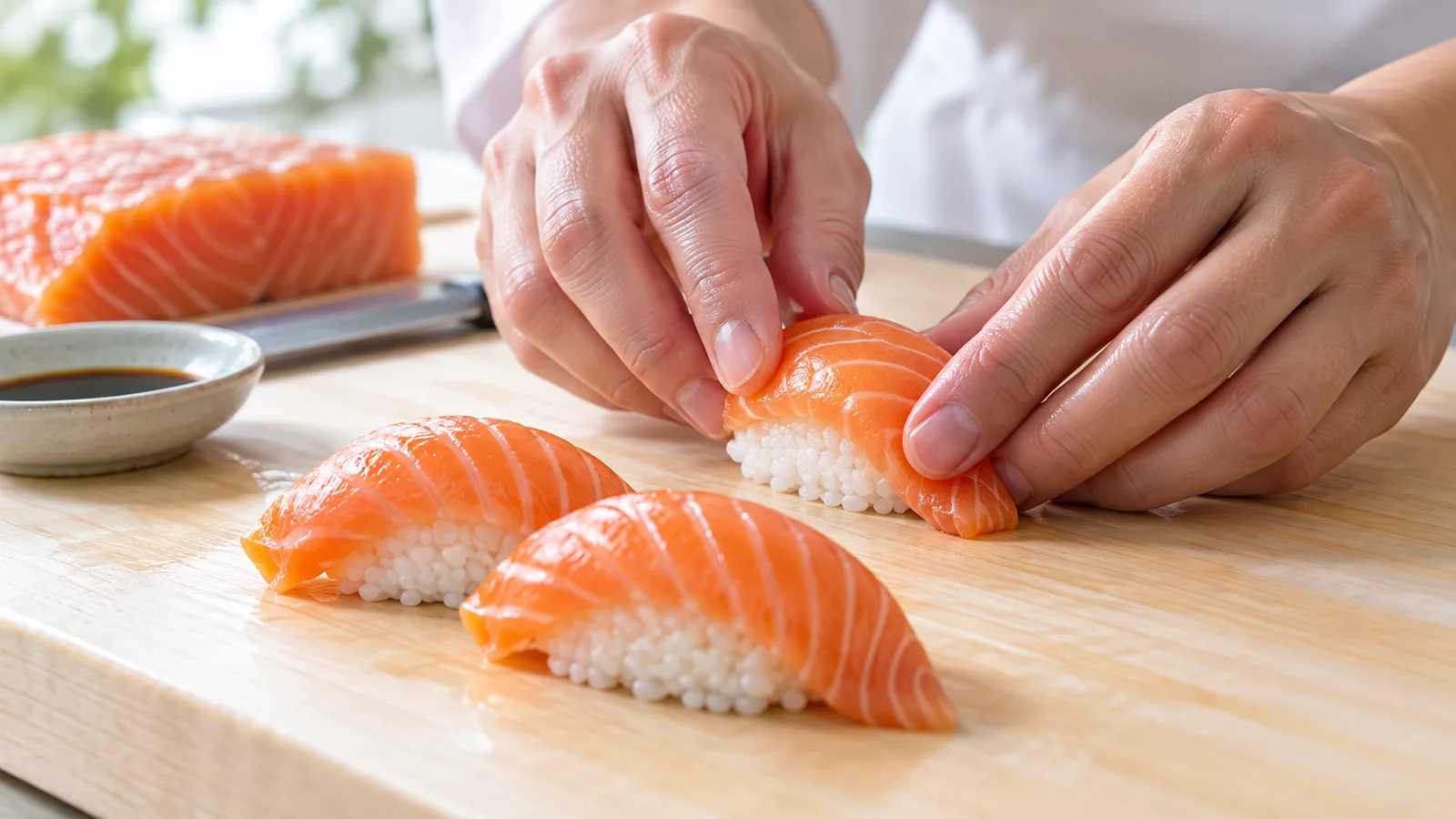
Salmon Sushi: Which Salmon Is Used and Why
Salmon is the sushi topping many people outside Japan try first, and it is now hugely popular in Japan too. Yet raw salmon on rice is a fairly recent idea. Until a few decades ago, salmon in Japan was something you grilled or salted, not something you ate raw.
This guide explains which salmon is used for sushi, why that matters for safety, what the label "sushi grade" does and does not mean, and how to choose salmon if you want to make sushi at home.
Popular in Tokyo right now — our most recommended experience
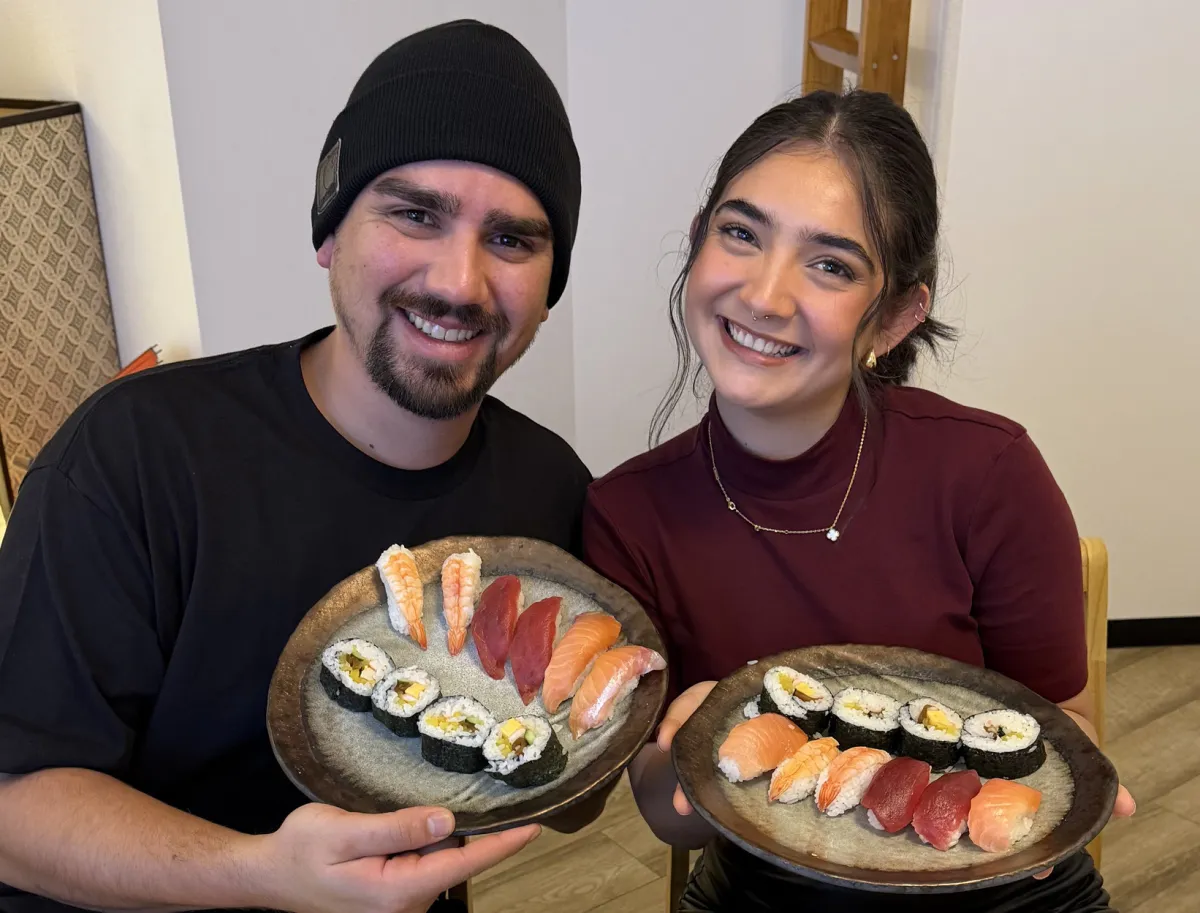
Tokyo Sushi Making Class : Sake Ceremony & Matcha Experience in Asakusa
Japan did not traditionally eat salmon raw
Japan's Fisheries Agency is clear on this point. In its annual fisheries white paper, it explains that Japan had almost no custom of eating salmon raw. Until the 1980s, the salmon sold in Japan was mostly domestic chum salmon caught in autumn and sockeye imported from North America, and both were mainly for cooking.
Hokkaido also has ruibe, an Ainu dish of thinly sliced frozen fish. Historical freezing practices are not a preparation guide for today's home kitchen: parasite control requires verified conditions, and freezing does not eliminate all foodborne hazards. MAFF
How salmon became a sushi favourite
The change came from farming, and largely from Norway. The Norwegian Seafood Council describes a delegation that travelled to Tokyo in 1985 to sell Norwegian fish in Japan. A dedicated "Project Japan" followed from 1986. Its aim was to present farmed salmon as a fish to eat raw, quite separate from the salted fillets Japanese shoppers knew.
It took time, but according to the Fisheries Agency white paper, from the 1990s onward farmed Atlantic salmon and trout from Norway and Chile, raised for raw consumption, came onto the Japanese market. The word sāmon (salmon) and the habit of eating it raw gradually took hold. Conveyor-belt sushi helped. In a February 2026 consumer survey reported by nippon.com, salmon was the topping people ate most often at conveyor-belt sushi restaurants, and it had held first place for 15 years in a row.
You will still notice the old split in Japanese. Sāmon on a sushi menu usually means fish for eating raw, while sake or shake often refers to salmon for grilling, as in a grilled salmon breakfast.
Which salmon is used for sushi
Most salmon served raw in Japan is one of these:
- Farmed Atlantic salmon, much of it from Norway. Rich, with clear white fat lines.
- Farmed rainbow trout, often sold as "trout salmon" and widely imported from Chile and Norway. The colour and fat are similar to salmon, which is why it is used the same way.
- Japanese brand salmon. Many prefectures now farm their own. Miyagi Prefecture produces most of Japan's farmed coho salmon and registered Miyagi Salmon as a geographical indication in 2017, promoted as salmon for eating raw. Shinshu Salmon from Nagano is a trout cross bred by the prefecture's fisheries research station.
These examples are farmed fish, but farming alone does not establish that a particular fillet is suitable for raw consumption. The production conditions and handling must also be appropriate.
Parasite controls for raw salmon
Wild salmon can carry parasites, and some controlled aquaculture systems can reduce that risk. Norway's Food Safety Authority describes a freezing exemption for Norwegian farmed Atlantic salmon and rainbow trout, with operators responsible for meeting its conditions. That is not a blanket exemption for every farmed fish.
Parasite control also does not remove every food-safety risk. The FDA explains that freezing does not kill all harmful germs and that thoroughly cooking seafood is the safest option. Vinegar, salt, soy sauce and wasabi do not reliably kill anisakis larvae, according to Japan's health ministry.
Is "sushi grade" salmon safe to eat raw?
A label such as “sushi grade” does not by itself show that a fillet is suitable for raw eating. Ask the supplier whether it is intended for raw consumption and what documented parasite controls, production conditions and cold-chain handling apply. Freezing requirements and permitted exemptions vary by jurisdiction; do not assume that a household freezer or the word “farmed” settles the question.
Choosing salmon for sushi at home
- Choose fish explicitly supplied for raw use, and ask about its handling and applicable parasite controls. If the seller cannot confirm this, cook it instead.
- Keep it refrigerated and follow the supplier's storage and use-by instructions. Good colour, fat lines or smell cannot establish the absence of pathogens.
- Consider who will eat it. The FDA advises pregnant people, children, older adults and people with weakened immune systems to avoid raw or undercooked seafood. Choose fully cooked alternatives for these groups.
For more choices beyond salmon, our guide to the best fish for sushi compares tuna, yellowtail and other favourites. And because good nigiri depends on the rice as much as the fish, our article on shari, sushi's vinegared rice is worth reading before you start.
Salmon in traditional Edomae sushi
Because raw salmon arrived so late, it is not part of the classic Edomae tradition. Edo-period chefs relied on curing, marinating and simmering instead, as our article on the history of Edomae sushi explains. Traditional Edomae-style counters tend to focus on these classic toppings, so do not be surprised if salmon does not appear at an omakase meal.
If you prefer to avoid raw fish altogether, our guide to no-raw-fish options in a sushi class explains the alternatives.
Make salmon nigiri yourself in Asakusa
In our signature sushi and matcha class in Asakusa, salmon is one of the nigiri toppings you shape by hand, alongside lean tuna (akami), medium-fatty tuna (chutoro) and shrimp. You also roll a futomaki, join a sake toast and whisk your own matcha. The class lasts 90 minutes, is taught in English and is designed for beginners. Book a session and try shaping the topping that took Japan a generation to love.
Related Articles
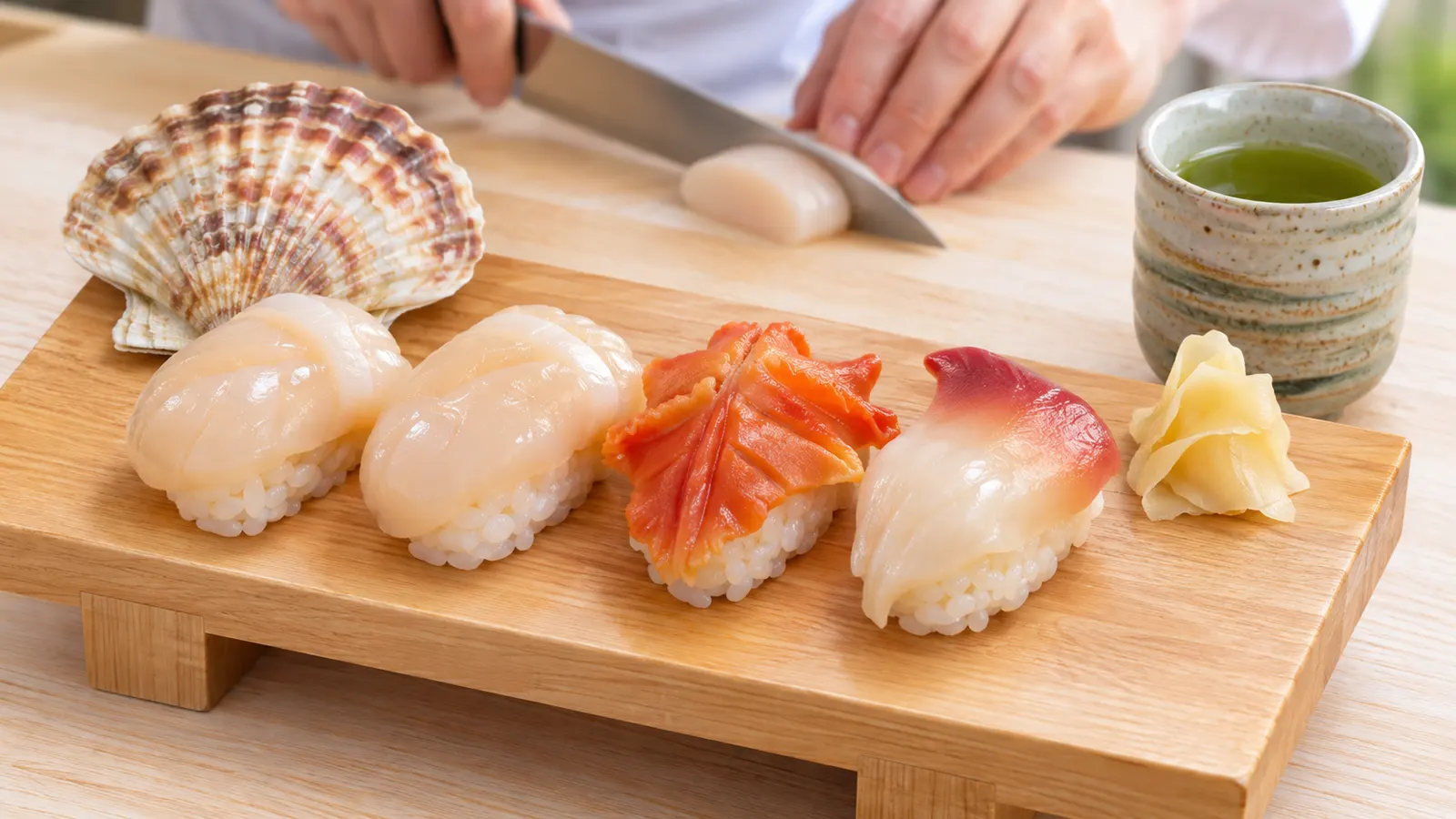
Hotate, Akagai, Hokkigai: Shellfish Sushi
Scallop, ark shell and surf clam are the shellfish you meet most at sushi counters in Japan. How they differ, when they are best and what to say on allergies.
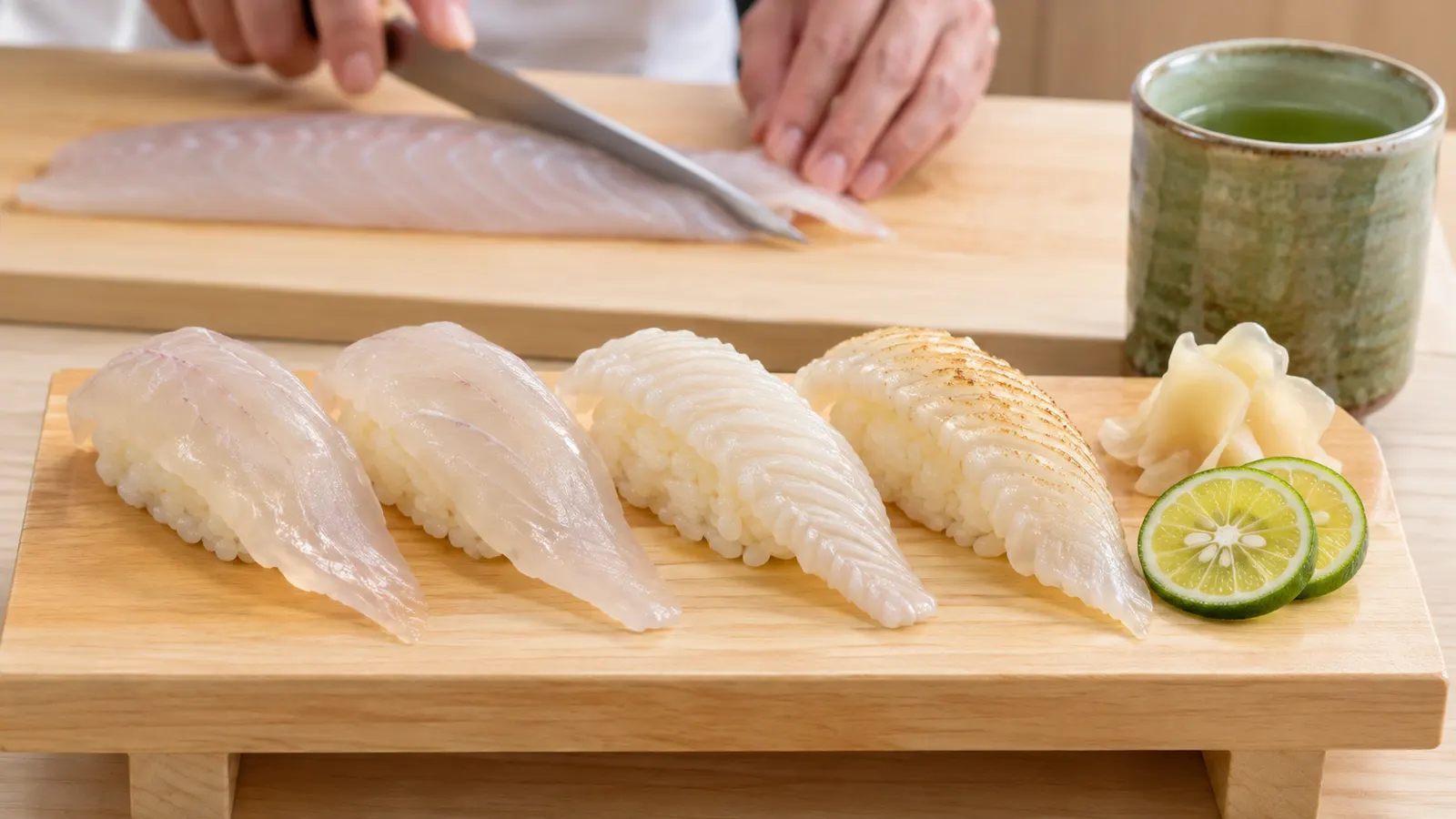
Hirame vs Karei: Flounder Sushi and Engawa
Hirame and karei are both flounder, but they differ in season, taste and price. How to tell them apart, what engawa is and how to order.
Nikiri, Tsume and Soy Sauce on Sushi
Why sushi chefs brush sauce on nigiri: nikiri, the sweet tsume on anago, the main types of Japanese soy sauce and when to skip the dipping dish.