Do You Tip at a Sushi Class in Japan?
If you come from a country where tipping is part of every meal, a cooking class in Tokyo raises an awkward question. The instructor has spent 90 minutes teaching you, you ate well and you had a good time. Are you supposed to leave something extra, and how much?
The short answer is no. Tipping is not part of Japanese service culture, and you do not need to tip at a sushi class. This guide explains why, what the class price already covers, and simple ways to show your thanks that are welcome in Japan.
Popular in Tokyo right now — our most recommended experience
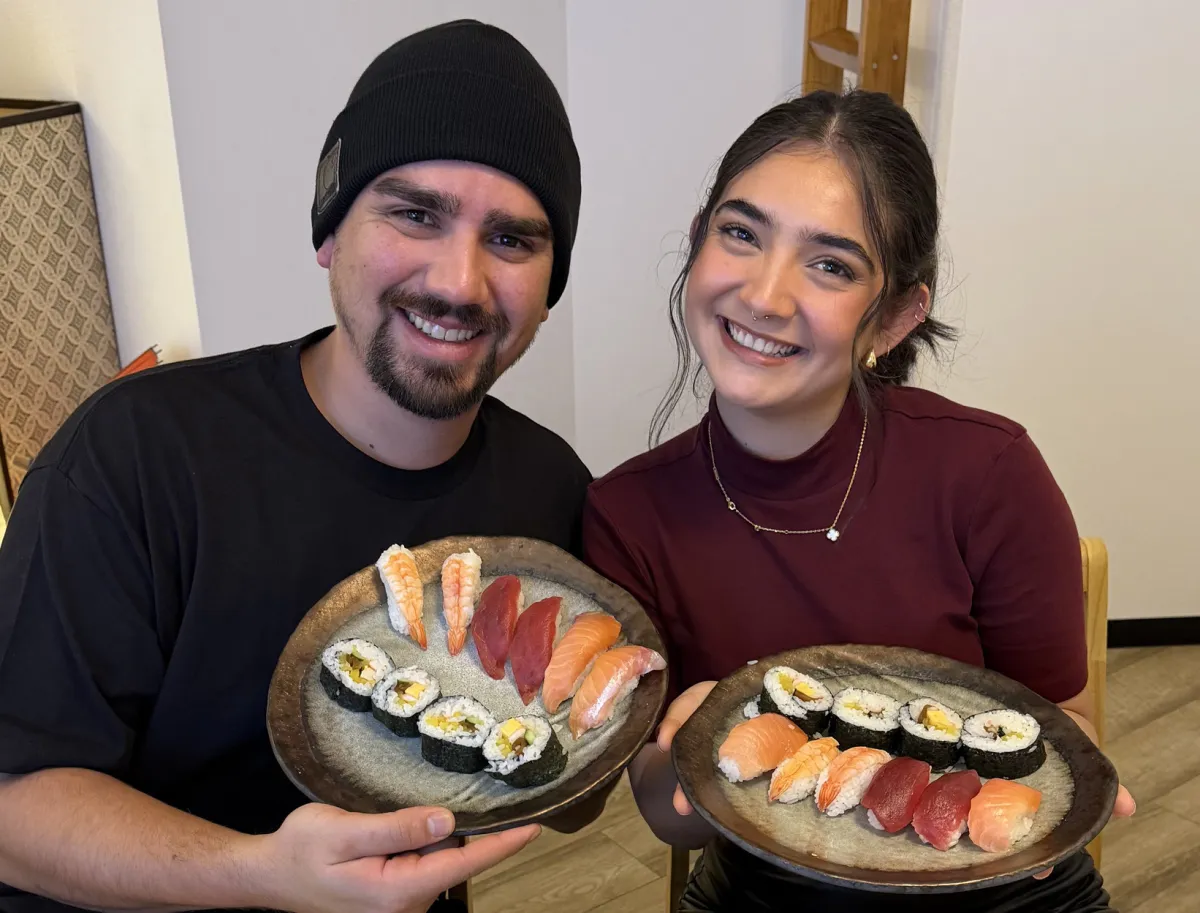
Tokyo Sushi Making Class : Sake Ceremony & Matcha Experience in Asakusa
Tipping in Japan: the general rule
The Japan National Tourism Organization's own guide to tipping in Japan is clear: it is not common to tip for services in bars, cafés, restaurants, taxis or hotels. Good service is considered part of the job and part of the price, not something earned separately.
The same guide notes a few exceptions. A private guide or interpreter used to overseas visitors may accept a tip as a gesture of gratitude, but it is not expected and should be given discreetly, usually in an envelope rather than as loose cash. In everyday situations, a sincere thank you is the norm.
A cooking class sits squarely in the everyday category. You are paying for a set experience at a published price, just as you would for a museum ticket or a meal.
What the class price already includes
For our signature sushi and matcha class, the price shown on the class page is ¥12,000 per person, and our terms state that fees are as displayed, tax included. That price covers:
- all ingredients and tools,
- sake for the toast, with refills during the class,
- water or Japanese green tea,
- the matcha you whisk yourself,
- the full 90-minute session with an English-speaking instructor.
There are no separate charges for the listed ingredients or equipment, and our online checkout has no tip or service-charge line to fill in. For a fuller breakdown, our guide to what is included in the sushi class price goes through each item, and paying for a Tokyo sushi class explains currencies, cards and when payment is taken.
What if you really want to give something?
Some guests still feel uncomfortable leaving without doing something extra. That is a kind instinct, and you do not need to suppress it. You simply do not need to express it with money. Offering cash to an instructor in the middle of a shared class can create an awkward moment for everyone, because it is not part of how the experience is set up.
If you still feel strongly about giving a gift, follow JNTO's advice for the rare situations where it is appropriate: be discreet and use an envelope. Small cash envelopes are sold at convenience stores and 100-yen shops. But please do not feel any obligation. Nobody at the class is expecting it, and your experience will be exactly the same either way.
Thank-you gestures that are welcome
There are better ways to show appreciation in Japan, and they cost nothing.
Say it in Japanese. At the end of the class, "Arigato gozaimashita" (thank you very much) is warm and appropriate. After eating, "Gochisosama deshita" is the traditional thanks for a meal. Instructors notice and appreciate the effort.
Take part fully. Ask questions, try the techniques and enjoy the food you made. For a teacher, an engaged class is the best reward.
Leave a review. For a small business, an honest review that mentions your instructor by name is genuinely valuable. It helps other travellers decide and lets the team see what worked for you.
Share your photos. If you post pictures of your nigiri or your matcha, tagging the class helps people find it. Our guide to taking photos and videos during the class covers what to capture.
Recommend it. Telling a friend who is travelling to Tokyo is one of the nicest compliments you can pay.
Other money questions before you book
A few related points come up often:
- Do I need cash at the studio? No. The class is paid when you book online, so you do not need cash to settle the class price on the day.
- Is there a service charge? No separate service charge is added to the class price at checkout.
- What costs are separate? Your train fare, anything you buy in Asakusa before or after the class, and any food or drink outside the session are ordinary travel expenses.
- What about private classes? Private formats such as the family private sushi class have their own published prices and conditions. The same no-tipping custom applies.
Tipping elsewhere on your Tokyo trip
Because a sushi class is often one of the first experiences visitors book, it is a useful place to adjust to Japanese norms. In restaurants, you pay the bill and leave. If you leave extra coins on the table, staff may simply assume you forgot your change. In taxis, the metered fare is what you pay. For restaurant behaviour more generally, our sushi etiquette guide explains soy sauce, wasabi and counter manners.
Book with a clear price
The simplest way to avoid surprises is to know the full price before you go. Check live dates and the tax-included price on the signature class page, book the session that suits your trip, and save your thanks for the end of the class, in words rather than yen.
Related Articles
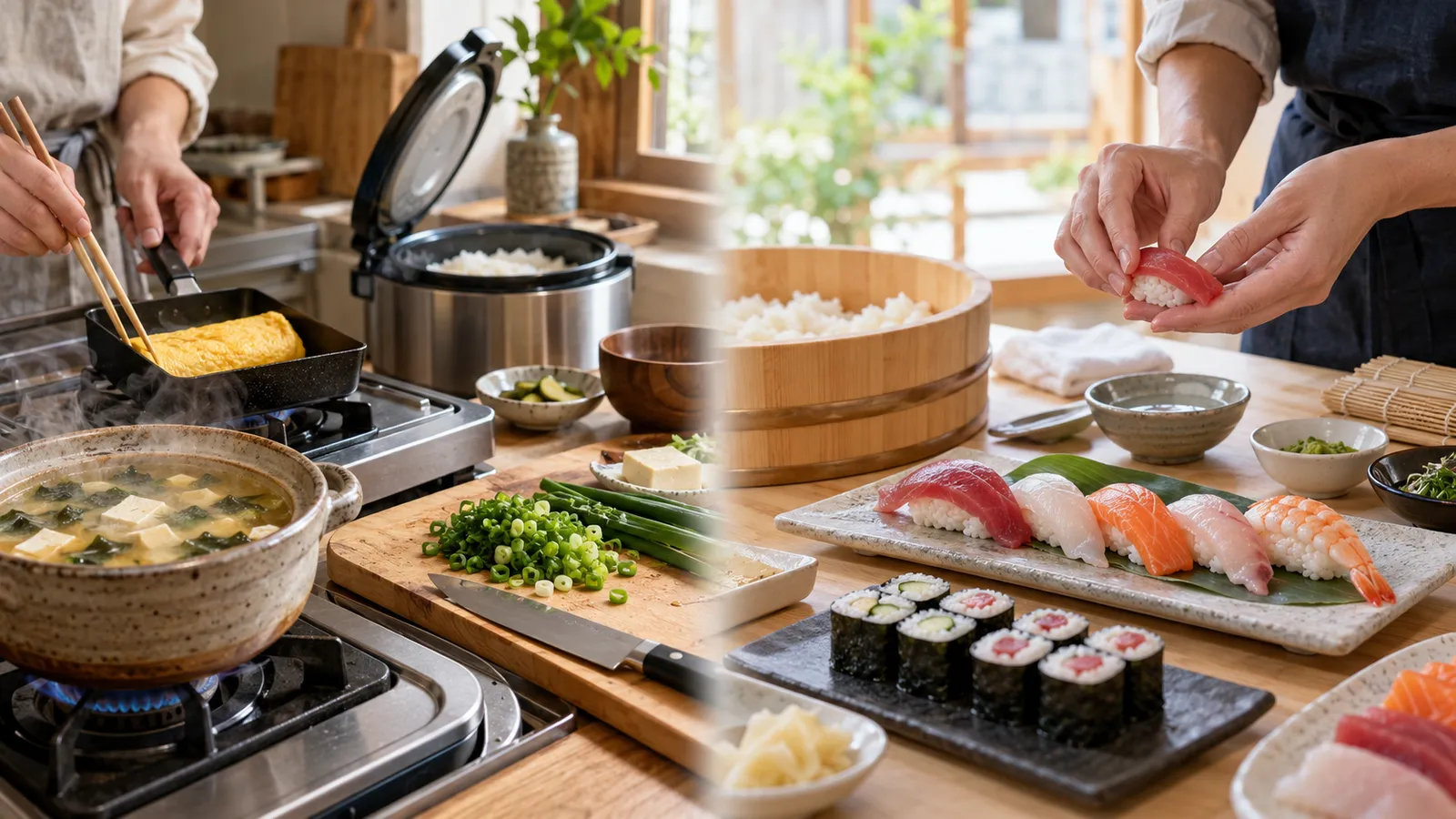
Home Cooking Class or Sushi Class in Tokyo?
A local's kitchen or a dedicated sushi studio? Compare menus, group size, timing, language and booking so you can choose the Tokyo cooking class that fits you.
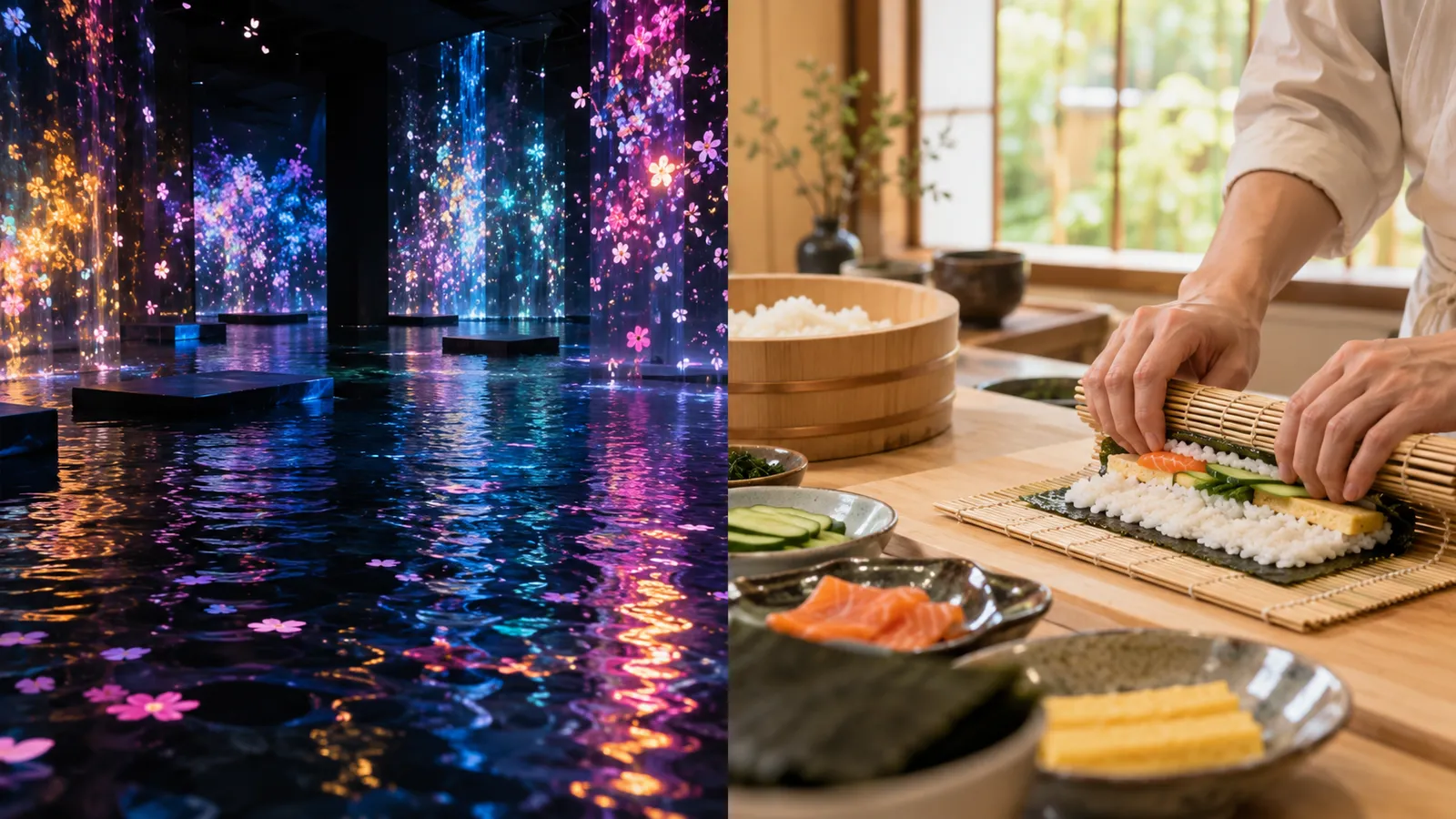
teamLab Planets and a Sushi Class in One Day
Pair teamLab Planets in Toyosu with a sushi class in Asakusa. Train routes, what to wear for the water rooms, timing and two simple plans for one Tokyo day.
Ginza and a Sushi Class in One Day
Pair Ginza's shops, food halls or kabuki with a sushi class in Asakusa. Direct train routes, timing and three simple plans for one relaxed Tokyo day.