Sushi in Japan vs Abroad: What's Different?
Many visitors arrive in Tokyo after years of eating sushi at home, and the first meal can be a small surprise. The menu looks shorter, the pieces look plainer, and the rolls you know best may not be there at all. None of this means the sushi is better or worse. It is a different style, built around different habits.
This guide explains the main differences you are likely to notice, why they exist, and how to order with confidence on your first visit.
Popular in Tokyo right now — our most recommended experience
Tokyo Sushi Making Class : Sake Ceremony & Matcha Experience in Asakusa
The short answer
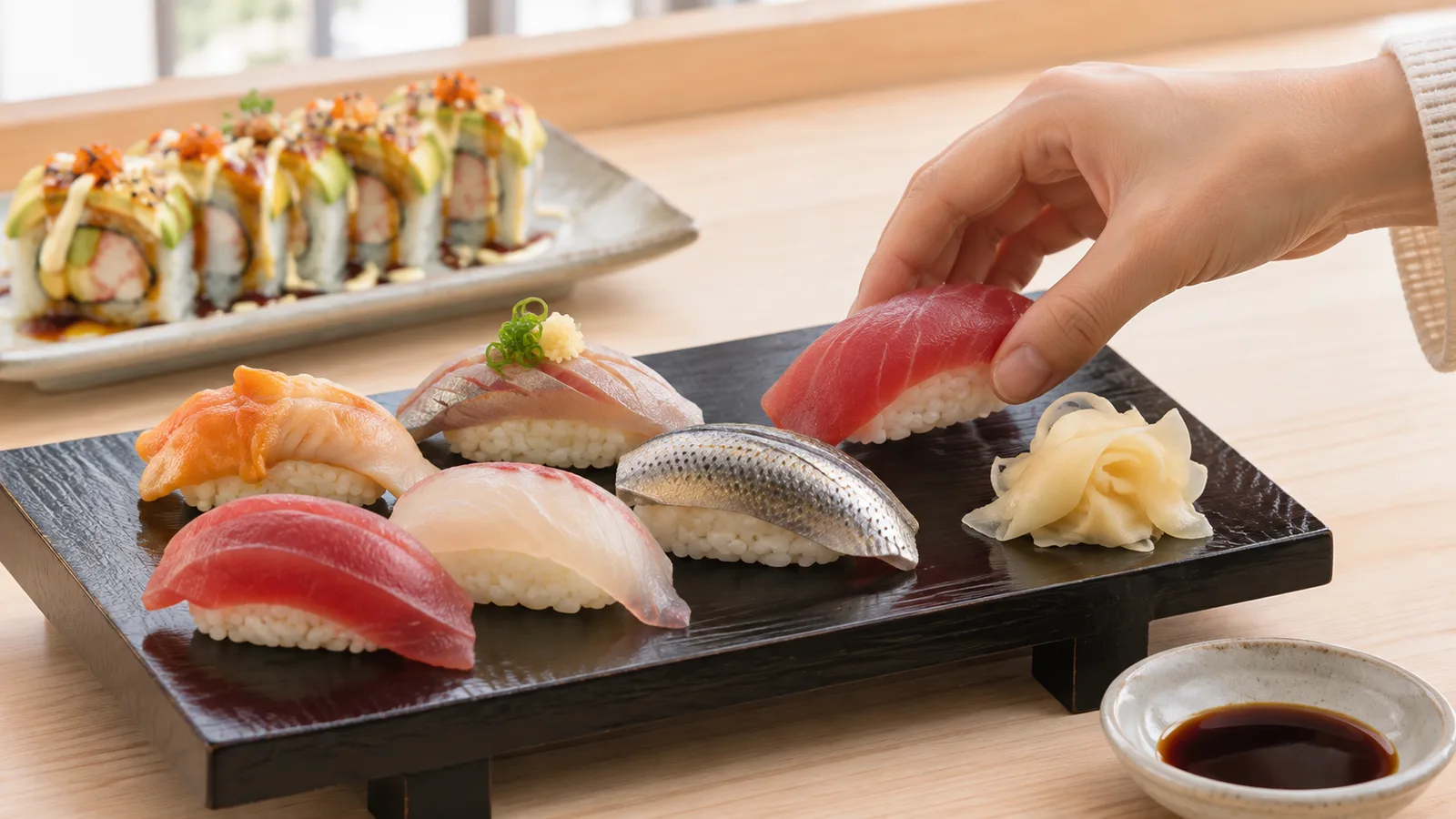
At home, sushi is often a roll with several fillings, sauces and toppings. In Japan, the centre of the meal is usually nigiri: a small portion of seasoned rice with one topping. Seasoning is kept light so the fish and the rice can be tasted. Rolls exist, but they are mostly simple, and the inside-out rolls common abroad are much less usual.
Nigiri comes first, not rolls
At a sushi counter in Tokyo, most of the meal is nigiri, often eaten one or two pieces at a time as the chef makes them. The rolls you are offered are usually hosomaki, thin rolls with a single filling such as tuna or cucumber, wrapped in nori with the seaweed on the outside. Thick rolls, futomaki, are packed with several fillings at once and are more common at home, at festivals and in takeaway shops.
Uramaki, the inside-out roll with rice on the outside, is the style many people abroad picture when they think of sushi. You can find it in Japan, especially at conveyor-belt chains, but it is far less central than in North America or Europe.
The California roll was born abroad
The best-known inside-out roll, the California roll, is a product of sushi's journey overseas. Encyclopaedia Britannica describes it as an inside-out roll of crab, avocado and cucumber that became popular in the United States in the 1970s. Its origin is disputed: one account credits a chef in Los Angeles' Little Tokyo in the 1960s, another a chef in Vancouver. Both stories share the same idea: hiding the nori and using cooked crab and avocado made sushi easier for first-time diners.
The same logic produced many rolls you may love at home, such as rolls with cream cheese, tempura shrimp or spicy tuna. They are real dishes with their own history, just not the everyday sushi of Tokyo.
Lighter seasoning, fewer sauces
Abroad, many rolls arrive with spicy mayonnaise, sweet eel sauce or crunchy toppings. In Japan, the chef usually seasons each piece already. At a counter, the wasabi is often placed between the rice and the fish, and some pieces are brushed with a soy-based glaze or a sweet reduction before they are served. In that case, you do not need to add soy sauce.
When you do use soy sauce, use a little and let it touch the topping rather than the rice. Our sushi etiquette guide for first-timers covers this and other counter manners. The pickled ginger is there to refresh your palate between pieces, not as a topping.
Wasabi is not always what you know
The green paste served with sushi outside Japan is often mostly horseradish coloured green. In Japan, too, tubes and packets are common at casual places, but higher-end counters grate fresh wasabi root, which is milder, fresher and slightly sweet. Our guide to real wasabi explains how to tell the two apart.
The rice matters as much as the fish
In Japan, sushi rice is judged as carefully as the topping. It is seasoned with vinegar, salt and usually some sugar, and it is served soft and loosely packed, often slightly warm rather than cold from a fridge. Our article on shari, the vinegared rice, explains why.
The toppings change with the season
Tuna and salmon are easy to find everywhere in Japan, and salmon has become a favourite at conveyor-belt chains. But menus in Japan also change through the year with what is in season, and you will see fish such as shiny-skinned mackerel and gizzard shad (kohada), squid, sea urchin and fish roe more often than abroad. If you want to know what you are ordering, our guide to the best fish for sushi introduces the main types.
Where you eat it changes the experience
Sushi in Japan covers a wide range of places: conveyor-belt restaurants, standing sushi bars, supermarket and department store counters, and quiet counters where the chef serves an omakase (chef's choice) course. Prices and formality vary greatly. Conveyor-belt chains usually have the widest choice, often including rolls, cooked toppings and desserts. A counter meal is closer to the classic Tokyo style. Our comparison of a sushi class or a sushi restaurant helps if you are deciding how to spend one meal.
If you do not eat raw fish
You do not need to eat raw fish to enjoy sushi in Japan. Cooked shrimp, sweet omelette (tamagoyaki), cooked eel and vegetable rolls are common. Our guide to sushi class options without raw fish explains what to ask for.
Try the Tokyo style with your own hands
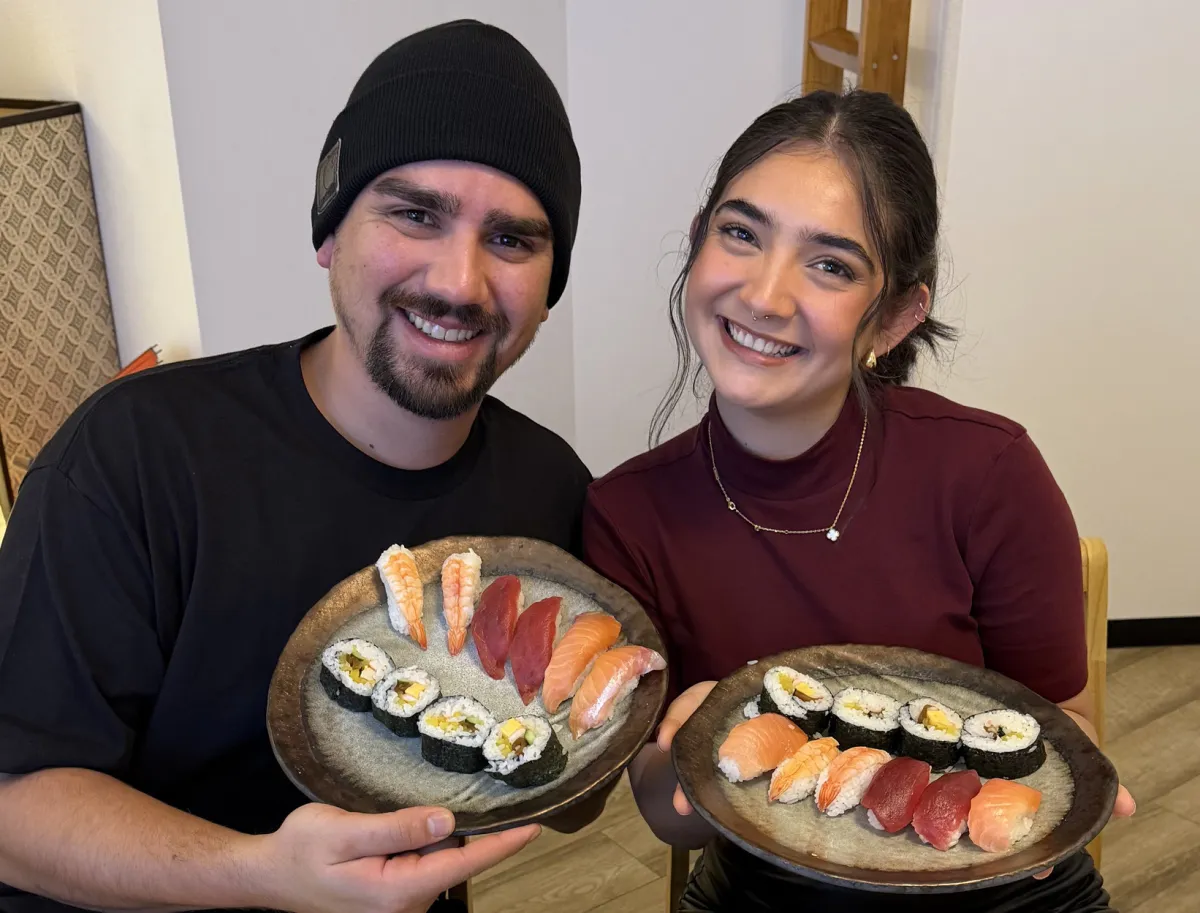
The quickest way to understand the difference is to make it. In our signature sushi and matcha class in Asakusa, you season the rice, shape nigiri with toppings such as lean tuna (akami), medium-fatty tuna (chutoro), salmon and shrimp, and roll a futomaki filled with tuna, cucumber, tamagoyaki and pickled radish. Exact ingredients depend on your session. You then eat everything you make, toast with sake (water or green tea is available instead) and finish by whisking matcha.
The class lasts 90 minutes and is taught in English. Bring your questions about the sushi you know from home: comparing the two is part of the fun. Check the live sessions on the class page and pick a time that fits your first days in Tokyo.
Related Articles
What Is Aburi Sushi? Seared vs Raw Nigiri
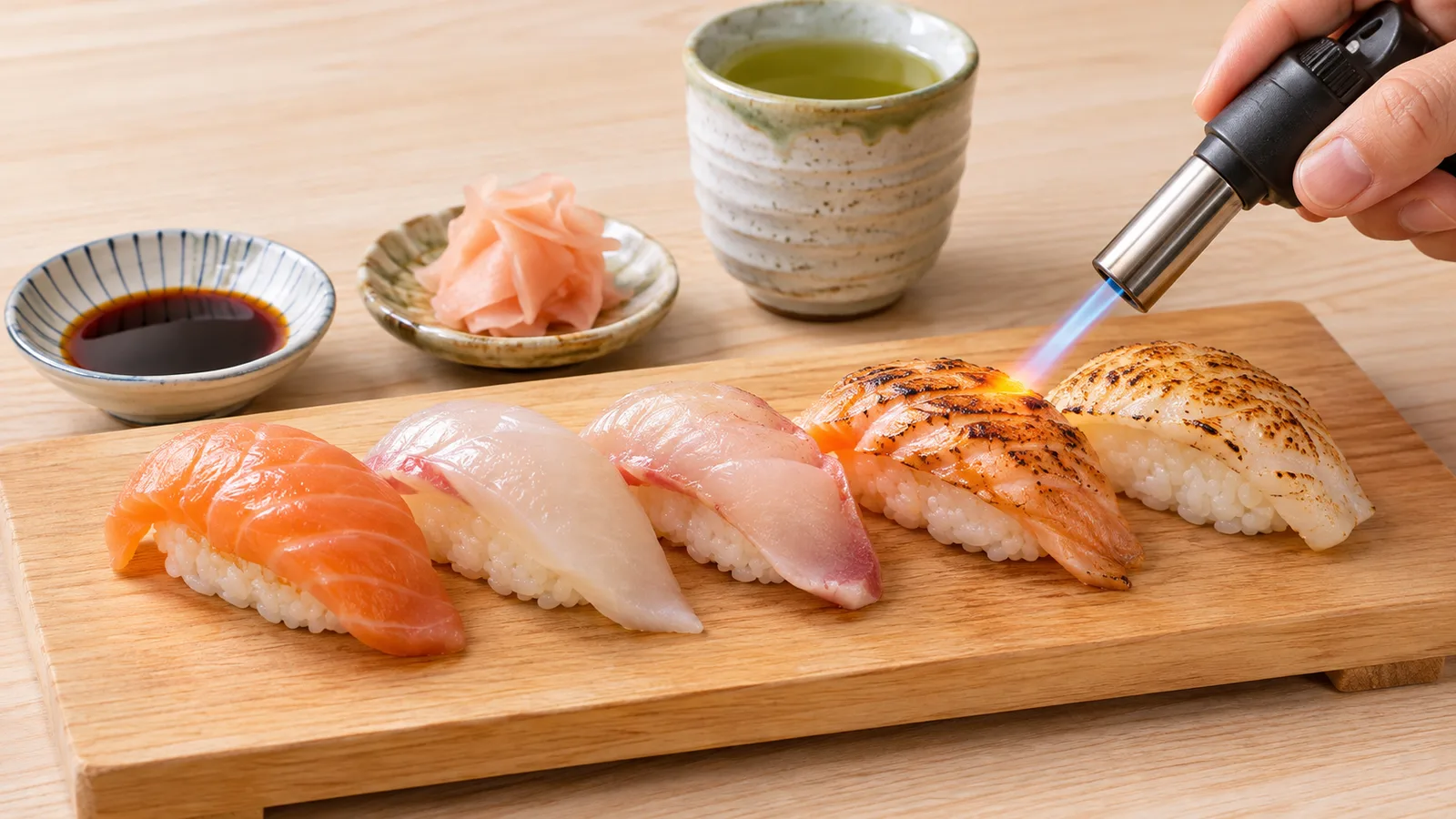
Aburi means flame-seared. Learn how aburi nigiri differs from raw nigiri, which toppings suit it, why it is not fully cooked, and what to order in Tokyo.
What Is Omakase? A Sushi Guide for Tokyo
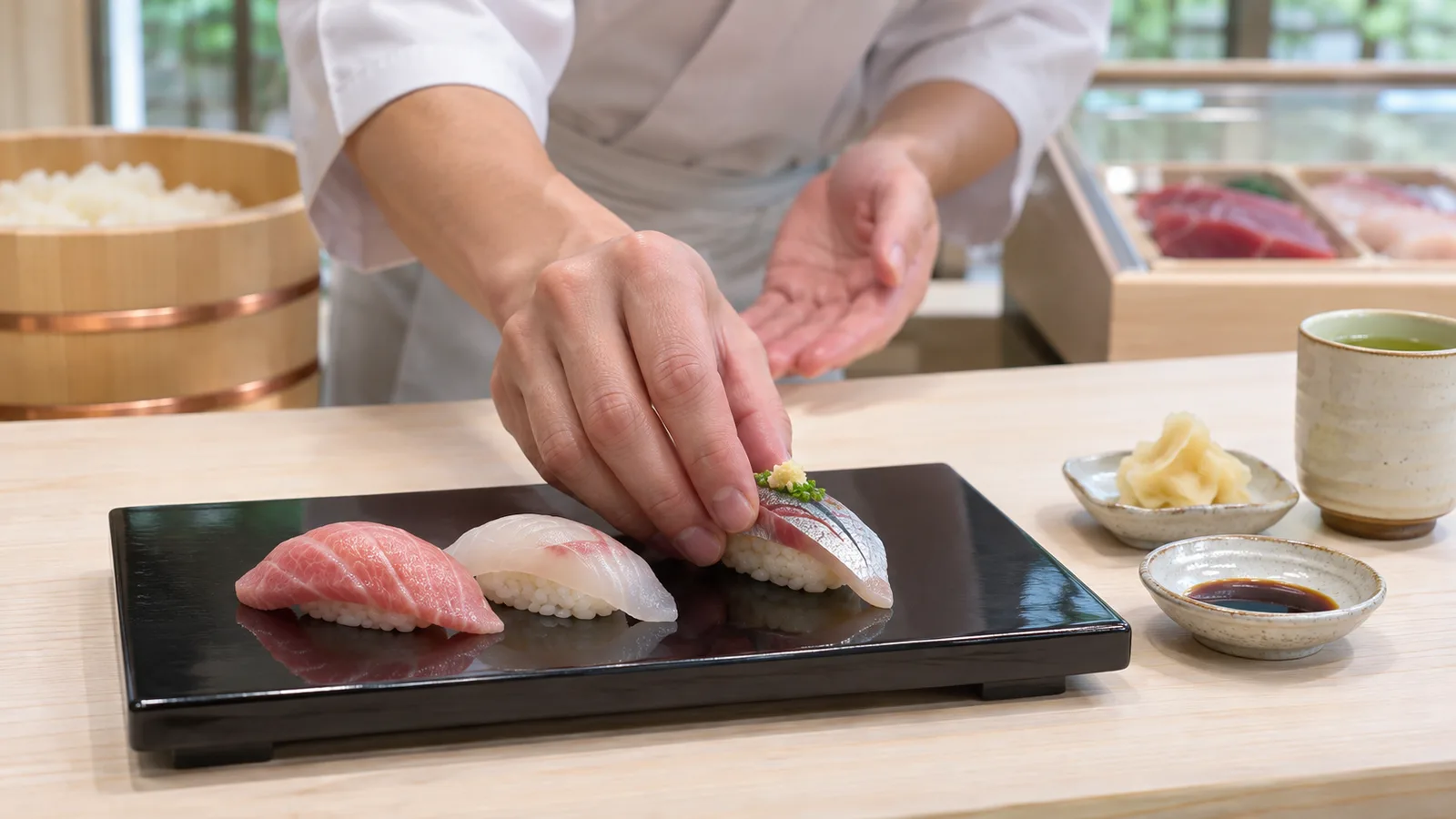
What omakase means, how a sushi counter course usually runs, how to book one in Tokyo, and how a hands-on private omakase in Asakusa differs.
Halal Sushi Class in Tokyo: What to Confirm
Looking for a halal sushi class in Tokyo? Check certification, ingredients, shared tools and the reply you need before booking.