What Dishes Do Tokyo Cooking Classes Teach?
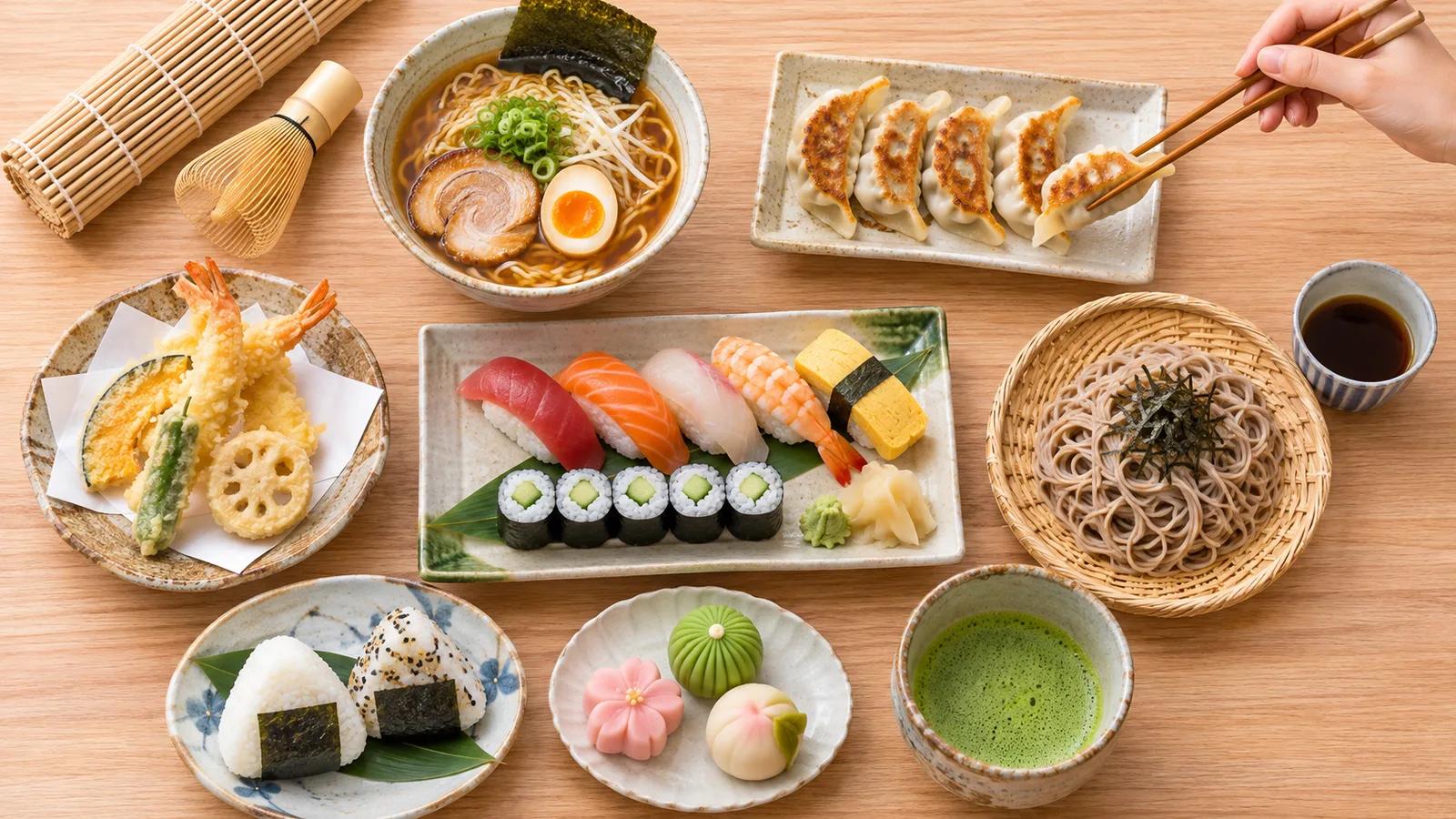
Search for a cooking class in Tokyo and you will find far more than sushi. Classes cover noodles, dumplings, fried food, street snacks, sweets and tea, and each one asks different things of you: different hand skills, different ingredients and a different kind of meal at the end.
This guide sorts the most common dishes into groups, explains what the hands-on part usually involves, and points to our more detailed comparisons. We run a sushi and matcha studio in Asakusa, so we say plainly where we are describing our own class and where we are describing class types in general. Menus vary between providers, so always read the specific listing before you book.
Popular in Tokyo right now — our most recommended experience
Tokyo Sushi Making Class : Sake Ceremony & Matcha Experience in Asakusa
Sushi: rice, fish and hand shaping
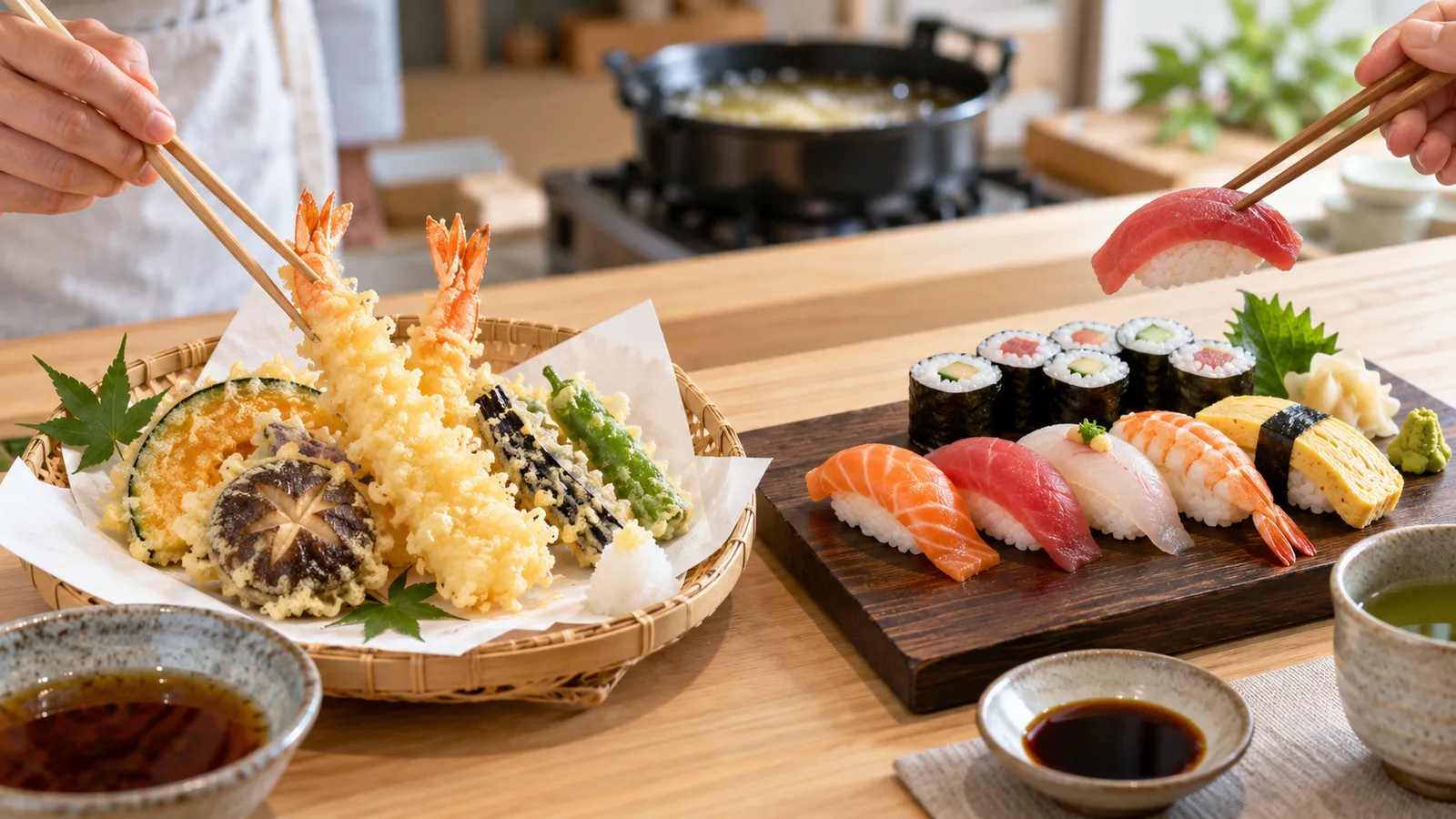
Sushi is the dish most visitors associate with Japan, and it is one of the most popular cooking-class themes for travellers. A typical beginner class teaches two things: shaping nigiri, a small hand-pressed mound of vinegared rice with a topping, and rolling maki, rice and fillings wrapped in nori with a bamboo mat.
The skill is gentle pressure rather than knife work. In many beginner classes the fish is prepared in advance, so the focus is on the rice and the shaping. Check the individual menu before booking. You eat what you make, which means the class is also a meal.
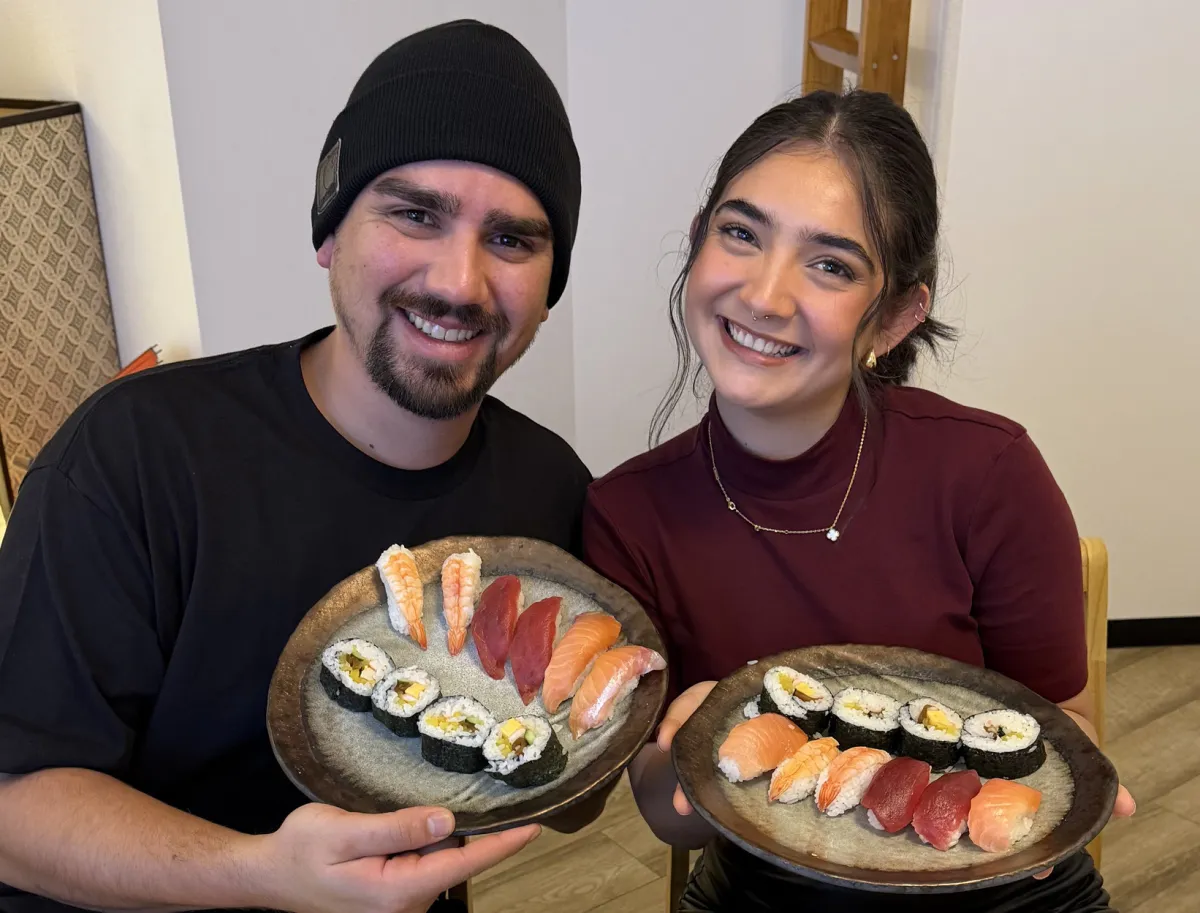
In our signature sushi and matcha class, you spend 90 minutes making nigiri and maki with English-speaking instruction, toast with sake, eat your creations and whisk your own matcha. A plant-based vegan version uses the same 90-minute format with a plant-based menu. Our article on what you make in a sushi and matcha class walks through each step.
Noodles: ramen, soba and udon
Noodle classes divide into two kinds. Some focus on the bowl: broth, tare seasoning, toppings and assembly. Others focus on making noodles by hand: mixing flour and water, kneading, rolling and cutting.
Ramen classes are popular because ramen is a favourite meal for many visitors, but read the description carefully. Making noodles and a full broth from scratch takes far longer than a class allows, so many classes prepare parts in advance. Soba classes are usually about the noodle itself, cutting buckwheat dough with a large knife into even strands, which is precise, quiet work.
Both are wheat- or buckwheat-based, which matters if anyone in your group avoids gluten. Our comparisons of ramen and sushi classes and soba and sushi classes go into the differences.
Dumplings and fried food: gyoza and tempura
Gyoza classes teach the filling and the folding. You pleat the edge of each wrapper, then pan-fry and steam the dumplings so the base turns crisp. The filling is often pork with cabbage or other vegetables, and the wrappers are made of wheat, so check the menu if anyone eats neither.
Tempura classes teach batter and frying: keeping the batter cold and light, and controlling the oil temperature. Hot oil sets the pace, and an instructor usually handles the riskiest steps.
Both produce hot food that is best eaten straight away. Read our comparisons of gyoza and sushi classes and tempura and sushi classes for more detail.
Street food and home cooking
Okonomiyaki is a savoury pancake of batter, cabbage and toppings cooked on a hot plate. A class is relaxed and social, and it is often closer to cooking together than to learning a technique. Onigiri, rice balls with a filling, is the simplest rice dish to learn and the easiest to repeat at home.
Home-cooking classes teach an everyday Japanese meal, such as miso soup, a simmered dish and rice, often in a host's kitchen. They answer a different question from sushi: how people eat on an ordinary day, rather than how a celebrated dish is shaped.
We teach a 60-minute morning onigiri class from 8 AM. See also okonomiyaki or sushi, sushi or onigiri and home cooking or sushi.
Sweets and tea: wagashi and matcha
Wagashi classes teach traditional Japanese confectionery. In a nerikiri class you colour and shape sweet bean paste into small seasonal designs such as flowers or leaves. It is detailed handwork, and you usually take the sweets with you rather than eating a meal.
Matcha is taught in two very different ways. A tea ceremony follows a formal sequence in a tea room, much of it watching a host. A matcha workshop puts the bamboo whisk in your hands so you whisk your own bowl. Our guides to wagashi or sushi and a matcha workshop or a tea ceremony explain the choice.
How to choose the dish for your trip
The dish matters less than what you want from the session. Four questions narrow it down quickly.
- Do you want a meal? Sushi, ramen, gyoza, tempura, okonomiyaki and home-cooking classes usually end with eating. Wagashi does not replace lunch.
- What does everyone eat? Gluten, pork, raw fish, alcohol and allergies rule some dishes in or out. Our guide to food allergies and a sushi class shows what to tell a provider before you pay.
- Which skill do you want to take home? Shaping rice, cutting noodles, folding dumplings or whisking tea are all different. Choose the one you are most likely to repeat.
- Where does it fit in the day? A class near the sights you are already visiting is easier to enjoy. Our studio is a short walk from Asakusa Station and Senso-ji.
If you are still comparing providers and areas, our overview of cooking classes in Tokyo sets out the options in one place.
Why we teach sushi and matcha together
We chose sushi and matcha because together they give a beginner a satisfying meal and two distinct hand skills in 90 minutes, without hot oil or long preparation. No experience is needed. If you want to see a dish you have only eaten in restaurants come together in your own hands, check the dates on our signature class page and let us know about any dietary needs when you book.
Related Articles
Okonomiyaki or a Sushi Class in Tokyo?
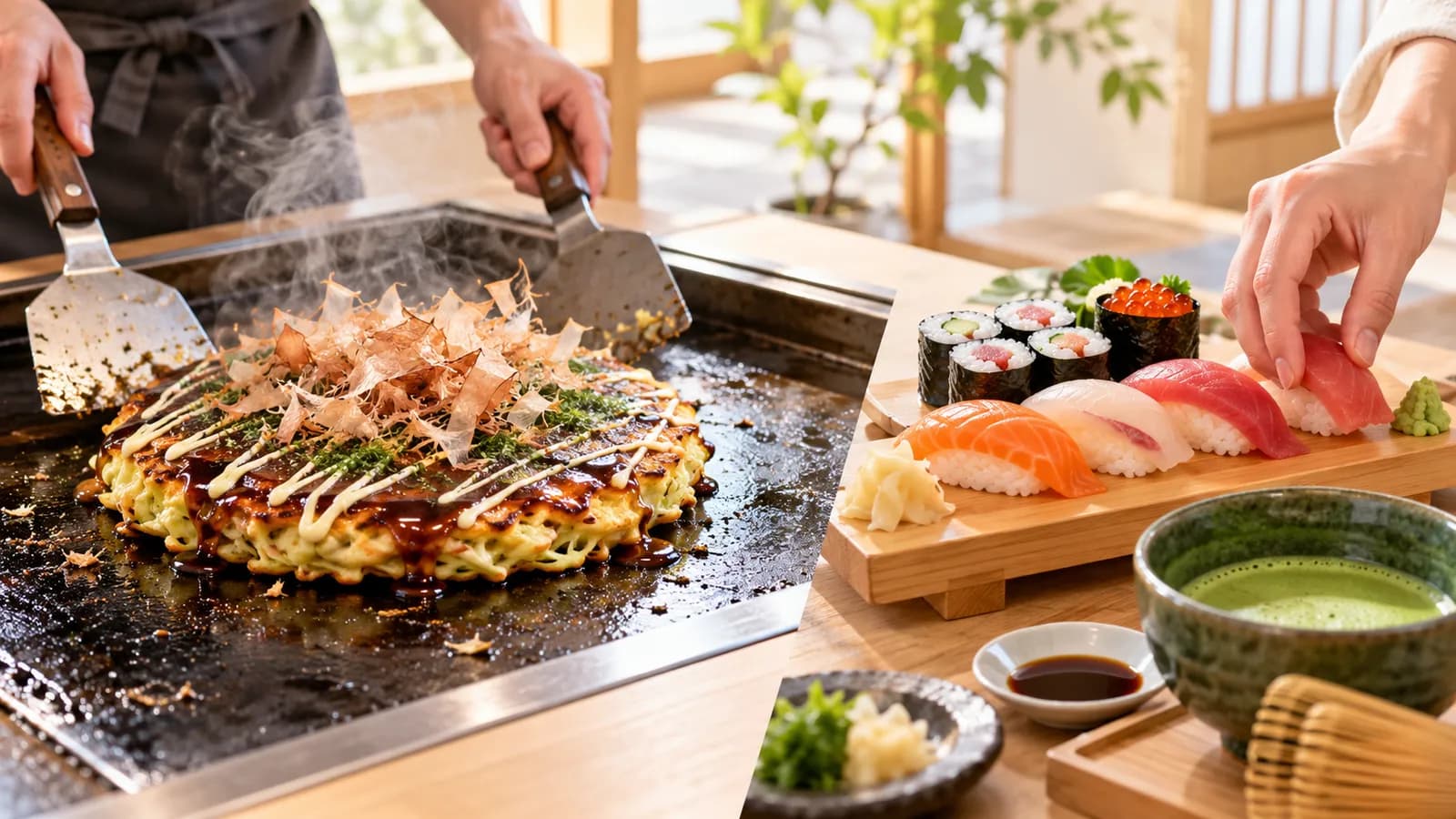
Okonomiyaki or a sushi class in Tokyo? Compare cooking at a table griddle with a guided class: the hands-on work, ingredients, heat and what you take home.
Gyoza Class or Sushi Class in Tokyo?
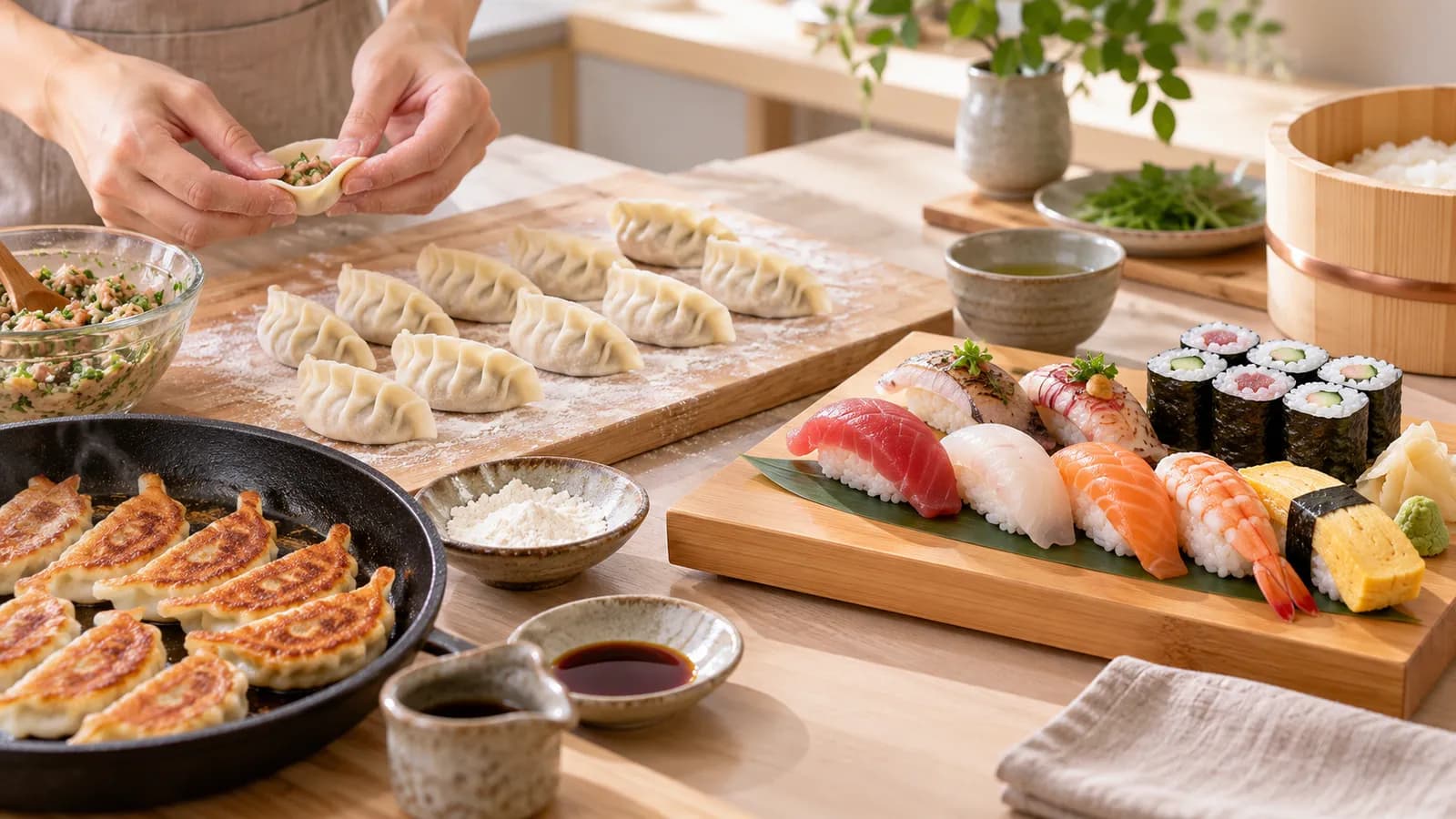
Choosing between a gyoza class and a sushi class in Tokyo? Compare the hands-on work, the hot pan, pork and wheat in the filling and wrappers, and the meal.
Tempura Class or Sushi Class in Tokyo?
Tempura or sushi for your one Tokyo cooking class? Compare hot oil and age limits, batter and gluten, shellfish, timing and what you eat at the end.